
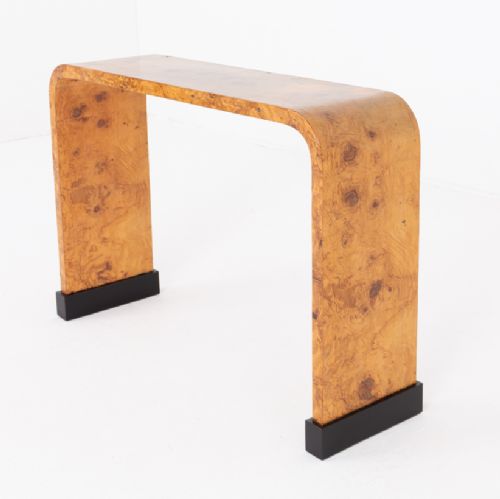
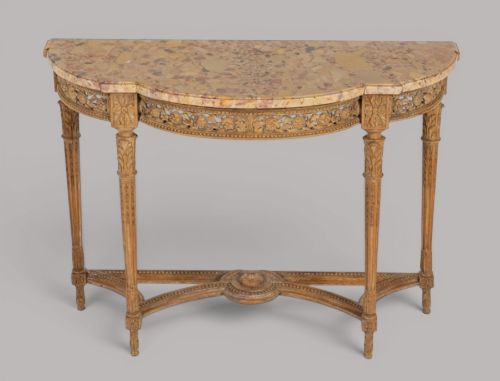
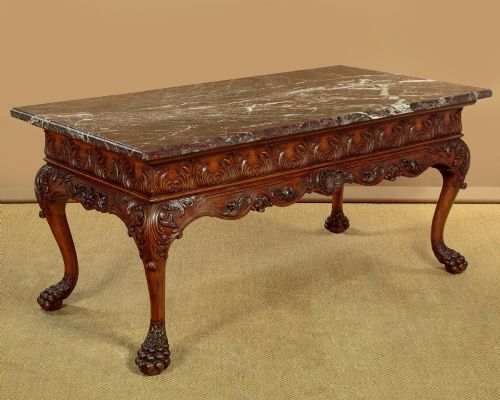


Vintage Walnut Pier Table
A vintage walnut pier table brings architectural presence and rich grain to a hallway or drawing room.
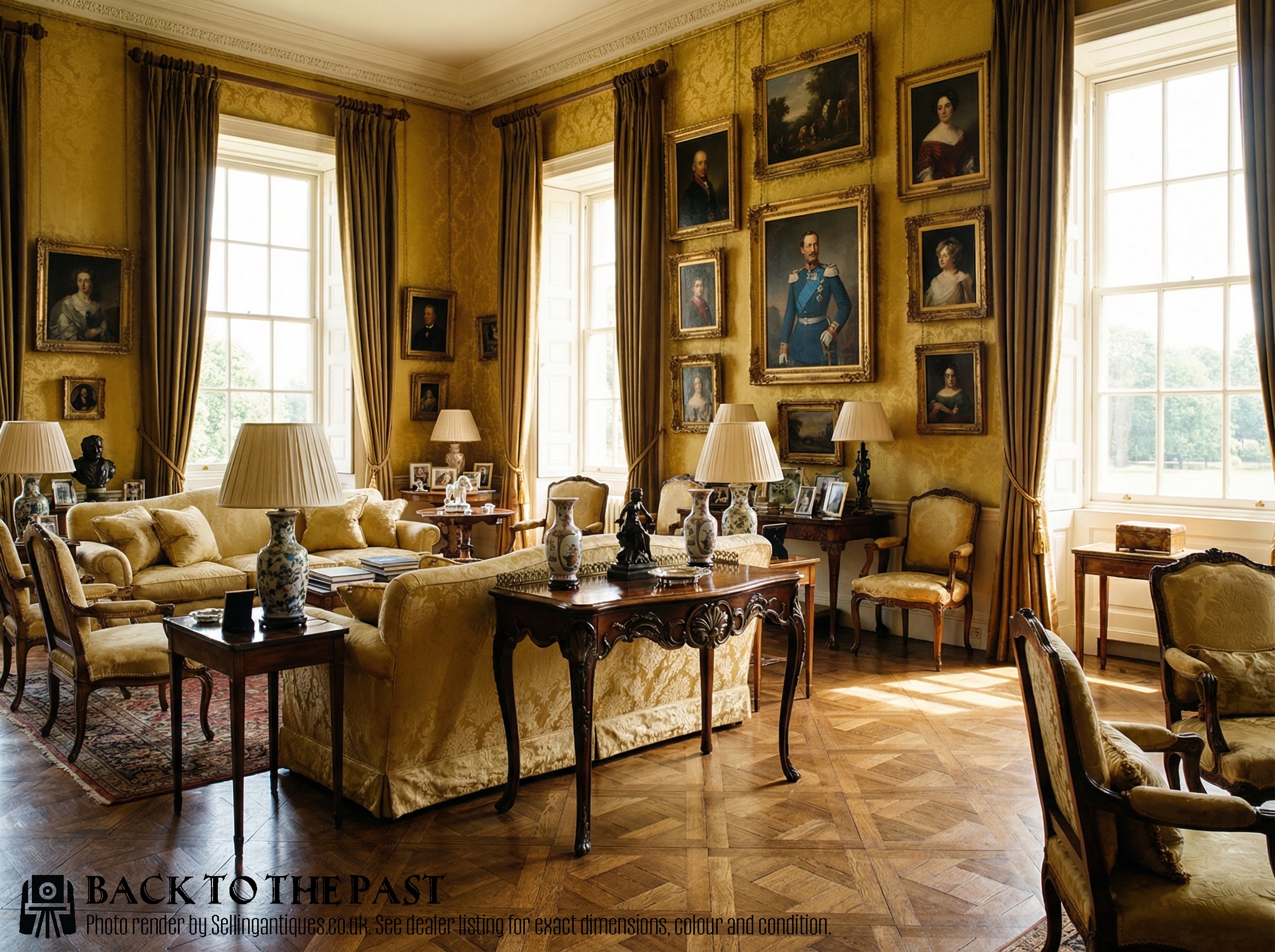
Vintage Walnut Pier Table
A vintage walnut pier table is a console or side table designed to sit flat against a wall, frequently beneath a mirror. These pieces appear across the eighteenth, nineteenth and twentieth centuries in styles spanning George II revival, Victorian, Art Deco and Louis XVI. Buyers encounter console tables, side tables and serving tables constructed primarily for formal entertaining and display.
The materials recorded in these listings rely heavily on walnut, burr walnut and walnut veneer paired with marble tops and occasional brass accents. Timelines stretch from the eighteenth century through nineteenth century revivals up to the nineteen-thirties. Forms range from simple side tables to grand console tables paired with mirrors.
How they were made
Construction relies on timber foundations faced with walnut veneer or burr walnut, utilising traditional cabinetmaking joints. Carving and parcel-gilt details appear on revival pieces from the nineteenth century.
Marble slabs form the tops of many tables, fitted directly to wooden frames. Brass mounts and hardware occasionally accent the woodwork, particularly on Continental and revival pieces.
Listings span the eighteenth century, nineteenth century and nineteen-thirties, featuring walnut, burr walnut, mahogany, marble and brass.
What varies in quality
Quality rests in the figuring of the walnut and burr walnut veneer, where striking grain patterns elevate the visual impact of the timber. The weight and finish of the fitted marble top also separate standard examples from finer commissions.
Execution of carved detail and parcel-gilt work dictates the standing of revival pieces. Proportions and the integration of mirrors in console sets influence overall refinement.
Epstein and Co
The Vintage Walnut Pier Table Glossary
- Pier table
- A table designed to stand against a wall, typically between windows or beneath a mirror. These pieces anchor decorative schemes in formal reception rooms.
- Console table
- A table supported by wall brackets or console legs. They serve display and decorative functions in hallways and drawing rooms.
- Burr walnut
- Walnut timber taken from a growth or burl on the tree, yielding highly decorative swirling grain patterns. Cabinetmakers prize this material for veneering prominent surfaces.
- Parcel-gilt
- Partially gilded with gold leaf, highlighting specific carved details on a wooden frame. This technique adds contrast to walnut furniture.
- Serpentine
- A curved line that bends outward at the centre and inward at the sides, or vice versa. This shape creates fluid movement in table tops and fronts.
Vintage Walnut Pier Table: Frequently Asked Questions
Where should I place a pier table?
These tables suit hallways, entrance foyers and drawing rooms where floor space meets a blank wall. Placing one beneath a mirror creates a traditional focal point.
Because they sit flush against the wall, they occupy minimal depth while offering a surface for lamps, vases and decorative objects.
How do I care for a marble top?
Marble requires gentle cleaning with warm water and a soft cloth, avoiding acidic cleaners that etch the polished surface. Use coasters under glasses to prevent staining.
Periodic application of a specialist stone sealer helps protect the marble from moisture and everyday wear.
Can I use a side table as a desk?
Most pier and console tables lack the knee clearance required for comfortable daily seating and writing. Their narrow proportions serve display rather than workspace needs.
They function better as serving surfaces, display ledges or hallway drop zones for keys and correspondence.
How do I identify a revival style?
Revival pieces borrow decorative vocabulary from earlier eras, such as George II, Queen Anne or Louis XVI designs, executed with nineteenth or twentieth-century construction methods. Look at the sharpness of carving and timber preparation for clues to the actual date.
Makers often combined historical silhouettes with contemporary finishes of their own period.