
Walnut Furniture Storage
Walnut furniture storage brings together timber with rich grain and practical compartments, offering chests, cabinets and tallboys for the home.
Walnut Furniture Storage
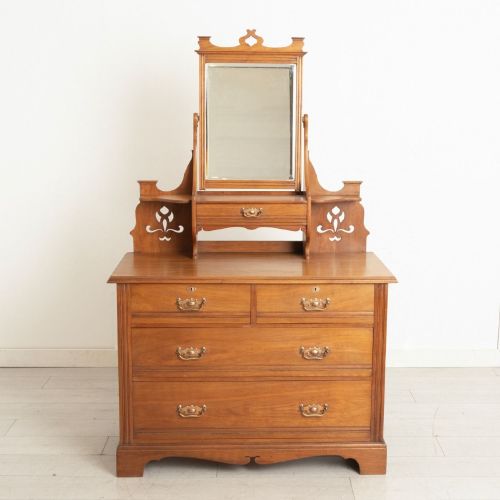
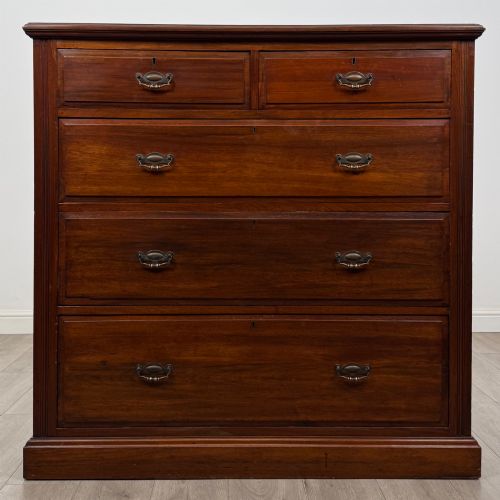
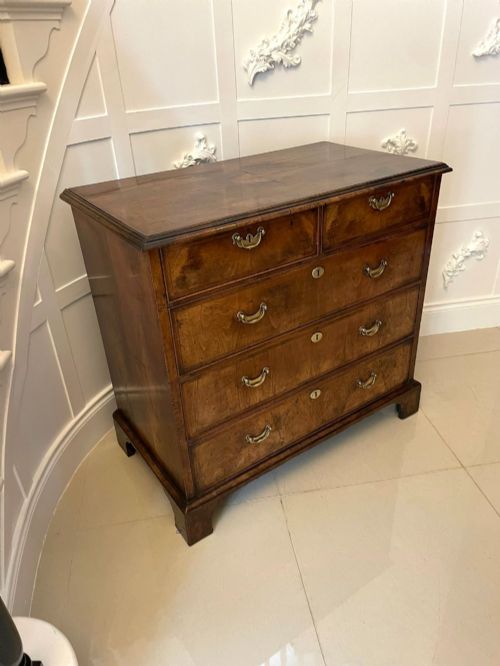
Walnut furniture storage spans centuries of domestic utility, focusing primarily on chests of drawers, cabinets, linen presses and wardrobes. When searching for walnut furniture storage, buyers encounter formal 18th-century pieces alongside 19th-century Victorian designs and 1930s Art Deco examples.
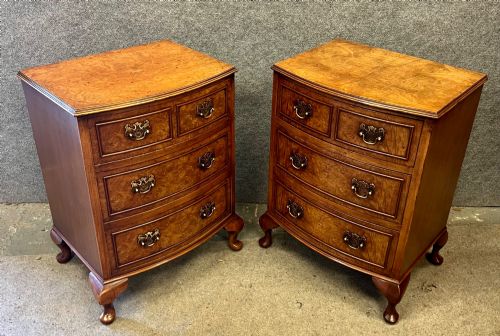
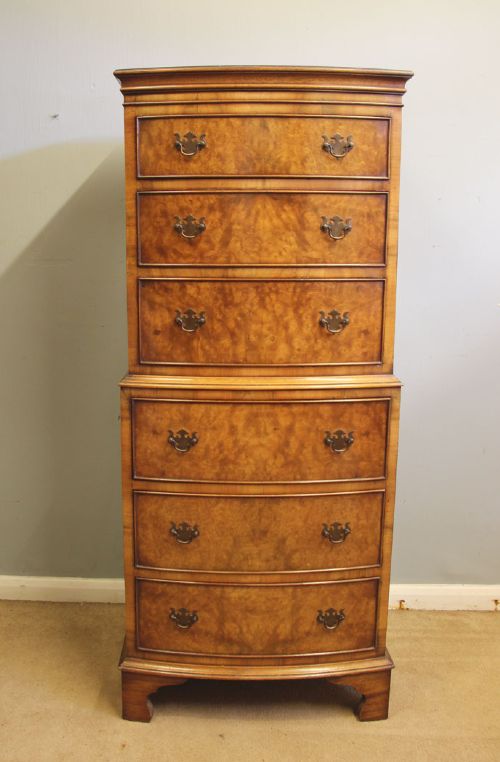
The domestic interior relies on these items for containment, manifesting as bow front chests, tallboys, commodes and corner cabinets. English, French, Dutch and Swedish makers all contributed variations, utilising the inherent visual weight of the timber to anchor rooms.
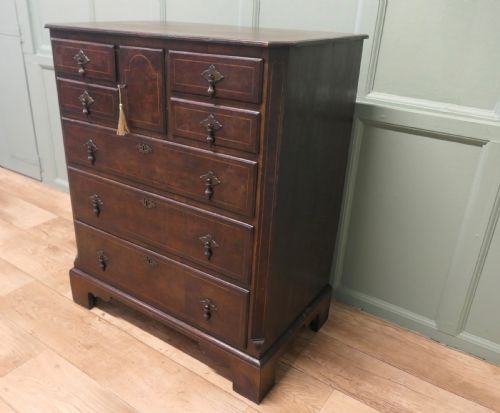
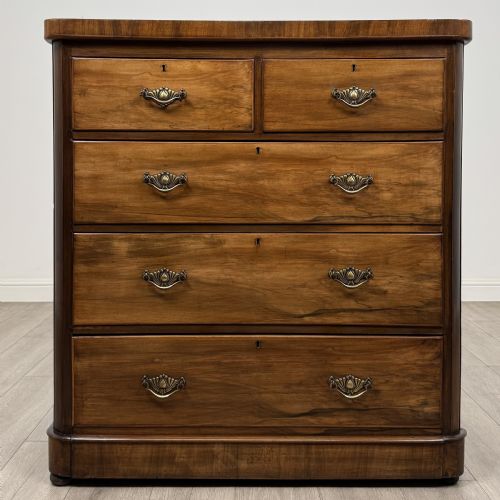
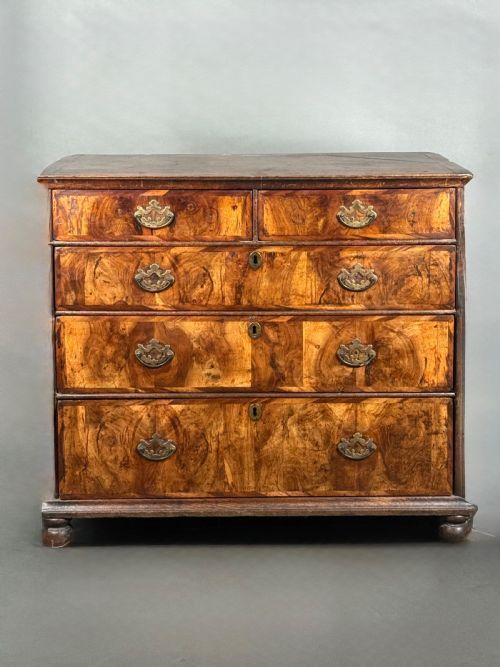
Early periods bring Queen Anne and George I influences with herringbone banding and figured veneers, while later decades favour clean curves and streamlined surfaces. Most examples on offer take the form of drawer units and enclosed cupboards designed to conceal household belongings.
How walnut furniture storage was made
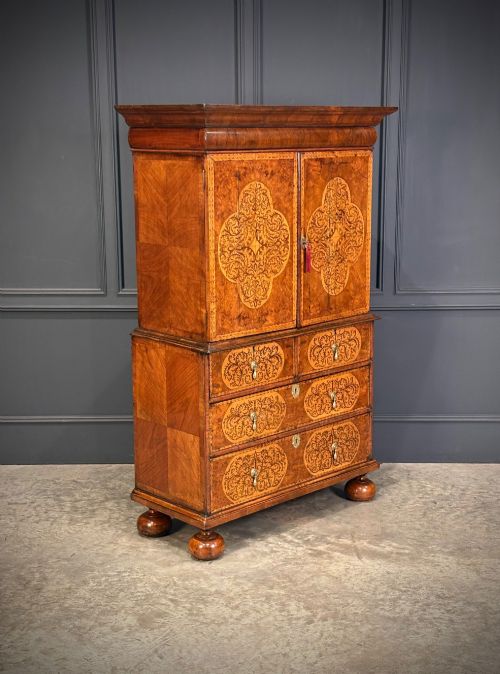
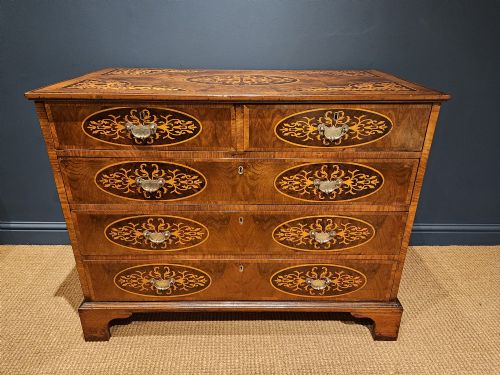
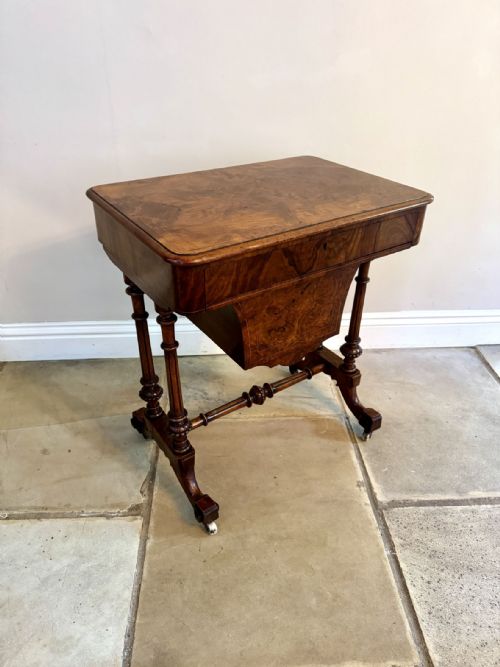
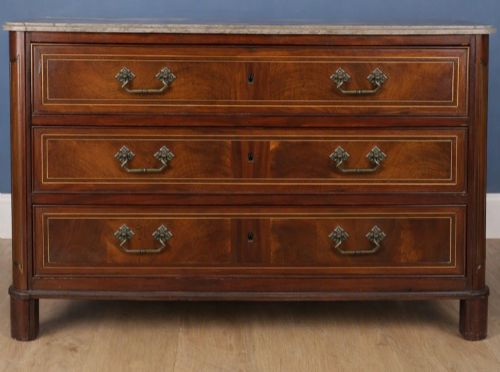
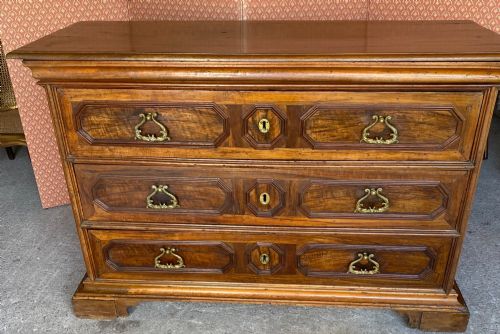
Cabinet makers applied walnut veneers, burr walnut and oyster veneers over secondary carcase timbers, framing the surfaces with crossbanding and marquetry inlay. Brass handles, escutcheons and ormolu mounts provide structural hardware and decorative contrast to the dark timber.
Marble tops appear on commodes, washstands and corner cabinets, offering a durable and cool horizontal surface above the wooden storage below. Fruitwood, oak and satin birch occasionally supplement the primary walnut structure in drawer linings and internal shelving.
The listings span from 17th-century oyster veneers to 1930s Art Deco cabinets, incorporating marble, brass, ormolu and fruitwood.
What varies in quality
The selection of the wood veneer dictates the initial visual impact, with figured walnut, burr patterns and symmetrical oyster cuts marking out superior examples. Crisp execution of marquetry floral inlays and precise herringbone banding separate standard workshop production from master craftsmanship.
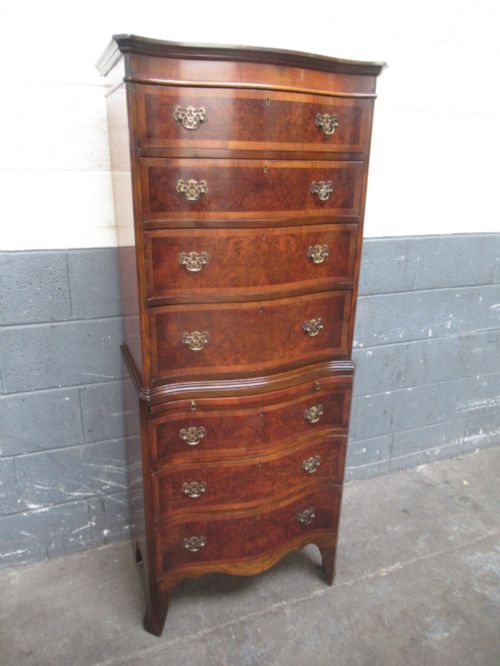
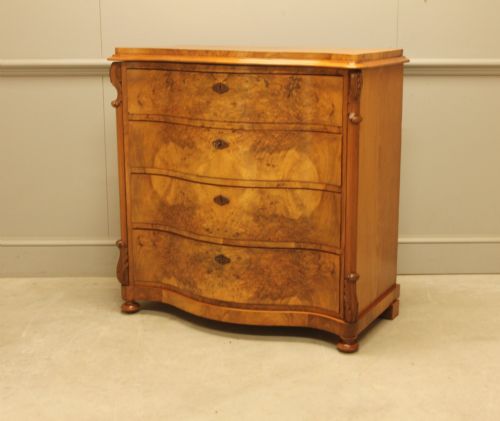
Hardware integrity and structural articulation, such as serpentine fronts, dovetailed drawer construction and original marble slabs, define the upper echelon of surviving pieces. The handling of proportions across tallboys, commodes and linen presses reflects the maker's architectural competence.
Shoolbred & Co·Jas Shoolbred·Harry and Lou Epstein·Walker & Sons
The Walnut Furniture Storage Glossary
- Burr Walnut
- A timber harvested from walnut tree growths, producing swirling, highly figured grain patterns prized for decorative veneer panels.
- Marquetry
- The art of applying small pieces of veneer to form intricate pictorial designs and floral patterns across cabinet surfaces.
- Tallboy
- A tall chest of drawers, often constructed as a chest on chest, providing vertical storage capacity.
- Herringbone Banding
- Inlaid strips of veneer arranged in a V-shaped zig-zag pattern, commonly framing drawer perimeters on 18th-century pieces.
- Serpentine
- A curved line of furniture fronts, featuring a convex centre flanked by concave curves.
Walnut Furniture Storage: Frequently Asked Questions
What is burr walnut?
Burr walnut comes from a growth on the tree where the grain grows in a deformed manner. This creates highly decorative swirling patterns when sliced into thin veneers.
Cabinet makers used these distinctive sheets on the main drawer fronts and top surfaces of storage furniture to catch the eye.
How do I spot an 18th-century piece?
Eighteenth-century examples often display subtle figuring, herringbone banding and specific proportions associated with the Queen Anne and George I eras. Drawer construction typically uses hand-cut dovetails and solid oak linings.
Later revivals from the Victorian and Edwardian periods copied these styles but usually utilised machine-cut elements or different internal secondary timbers.
Were these cabinets used in bedrooms?
Storage items like chests of drawers, wardrobes and linen presses served primarily in sleeping quarters to hold clothing and household linens. Corner cabinets and commodes also found places in reception rooms and hallways.
Their enclosed shelving and deep drawers kept textiles protected from dust and light.
What distinguishes Art Deco walnut storage?
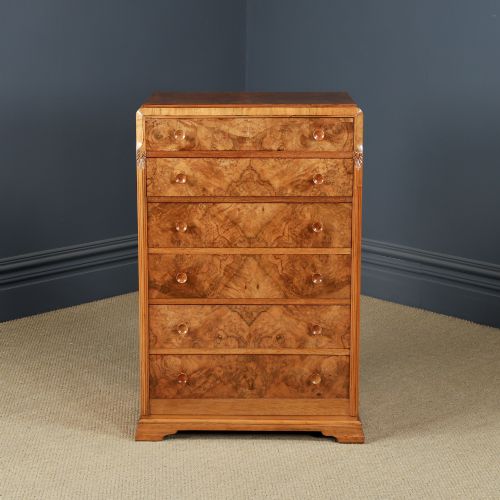
Art Deco pieces from the 1930s favour smooth, curved surfaces, bow fronts and symmetrical burr walnut veneers without traditional ornamentation. Makers such as Harry and Lou Epstein embraced clean geometric lines.
These items prioritized the natural grain pattern of the timber over applied carving or marquetry.