
Walnut French Bedside Tables
Walnut french bedside tables bring warmth and continental elegance to a bedroom, offering practical surface space alongside distinctive period character.
Walnut French Bedside Tables
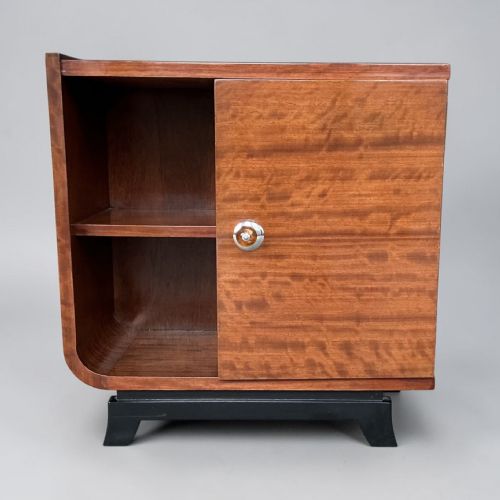
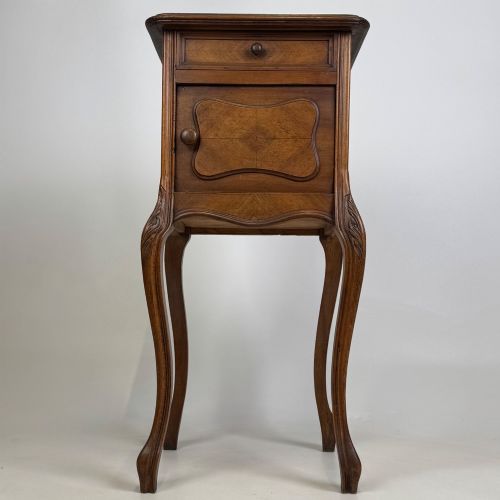
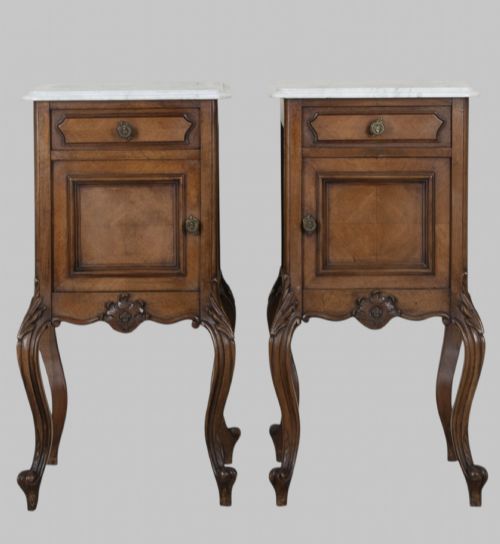
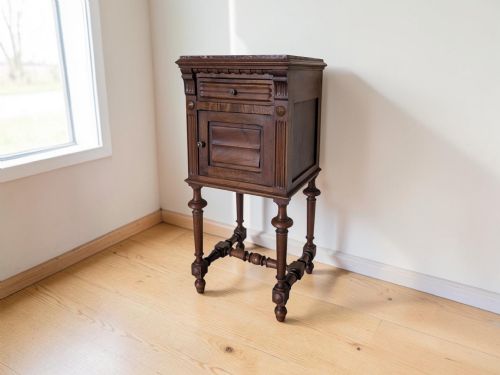
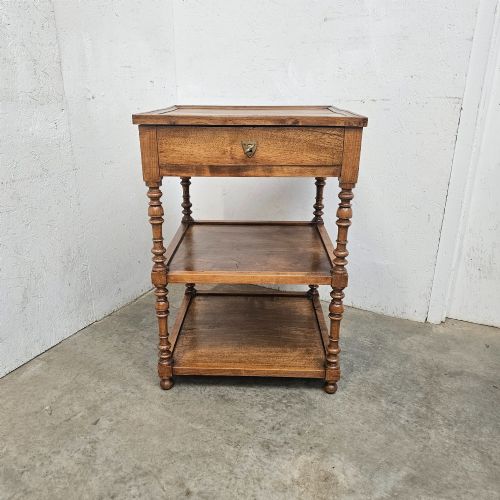
When searching for walnut french bedside tables, buyers encounter a variety of compact bedside furniture originating from the nineteenth and early twentieth centuries. These pieces span provincial designs and revival styles, reflecting the aesthetic preferences of the Victorian era through to the Art Deco period.
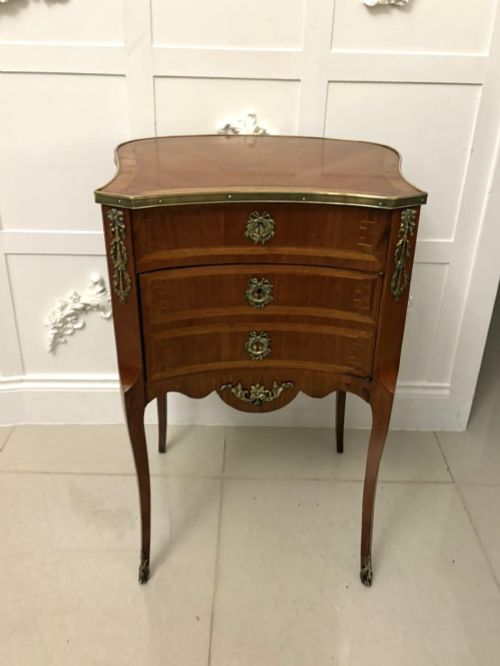
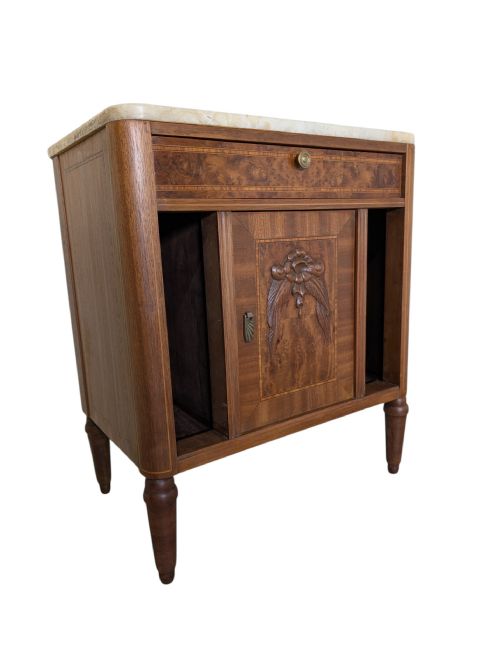
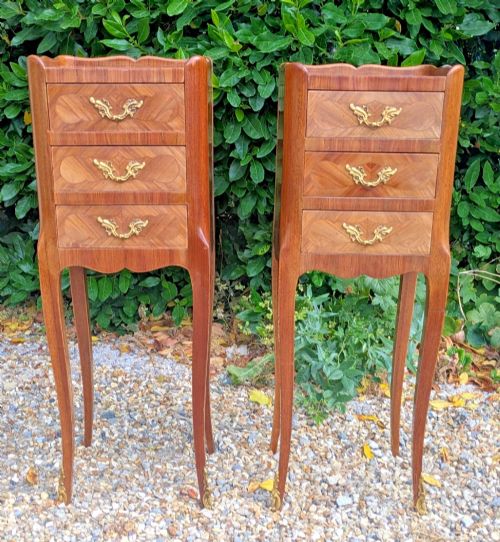
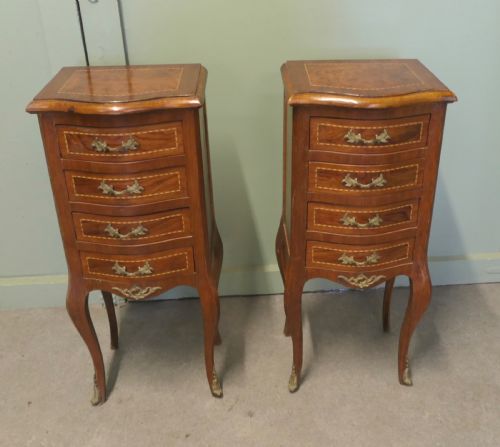
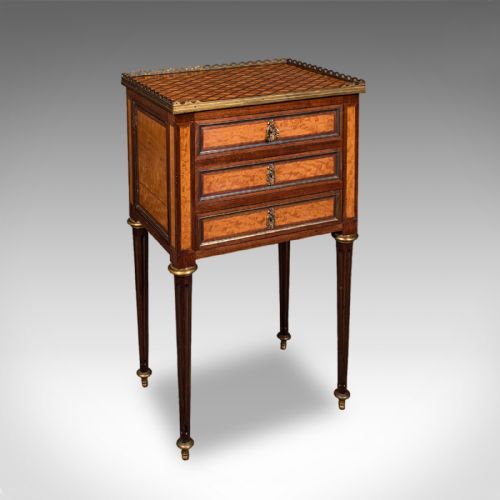
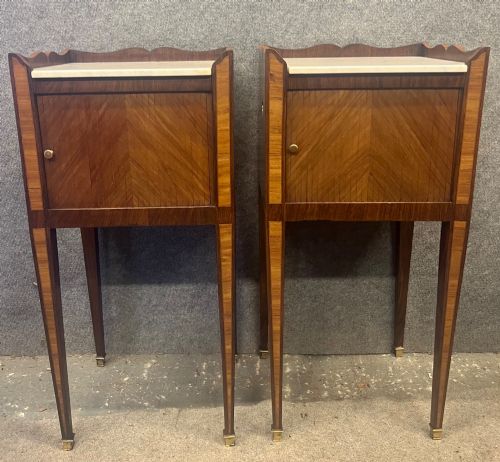
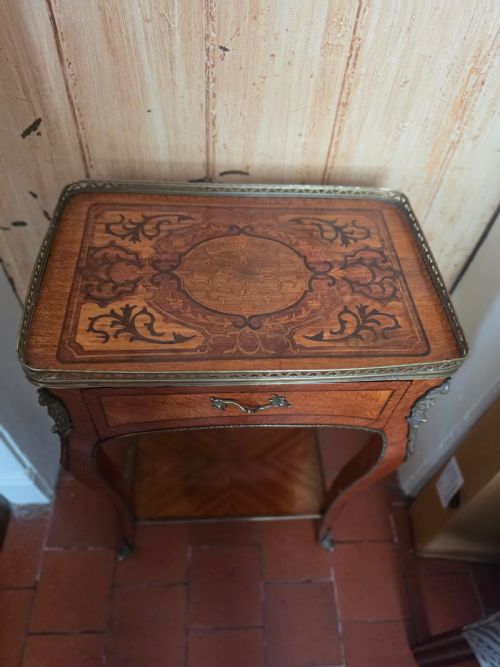
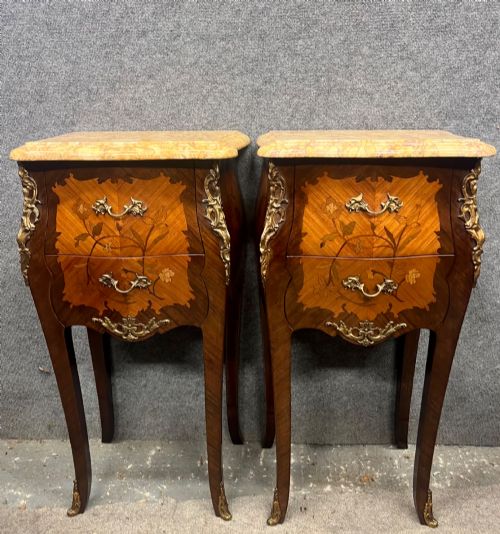
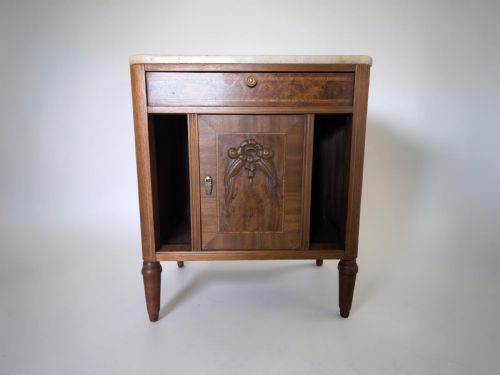
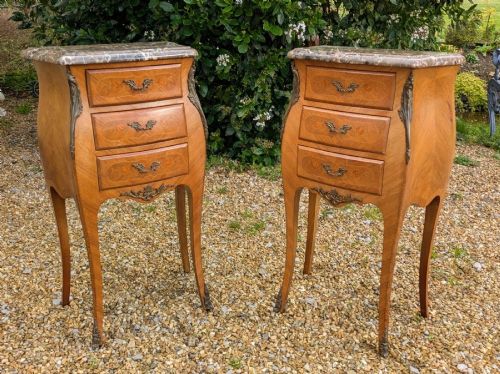
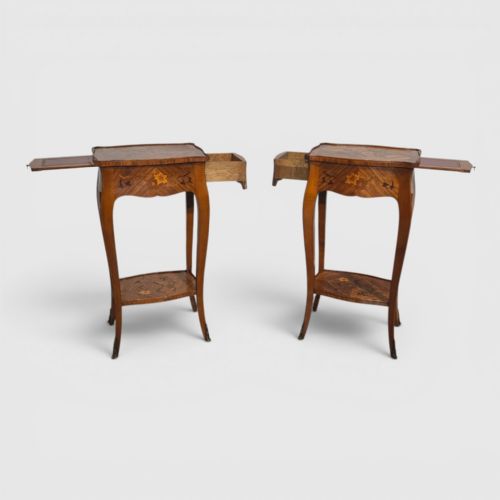
The selection on this page includes enclosed bedside cabinets with cupboards, open lamp tables, and small chests featuring multiple drawers. Many examples incorporate polished marble tops and decorative marquetry inlay, demonstrating the diverse craftsmanship found across French provincial and city workshops.
How they were made
Cabinet makers utilised solid walnut and figured veneer surfaces, often combining burr walnut or kingwood to create striking grain patterns on drawer fronts and cabinet doors. Marquetry and parquetry techniques introduced geometric or floral patterns using contrasting timbers.
Many cabinets incorporate fitted marble tops, frequently supported by brass mounts, ormolu details, and turned or cabriole legs characteristic of Louis XV and provincial styling.
Several petite cabinets double quietly as music cabinets, holding sheet music behind their diminutive doors.
What varies in quality
Quality rests in the precision of the cabinet work, the depth of the timber grain, and the harmony of the proportions. Superior examples display carefully matched veneer patterns and refined carving that respects the chosen revival style.
The integrity of the fitted marble top and the crispness of any brass or ormolu mounts further distinguish finer pieces from standard utilitarian cabinets of the period.
The Walnut French Bedside Tables Glossary
- Marquetry
- Decorative woodwork where pieces of veneer are fitted into a ground to form floral or geometric patterns. This technique defines the visual appeal of many revival cabinets.
- Ormolu
- Gilded bronze mounts applied to furniture for decorative effect. These metallic accents highlight the corners and legs of formal revival pieces.
- Parquetry
- Geometric mosaic woodwork used for tabletops and cabinet doors. It relies on regular repeating shapes rather than pictorial designs.
- Chevets
- The traditional French term for a bedside table or small cabinet. Buyers frequently encounter this description on continental pieces.
- Bombe
- A swelling, outward-curving contour found on the front and sides of select cabinets. This curved form requires advanced shaping skill from the maker.
Walnut French Bedside Tables: Frequently Asked Questions
Are these tables usually found as pairs?
Many walnut french bedside tables appear on the market as matched or near-matched pairs, reflecting their original placement flanking a bed. Single cabinets also surface frequently for buyers seeking an accent piece.
Matching pairs often command greater interest among collectors who require symmetrical bedside arrangement in a bedroom scheme.
What marble types appear on these cabinets?
Sainte-Anne marble and various veined grey or white stone slabs frequently top these bedside cabinets. These stone surfaces provided a durable, water-resistant top for washing jugs and glassware.
Each marble slab displays unique natural veining that complements the dark tones of the surrounding walnut timber.
How do I date a walnut french bedside table?
Dating relies on stylistic clues, hardware construction, and timber selection, spanning the nineteenth century through the Art Deco period of the 1930s. Earlier nineteenth-century examples often display simpler turned legs, while revival pieces adopt elaborate Louis XV curves.
Twentieth-century iterations introduce streamlined silhouettes alongside traditional parquetry and marquetry surfaces.
How do I maintain marble-topped bedside tables?
Cleaning requires only a soft cloth dampened with mild soapy water, avoiding acidic substances that can etch the polished stone surface. Regular dusting preserves the lustre of the walnut timber body.
Waxing the wood periodically maintains the finish without harming the adjacent marble or brass mounts.