
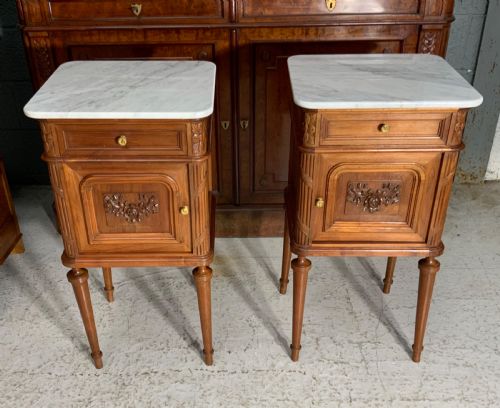
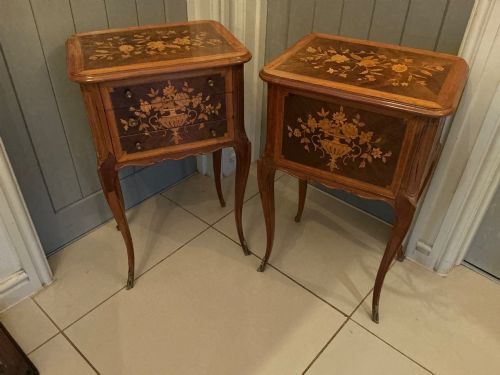
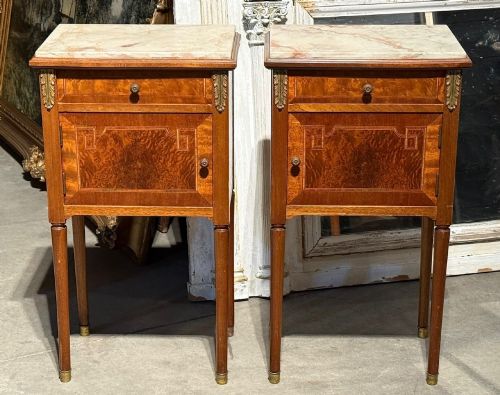
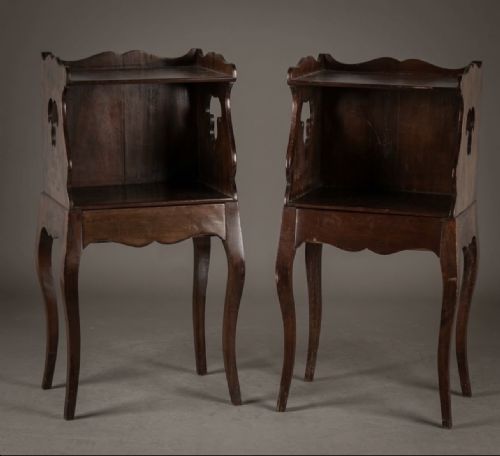
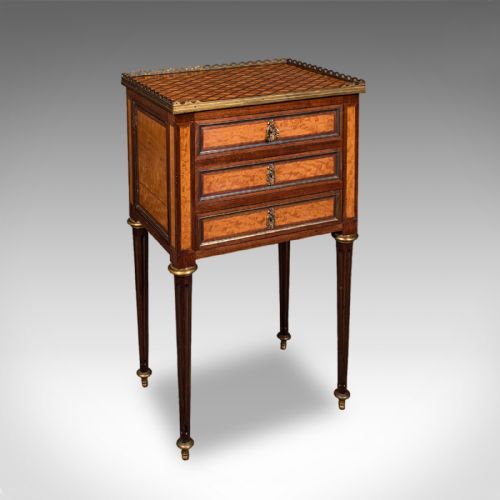
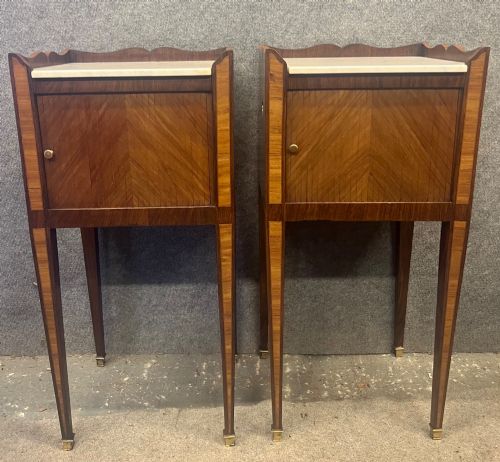
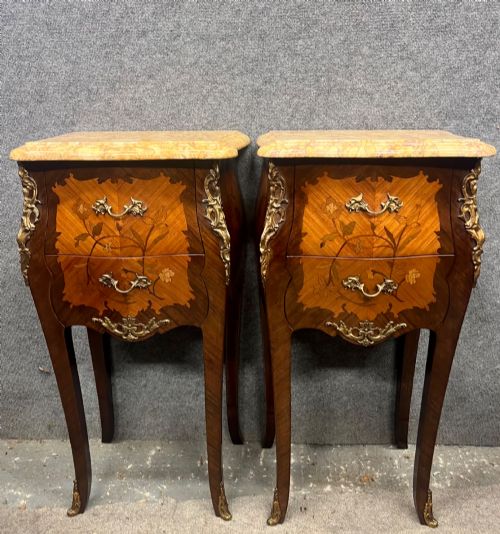
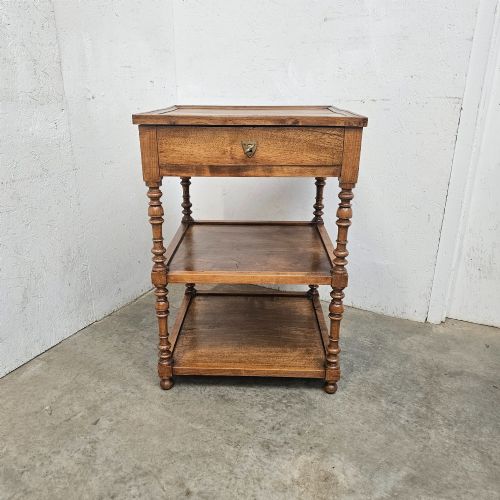
Walnut French Bedside Cabinets
Walnut french bedside cabinets are practical French tables and cupboards that bring warmth and continental charm to a bedroom.
Walnut French Bedside Cabinets
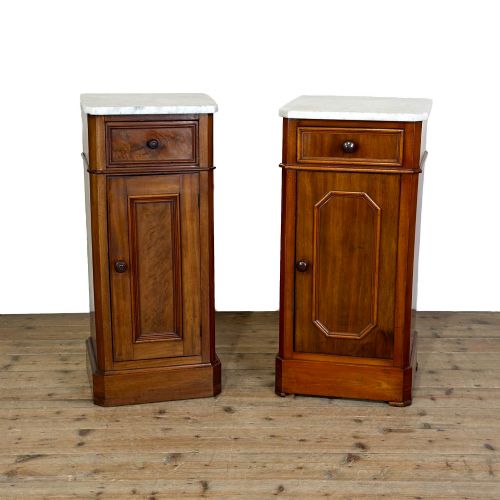
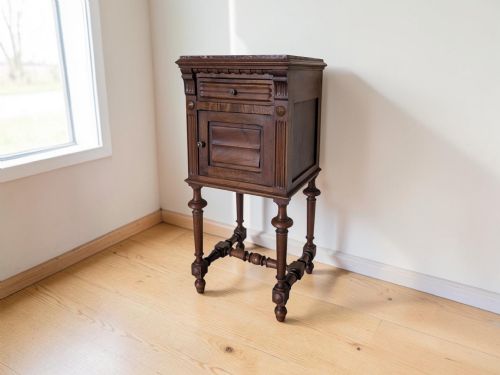
Walnut french bedside cabinets are low bedside tables, cupboards, chests of drawers and nightstands designed for domestic use.
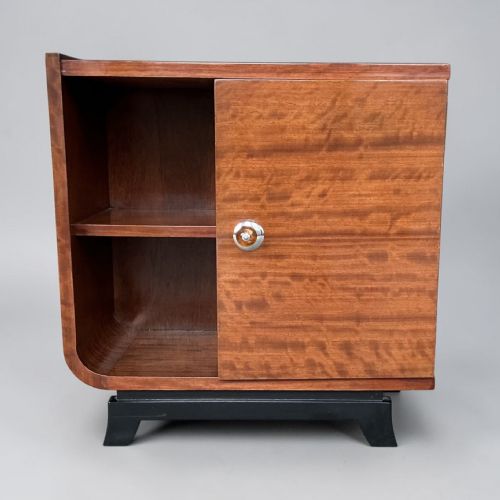
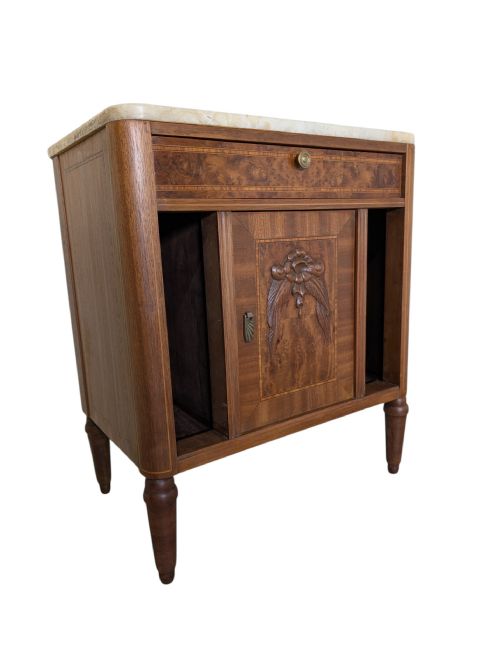
Most examples found on this page date from the nineteenth century up through the nineteen-thirties, spanning periods such as Victorian, nineteen-twenty and nineteen-thirty.
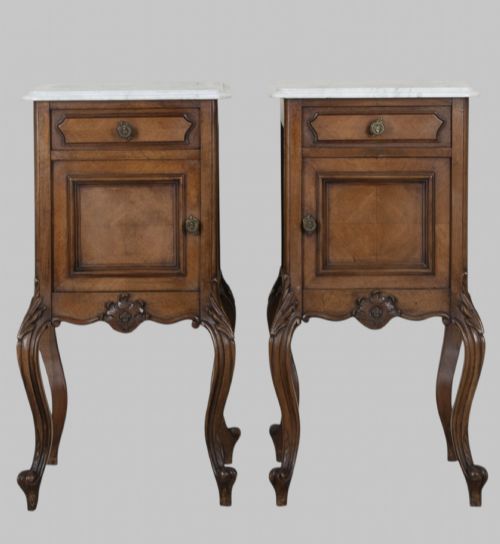
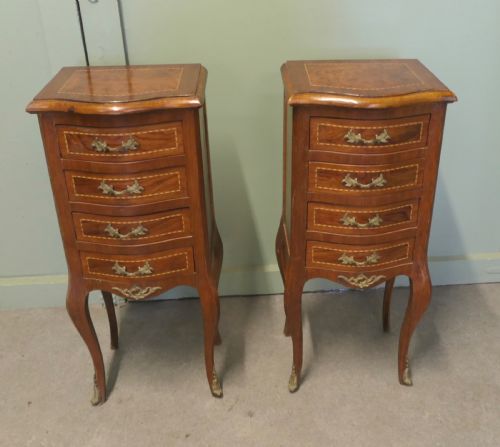
Buyers frequently encounter pairs of cabinets or tables, often styled in the Louis XV revival taste or French provincial tradition.
Materials and construction
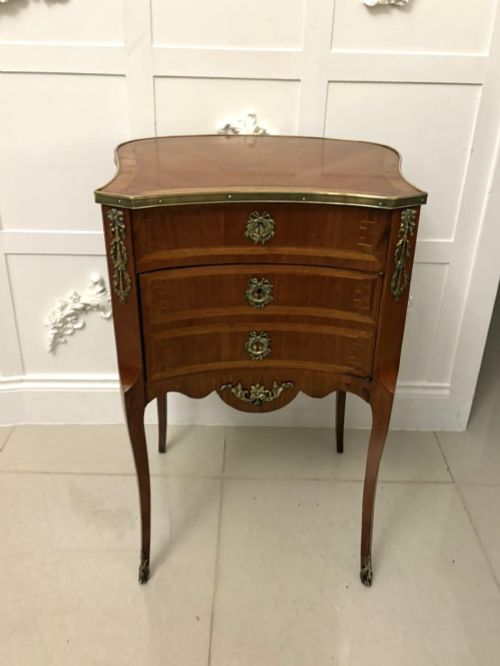
Cabinet makers utilised walnut timber, frequently applied as a veneer or burr walnut over secondary woods, alongside marquetry and parquetry inlays.
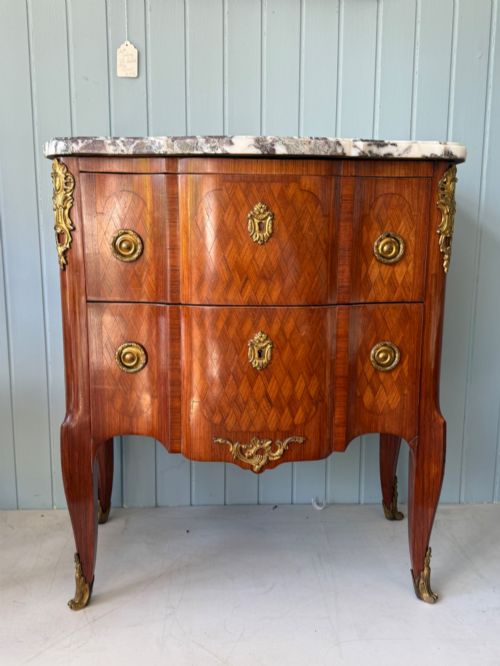
Many cabinets incorporate polished marble tops, such as Belgian Sainte-Anne marble, paired with cast brass or ormolu mounts and handles.
Listings span from the nineteenth century to nineteen-thirty, incorporating walnut, marble, ormolu, and kingwood.
Quality variations
The standard of these cabinets depends upon the crispness of the carved details, the precision of the parquetry or marquetry patterns, and the weight of the marble tops.
Superior examples display finer timber selection in the walnut veneers, heavier ormolu mounts, and careful proportions typical of revival styles.
The Walnut French Bedside Cabinets Glossary
- Ormolu
- Gilded bronze mounts and decorative trimmings applied to furniture. This technique adds metallic highlights to the wood surfaces.
- Marquetry
- Decorative veneer patterns formed from pieces of different coloured wood fitted together. It creates pictorial or geometric designs on drawer fronts and tops.
- Parquetry
- Geometric wood inlay work arranged in patterns such as cubes or chequers. This technique decorates the surfaces of many French tables.
- Chevet
- A French term for a small bedside table or nightstand. These pieces often feature a small cupboard door and a drawer.
- Serpentine
- A gently curved shape resembling a snake, used on the fronts and tops of cabinets. This undulating form requires skilled carpentry.
Walnut French Bedside Cabinets: Frequently Asked Questions
What periods do these cabinets come from?
These pieces date from the nineteenth century through the early twentieth century, including Victorian periods and the nineteen-twenties and nineteen-thirties.
Craftsmen produced them across several decades, reflecting changing preferences from revival styles to Art Deco designs.
Are marble tops original to the tables?
Many cabinets feature fitted marble tops, such as Belgian Sainte-Anne marble, which were supplied with the piece from the workshop.
These stone surfaces provided a durable, water-resistant top for washing basins and bedroom items.
Do these cabinets usually come in pairs?
A large proportion of the listings consist of matched pairs intended to flank a bed symmetrically.
Single cabinets also appear, serving as lamp tables or side chests in smaller spaces.
How do I identify French revival styles?
Louis XV revival pieces typically display cabriole legs, asymmetrical curves, and floral marquetry, referencing eighteenth-century royal furniture.
Later pieces from the nineteen-thirties lean towards cleaner lines while retaining walnut timbers.