

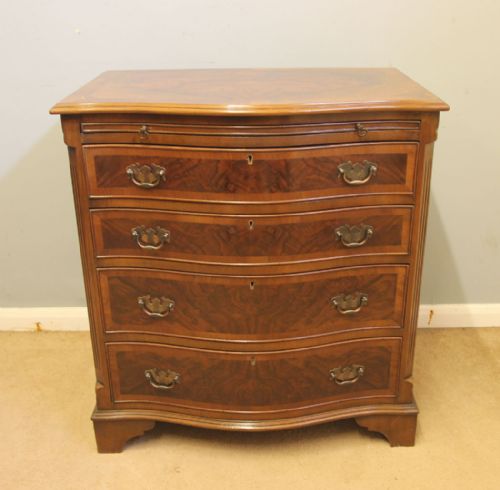
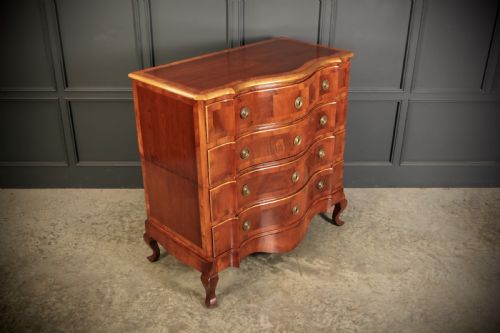


Walnut Dresser Four Drawers
A walnut dresser four drawers provides substantial storage while showing off rich timber figures and deep tones.
Walnut Dresser Four Drawers
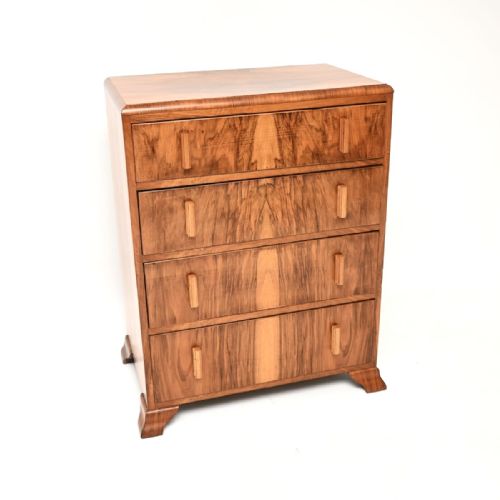
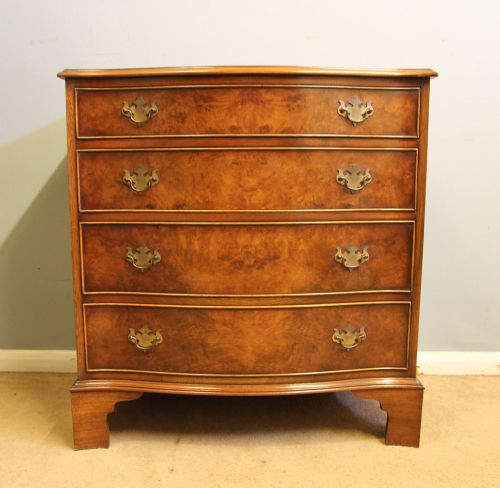
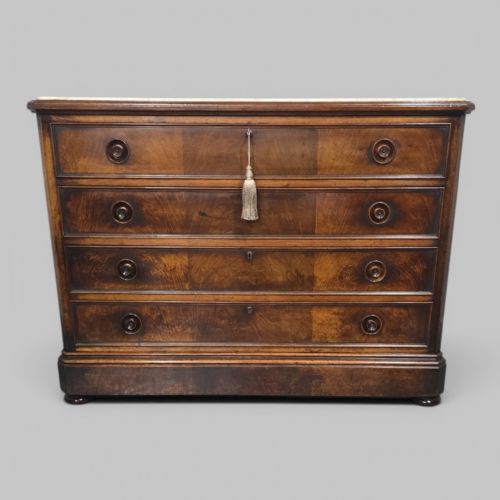
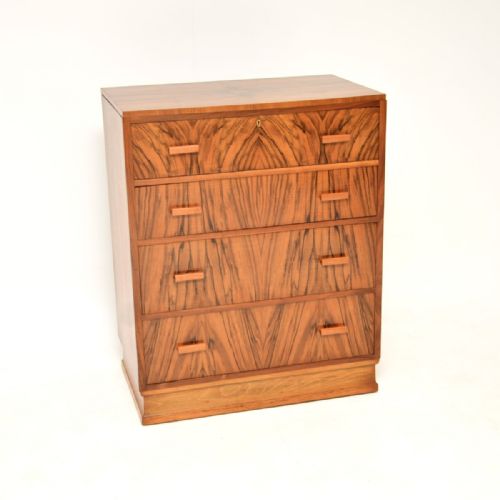
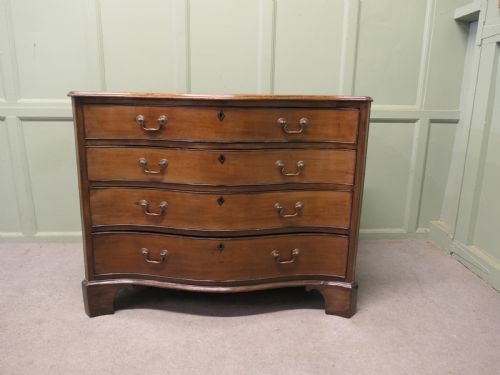
A walnut dresser four drawers typically refers to a chest featuring four horizontal tiers for storage, constructed primarily from walnut timber. These pieces span multiple eras, including Georgian, Victorian, and Art Deco periods.
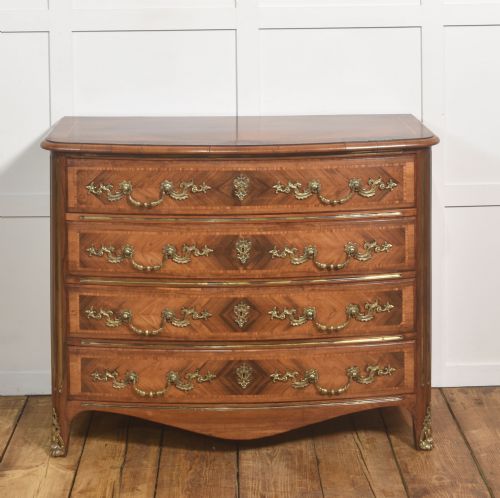
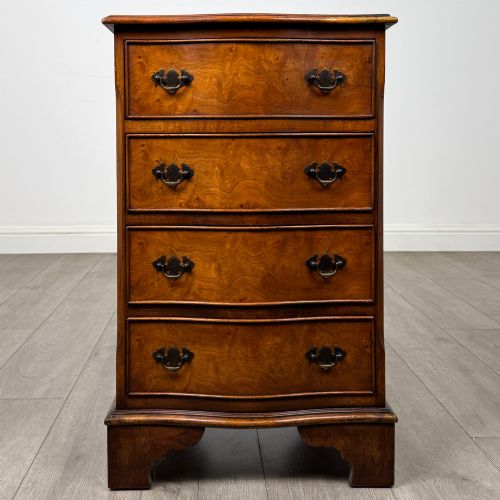
Buyers encounter various regional styles, from English Georgian models to continental European commodes and Scandinavian pieces. Forms range from straight-fronted carcases to serpentine and bombé shapes.
Materials and construction
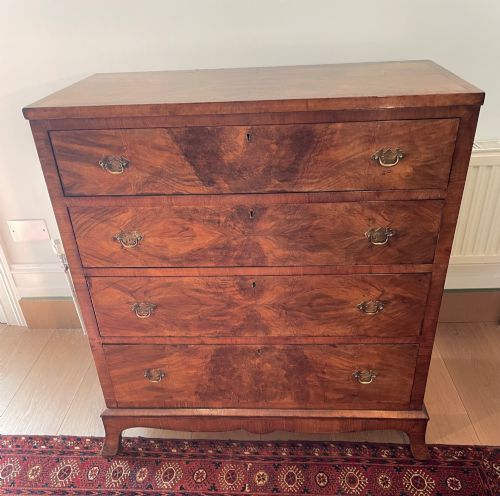
Cabinetmakers utilised solid walnut, burr walnut, and figured veneers applied over secondary woods like pine. Brass hardware such as handles and escutcheons complemented the rich grain patterns of the timber.
Construction techniques involve traditional joinery for the carcase and drawer boxes, alongside detailed marquetry or parquetry work on continental examples.
Listings span periods from the eighteenth century through the Art Deco era, incorporating materials such as brass, marble, and burr walnut.
Assessing quality and craftsmanship
Quality rests in the choice of timber figures, where symmetrical burr walnut or highly figured grain elevates the visual impact. The crispness of serpentine shaping and the precision of the veneer work also define superior examples.
The integrity of the internal drawer construction and the retention of original brass fittings contribute significantly to the standing of a piece within its period.
The Walnut Dresser Four Drawers Glossary
- Burr walnut
- A type of wood veneer taken from the warted growth on a walnut tree, yielding complex, swirling patterns. This material appears frequently on decorative drawer fronts.
- Serpentine
- A furniture shape featuring a front that curves outward at the centre and inward at the sides, or vice versa. This contour requires skilled woodworking.
- Commode
- A low chest of drawers, often French or continental in origin, used for storage in domestic interiors. Many examples utilise rich walnut veneers.
- Veneer
- A thin layer of superior wood glued to a base of lesser quality timber. Walnut veneer allows makers to display striking grain patterns across large surfaces.
- Biedermeier
- A central European style spanning the nineteenth century, characterised by utilitarian comfort and clean lines. These pieces often highlight blonde or figured walnut timbers.
Walnut Dresser Four Drawers: Frequently Asked Questions
How do I date a walnut chest?
Dating relies on examining construction methods, timber types, and hardware styles associated with specific periods like Georgian or Art Deco.
Changes in drawer linings and dovetailing techniques also help pinpoint the era of manufacture.
What is burr walnut?
Burr walnut comes from a tree growth that produces intricate, swirling grain patterns highly prized by cabinetmakers.
This decorative veneer is typically applied to the primary surfaces of high-status furniture.
Are these chests suitable for daily use?
These chests offer robust storage capacity and sturdy construction well-suited for contemporary bedrooms or living spaces.
Proper care of the polished wood surface ensures the timber remains protected over time.
How do English and continental chests differ?
Continental pieces often feature serpentine or bombé fronts with elaborate marquetry, whereas English versions tend towards restrained Georgian proportions.
European commodes frequently utilise varied walnut veneers and distinct regional foot styles.