
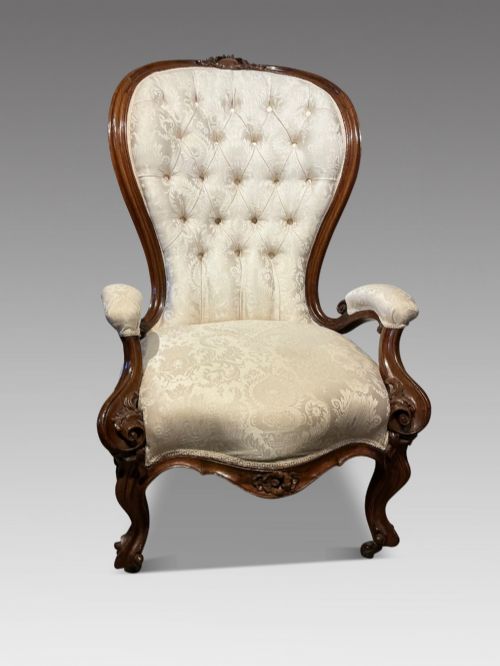
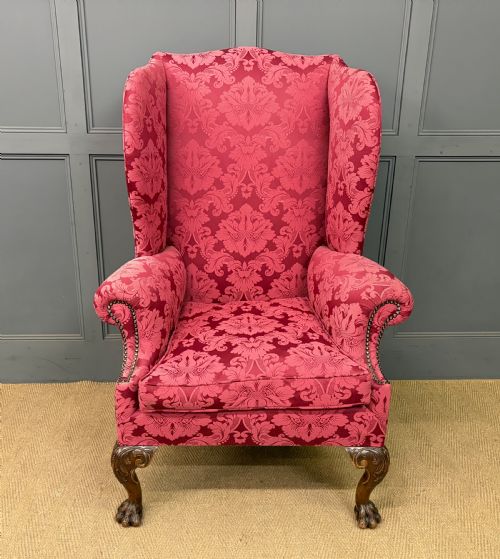


Walnut Damask Armchair
A walnut damask armchair brings tactile warmth and carved timber presence into a room, offering a seat rooted in centuries of classical design.
Walnut Damask Armchair
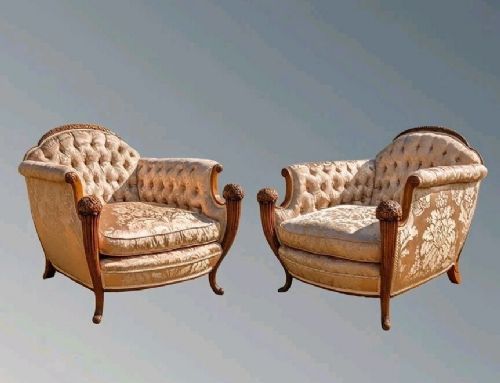
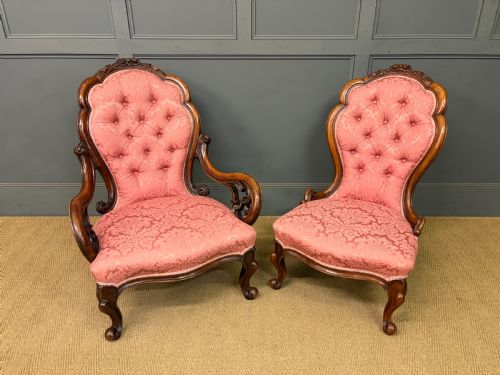
When you search for a walnut damask armchair, you encounter seating built from rich timber frames and paired with patterned fabric upholstery. The selection spans distinct forms, from substantial wing armchairs and library chairs to open armchairs, fauteuils, and smaller salon or nursing chairs.
Most examples originate from the nineteenth and eighteenth centuries, alongside early twentieth-century revivals. English and French workshops dominate the selection, producing everything from straightforward country seating to ornate revival salon suites.
How they were made
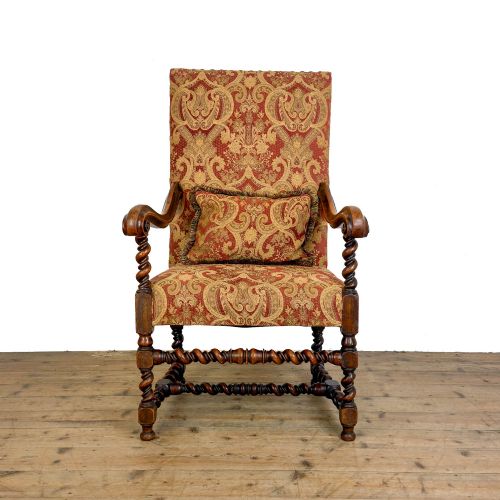
Cabinetmakers shaped the structural frames using solid walnut, often applying hand-carving to the cabriole legs, scroll arms, and crest rails. Some regional variations incorporate turned woodwork, such as bobbin turning, while others highlight the pale or dark grain of the polished timber.
Textiles complete the construction, historically utilising silk damask or standard damask upholstery secured with traditional stuffing and tension methods. Brass tacks or decorative gimp trim frequently edge the fabric panels where they meet the wooden frame.
What varies in quality
The distinction between ordinary and exceptional seating lies in the depth and sharpness of the timber carving. Crisp detailing on the walnut framework indicates skilled joinery, whereas softer mouldings point to standard production.
The choice of textile also alters the character of the piece, with heavy silk damask providing a different visual weight compared to standard woven fabric upholstery. The integrity of the frame construction and the proportion of the arms determine the overall balance of the chair.
The Walnut Damask Armchair Glossary
- Damask
- A reversible figured fabric traditionally woven on a jacquard loom with patterns formed by contrasting warp and weft threads. Silk variations appear frequently on high-status nineteenth-century seating.
- Fauteuil
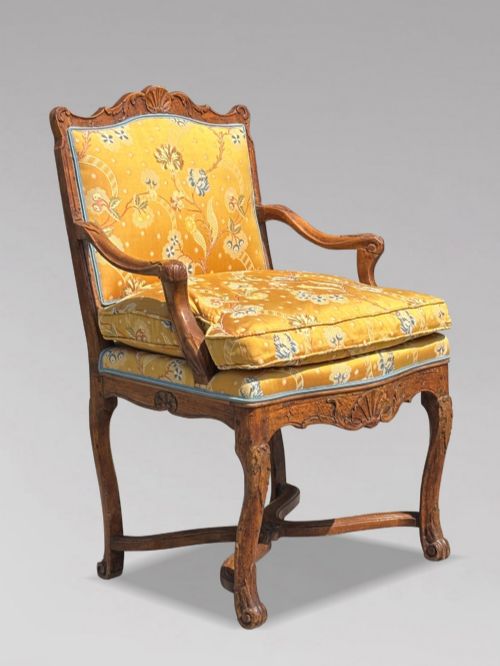
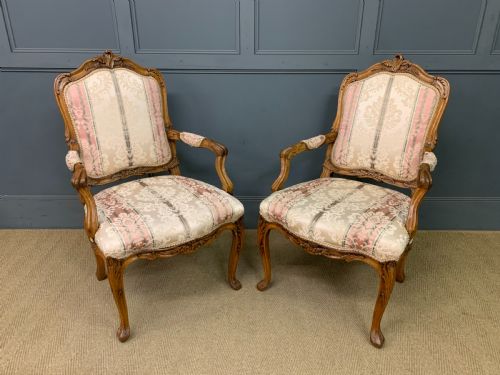
- An open-armed upholstered armchair with exposed wooden armrests and framework, originating in France. These seats typically feature padded arm pads and carved rails.
- Wing Armchair
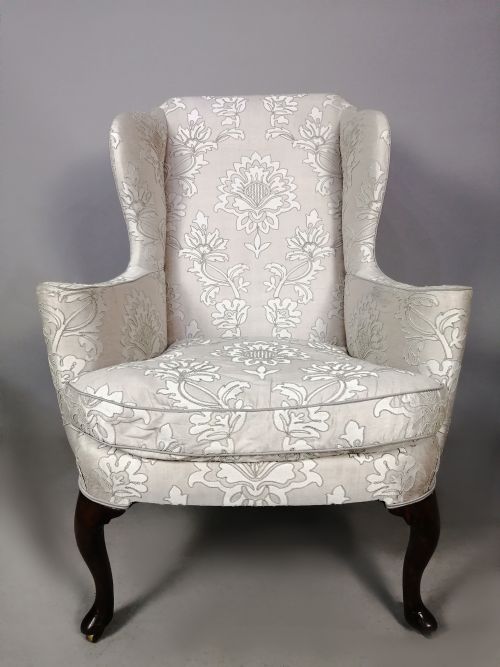
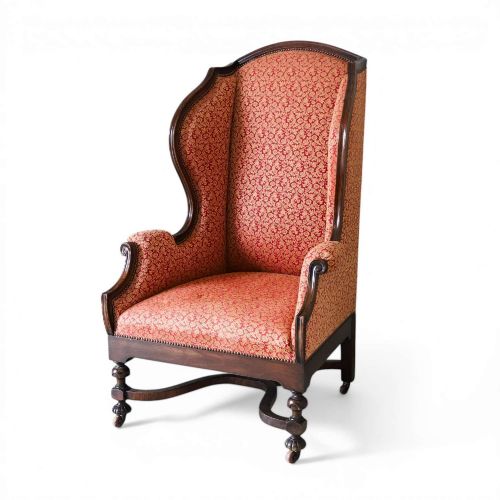
- A high-backed seat featuring protective side panels designed to shield the sitter from draughts. Eighteenth and nineteenth-century examples often incorporate substantial scroll arms and cabriole legs.
- Carolean Style
- A seventeenth-century aesthetic revival characterised by rich walnut carving, high backs, and scrollwork. Pieces in this style often display elaborate crown and scroll motifs.
- Spoon-Back
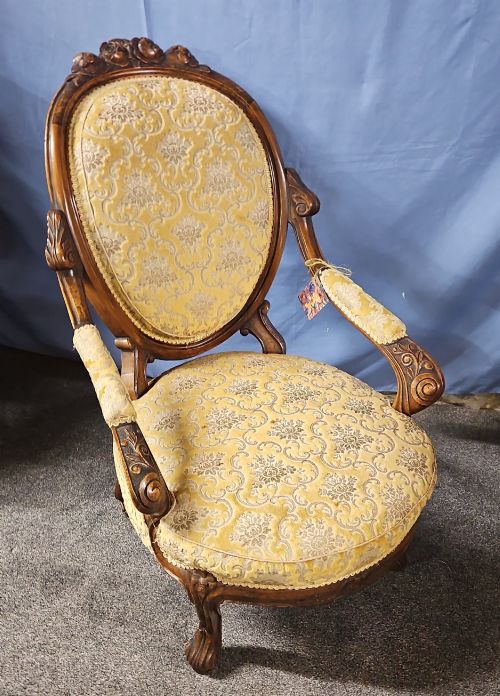
- A curved, oval-backed chair design popular during the Victorian era that follows the natural contours of the human spine. The wooden rim is typically moulded and polished to frame the central upholstery.
Walnut Damask Armchair: Frequently Asked Questions
How do I date a walnut armchair?
Dating relies on observing structural characteristics, joinery techniques, and stylistic revival cues. Eighteenth-century pieces generally show hand-cut joinery and period-specific proportions, whereas nineteenth-century items often reflect earlier Georgian or French motifs.
Material finishes and upholstery tacking patterns also provide chronological clues. Examining the underside and the wear on the walnut timber helps confirm the age of the frame.
Are these chairs suitable for daily use?
Most antique seating functions well in modern reception rooms when placed with care. Periodic checks of the internal webbing and padding ensure the upholstery maintains proper support during sitting.
Positioning the chairs away from direct sunlight preserves the damask fabric and prevents the walnut timber from drying out. Gentle vacuuming with a soft attachment keeps the textile panels clean.
What is the difference between a salon chair and a wing armchair?
Salon chairs are lighter, more compact seats designed for entertaining rooms and parlours. They often feature open frames, lower backs, and delicate carved walnut legs suited for occasional sitting.
Wing armchairs are heavier, enclosed seats built for comfort near a fireplace or in a library. Their high backs and protective side panels create a distinct architectural presence within a room.
How do I care for silk damask upholstery?
Silk damask requires protection from direct sunlight to prevent the fibres from fading and weakening over time. Professional cleaning is recommended for any major maintenance to avoid damaging the woven pattern.
Regularly brushing the fabric gently with a soft brush removes surface dust before it settles into the weave. Avoiding harsh chemical cleaners preserves the natural sheen of the silk threads.