
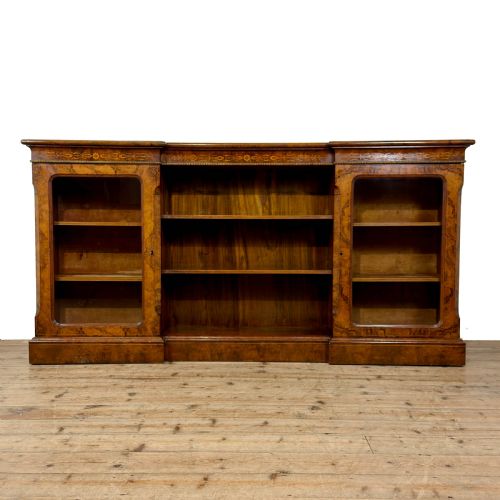


Walnut Credenza Open Shelves
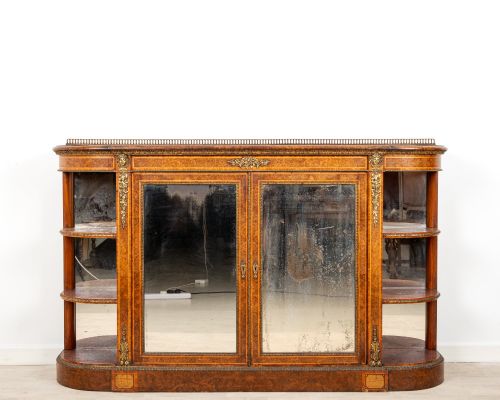
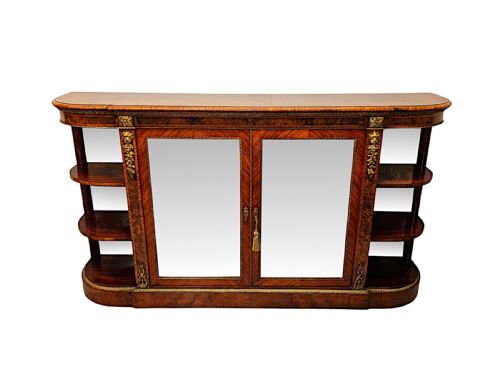
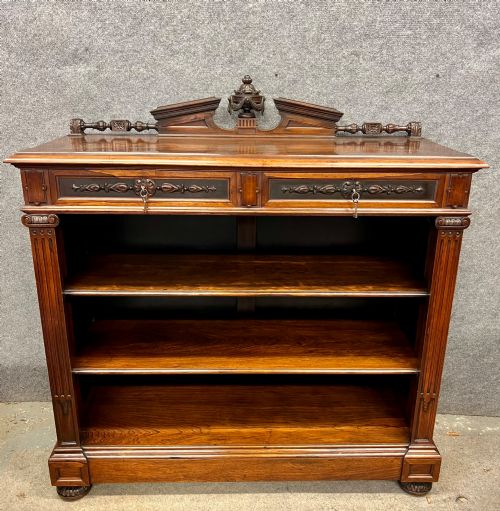
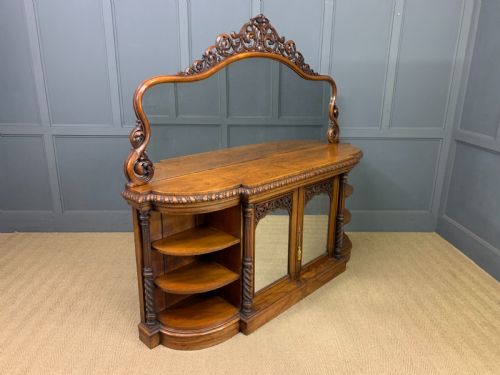
A walnut credenza open shelves selection brings together rich timber surfaces and accessible display space, offering both enclosed storage and open shelving.
Walnut Credenza Open Shelves
A walnut credenza open shelves design combines traditional cabinet work with practical display formats across periods such as the Victorian and Edwardian eras. Buyers encounter pieces ranging from mid-nineteenth-century burr walnut credenzas with mirrored doors to later breakfront bookcases and side cabinets.
The objects stem predominantly from the nineteenth and early twentieth centuries, capturing Victorian craftsmanship alongside Art Deco French cabinet making. These furniture forms function simultaneously as low sideboards, display cabinets, and open bookcases.
Execution varies from elaborate mirror-backed chiffons mounted in ormolu to simpler figured walnut breakfront designs with integrated drawers. Selecting a piece involves weighing the presence of glass doors and brass mounts against open shelving configurations.
Quality factors in walnut furniture
The distinction between tiers of production lies in the selection and bookmatching of the walnut veneer across large surfaces. Superior examples display symmetrical figuring and careful integration of boxwood inlay without disruption.
Mounting hardware and internal fittings also mark out finer pieces, from chased ormolu details to substantial glass panels and robust shelving supports. Maker attribution, when present through stamps, elevates the standing of a credenza or bookcase.
Materials recorded across the selection include burr walnut, ormolu, mirror plate, and boxwood stringing.
Gillows·Maple & Co.
The Walnut Credenza Open Shelves Glossary
- Burr walnut
- A specialised timber cut from the wart-like growths on walnut trees, yielding highly ornamental swirling grain patterns. It was heavily favoured by Victorian cabinet makers for high-status credenzas and display cabinets.
- Ormolu
- Gilded bronze ornamentation applied to furniture surfaces. This decorative technique added metallic contrast to dark walnut timbers.
- Breakfront
- A cabinet design where the central section projects forward from the flanking wings. This configuration breaks the monotony of long storage units.
- Chiffonier
- A low sideboard or cabinet development originating in the nineteenth century, often fitted with shelves or mirror backs. These pieces served dual purposes for storage and display in domestic interiors.
Walnut Credenza Open Shelves: Frequently Asked Questions
How do I date a walnut credenza?
Dating relies on examining construction methods, timber preparation, and stylistic markers such as Victorian ormolu mounts or Art Deco geometric lines.
Secondary woods, backboards, and screw types offer further clues to the decade of manufacture.
Where should I place an open shelf bookcase?
These pieces suit principal reception rooms or libraries where their displayed contents complement the surrounding interior scheme.
Positioning away from direct sunlight protects the walnut veneer and polished surfaces from fading.
What is the difference between a credenza and a chiffonier?
A credenza traditionally provides low enclosed storage, sometimes with flanking glass doors, whereas a chiffonier often includes raised upper shelving or mirror backs.
Both forms evolved through the nineteenth century to handle decorative display and service functions.
How do I care for figured walnut timber?
Maintenance involves applying appropriate beeswax or polish sparingly to nourish the grain without building up heavy residues.
Keeping room humidity stable prevents the timber veneers from lifting or splitting over time.