

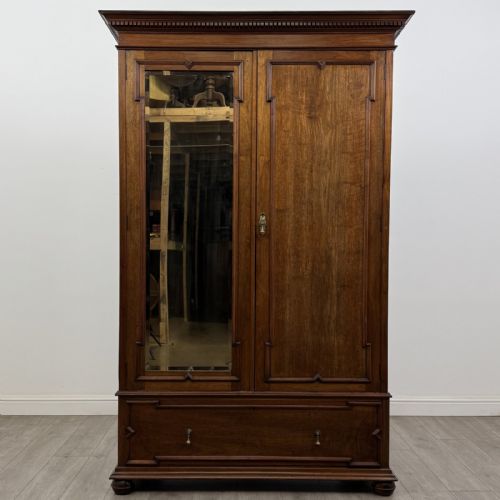
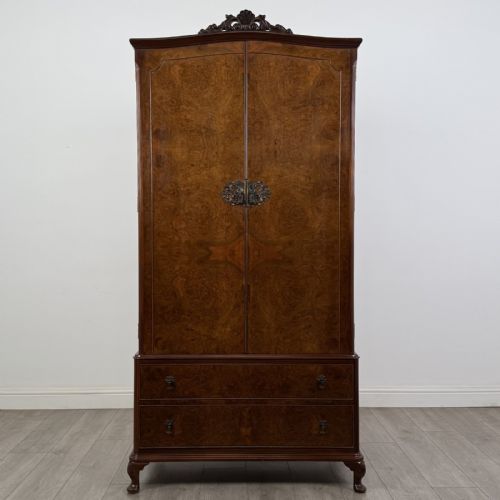
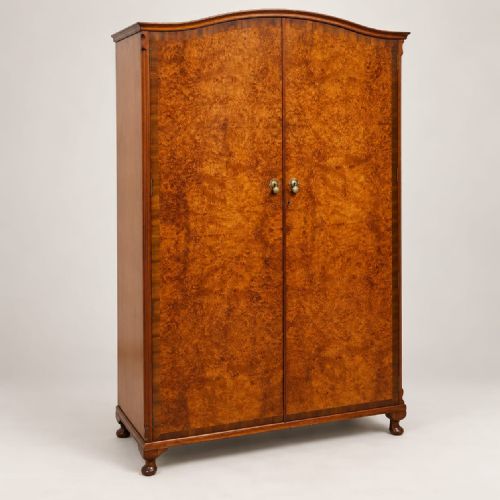
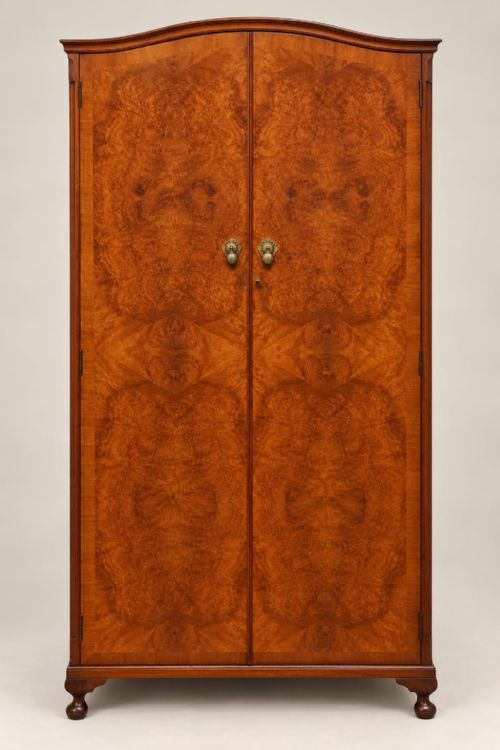
Walnut Clothing Cabinet
A walnut clothing cabinet is a substantial storage piece built from rich timber, offering deep hanging space and internal drawers for the bedroom.
Walnut Clothing Cabinet
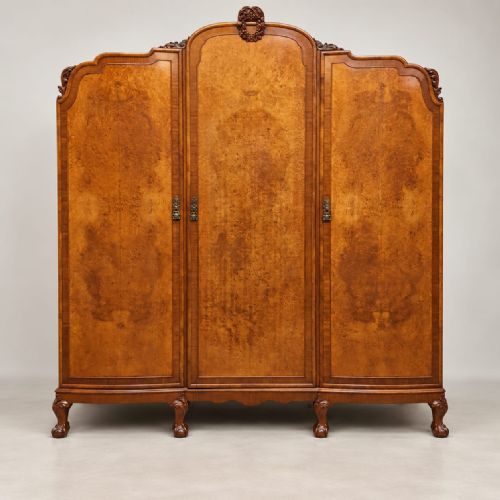
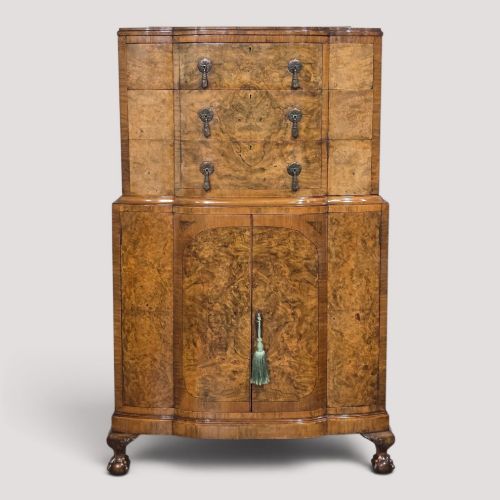
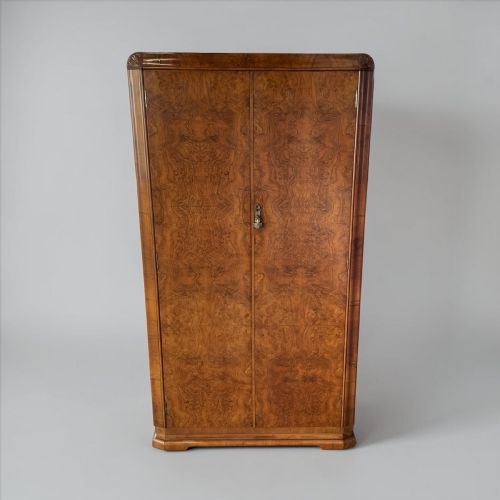
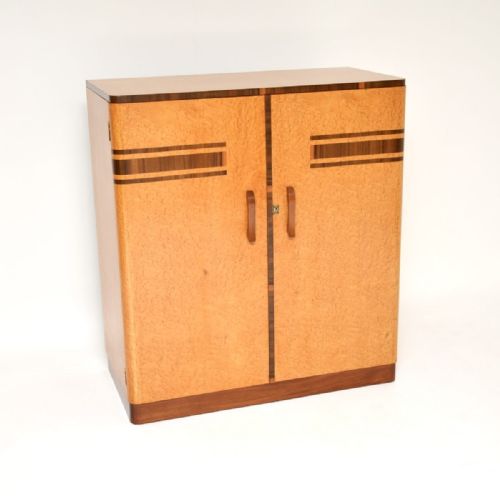
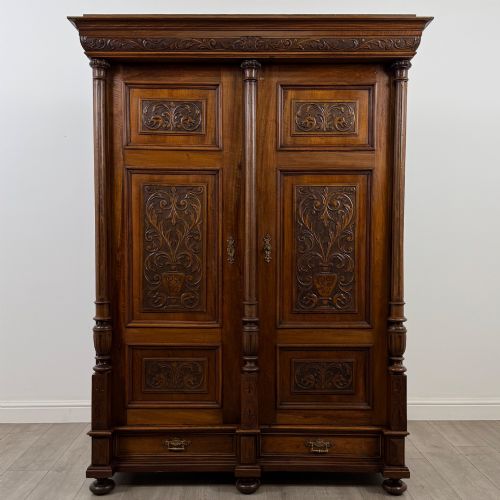
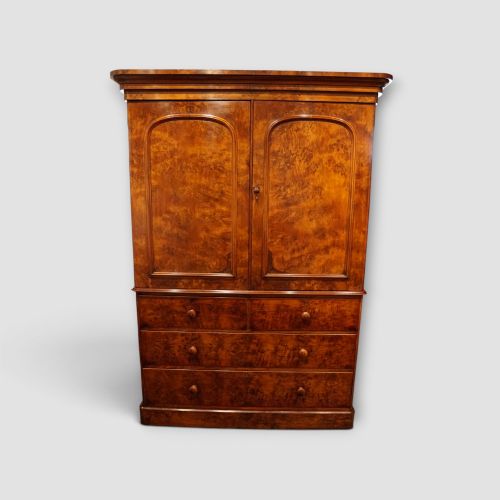
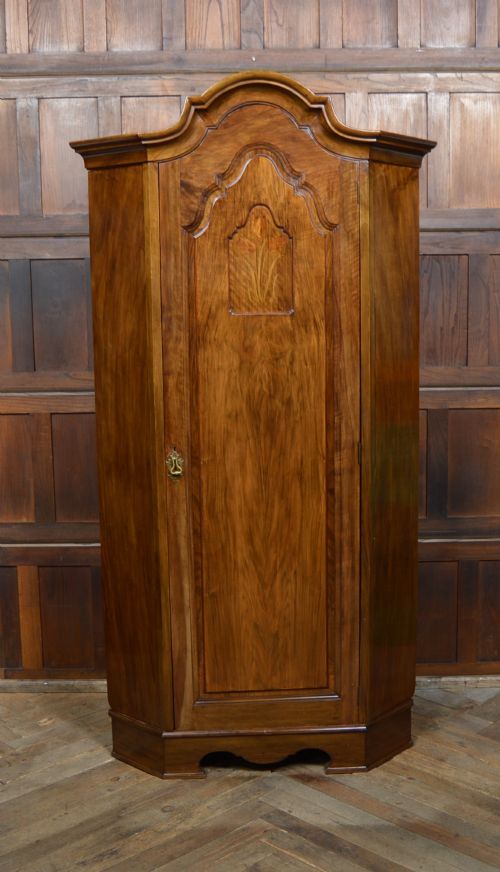
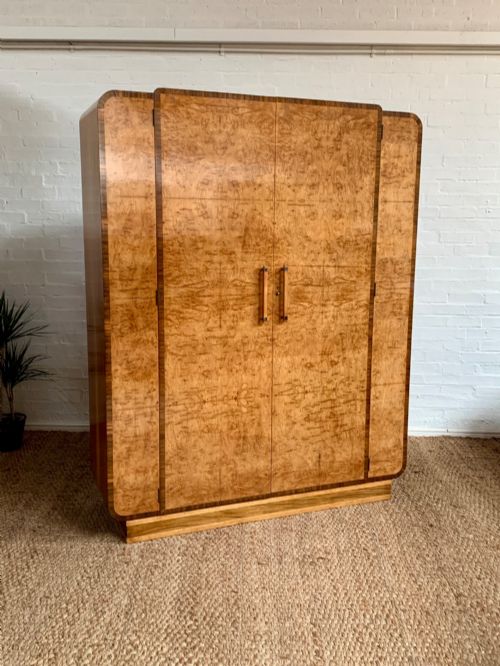
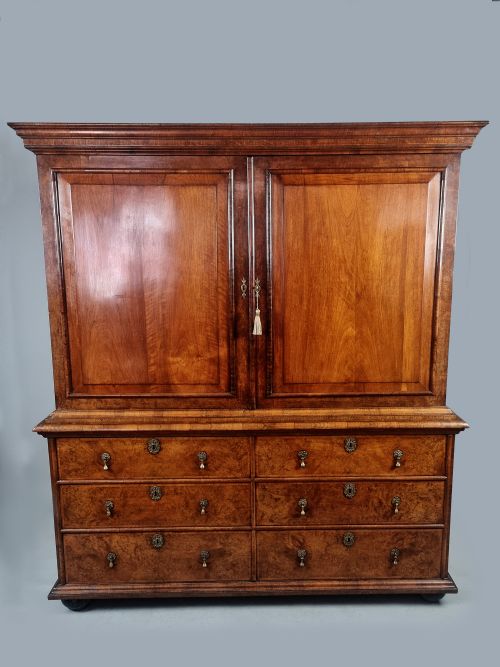
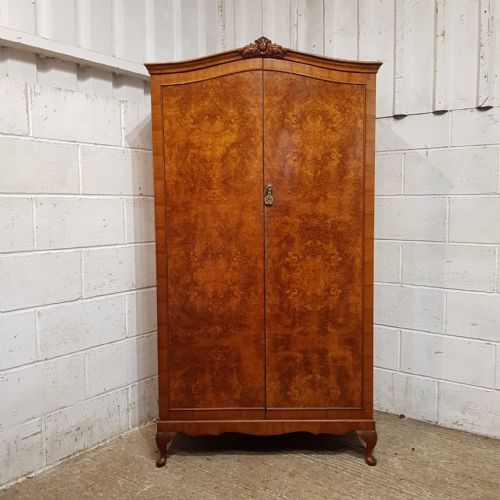
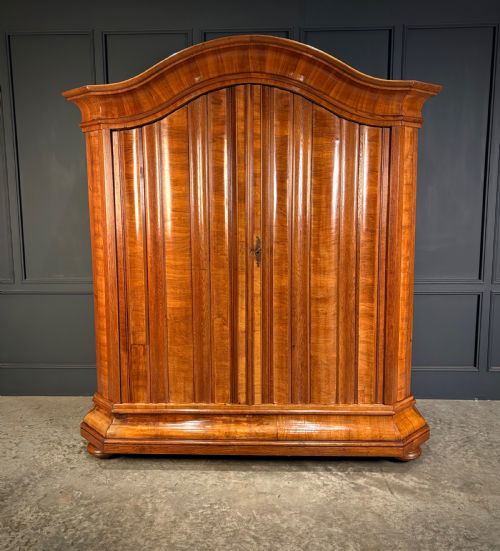
A walnut clothing cabinet encompasses wardrobes, armoires, press cupboards, and compactums designed to store garments across multiple periods. The selection on this page ranges from early eighteenth-century press cupboards and continental armoires to Victorian storage pieces and geometric Art Deco designs from nineteen-thirty. Buyers most frequently encounter burr walnut double wardrobes and fitted compactums dated around nineteen-twenty.
These items served primarily for domestic storage, holding folded linens, gentlemen's attire, and hanging coats within dedicated compartments. Forms vary from small single robes and corner cabinets to massive triple wardrobes and French armoires fitted with internal drawers and shelves. The diversity in scale reflects the changing domestic requirements of the eighteenth, nineteenth, and early twentieth centuries.
How they were made
Cabinetmakers utilised solid walnut and decorative burr walnut veneers applied to stable secondary timbers such as oak, creating richly figured exterior surfaces. Decorative elements relied on matched grain patterns, marquetry, and carved details rather than excessive ornamentation, though some pieces incorporate ormolu mounts and glass panels.
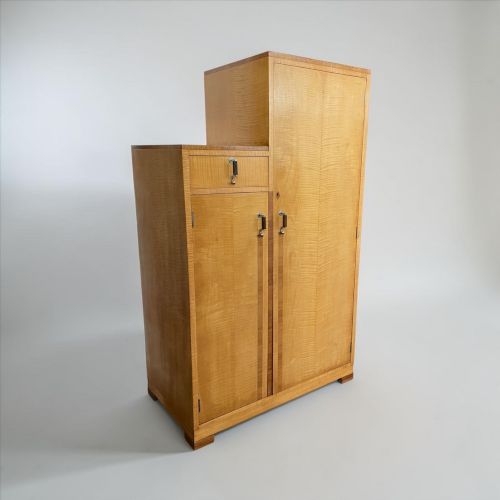
Internal construction involved pegged joints, dovetailed drawers, and brass hardware, with specialised configurations like sliding linen trays appearing in press cupboards. Art Deco examples from the nineteen-thirties introduced specialised compactum layouts and contrasting timbers like birds-eye maple alongside traditional cabinetwork.
Walnut Clothing Cabinet Retail Price Guide 2026
Typical asking prices for walnut clothing cabinet among the pieces listed under this phrase on Sellingantiques today, from the lower quarter to the upper quarter. They describe what is for sale here now, not the wider market.
Materials recorded across the selection include solid walnut, burr walnut veneer, oak, brass, glass, and Bakelite.
What varies in quality
Quality rests upon the selection and matching of the timber veneer, particularly the density and movement within burr walnut surfaces across large door panels. Superior cabinets display continuous grain matching and crisp, hand-carved details, whereas standard production relies on simpler figured veneers.
Internal fitting and structural integrity define the upper tier of these cabinets, seen in robust drawer dovetailing, original brass hardware, and well-fitted linen slides. Maker attribution also influences standing, with documented pieces by firms such as Waring and Gillow or Harry and Lou Epstein commanding greater recognition.
Waring and Gillow·Harry and Lou Epstein
The Walnut Clothing Cabinet Glossary
- Burr walnut
- A figured timber harvested from walnut tree growths, producing swirling grain patterns prized for cabinet veneers. This material defines the aesthetic of many wardrobes and press cupboards on this page.
- Compactum
- A fitted wardrobe containing a combination of hanging space, shelves, and internal drawers within a single carcass. These versatile pieces became popular in the Victorian era and continued through the Art Deco period.
- Linen press
- A tall storage cabinet featuring upper sliding trays for folded textiles above a base of lower drawers. Eighteenth-century and Victorian examples often showcase high-status figured walnut veneers.
- Armoire
- A large freestanding cupboard or wardrobe of continental European origin, typically featuring two large doors. Pieces in walnut and oak appear from France, the Netherlands, and northern Europe.
- Ormolu
- Gilt-bronze mounts applied as decorative highlights to nineteenth-century French furniture. This technique adds metallic contrast to polished walnut surfaces.
Walnut Clothing Cabinet: Frequently Asked Questions
What is a compactum wardrobe?
A compactum wardrobe is a specialised storage unit designed to hold various types of clothing within a single footprint. It typically combines hanging space with modular internal drawers and shelving.
These pieces emerged to maximise bedroom storage efficiency. They offer a comprehensive solution for organising both folded garments and long coats.
Where should I place a heavy armoire?
A heavy armoire requires a stable, level floor in a room with sufficient ceiling height and clearance for wide doors to open fully. Placing large wooden cabinets away from direct sunlight and heat sources protects the walnut veneer from drying out.
Because these cabinets are substantial, anchoring them to a wall provides stability. This is particularly important for taller nineteenth-century and continental pieces.
How do Art Deco wardrobes differ from Victorian ones?
Art Deco wardrobes, dating around nineteen-thirty, feature streamlined geometric forms, symmetrical burr walnut veneers, and often contrasting timbers like birds-eye maple. They embrace modern minimalism with minimal carved ornamentation.
Victorian cabinets rely on deeper mouldings, heavy panelled doors, carved cornices, and traditional historic revival styles. Their construction emphasises traditional craftsmanship and imposing scale.