


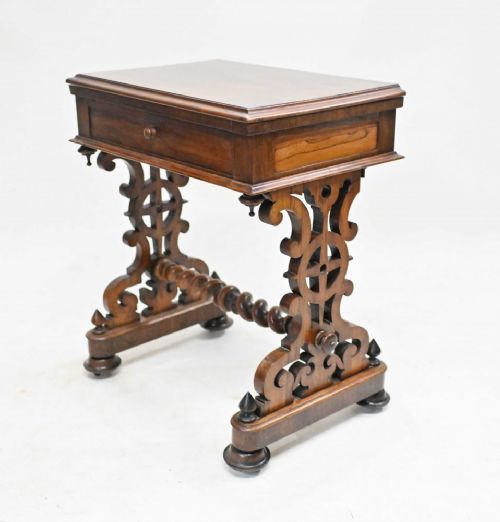


Walnut Chess Table
A walnut chess table brings together timber and strategy, offering a functional surface designed for play.
Walnut Chess Table
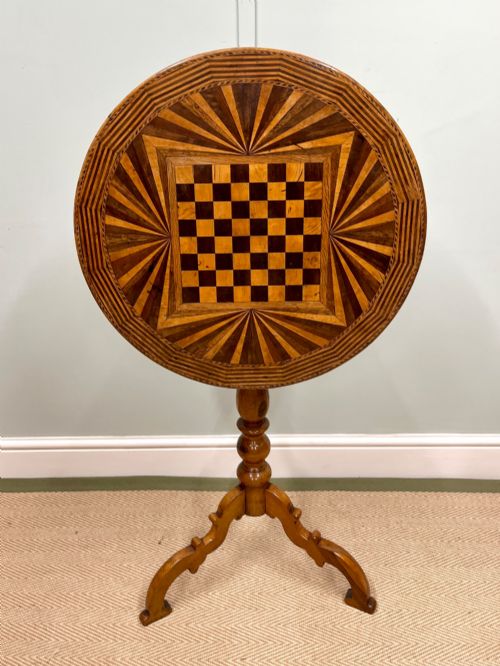
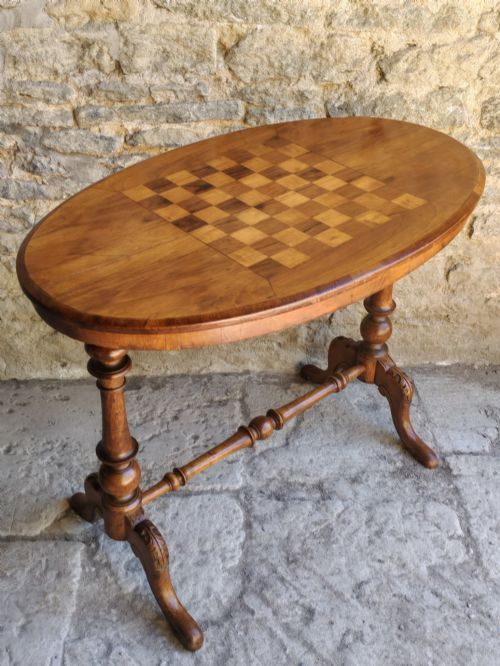
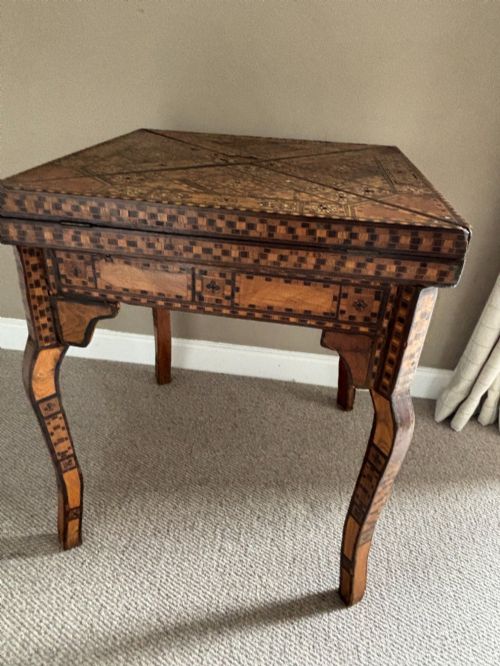
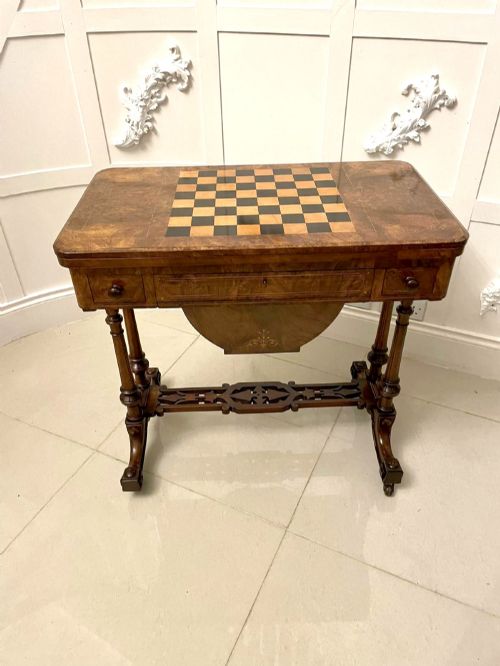
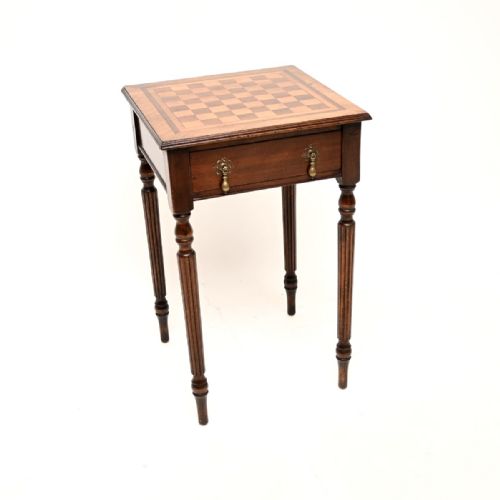
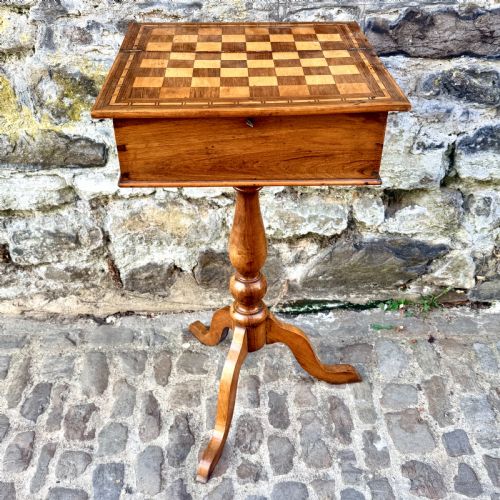
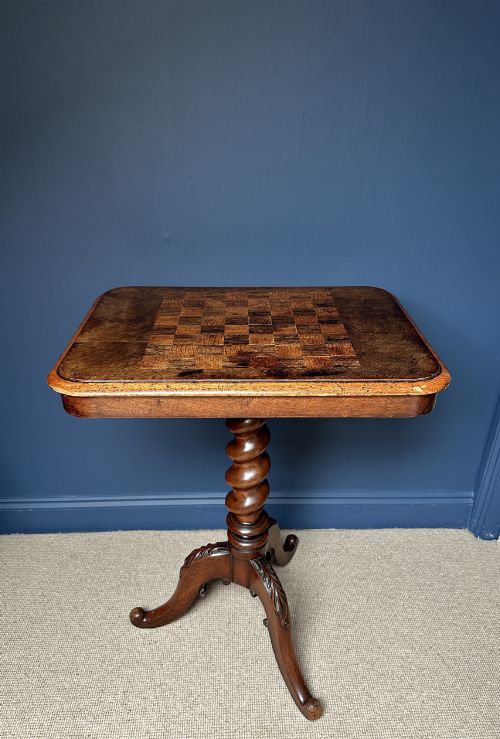
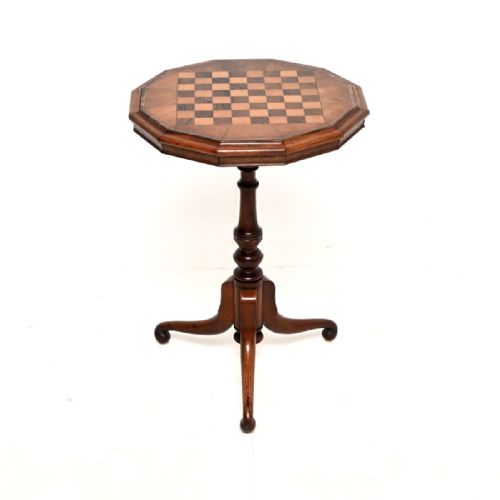
A walnut chess table is primarily a piece of nineteenth-century furniture designed for leisure, most frequently encountered in Victorian iterations featuring inlaid playing surfaces. Buyers seeking a walnut chess table typically find examples that double as sewing tables, occasional tables, or foldover card tables incorporating compartments for pieces.
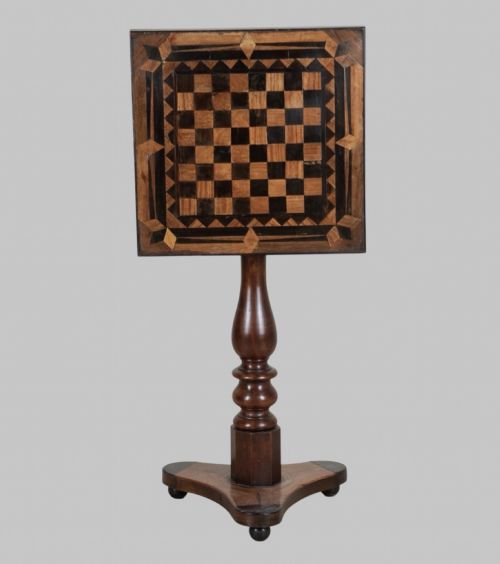
The selections span Georgian origins through to the early twentieth century, taking the form of tripod tables, centre tables, and tilt-top designs. Many incorporate multi-game boards that accommodate backgammon and draughts alongside the chequerboard.
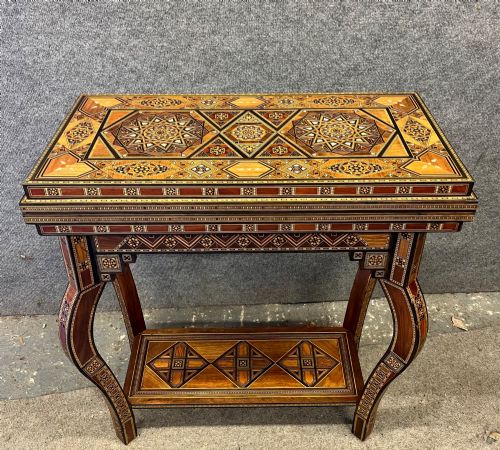
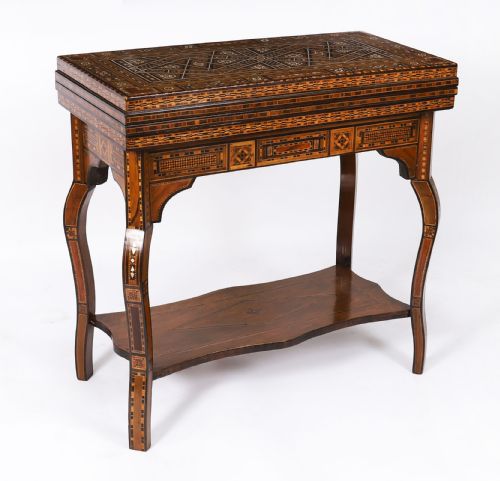
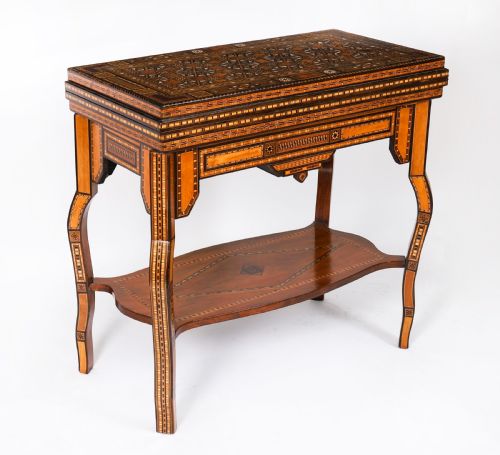
The dominant aesthetic draws upon Victorian craftsmanship, often displaying burr walnut veneers alongside marquetry detailing. Regional variations include French Provincial pieces and Levantine or Damascan tables utilising Arabic inlay.
How They Were Made
Cabinet makers utilised solid walnut and decorative burr walnut veneers applied over secondary timbers such as mahogany or pine. The distinctive chequerboards and decorative motifs were constructed through precise wood inlay, combining lighter woods like boxwood with darker fruitwoods and brass.
Construction techniques varied from stable pillar and tripod bases to intricate sewing compartments fitted beneath the playing surface. Marquetry panels, notably Sorrento work, involved cutting thin slices of diverse woods to form pictorial or geometric designs.
Walnut Chess Table Retail Price Guide 2026
Typical asking prices for walnut chess table among the pieces listed under this phrase on Sellingantiques today, from the lower quarter to the upper quarter. They describe what is for sale here now, not the wider market.
Several tables hid the sewing pins inside while the board waited outside.
What Varies in Quality
The distinction between standard and superior pieces rests on the complexity of the timber selection and the precision of the marquetry. Highly figured burr walnut veneers and intricate multi-wood inlays elevate a piece beyond simple geometric boxwood and walnut banding.
Structural complexity also defines the tier of the piece, separating basic fixed-top tables from multifunctional examples that incorporate pivoting tops, sliding drawers, and fitted sewing wells.
The Walnut Chess Table Glossary
- Burr walnut
- A figured timber obtained from the knot growths of walnut trees, prized for its swirling grain patterns. It provides a highly decorative surface veneer on Victorian table tops.
- Marquetry
- The art of applying decorative pieces of veneer to a structural structure to form geometric patterns or pictorial designs. It frequently defines the playing surface borders.
- Chequerboard
- The grid of alternating dark and light squares utilised for games of chess and draughts. In these pieces, it is typically formed from inlaid boxwood and walnut.
- Tilt-top
- A mechanism allowing the table surface to pivot vertically for storage against a wall when not in use. It is commonly found on nineteenth-century pillar and tripod bases.
- Sorrento work
- A specific style of decorative wood inlay originating from an Italian coastal town, often featuring detailed botanical or architectural motifs.
Walnut Chess Table: Frequently Asked Questions
What is a walnut chess table?
A walnut chess table is a domestic piece of furniture featuring an integrated playing surface for chess, manufactured predominantly during the nineteenth century. These tables were designed for polite recreation in Victorian parlours.
Many examples incorporate multi-functional designs, serving as sewing tables, card tables, or occasional centre tables when not in active use.
How do I identify a Victorian chess table?
Victorian chess tables are typically identified by their use of walnut and burr walnut veneers, combined with boxwood inlay for the board squares. They often feature turned pedestal bases, tripod legs, or enclosed sewing compartments beneath the top.
Cabinet making techniques from this era frequently include foldover leaves or tilt-top mechanisms, aligning with the domestic habits of the mid to late nineteenth century.
Were these tables used only for chess?
Many tables designed for chess served multiple domestic purposes simultaneously. The playing surfaces were frequently reversible or accompanied by compartments for backgammon, cards, and sewing equipment.
Consequently, owners utilised a single piece of furniture for needlework, card games, and board games within the same parlour setting.
How should I care for a burr walnut table?
Burr walnut requires stable environmental conditions away from direct heat sources and strong sunlight to prevent veneer lifting and timber drying. Regular dusting with a dry, soft cloth maintains the finish.
Applying appropriate wax polishes occasionally helps nourish the historic timber surface without building up excessive residue.