


Walnut Chair Back Settee
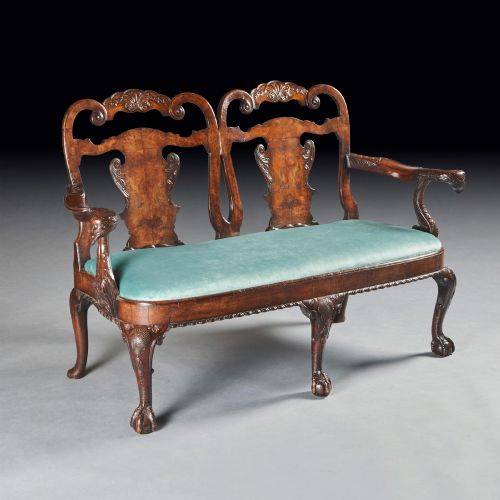
A walnut chair back settee is a formal seat that brings historic joinery and rich timber grain directly into a drawing room.
Walnut Chair Back Settee
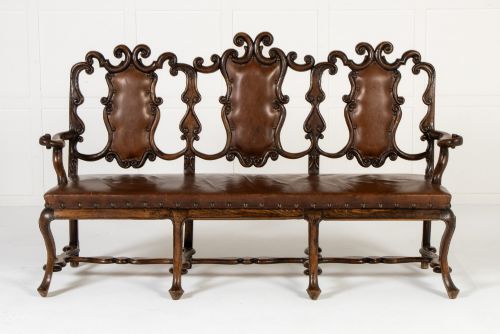
When you search for a walnut chair back settee, you encounter double and triple chair forms united on a single bench frame. The evidence shows these seating pieces spanning the eighteenth, nineteenth, and early twentieth centuries.
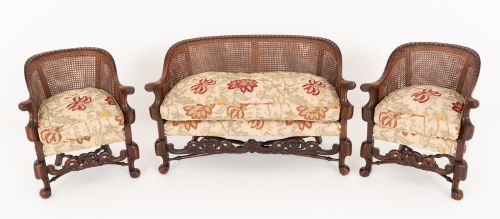
Most examples adopt historical revivals, with Carolean style, Queen Anne, and George II influences dominating the designs. These settee forms often appear within larger salon suites, drawing room suites, or as standalone seating.
Origin points range from Dutch workshops to British cabinetmakers, showcasing elaborate splats and carved woodwork. Buyers meet everything from cane-backed seating to upholstered double-chair frames.
Materials and construction
Cabinetmakers utilised solid walnut and burr walnut veneers over hardwood frames to build these settees. The primary timber displays deep grain patterns that define the aesthetic of each piece.
Seating areas incorporate cane work, leather, velvet, and various traditional fabrics for upholstery. Brass hardware and detailed hand carvings finish the structural joints and decorative crestings.
Some nineteenth-century makers built entire matching eleven-piece drawing room suites so nobody had to sit on an unmatched stool.
Judging the quality of a settee
Quality rests upon the crispness of the wood carving and the fidelity of the period revival style. Superior pieces demonstrate precise joinery in the interlocking chair backs and fluent lines along the arms.
The choice of timber creates a distinct separation in grade, particularly where figured burr walnut is employed. Finer settees retain intact original cane work and substantial hardwood frames without structural compromise.
Epstein
The Walnut Chair Back Settee Glossary
- Chair back settee
- A multi-seater bench whose backrest is constructed by joining two or more individual chair backs together in a continuous line.
- Carolean style
- A decorative manner originating in the late seventeenth century, characterised by rich scrolling foliage, crown motifs, and high carved crestings.
- Burr walnut
- A prized timber harvested from walnut tree growths, featuring swirling, knotted grain patterns that create decorative surface textures.
- Salon suite
- A matching set of domestic seating and furniture designed for formal reception rooms, typically including a settee and several armchairs.
Walnut Chair Back Settee: Frequently Asked Questions
What is a walnut chair back settee?
A walnut chair back settee is a form of seating where the backrest resembles two or three distinct dining or parlor chairs joined together.
These pieces emerged in various revival styles, providing formal seating for eighteenth, nineteenth, and early twentieth-century drawing rooms.
How were these settees used originally?
These settees served as formal seating in grand parlors, salons, and drawing rooms for entertaining guests.
They functioned both as functional furniture and as visible statements of social standing and taste.
How do I identify a revival period?
Revival periods are identified through specific decorative motifs, such as the scrolling crests of Carolean style or the shaped splats of Queen Anne design.
Cabinetmakers of the nineteenth and early twentieth centuries deliberately copied these earlier historical forms.
How do I care for walnut and upholstery?
Care involves keeping the walnut timber away from direct heat sources and sunlight to protect the grain and finish.
Upholstery materials like velvet, leather, or fabric require gentle cleaning appropriate to the specific textile.