


Georgian Style Walnut Bench
A georgian style walnut bench brings tactile warmth and period elegance to an interior.
Georgian Style Walnut Bench
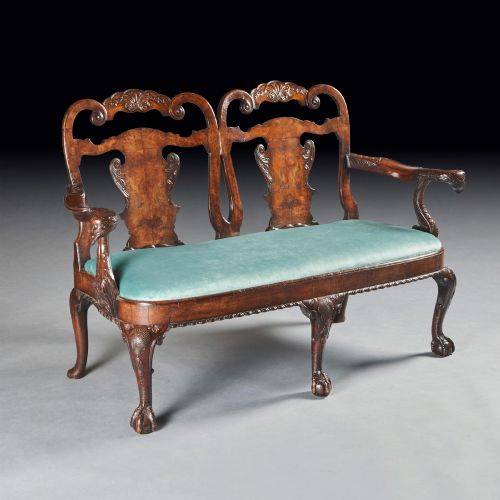
A georgian style walnut bench encompasses sturdy footstools, window seats, and chair back settees rooted in eighteenth-century forms. Buyers searching for a georgian style walnut bench encounter revival pieces alongside genuine period items dating from the eighteenth century through to the early twentieth century. The selection spans distinct historical revivals, including Queen Anne, George I, George II, and Dutch Rococo influences.
How they were made
Construction relies upon solid walnut timbers shaped into structural frames, cabriole legs, and architectural supports. Artisans employed traditional joinery to secure the wood before finishing surfaces to highlight the natural grain.
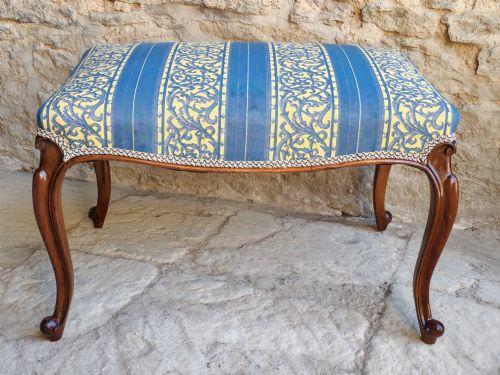
Upholstery techniques incorporate textile, velvet, fabric, and wool secured with textile braid, frequently complemented by brass detailing. Needlepoint covers complete the seating surfaces on specific revival stools, adding layered texture to the wooden framework.
An unusually decorative needlepoint cover transforms a standard stool into a tactile conversation piece.
What varies in quality
Quality rests in the crispness of the wood carving and the proportional harmony of the frame. Pieces exhibiting deeply defined cabriole legs and sculptural claw and ball feet stand apart from simpler iterations.
The sophistication of the upholstery further distinguishes the range. Original needlepoint and choice textiles elevate a seating piece, while the inherent figuring and warmth of the walnut timber determine visual presence.
The Georgian Style Walnut Bench Glossary
- Cabriole leg
- A furniture leg that curves outward in a convex arc and tapers inward in a concave arc, terminating in a foot. This characteristic form appears frequently on eighteenth-century seating and later revivals.
- Claw and ball
- A foot motif carved to resemble a bird's talon clutching a ball, commonly found on the base of cabriole legs. It derives from Eastern motifs adopted by European cabinetmakers.
- Needlepoint
- A type of canvas work embroidery executed with wool yarn, often utilised for historical upholstery. It provides a durable and decorative surface for stool and bench seats.
- Window seat
- An elongated stool or small bench designed to fit within the recess of a window. These pieces frequently feature upholstered tops and decorative wooden frames.
Georgian Style Walnut Bench: Frequently Asked Questions
How do I date a walnut bench?
Dating relies upon examining construction methods, timber patination, and stylistic cues that align with periods like the Regency era or Edwardian revivals.
Makers often integrated specific decorative elements, such as cabriole legs or chair back configurations, characteristic of their respective decades.
Where were these benches used?
These seating forms served multiple domestic functions, from resting feet to providing window seating in grand rooms.
Settees and twin chair back sofas offered formal seating in reception spaces, while smaller stools functioned as moveable furniture.
What fabrics cover these seats?
Upholstery materials include traditional textiles, velvet, fabric, wool, and intricate needlepoint covers.
Braid trim often secures the edges of the fabric, complementing the dark tones of the walnut frames.