
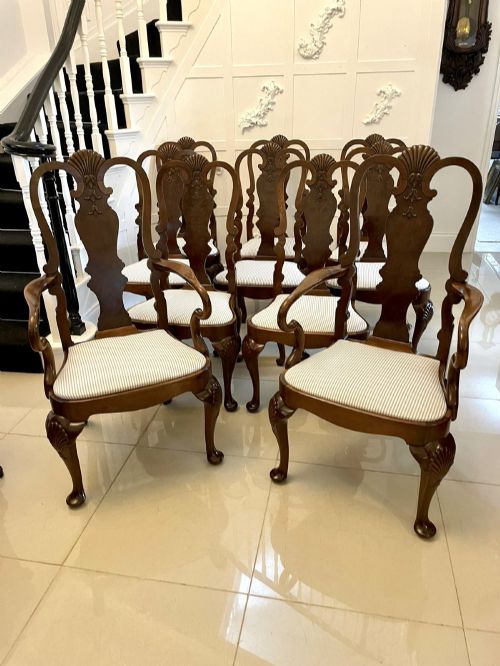
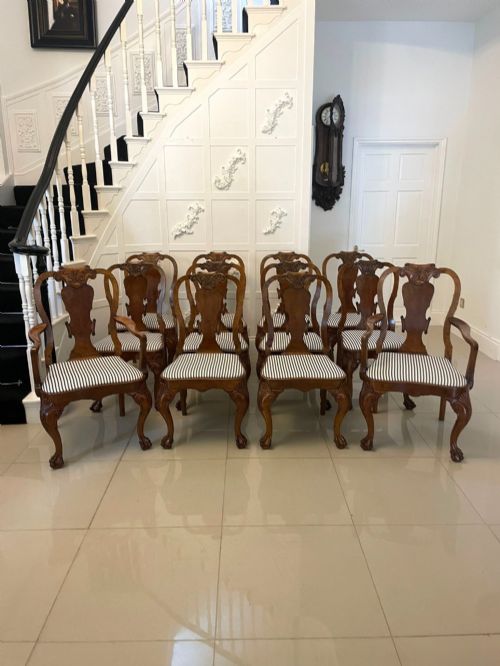
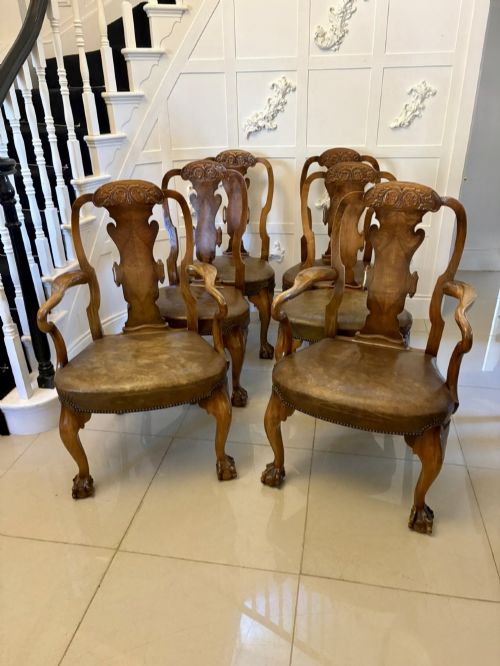
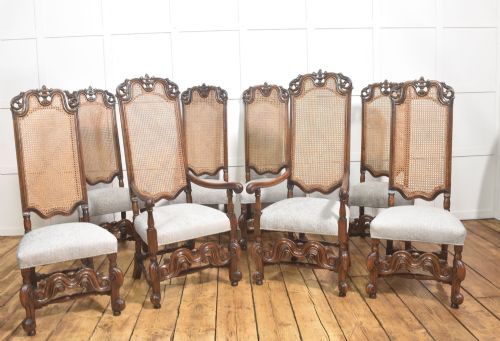



Walnut Carver Dining Chairs
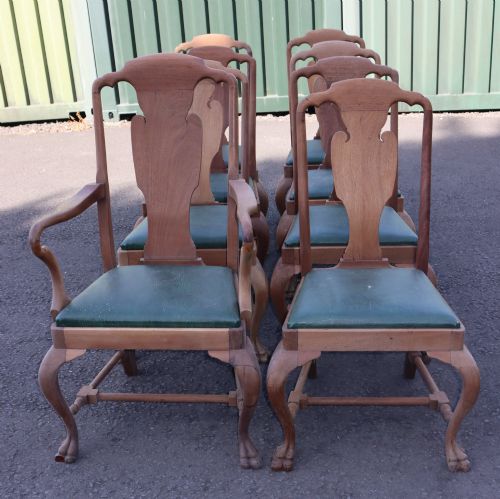
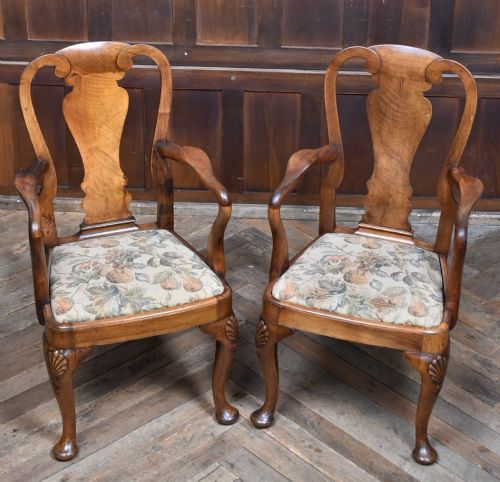
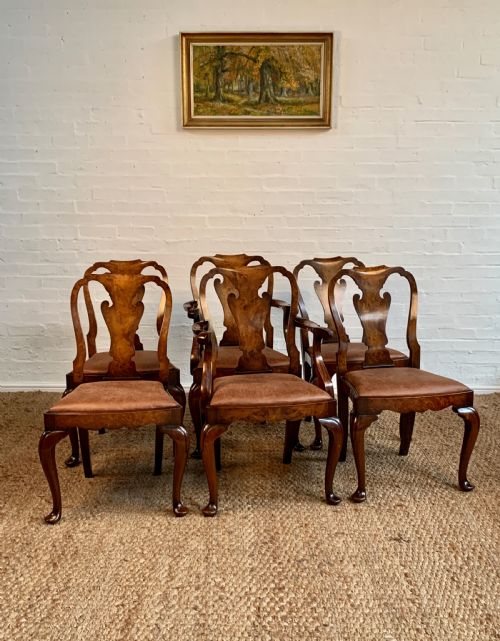
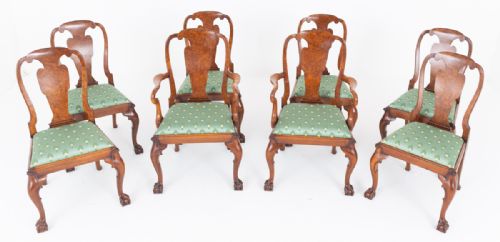
These walnut carver dining chairs bring substantial timber frames and open armrests to the table, offering both presence and support.
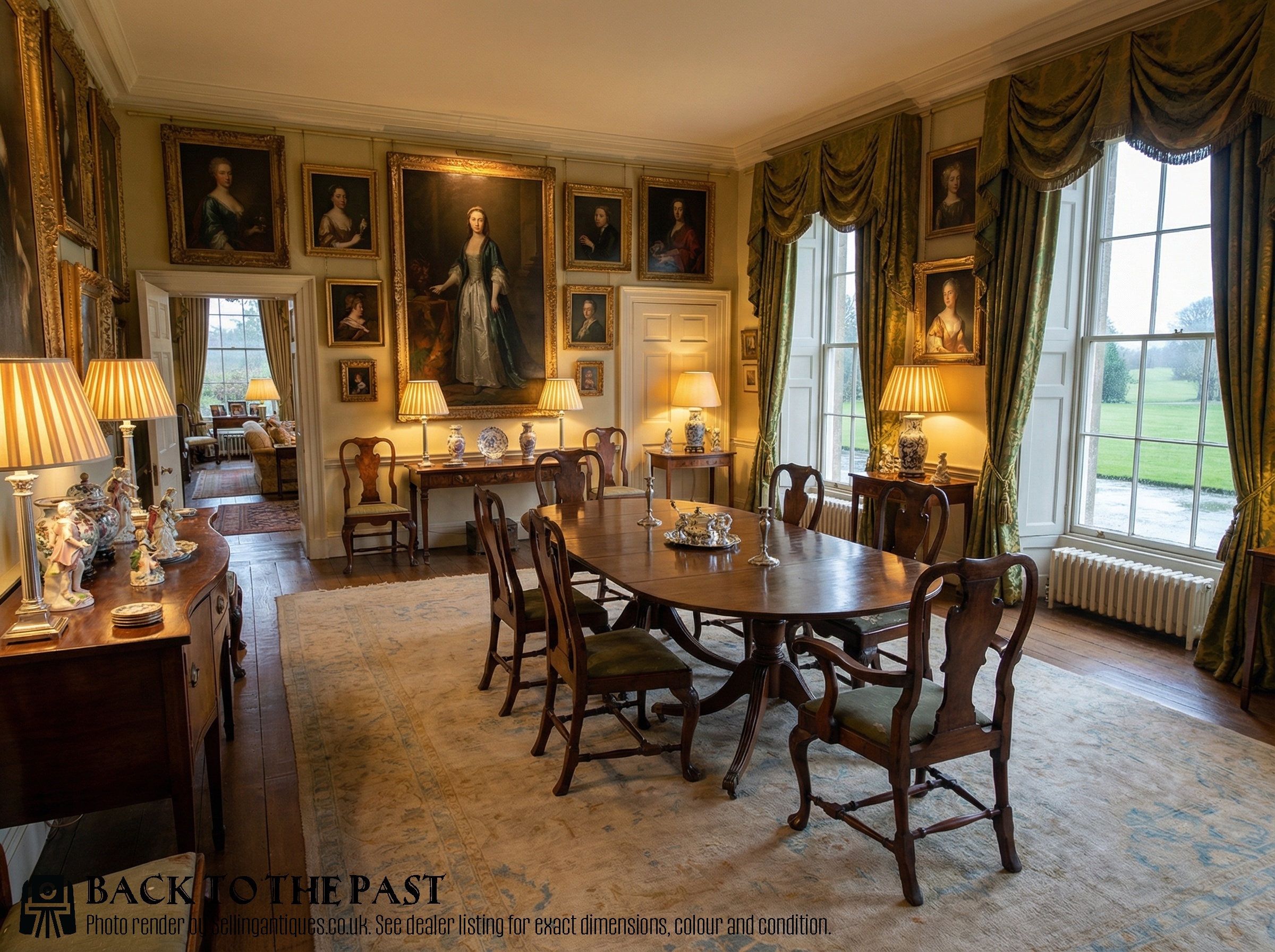
Walnut Carver Dining Chairs
Walnut carver dining chairs combine robust timber framing with open armrests designed to stand at the heads of a dining table. You encounter everything from substantial Victorian carved examples to sleek Art Deco iterations and lighter Queen Anne revival pieces.
The material palette spans plain walnut alongside figured burr walnut veneers, paired with drop-in or upholstered pads in leather, velvet, and textile. Sets frequently appear in matching groupings or as pairs of carvers designed to accompany side chairs.
Origins stretch from eighteenth-century workshops through the nineteenth-century revival periods into twentieth-century twentieth-century Edwardian and Art Deco production. The surviving pieces record shifts in taste from high-backed cane work to smooth cloud backs and carved splats.
Construction and materials
Makers utilised solid walnut and decorative burr walnut veneers applied to primary timber carcases, shaping the grain to create patterned visual movement across splats and backrests. Frame joints rely on traditional joinery methods like mortise and tenon to withstand daily seating loads.
Upholstery techniques developed from early drop-in webbing and squab pads through to deep springing and modern textile or leather coverings fixed with brass tacks. Carved details such as shells, scrolls, and husks were executed directly into the solid timber components by hand.
One set accommodates up to fifteen diners, ensuring nobody misses out on a seat.
Distinctions in quality
Quality rests in the depth of timber selection, visible in the rich figuring of burr walnut veneers and the weight of the underlying structural carcase. Superior examples display crisp, hand-carved ornamentation where details remain sharp rather than softened by excessive sanding.
Proportion and stance dictate the visual success of a chair, with balanced splats, raked back legs, and well-proportioned arms creating harmonious lines. The integration of the upholstery work, from the choice of leather or textile to the tension of the internal stuffing, completes the standard of the piece.
Lamb of Manchester·Epstein·Shoolbred·Spillman & Co
The Walnut Carver Dining Chairs Glossary
- Carver chair
- An armchair designed specifically for use at a dining table, featuring open arms to accommodate sitting forward. These typically form the head seats in a larger dining set.
- Burr walnut
- A highly figured timber veneer harvested from the wart-like growths on walnut trees. It creates intricate, swirling patterns across chair backs and splats.
- Queen Anne style
- A revival design movement drawing on early eighteenth-century aesthetics, characterised by spoon-backed chairs, vase-shaped splats, and cabriole legs.
- Cane back
- A method of weaving thin strips of rattan through drilled holes in a chair frame to form an open, flexible panel. This technique lightened the visual weight of high-backed seating.
- Splat
- The vertical central strip of wood rising from the seat to the top rail of a chair back. Carvers often shape this element with contours or carved motifs.
Walnut Carver Dining Chairs: Frequently Asked Questions
What is a carver chair?
A carver chair is an armchair built with open sides specifically to sit at the head or foot of a dining table. The armrests provide additional support while remaining low enough to tuck under the table surface.
Historically, dining sets included two carvers for the hosts alongside a larger number of armless side chairs. They share the same stylistic design as the rest of the set but offer a more substantial seat.
How do I identify Queen Anne style?
Queen Anne style chairs feature characteristic spoon-backed profiles and solid vase-shaped central splats that curve to fit the sitter's spine. They typically stand on cabriole legs ending in pad or claw-and-ball feet.
Revival versions from the Edwardian era and the nineteen-twenties emulate these eighteenth-century proportions using walnut and burr walnut veneers. Look for smooth, flowing lines rather than heavy geometric carving.
Are these chairs comfortable for daily use?
These dining chairs accommodate modern dining habits well, provided the internal webbing and padding have been properly maintained or restored. Open armrests on carvers give plenty of elbow room during long meals.
Upholstery materials range from supportive leather pads to softer velvet and textile squabs. Checking the seat height and depth relative to your table ensures a comfortable seating position.
How do I care for walnut furniture?
Walnut furniture requires protection from direct sunlight and excessive temperature fluctuations to prevent timber movement and veneer cracking. Regular dusting with a soft, dry cloth preserves the finish without building up residue.
Conditioning the wood occasionally with appropriate wax helps maintain the lustre of the grain. Avoid placing chairs directly against heat sources or damp exterior walls.