
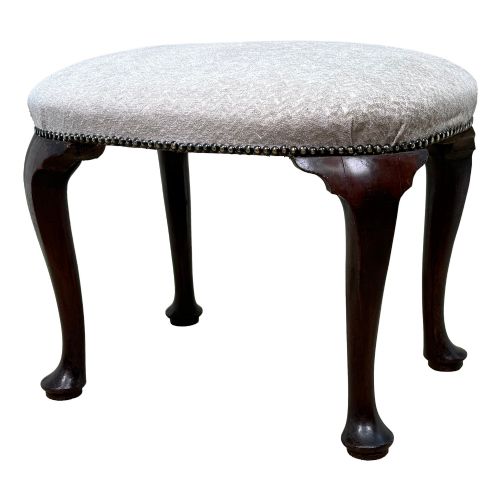
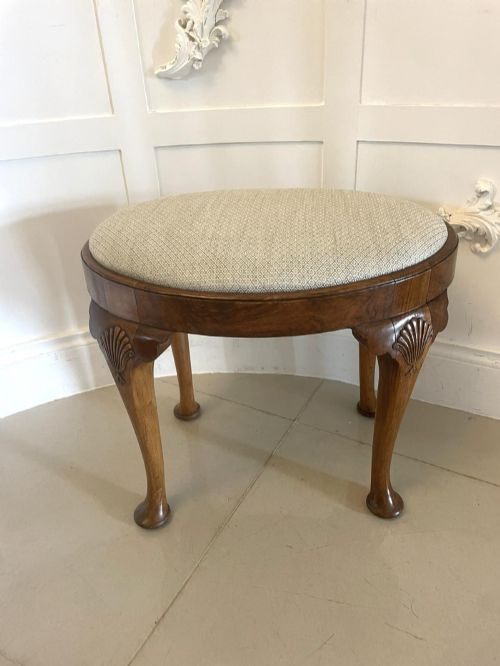
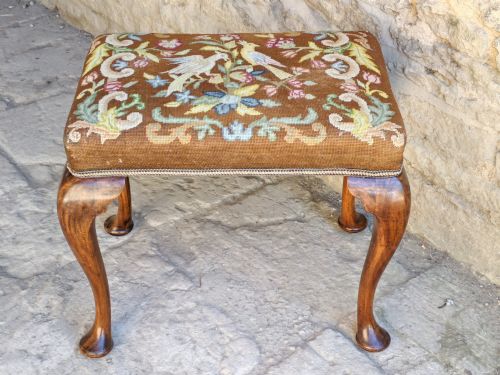
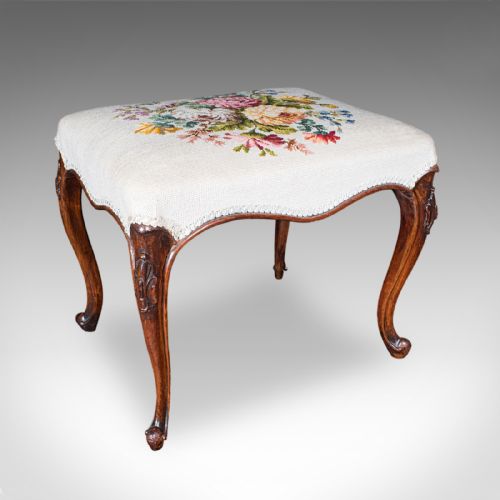
Walnut Cabriole Stool
When you search for a walnut cabriole stool, you seek a classic seating form that unites robust timber frames with graceful, sweeping leg profiles.
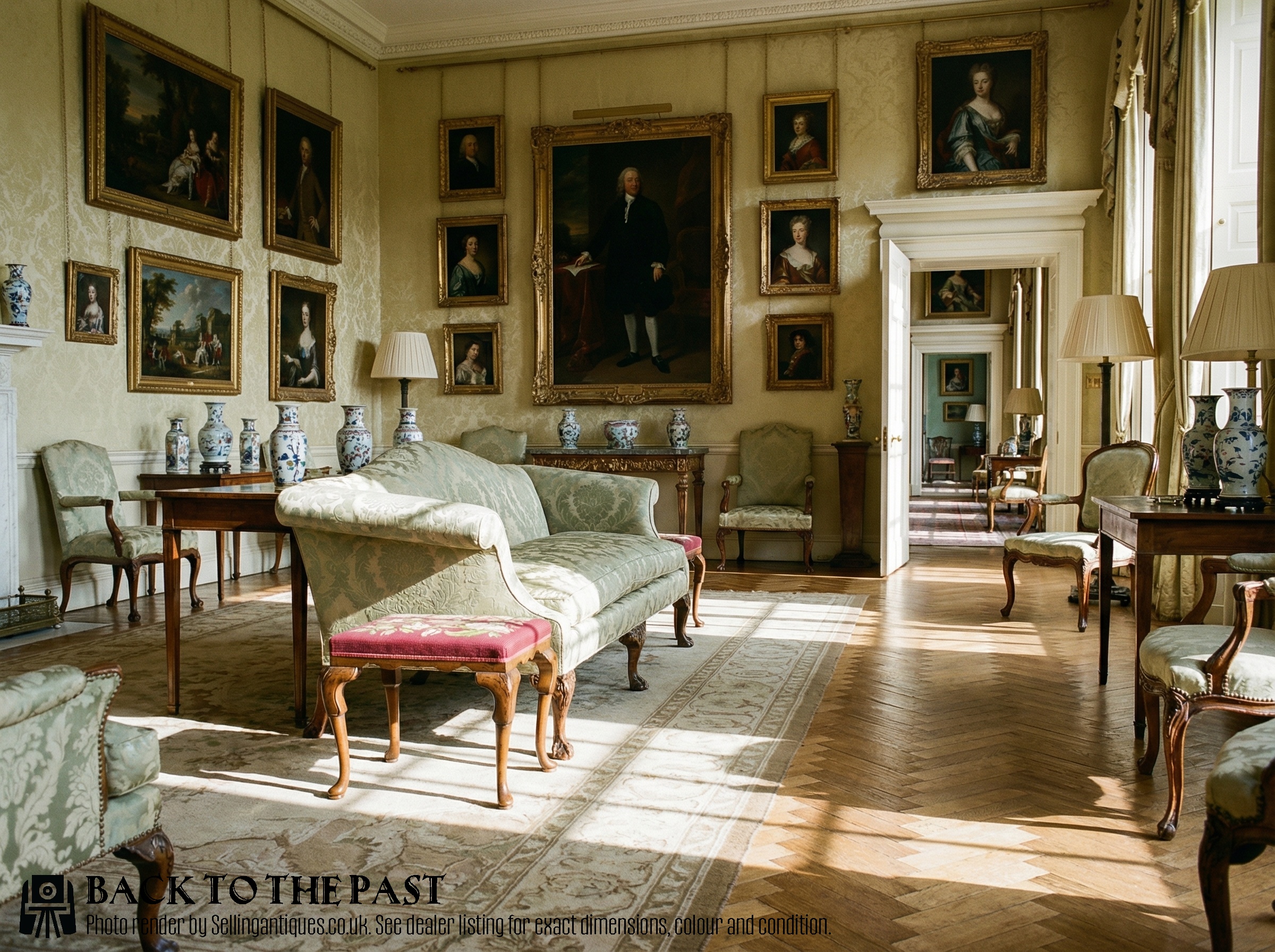
Walnut Cabriole Stool
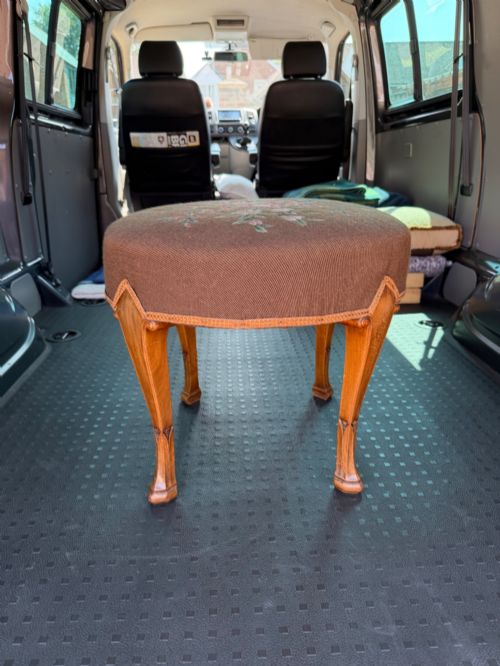
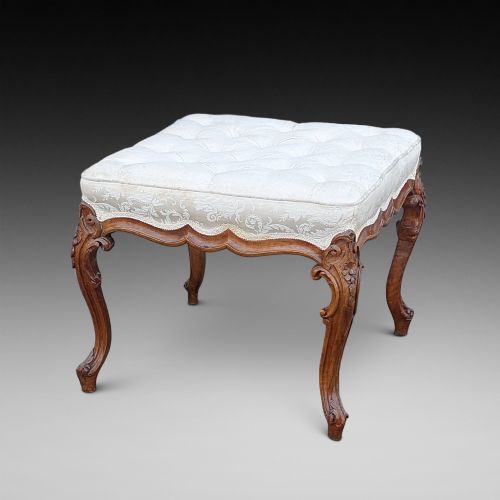
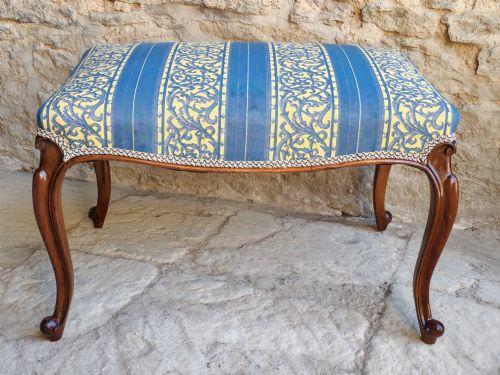
A walnut cabriole stool combines a sturdy timber frame with the distinctive curving lines of the cabriole leg form. These pieces emerge primarily from Victorian and early twentieth-century periods, often following earlier Queen Anne or George I design revivals.
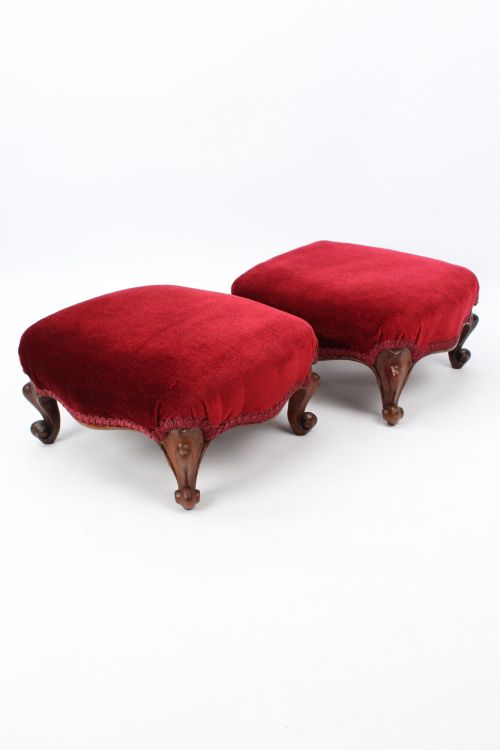
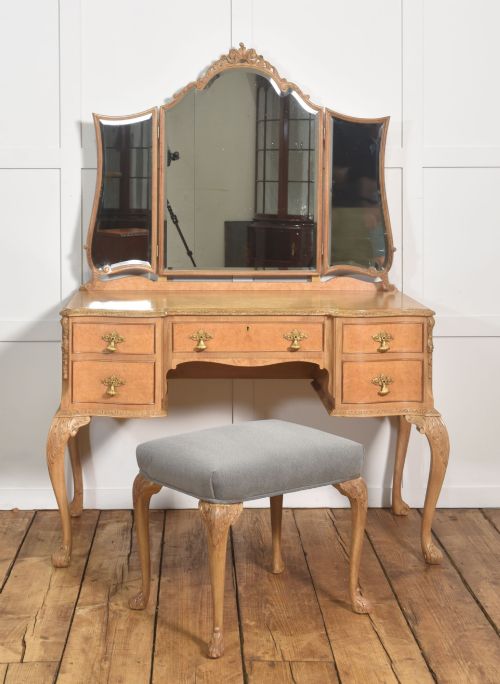
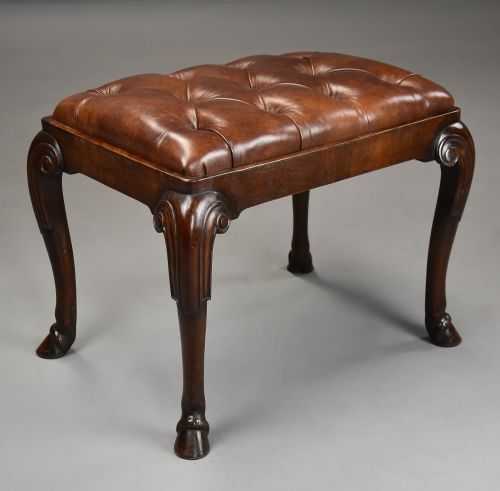
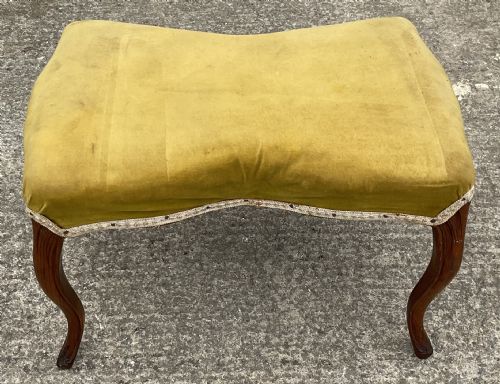
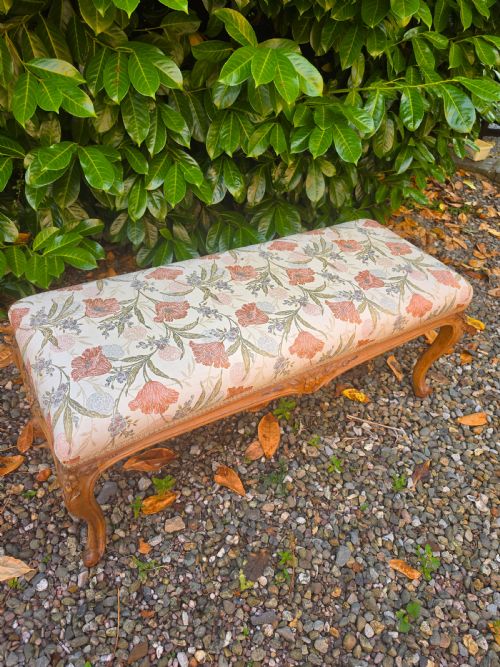
Buyers encounter various formats ranging from low fireside footstools and dressing table seats to larger salon and centre stools. Many examples feature upholstered tops covered in needlepoint, tapestry, velvet, or leather.
The aesthetic leans heavily toward traditional English and French revival styles, utilising dark figured woods alongside decorative fabric work.
How They Were Made
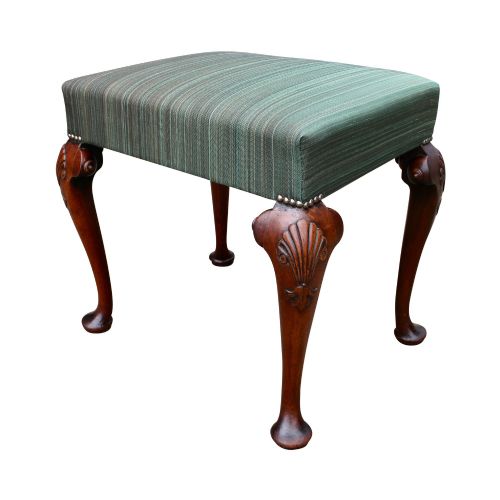
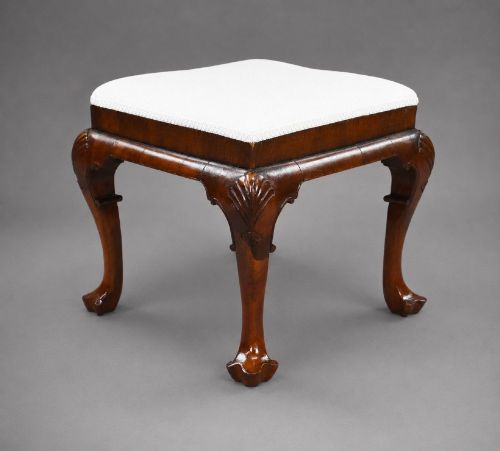
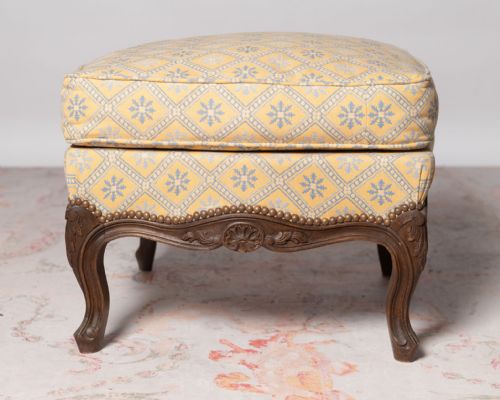
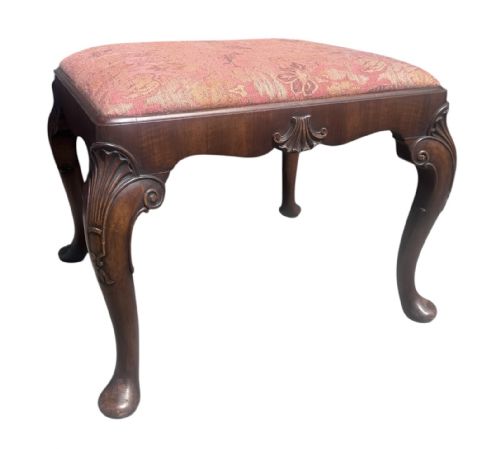
Constructed primarily from solid walnut frames, these stools rely on dense timber capable of supporting detailed hand-carved ornamentation on the knees and feet of the cabriole legs. Workshops shaped the curved legs to flow seamlessly into the seat rails.
Upholstery techniques varied from simple drop-in pads to buttoned leather and intricate hand-stitched needlepoint or tapestry coverings secured with brass tacks.
The documented materials span solid timber frames paired with diverse textiles including wool, leather, and brass detailing.
What Varies In Quality
The standard of carving defines the upper tier of these pieces, separating mechanical output from crisp, deep hand-executed detail on the wooden knees and scroll feet. Timber selection also matters, as rich grain patterns and solid structural joints elevate a piece above simpler constructions.
Original upholstery materials and period-appropriate textile coverings contribute significantly to the integrity of an antique stool, though many have undergone reupholstery over time.
The Walnut Cabriole Stool Glossary
- Cabriole leg
- A furniture leg that curves outward at the knee and tapers inward toward the foot, mimicking animal limbs. This design gained prominence in the eighteenth century and saw frequent revival.
- Needlepoint
- A type of counted thread embroidery stitched onto canvas mesh. It frequently appears as the decorative textile covering on Victorian and revival stool tops.
- Queen Anne style
- A design movement characterised by curved lines, pad feet, and graceful proportions. Makers in the nineteenth and twentieth centuries frequently drew upon these earlier aesthetics.
- Centre stool
- A larger freestanding seating form designed to sit in the middle of a room rather than against a wall. These pieces often feature generous proportions and elaborate frame carving.
- Tapestry
- A heavy hand-woven or embroidered textile depicting pictorial scenes or geometric patterns. These fabrics frequently cover the seats of period footstools and dressing benches.
Walnut Cabriole Stool: Frequently Asked Questions
Where were walnut cabriole stools used?
These versatile pieces served multiple functions across domestic interiors, acting as dressing table seats, fireside footstools, or low salon seating.
Larger variants often accompanied matching armchairs or functioned as freestanding centre stools within formal reception rooms.
How do I identify a revival piece?
Many items bearing eighteenth-century styling actually date from the Victorian era or the early twentieth century. Examining the timber maturity and construction joints helps determine the true age of the frame.
Revival pieces often combine earlier design vocabulary with the machining techniques and upholstery styles of their actual production period.
What fabrics are common on these stools?
Original and replacement coverings include wool needlepoint, patterned tapestry, plush velvet, and buttoned leather. Brass tacks frequently secure these textiles to the wooden seat rails.
Many surviving frames have been recovered multiple times to suit changing interior tastes over the decades.
Are these stools suitable for daily use?
Solid walnut construction provides a durable framework capable of handling everyday sitting and foot-rest duties. Maintaining the textile top and checking the stability of the leg joints ensures lasting utility in modern spaces.