
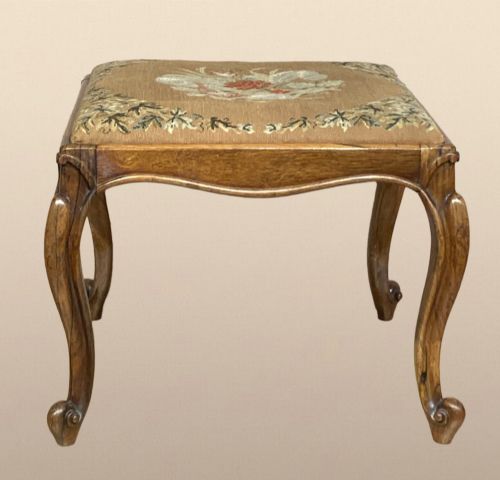


Vintage Needlepoint Stool
These vintage needlepoint stool options combine sturdy timber frames with worked textile tops, bringing traditional seating into modern rooms.
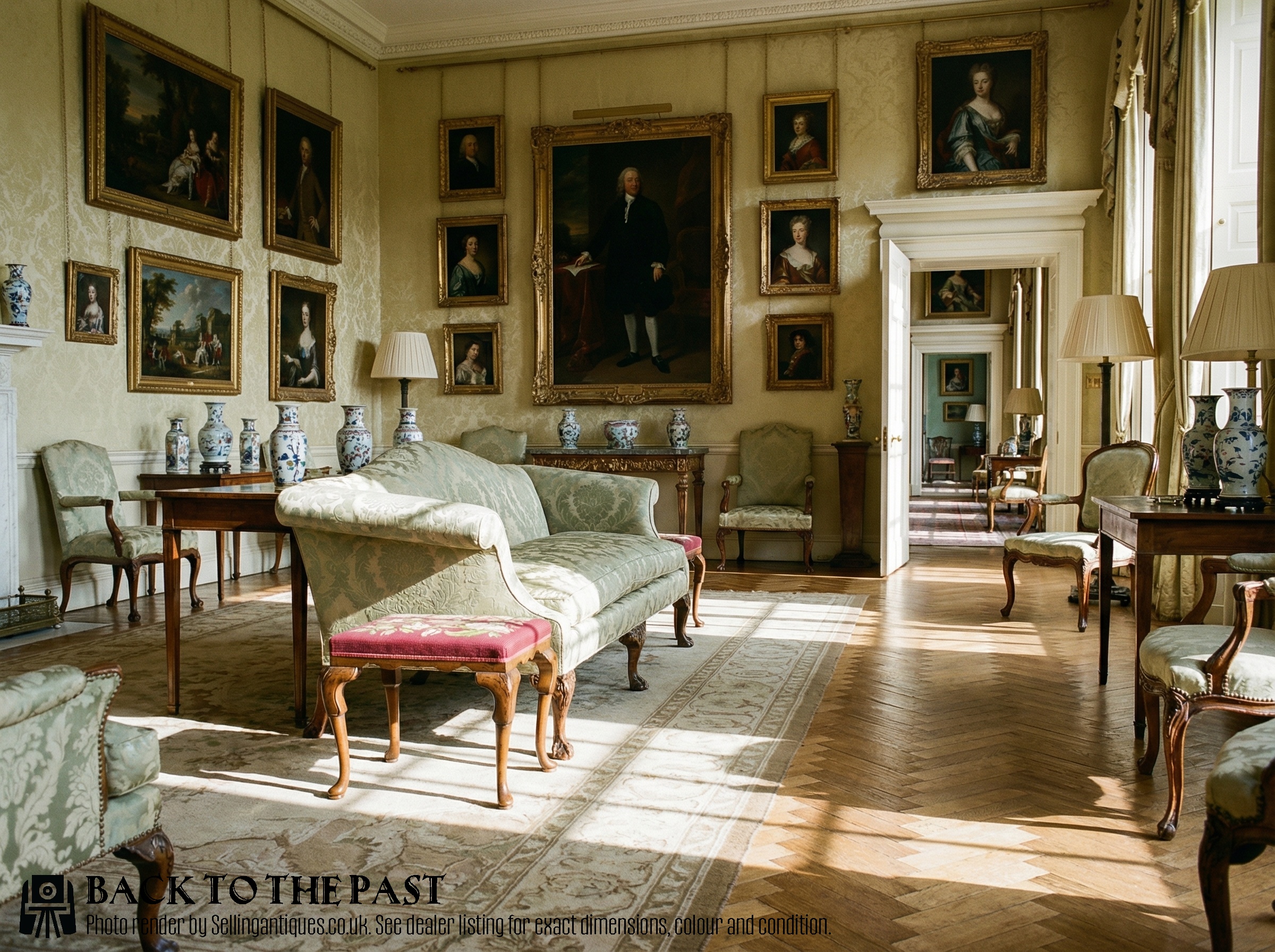
Vintage Needlepoint Stool
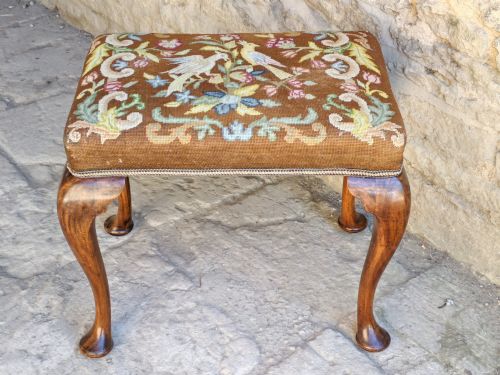
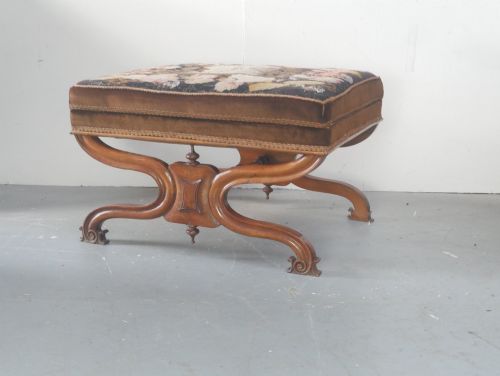
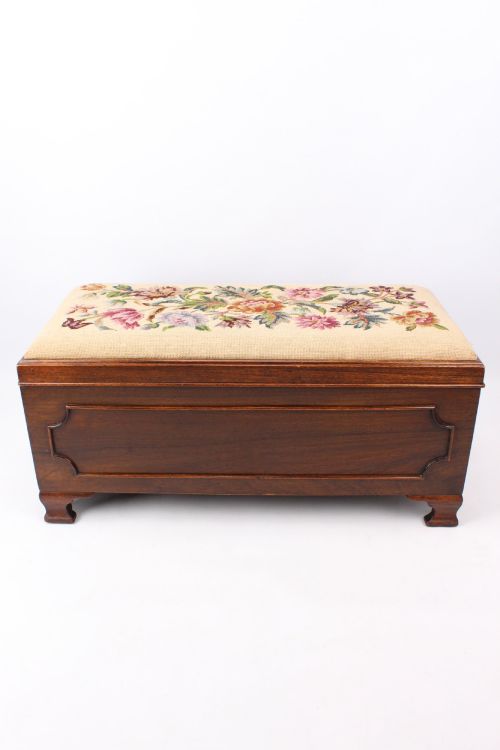
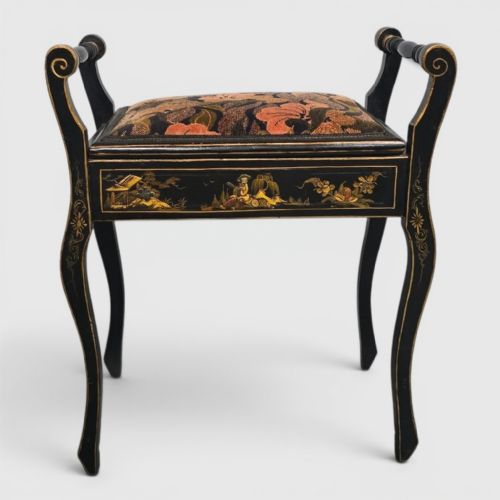
When you search for a vintage needlepoint stool, you encounter low timber seating designed for firesides, dressing tables, and pianos. These pieces span from the Victorian era into the early twentieth century, taking the form of compact footstools, long ottomans, and revolving piano seats.
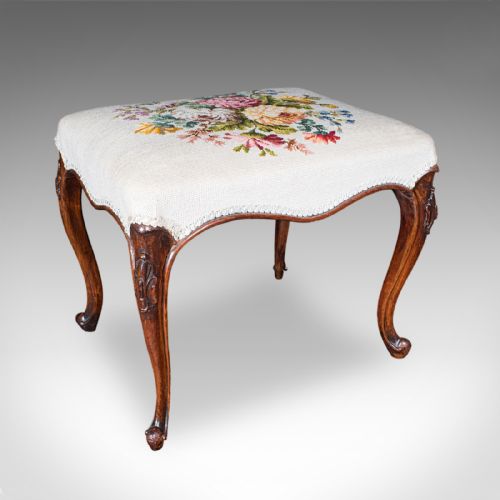
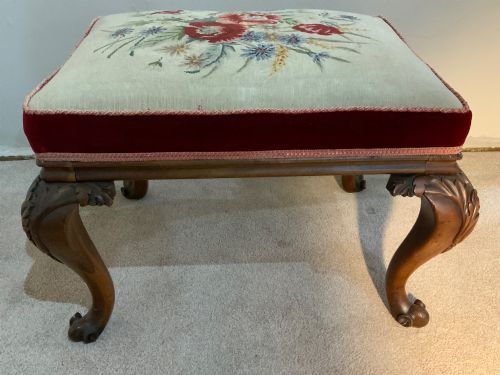
The most common examples on this page are Victorian and later walnut or mahogany pieces featuring worked wool tapestry seats. You will also find occasional French and Italian examples alongside revival styles inspired by Queen Anne and Chippendale designs.
Materials and construction
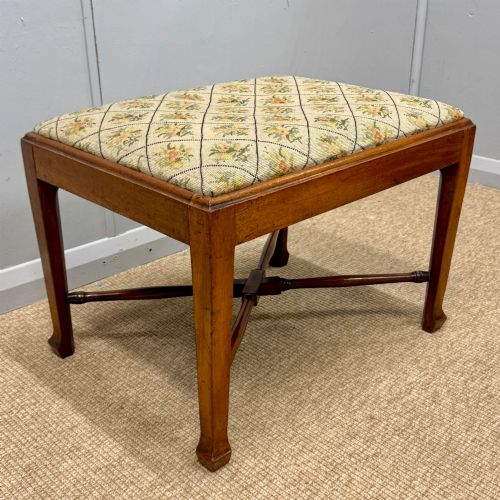
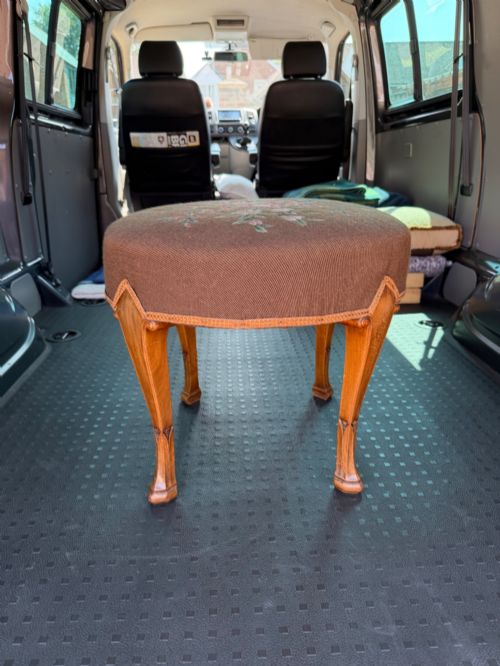
Frames are constructed from dense hardwoods such as walnut, mahogany, rosewood, and oak, occasionally finished with paint or gilt. Joinery methods include turned legs, cross stretchers, and carved cabriole supports suited to bearing weight.
Seat tops utilise wool needlepoint, tapestry, and textile upholstery stretched over traditional stuffing. Brass hardware appears on adjustable piano stools and decorative mounts.
Listings feature walnut, mahogany, rosewood, oak, and brass alongside wool tapestry and velvet upholstery across the Victorian and Edwardian periods.
Judging quality in needlepoint stools
Quality rests in the crispness of the timber carving and the density of the wood used for the frame. Heavier hardwoods like walnut and rosewood generally indicate superior craftsmanship compared to simpler secondary timbers.
The needlepoint itself dictates value through the tightness of the stitch and the complexity of the worked wool design. Original undisturbed upholstery retains more character than later replacements.
Jas Shoolbred
The Vintage Needlepoint Stool Glossary
- Needlepoint
- A type of canvas work embroidery stitched with wool yarn to create patterned seat covers. This textile forms the primary decorative surface of these stools.
- Cabriole leg
- A furniture leg that curves outward and then tapers inward, inspired by the shape of an animal leg. It appears frequently on walnut and mahogany Victorian examples.
- Cross stretcher
- Wooden rails connecting the legs near the base to add structural stability. They are often found on larger dressing table and centre stools.
- Ottoman
- A low, upholstered seat without a back or arms, sometimes built longer for foot support. These pieces accommodate extended needlework panels.
- Tapisserie
- French term for hand-woven or needle-worked textiles used in upholstery. These decorative panels adorn continental footstools and poufs.
Vintage Needlepoint Stool: Frequently Asked Questions
How were these stools originally used?
These low seats served practical purposes by the fireside, at dressing tables, or alongside pianos where adjustable heights helped musicians reach the keys. Longer versions acted as ottomans for resting feet during long evenings.
Over time, homeowners moved them between drawing rooms and bedrooms as decorative accent seating that occupied minimal floor space.
How do I date a Victorian needlepoint stool?
Dating relies on timber choice, leg shape, and framing conventions typical of the nineteenth century. Walnut and rosewood frames with heavy carving usually point toward the middle decades of the Victorian period.
Later pieces from around nineteen hundred often adopt lighter mahogany frames or incorporate Edwardian revival styles that reflect earlier centuries.
Are the needlepoint tops original?
Many stools retain their initial wool tapestry work, though heavy use often necessitated re-stitching or complete reupholstery over the decades. Close inspection of the canvas edges and yarn wear helps determine age.
Original needlework exhibits natural fading and hand-spun wool characteristics that match the estimated manufacturing period of the wooden frame.
How do I fit a vintage stool into a modern room?
Their compact dimensions allow these stools to slide easily beneath console tables, sit beside armchairs, or serve as low occasional seating. The patterned textile top introduces texture and colour without dominating the floor plan.
Pairing a walnut or mahogany frame with contemporary furniture creates a balanced interior that highlights traditional craftsmanship.