



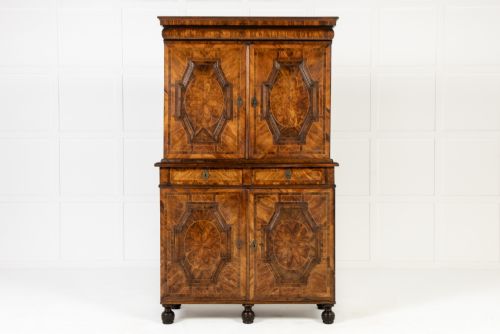

Walnut Buffet Furniture
These walnut buffet furniture pieces bring rich grain and heavy storage into a dining room or hall.
Walnut Buffet Furniture
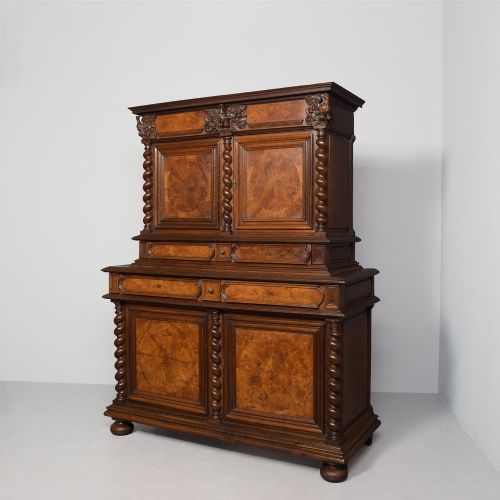
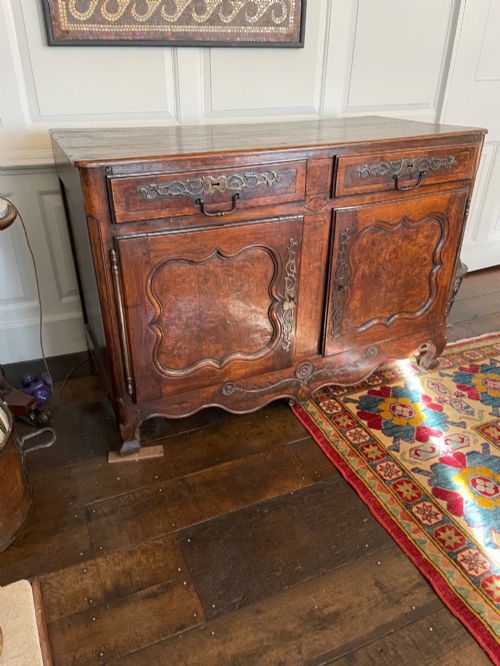
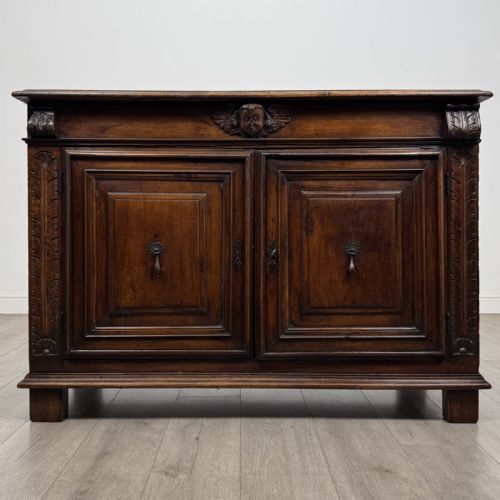
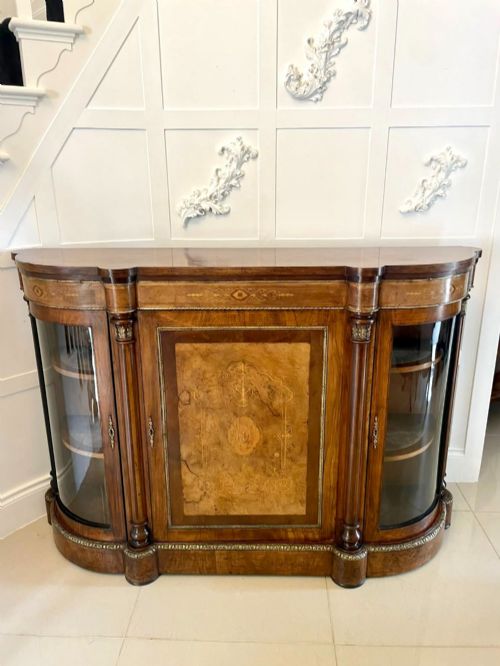
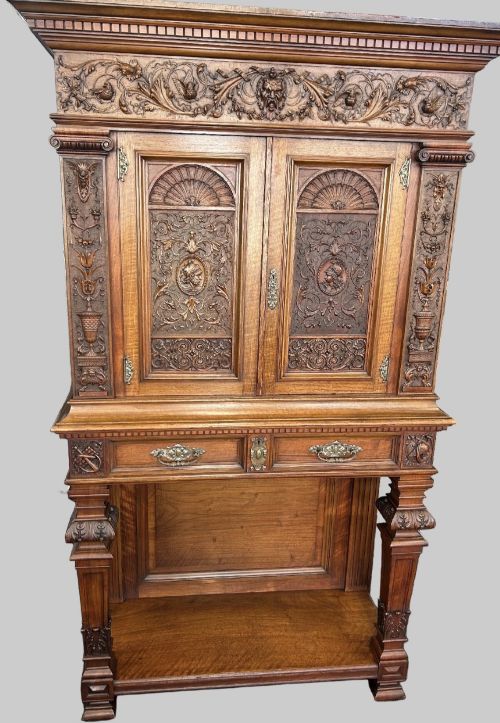
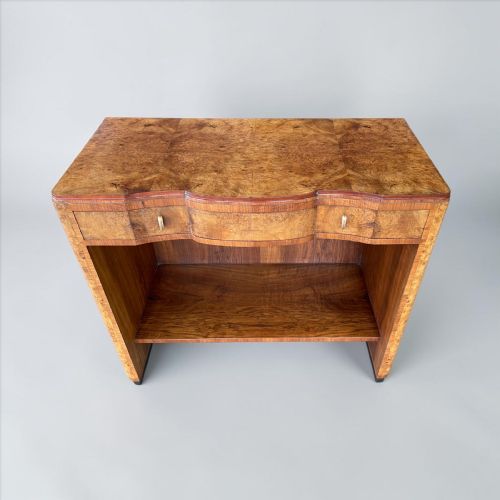
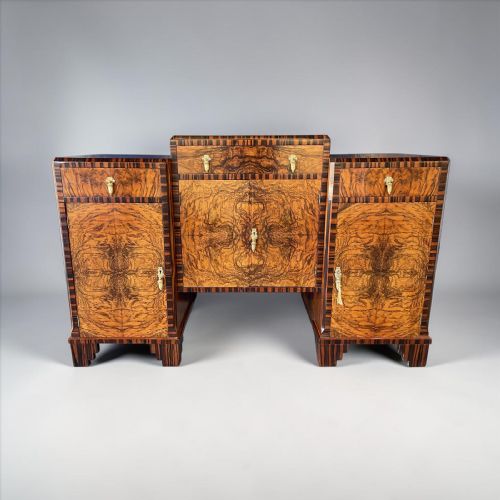
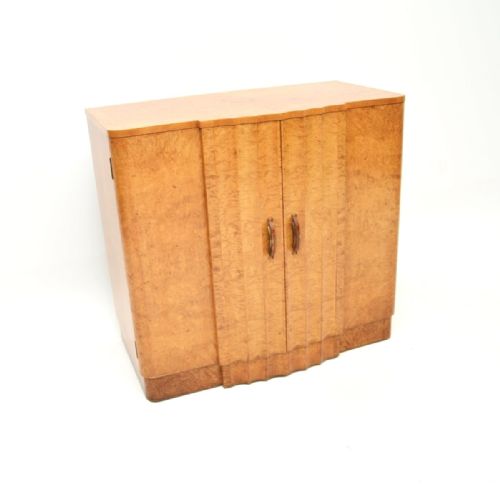
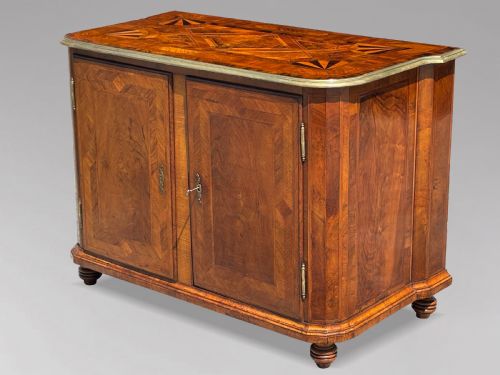
When you search for walnut buffet furniture, you encounter heavy timber storage pieces designed for dining rooms and grand halls, spanning centuries of cabinet making. The pieces here range from 17th-century French serving tables and 18th-century provincial buffets to Victorian burr walnut credenzas and 1930s Art Deco sideboards.
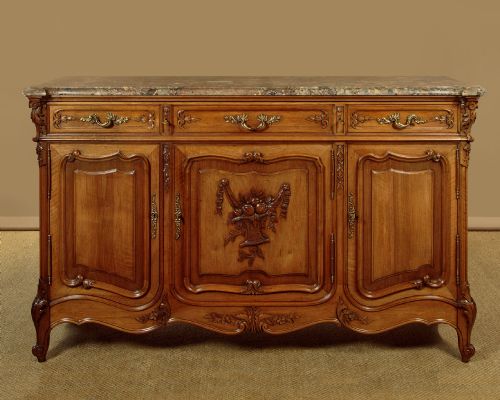
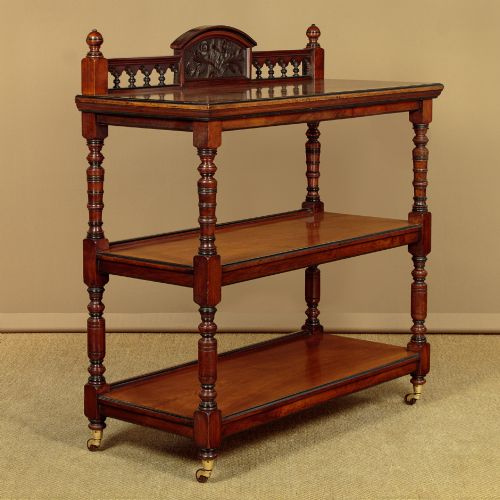
You are most likely to meet Victorian and 1930s examples on this page, reflecting the heavier representation of those eras in the listings. These include elaborately carved cabinets with marble tops alongside sleek Art Deco sideboards finished in burr walnut veneer.
How walnut buffet furniture was made
Cabinet makers utilised solid walnut and figured burr walnut veneers applied to carcases of secondary timber, often enhanced by marquetry patterns and intricate hand carving. Ormolu mounts, brass hardware, marble tops, and glass panels appear frequently across the periods to accent the dark timber.
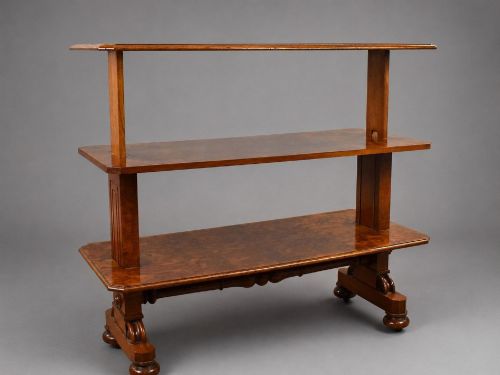
Techniques evolved from the deep joinery and heavy panel construction of the 17th and 18th centuries to the precise veneering methods of the Art Deco period and the mechanised telescopic mechanisms of Victorian dumbwaiters.
Walnut Buffet Furniture Retail Price Guide 2026
Typical asking prices for walnut buffet furniture among the pieces listed under this phrase on Sellingantiques today, from the lower quarter to the upper quarter. They describe what is for sale here now, not the wider market.
Listings feature walnut furniture spanning from the 17th century through to 1930, incorporating marble, brass, and ormolu.
What varies in quality
The distinction between ordinary production and exceptional cabinet making rests in the selection of the timber and the precision of the veneer work. Figured burr walnut with matching grain patterns across large drawer fronts or cabinet doors separates finer commissions from standard workshop output.
The integrity of the carved ornamentation and the quality of applied materials, such as heavy marble slabs, cast ormolu mounts, and original brass hardware, define the upper tier of these dining room pieces.
Gillows·Maurice Adams·Harry and Lou Epstein·Hamptons of Pall Mall London·Bowman Brothers·Gabriel Viardot
The Walnut Buffet Furniture Glossary
- Burr walnut
- A figured wood grain obtained from walnut tree growths, prized for its swirling patterns. It is sliced into thin veneers for decorative cabinet fronts.
- Credenza
- A low dining room cabinet or sideboard, frequently fitted with glass doors and internal shelving. Victorian examples often incorporate marquetry and ceramic plaques.
- Ormolu
- Gilded bronze mounted to furniture as decorative feet, handles, or corner mounts. It provides a bright metallic contrast to dark timber.
- Marquetry
- Inlaid pieces of wood veneer assembled to form decorative pictures or geometric patterns on a surface. It requires considerable skill to execute smoothly.
- Dumbwaiter
- A multi-tiered serving table on a central column, sometimes telescopic or adjustable. These pieces were designed to hold dishes near a dining table without servant intervention.
Walnut Buffet Furniture: Frequently Asked Questions
How do I clean walnut buffet furniture?
Dust regularly with a soft, dry cloth to prevent grit accumulation on the polished surface. Avoid silicone sprays or harsh chemical cleaners that can damage vintage timber finishes.
Apply a quality beeswax polish occasionally to nourish the walnut and maintain a soft sheen. Buff gently with a clean cloth after application.
Can I use a credenza as a sideboard?
Credenzas and sideboards serve similar functional roles for storing dining room tableware and serving food. Their long, low proportions make them practical for contemporary living spaces.
Many period credenzas offer ample internal shelving and surface space suitable for modern entertaining. Ensure the height matches your intended use before placing items.
How do I identify Art Deco sideboards?
Art Deco sideboards feature streamlined geometric shapes, symmetrical layouts, and striking burr walnut veneer patterns. They often lack the heavy carving seen in Victorian or revival pieces.
Look for clean architectural lines, minimalist hardware, and expert book-matched grain arrangements across the doors and drawers.
What is a telescopic dumbwaiter?
A telescopic dumbwaiter is a Victorian serving table with tiers that adjust in height using a central mechanism. It allowed dining rooms to adapt surface space according to the meal.
These pieces required precise engineering to function smoothly without jamming. The adjustable column remains a key feature of Victorian metamorphic furniture.