
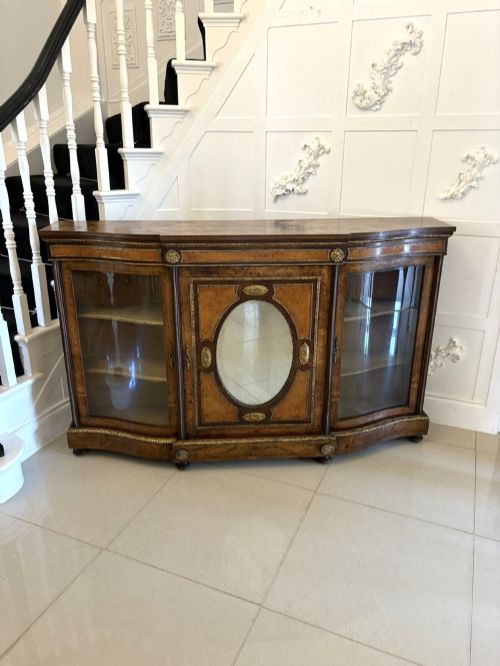
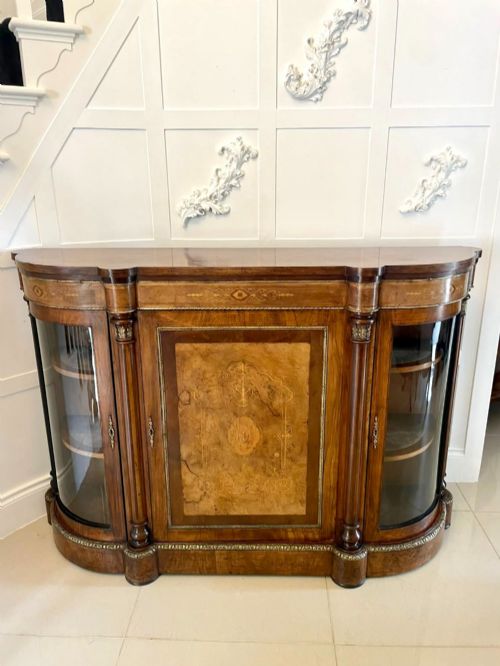
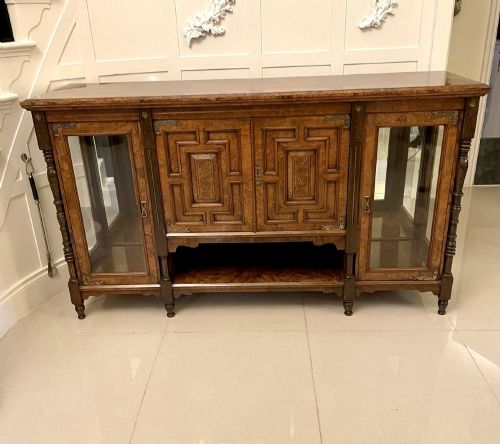
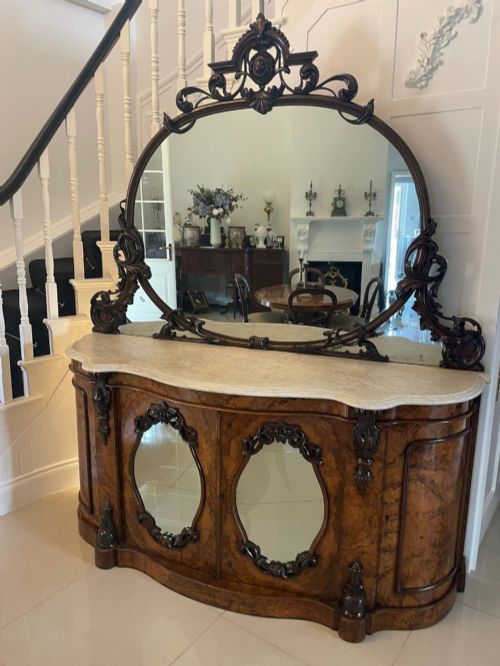

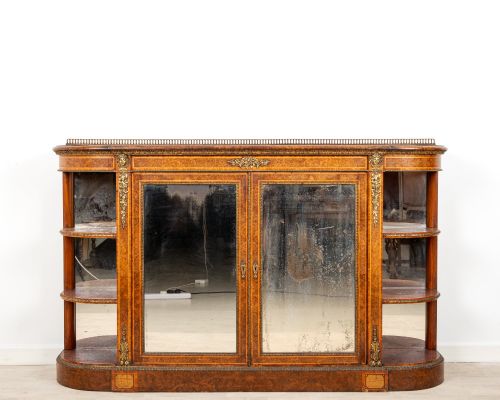
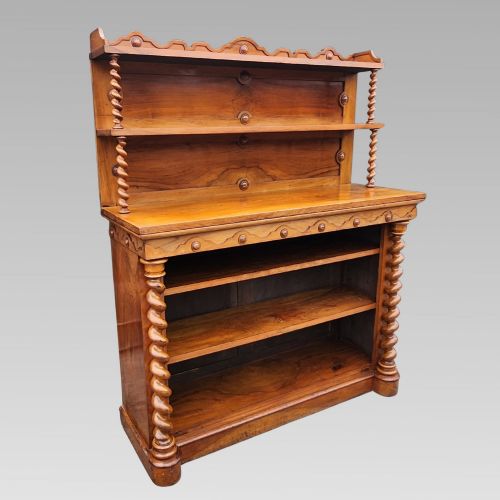


Walnut Buffet Display Cabinet
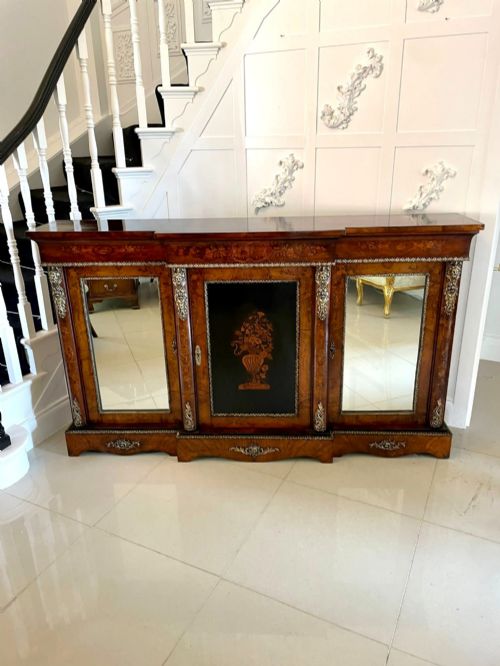
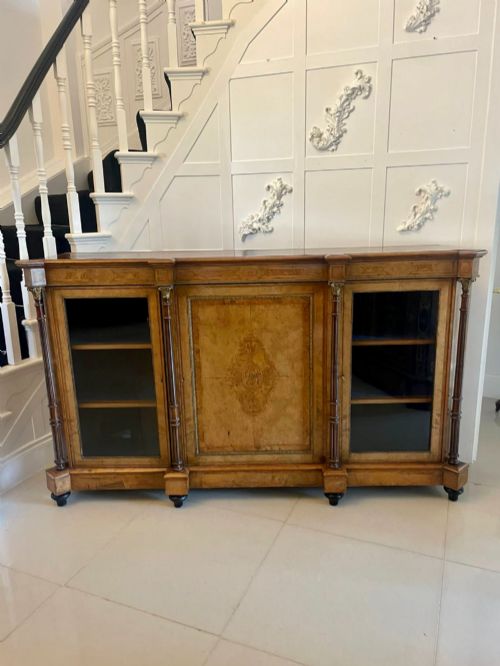
These walnut buffet display cabinet pieces bring striking timber grain and refined storage to any room, anchored firmly in nineteenth-century tradition.
Walnut Buffet Display Cabinet
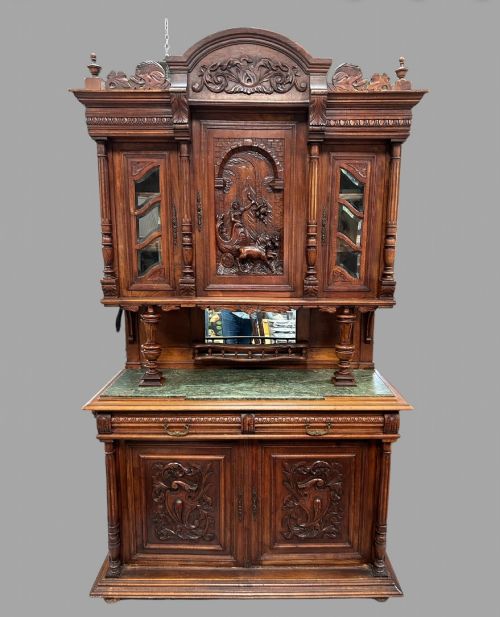
Makers and cabinetmakers of the nineteenth century utilised rich veneers to create substantial architectural forms intended for formal reception rooms. Alongside English Victorian output, the listings include French provincial dressers and Art Deco side cabinets that adapt the walnut medium to later tastes.
The objects serve as functional display furniture, uniting cupboards, shelving and surface display within a single decorative carcass. Buyers encounter diverse regional revivals, ranging from Louis XIII details to Aesthetic Movement styling.
How they were made
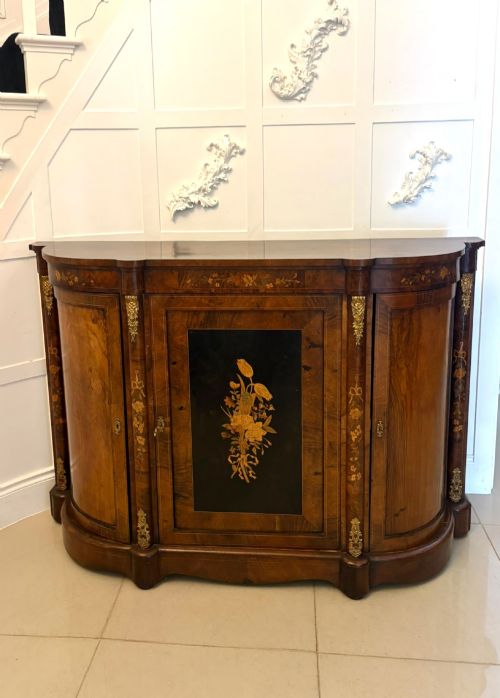
Cabinetmakers constructed these pieces using solid walnut and figured burr walnut veneers applied to secondary timbers, accentuating the natural grain patterns across curved and serpentine surfaces. Marquetry inlay utilising boxwood, alongside applied ormolu mounts, added decorative contrast to the primary timber.
Glazed doors, mirrored backs and occasionally marble tops or porcelain plaques completed the assembly, requiring sophisticated joinery to support heavy stone and glass components. Carved wooden elements and brass detailing finished the structural framework.
The site listings span from the eighteenth century through the Victorian era into Art Deco periods, dominated by burr walnut credenzas.
What varies in quality
The standard of timber selection and veneer matching defines the visual hierarchy, with intricate burr walnut grain and detailed floral marquetry marking out superior cabinetwork. The precision of the ormolu mounts and the depth of hand-carved ornamentation separate standard production items from exhibition pieces.
Structural complexity also dictates worth, where serpentine forms, mirror-backed superstructures and integrated side cabinets demonstrate advanced carpentry skills. The inclusion of specialist materials such as Sevres porcelain plaques elevates specific credenzas above simpler storage vessels.
Gillow
The Walnut Buffet Display Cabinet Glossary
- Credenza
- A sideboard or display cabinet lacking tall legs, typically featuring central cupboards flanked by curved glass doors. This form dominated high-status Victorian dining and drawing rooms.
- Burr Walnut
- A figured wood veneer harvested from the tree growths where branches join the trunk. It creates a swirling, highly decorative pattern prized by nineteenth-century cabinetmakers.
- Ormolu
- Gilt bronze ornamentation applied to furniture carcass corners and mounts. It provided metallic contrast against dark walnut surfaces during the nineteenth century.
- Marquetry
- The art of applying decorative pieces of veneer to a structure to form intricate designs. Floral motifs are frequently seen on nineteenth-century walnut panels.
- Serpentine Front
- A furniture front characterised by a concave central section flanked by two convex curves. This shape requires advanced woodworking skill to execute properly.
Walnut Buffet Display Cabinet: Frequently Asked Questions
What is a walnut buffet display cabinet used for?
These cabinets serve as principal storage and display furniture within a room, combining enclosed cupboard space with visible surface areas for ornaments and plate.
Historically, they occupied dining rooms and parlours to hold tableware while exhibiting prized ceramics and glassware behind glass or open shelves.
How do I identify a Victorian credenza?
Victorian credenzas typically present a low-profile silhouette with a central cupboard flanked by curved glazed doors, frequently decorated with burr walnut veneer and boxwood inlay.
Many incorporate mirrored backs or ormolu mounts, reflecting the ornate aesthetic favoured by mid-nineteenth-century British and continental cabinetmakers.
Are Art Deco walnut cabinets different?
Art Deco walnut cabinets discard nineteenth-century revival ornamentation in favour of clean geometric lines and streamlined geometric forms.
While still utilising rich walnut veneers, these later twentieth-century pieces rely on minimalist geometry rather than marquetry or applied bronze mounts.
How should I care for burr walnut furniture?
Burr walnut requires stable indoor humidity away from direct sunlight and heat sources to prevent the delicate veneer from drying or lifting.
Routine dusting with a soft, dry cloth and occasional application of appropriate furniture wax preserves the polished sheen of the timber.