



Walnut Tiered Display Shelf
A walnut tiered display shelf brings warmth and vertical storage to a room, offering multiple levels for books, ceramics and ornaments.
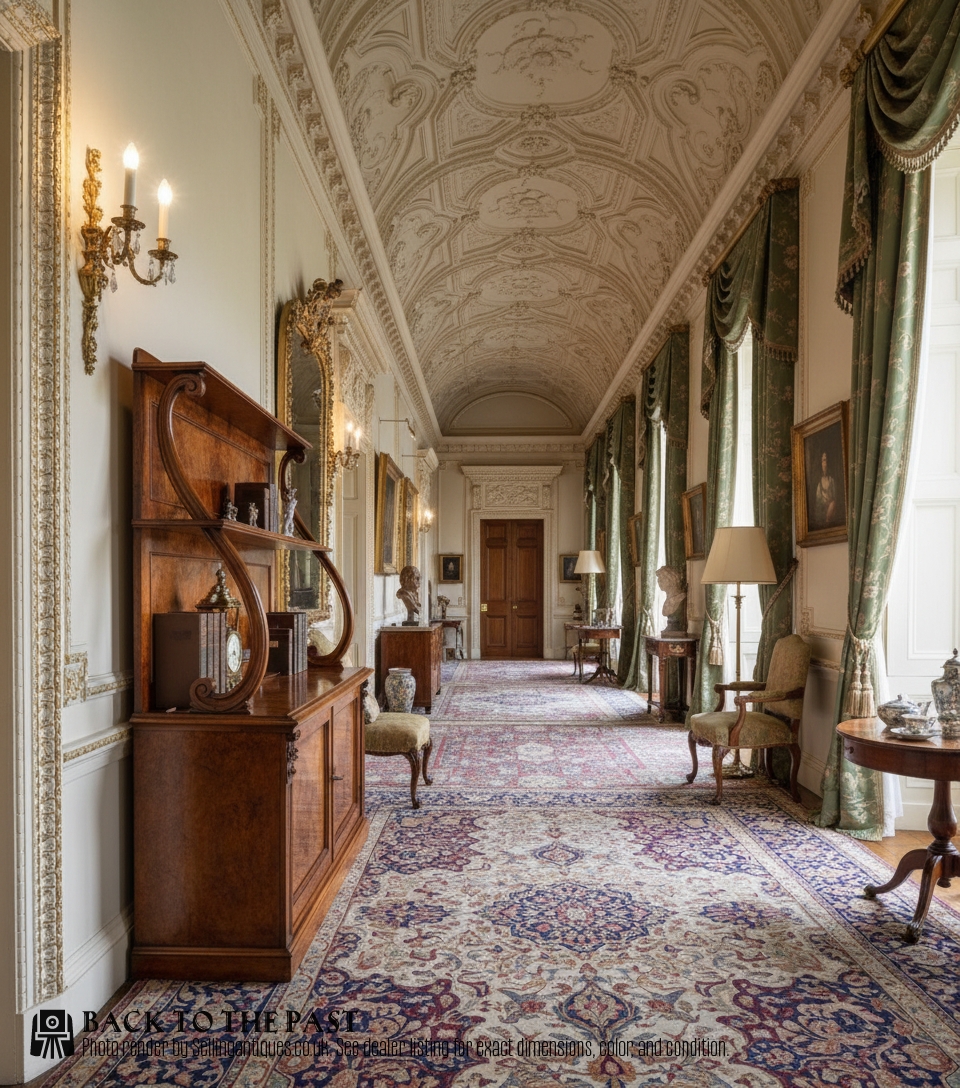
Walnut Tiered Display Shelf
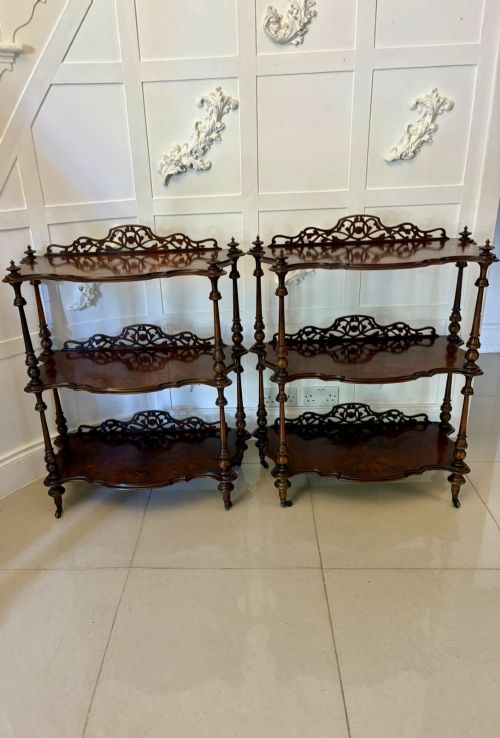
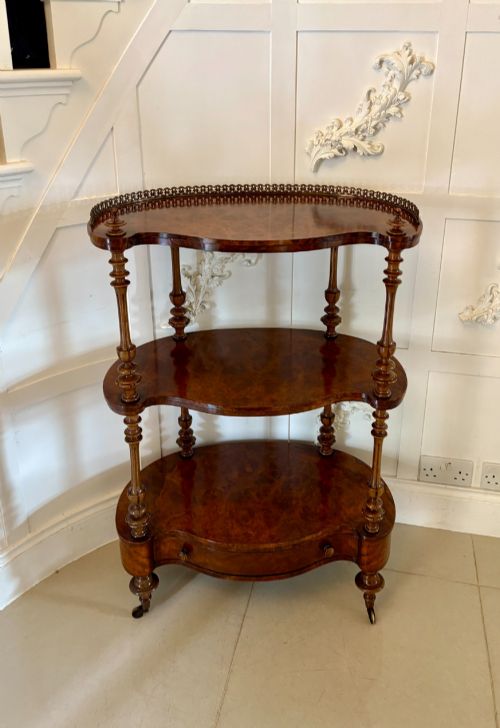
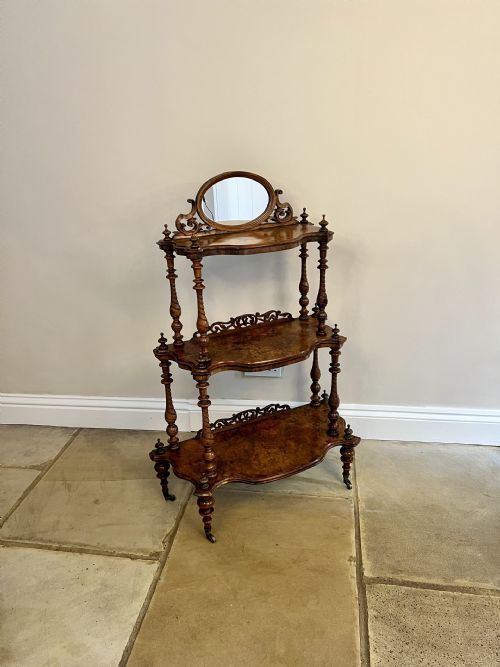
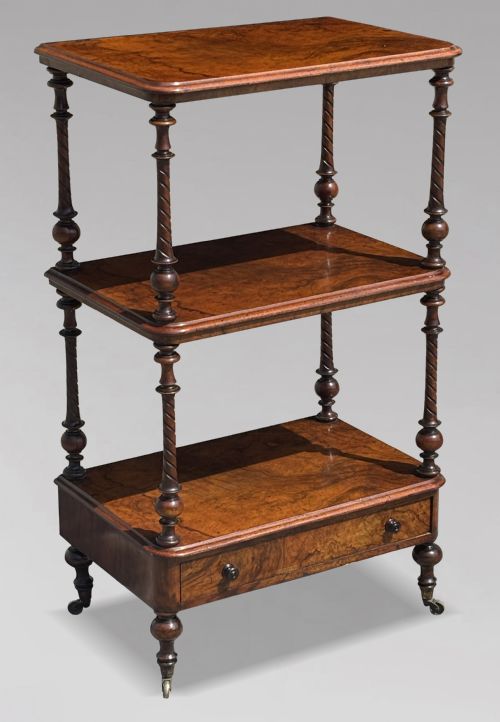
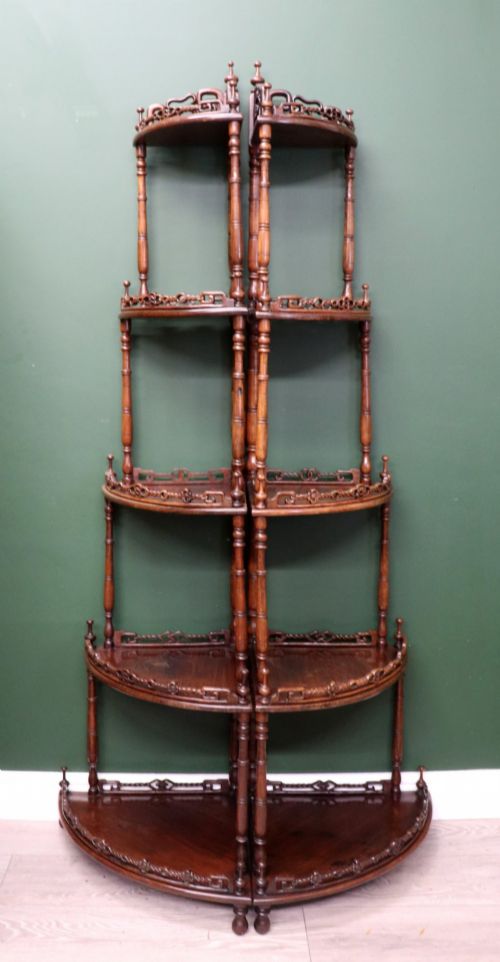
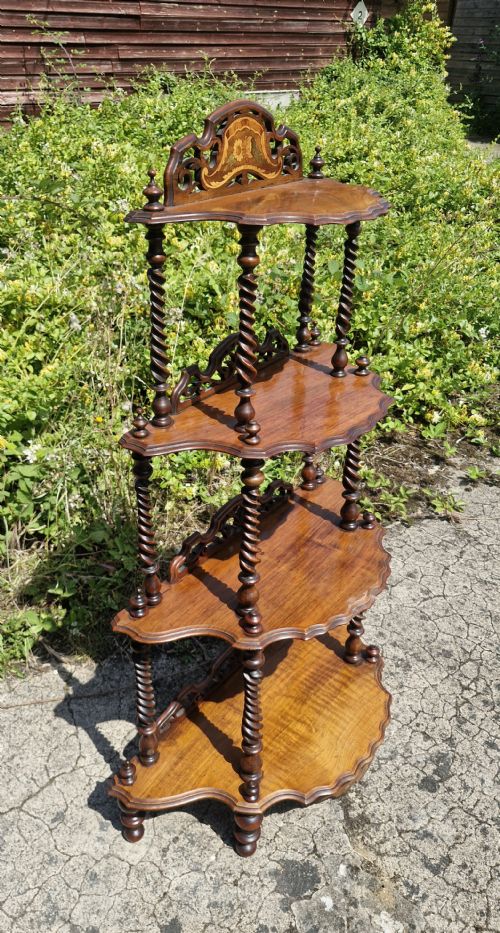
A walnut tiered display shelf, commonly encountered as a Victorian whatnot, etagere or corner shelf, provides ascending levels supported by turned columns or uprights. These pieces originate predominantly from the nineteenth century, spanning periods from the 1850s through to 1900, alongside occasional Edwardian and French revival examples.
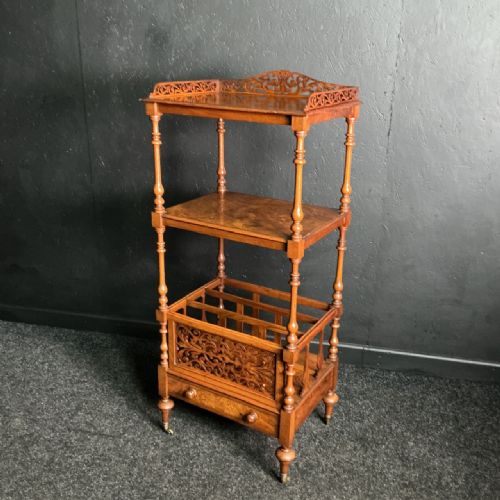
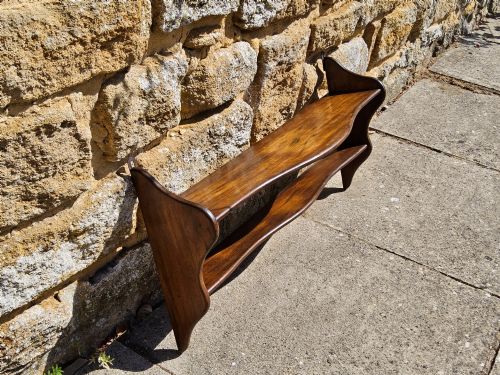
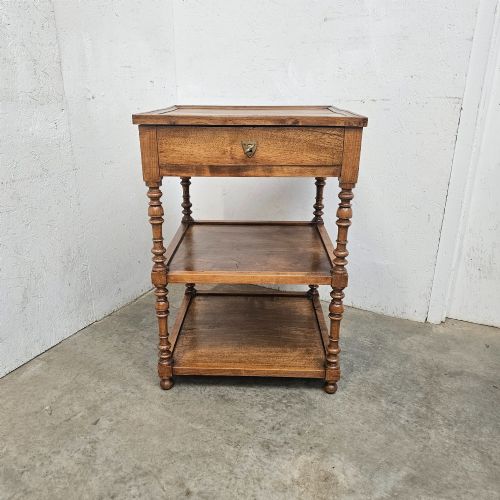
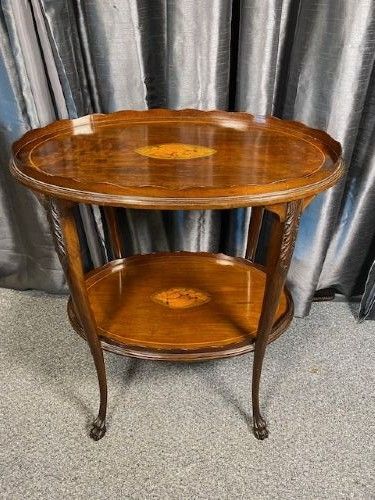
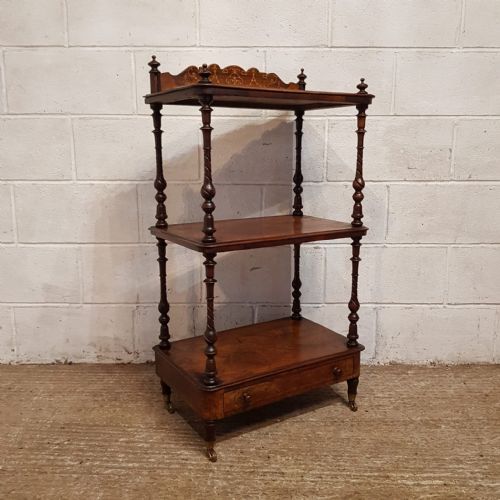
Forms vary significantly across the listings, ranging from freestanding serpentine and freestanding carved items to wall-mounted shelves, corner units and combination pieces that incorporate cabinets, music storage or lower drawers.
Materials and Construction
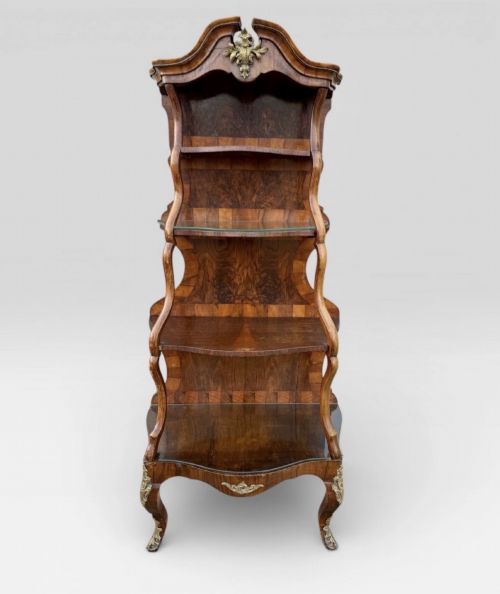
Makers utilised solid walnut and decorative burr walnut veneers, which provide rich figuring across the tiered surfaces. These wooden structures are frequently enhanced with contrasting boxwood or marquetry inlay, along with brass mounts or ormolu details.
Structural support relies on turned wooden legs or columns, while more ornate French-influenced pieces incorporate gilt metal mounts, glass panels and shaped serpentine edges.
The documented pieces span the Victorian, Edwardian and William IV periods, alongside French provincial and Rococo revival styles.
Judging Quality and Craftsmanship
Quality rests primarily in the choice of timber and the depth of the grain, with highly figured burr walnut commanding attention over plainer stock. The crispness of the turning on the upright supports and the precision of any marquetry or boxwood inlay further separate standard production from exhibition pieces.
Proportion and stability dictate the usefulness of a tiered shelf, particularly in freestanding multi-level formats where the joints between shelves and uprights must remain rigid and true.
The Walnut Tiered Display Shelf Glossary
- Whatnot
- A piece of furniture consisting of a set of open shelves for displaying small objects or ornaments. It gained popularity during the Victorian period.
- Etagere
- A piece of furniture with a series of open shelves for displaying ornaments, closely related to the whatnot and often reflecting French design influences.
- Burr walnut
- A specialised wood veneer taken from a walnut tree growth, yielding intricate, swirling patterns that decorators prize for cabinet fronts and display surfaces.
- Marquetry inlay
- Decorative patterns formed by fitting small pieces of veneer into a prepared wood surface, often depicting floral or geometric motifs.
- Ormolu
- Gilded bronze ornamentation applied to furniture and decorative objects, frequently seen on French-influenced pieces from the nineteenth century.
Walnut Tiered Display Shelf: Frequently Asked Questions
What is a walnut tiered display shelf?
A walnut tiered display shelf is an open shelving unit designed to hold ornaments, books and small decorative items across multiple vertical levels. These items are most commonly found in nineteenth-century Victorian forms such as whatnots and etageres.
They serve as both display furniture and practical storage, making efficient use of floor or wall space in a sitting room or hallway.
How do I style a tiered shelf?
Living with these pieces involves balancing objects of varying heights and materials across the different tiers, allowing the figured walnut grain to remain visible between displays. Placing heavier books or ceramics on the lower stages keeps the structure visually grounded.
Freestanding models suit corners and open wall spaces, while wall-mounted variants work well above side tables or credenzas.
Are these shelves sturdy enough for heavy books?
While these shelves accommodate a moderate collection of books or heavy ornaments, lighter decorative objects suit the upper tiers better to maintain stability. The upright columns and shelf joints dictate the weight capacity of each individual level.
Freestanding items with solid walnut frames offer greater load-bearing reliability than delicate wall-mounted alternatives.