

Walnut Bedroom Storage
Walnut bedroom storage encompasses wardrobes, chests of drawers and bedside cabinets that bring rich timber grain and classic proportion to sleeping quarters.
Walnut Bedroom Storage
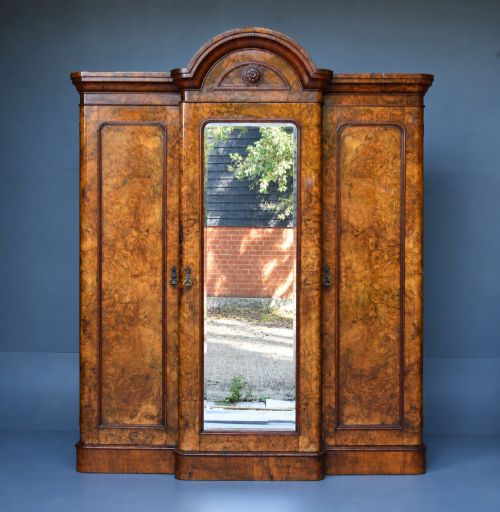
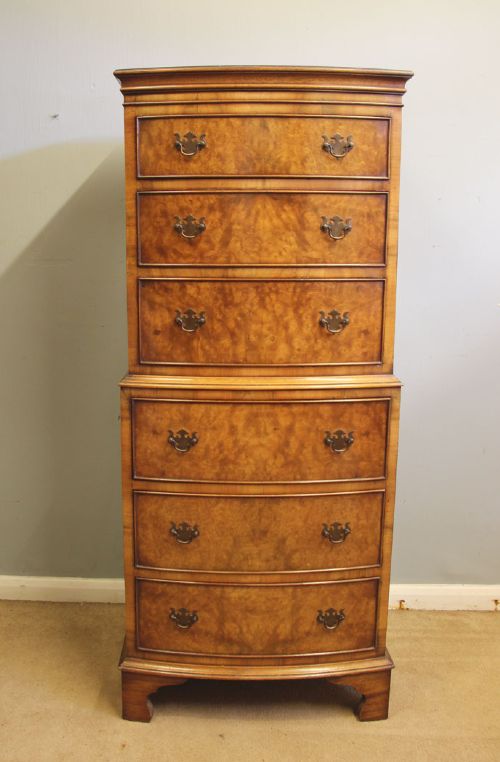
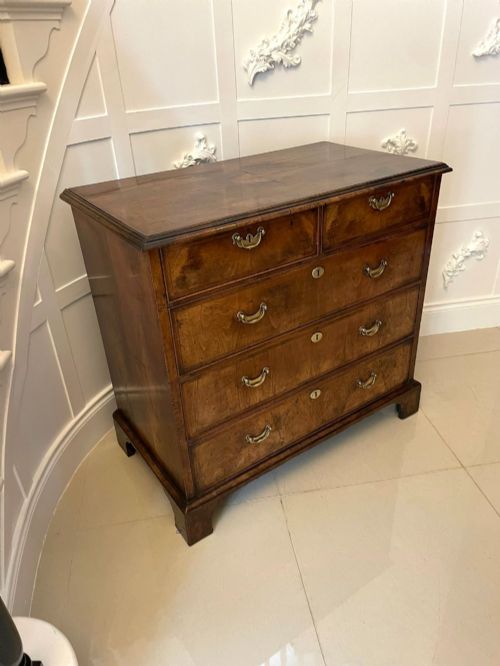
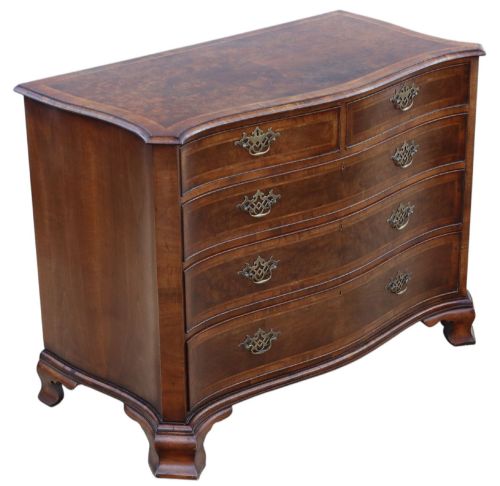
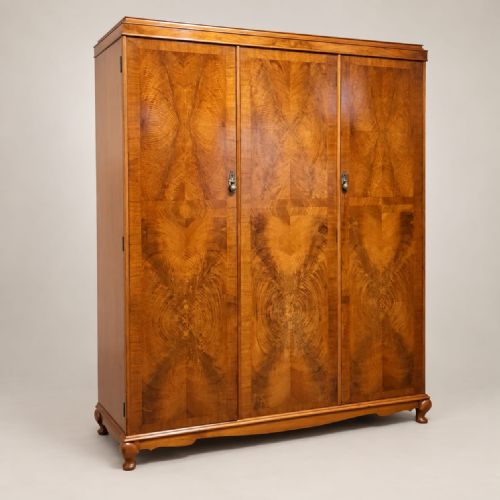
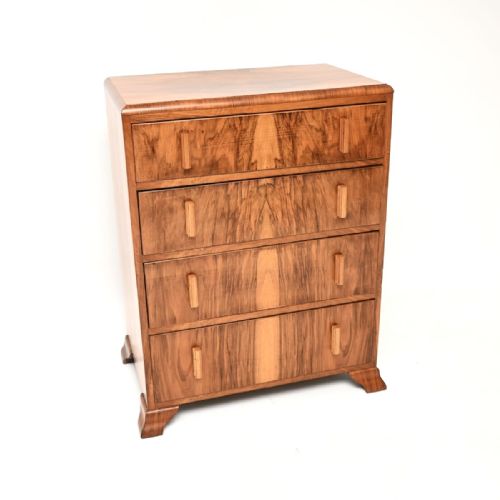
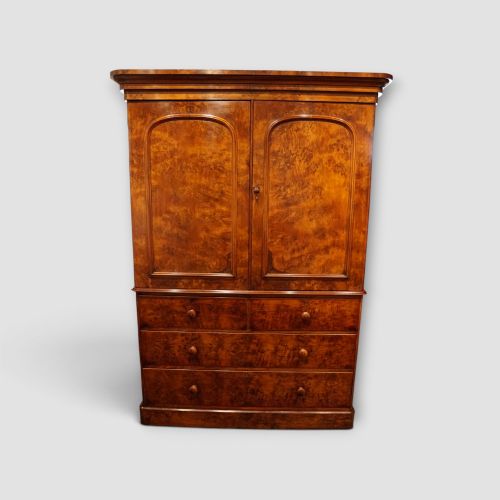
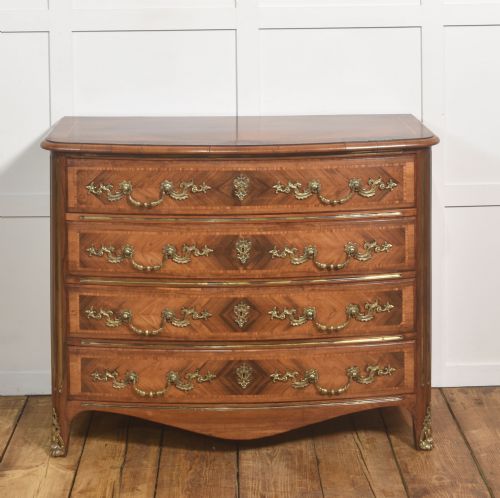
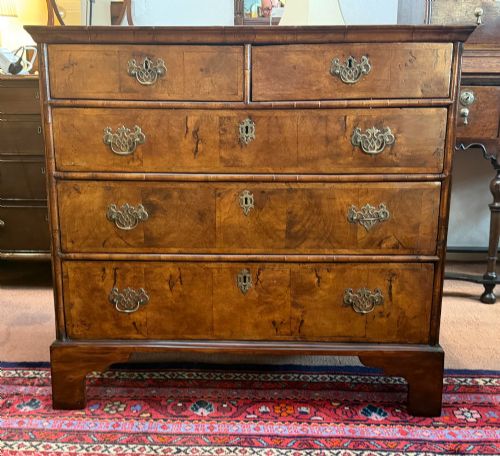
Walnut bedroom storage takes several distinct forms across the centuries, dominated primarily by chests of drawers, spacious wardrobes, tallboys and compact bedside cabinets. Pieces range from sturdy 18th-century Georgian designs to ornate Victorian linen presses and streamlined Art Deco cabinets.
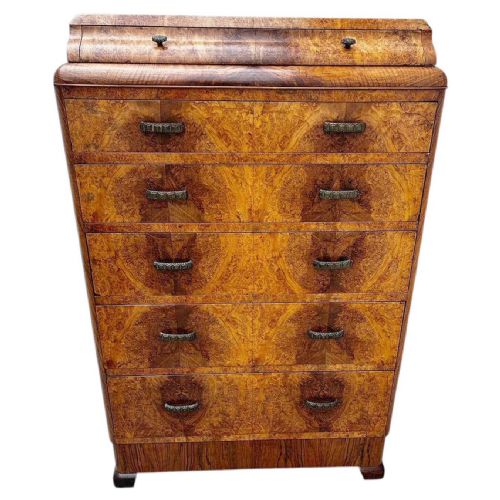
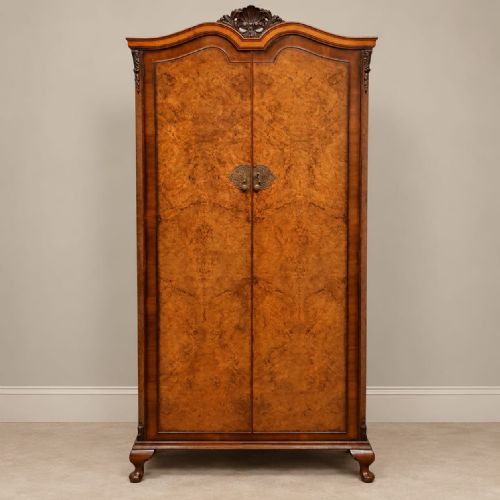
The 1920s and 1930s provide a strong representation of burr walnut chests and fitted wardrobes featuring bow front shapes. Buyers frequently encounter pieces displaying the distinct swirling figures of walnut veneer alongside solid structural timbers.
Construction and Materials
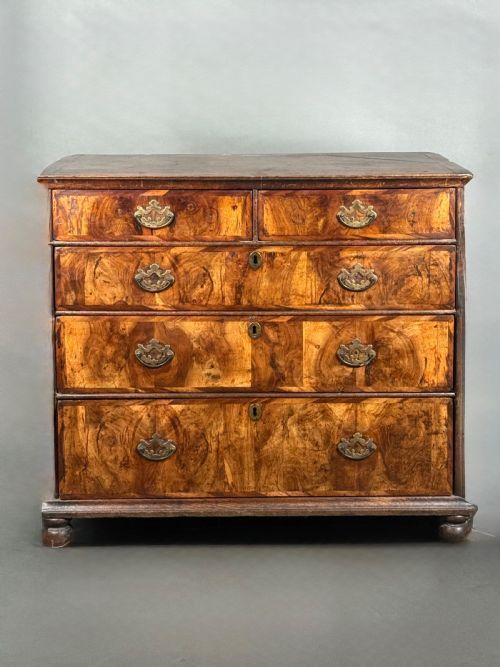
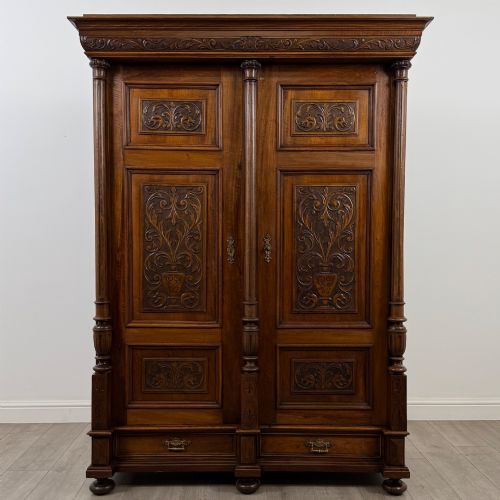
Cabinet makers utilise walnut and burr walnut veneers applied over secondary timbers such as oak, creating complex grain patterns across large surfaces like wardrobe doors and drawer fronts. Crossbanding and marquetry details often frame the primary panels.
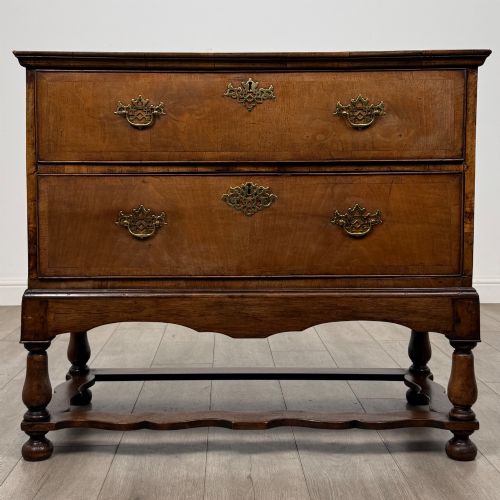
Solid brass handles, escutcheons and structural fittings complement the timber work, while dovetail joints secure the drawer construction. Metal components and auxiliary woods like kingwood provide contrasting structural support.
Walnut Bedroom Storage Retail Price Guide 2026
Typical asking prices for walnut bedroom storage among the pieces listed under this phrase on Sellingantiques today, from the lower quarter to the upper quarter. They describe what is for sale here now, not the wider market.
Some Victorian Wellington chests include a hidden locking arm that requires the keyhole flap to drop before any drawer moves.
Judging Quality
Quality depends heavily on the selection and matching of the veneer figures across the front of a chest or wardrobe. Grain symmetry and careful placement of burr walnut indicate higher workshop standards.
The crispness of mouldings, the integration of crossbanding, and the precision of the drawer joints differentiate standard utility items from finer decorative examples produced during various periods.
Jas Shoolbred
The Walnut Bedroom Storage Glossary
- Burr walnut
- A prized timber figure formed from tree growths, creating intricate swirling patterns used for decorative veneer on cabinet fronts.
- Chest on chest
- A tall storage unit comprising one chest of drawers stacked directly on top of a larger base chest, also known as a tallboy.
- Crossbanding
- A narrow strip of veneer laid around the border of a drawer or panel with the grain running perpendicular to the centre.
- Linen press
- A tall cabinet featuring upper sliding trays or shelves enclosed by doors, positioned above a base of lower storage drawers.
- Serpentine
- A curved furniture front characterised by a convex centre flanked by concave ends, creating a flowing wave shape.
Walnut Bedroom Storage: Frequently Asked Questions
What is a Wellington chest?
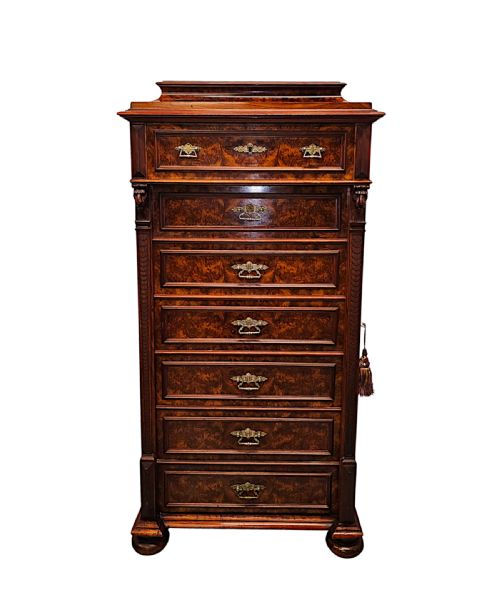
A Wellington chest is a tall, narrow set of drawers secured by a hinged locking side pilaster bar that fastens over the drawer edges.
This specific form originates from the 19th century and provides secure vertical storage with a relatively small floor footprint.
How do I date a walnut wardrobe?
Dating relies on observing stylistic markers, construction methods, and hardware types. Georgian pieces show different proportions compared to 1920s Art Deco wardrobes.
Veneer application techniques and internal fittings also shift from simple timber hanging spaces to fitted compartmentalised wardrobe interiors.
What is burr walnut?
Burr walnut comes from a tree growth or excrescence that produces highly complex, swirling grain patterns full of small knots.
Cabinet makers slice this wood into thin veneers to display decorative faces on prominent drawer fronts and cupboard doors.
Are these pieces made of solid walnut?
Most walnut bedroom furniture utilises timber veneers laid over a stable secondary wood base such as oak or pine.
This technique prevents warping across large surfaces while allowing makers to display expensive figured veneers on the exterior.