

Walnut Armoire Cabinet
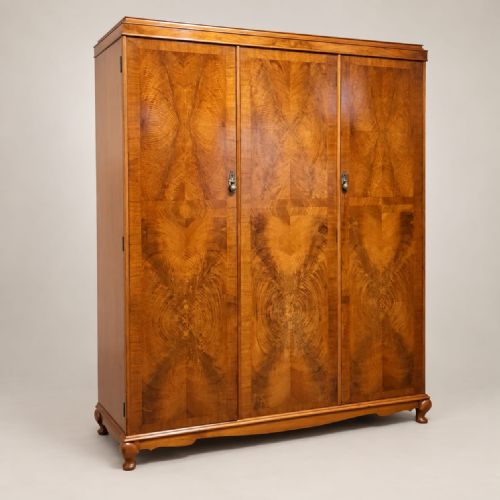
A walnut armoire cabinet delivers substantial storage while displaying rich timber figures across French, Dutch, and English designs.

Walnut Armoire Cabinet
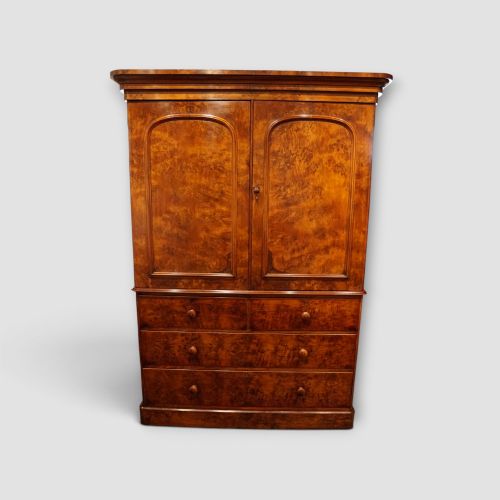
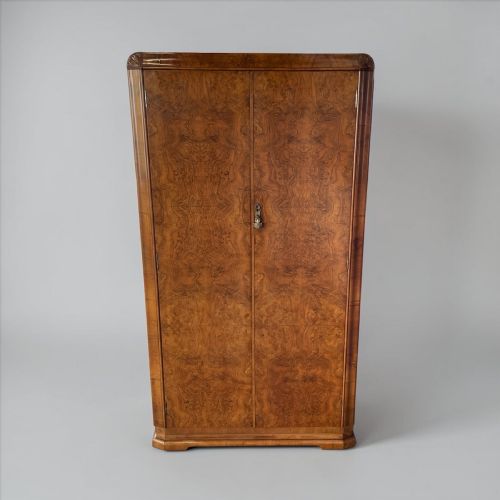
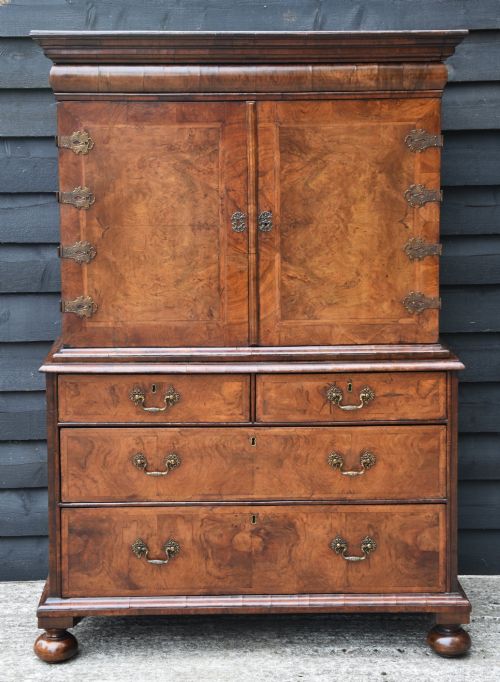
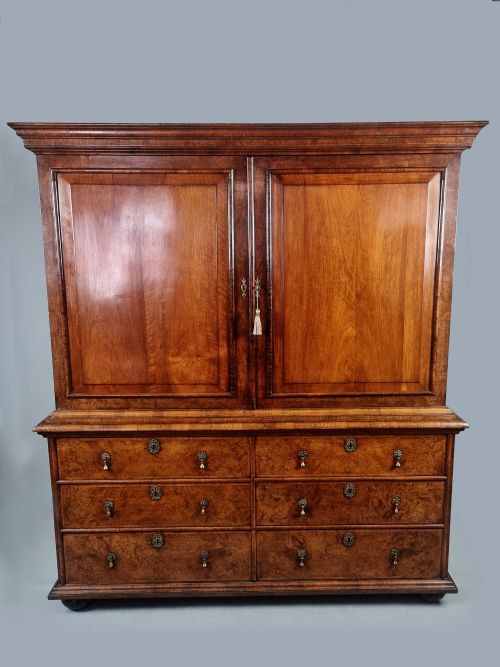
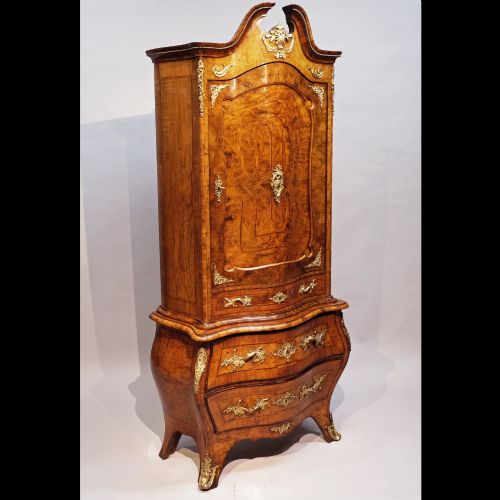
A walnut armoire cabinet search covers large storage pieces including fitted wardrobes, linen presses, and multi-tier cabinets on chests. Buyers encounter robust examples ranging from seventeenth-century William and Mary constructions to streamlined Art Deco compactums.
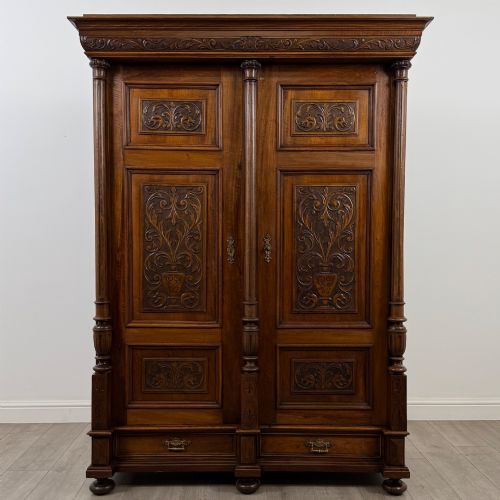
The material vocabulary spans plain timber alongside highly figured burr walnut and marquetry inlay. Pieces originate from diverse regional workshops across France, Italy, Holland, and Britain, each expressing distinct regional proportions and decorative carving.
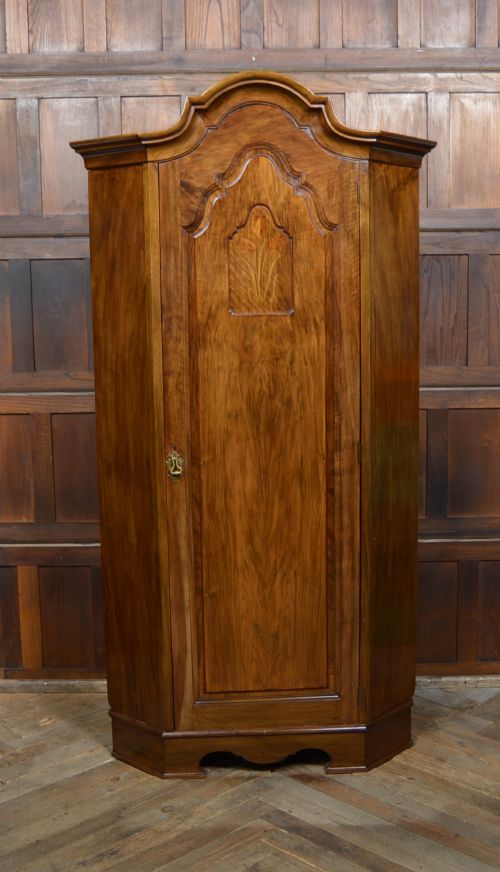
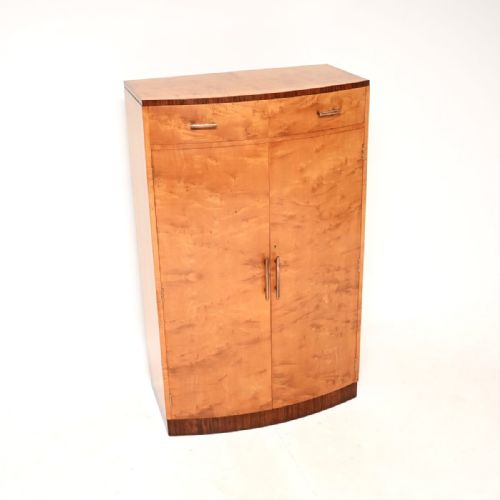
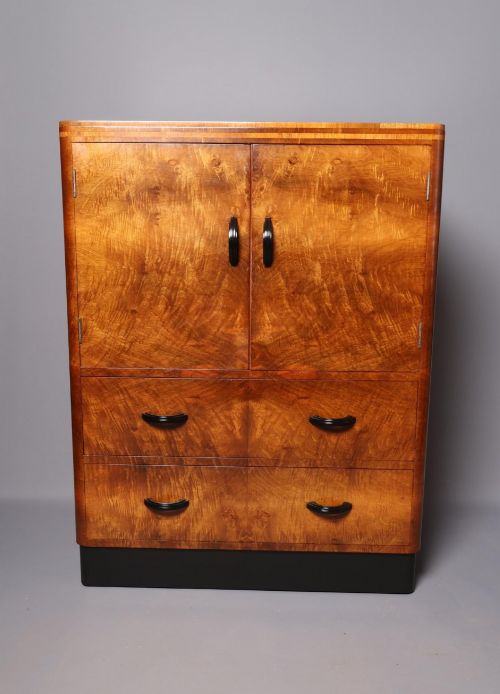
Tall Continental armoires and double wardrobes dominate the forms, frequently incorporating internal hanging space, sliding trays, or lower banks of drawers. Smaller corner robes and compactum configurations also appear to suit restricted spatial footprints.
Materials and construction
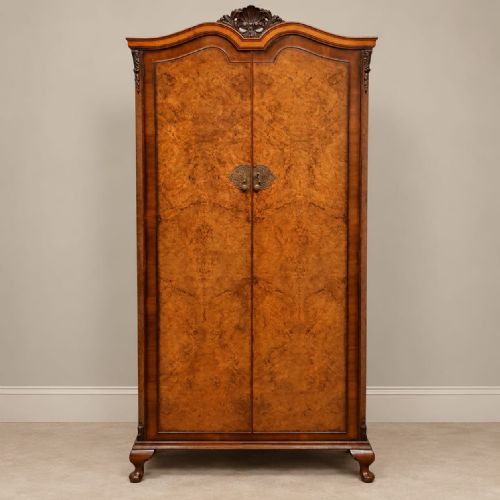
Cabinet makers utilised solid walnut frames combined with decorative burr veneers applied over secondary carcase timbers such as oak or pine. Marquetry panels introduced contrasting floral or geometric inlays using specialised wood types.
Structural integrity relied on traditional joinery methods, including dovetail joints for internal drawers and panelled door construction to accommodate timber movement. Metal hardware such as brass handles and ormolu mounts secured doors and provided functional ornamentation.
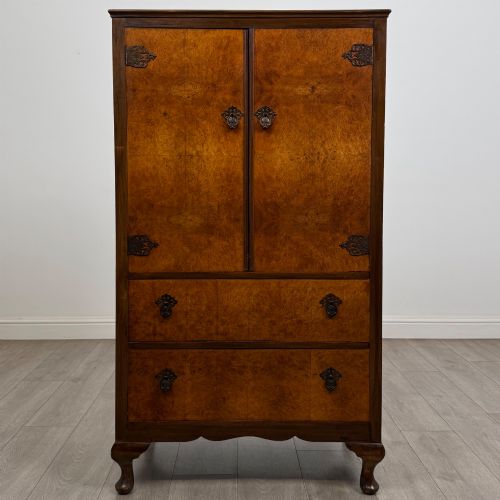
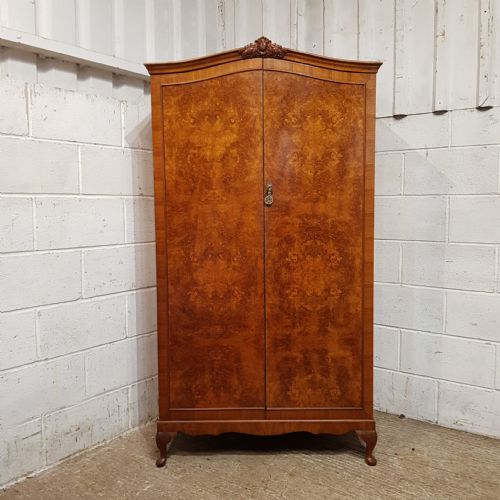
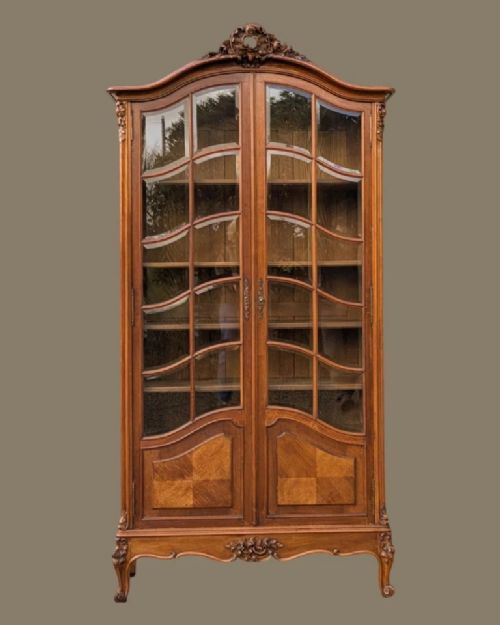
Listings feature walnut armoire cabinets spanning from the 17th century through the Art Deco period, incorporating brass, glass, and iron hardware.
Evaluating craftsmanship
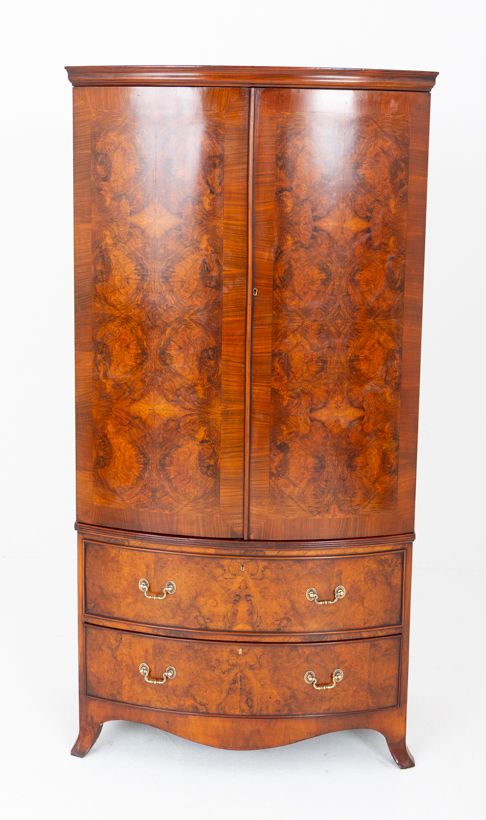
The hierarchy of quality rests on the selection and symmetry of veneer matching across expansive door panels and drawer fronts. Elaborate floral marquetry and well-preserved surface polishes distinguish master workshops from standard regional production.
Structural refinement shows in the weight and proportion of the cornice, the crispness of hand-carved mouldings, and the original integration of internal fittings. Altered interiors or replaced hardware alter the original integrity of the piece.
Harry and Lou Epstein
The Walnut Armoire Cabinet Glossary
- Burr walnut
- A figured wood grain derived from tree growths, yielding intricate swirling patterns highly prized for decorative cabinet facades. This veneer defines the primary aesthetic of many twentieth-century wardrobes.
- Compactum
- A multi-functional wardrobe featuring internal divisions, sliding trays, and clothes hanging sections within a single footprint. These configurations gained popularity during the Victorian and Art Deco periods.
- Bombé
- A swelling, convex furniture shape characteristic of eighteenth-century Dutch cabinet making. This curved profile requires exceptional mastery of veneer application.
- Linen press
- A tall storage cupboard containing sliding trays above a base fitted with drawers. Originally designed for storing household textiles.
- Cabinet on chest
- A two-part storage form comprising an upper enclosed cabinet resting upon a lower chest of drawers. This architectural format was prominent during the seventeenth and eighteenth centuries.
Walnut Armoire Cabinet: Frequently Asked Questions
How do I date a walnut wardrobe?
Dating relies on architectural proportions, construction methods, and surface treatments. Seventeenth-century examples often display oyster veneers and geometric mouldings, while twentieth-century Art Deco pieces feature streamlined silhouettes and contrasting wood pairings.
Secondary woods visible inside drawers and back panels also offer clues. Oak and hand-cut dovetails typically point to earlier periods, whereas later pieces incorporate standardised machine joinery.
What is the difference between an armoire and a wardrobe?
In historical terms, an armoire typically refers to a Continental European cupboard used for storing arms or garments, often featuring deep shelving or flexible internal volumes. Wardrobes generally evolved specifically for hanging garments on internal rails.
Over time, these terms became largely interchangeable in marketplace descriptions, covering tall wooden storage furniture with one or more doors.
How should I maintain burr walnut surfaces?
Burr walnut benefits from stable environmental conditions away from direct heat sources and strong sunlight, which can dry out timber and fade delicate veneer figures. Maintaining consistent indoor humidity prevents wood splitting.
Periodic application of appropriate wax polish maintains the lustre of the finish without building up heavy residue. Gentle dusting with a soft, dry cloth prevents surface scratching.