
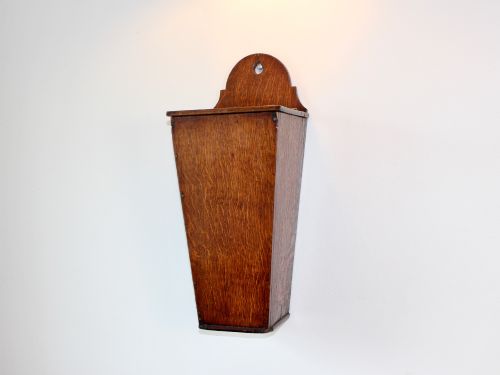


Wall Hanging Candle Box
These wall hanging candle box pieces are sturdy domestic storage items designed to keep tallow dips safe from mice while hanging close to the hearth.
Wall Hanging Candle Box
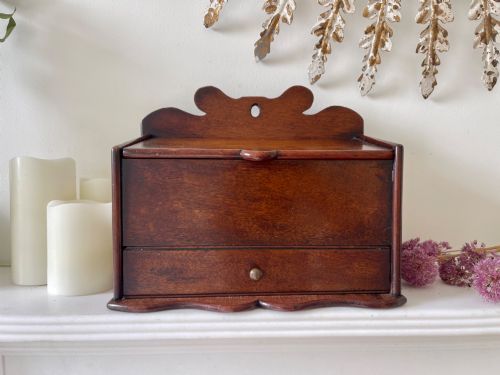
When you search for a wall hanging candle box, you encounter timber receptacles built specifically to be mounted on a wall rather than set upon a surface. The examples seen here range from the 17th century through the Victorian era, taking forms such as wall boxes, spill boxes, and combined salt receptacles.
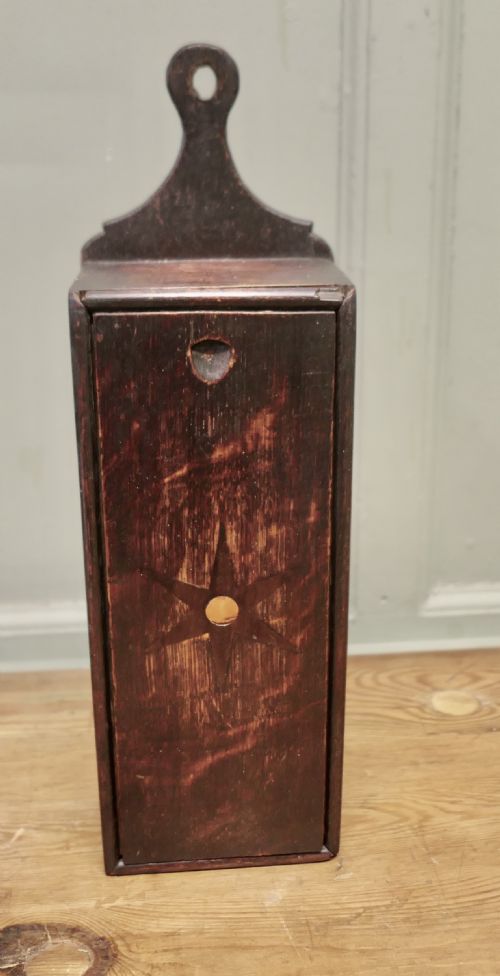
Oak dominates the selection, frequently shaped into Georgian vernacular styles and English country pieces. You also meet mahogany, pine, elm, and boxwood inlay, reflecting both formal town houses and rural Welsh or Dutch traditions.
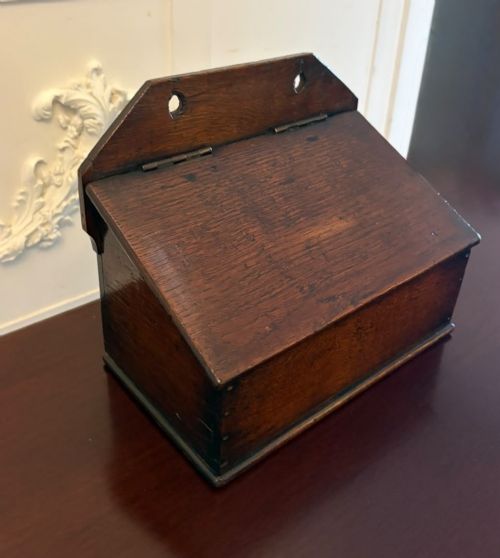
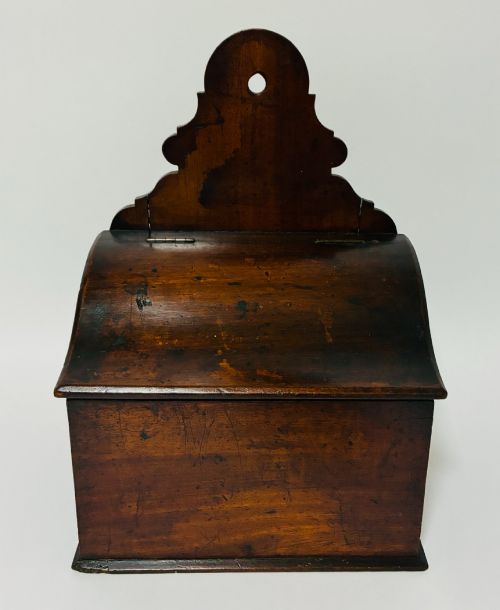
Sloping lids and shaped backboards distinguish these items, allowing them to hang flush against plaster or wood panelling. Many incorporate iron hardware, hinges, or traces of early red paint alongside compartments intended for tapers or keys.
Materials and construction methods
Cabinetmakers and rural joiners utilised native hardwoods, predominantly oak and elm, selecting timber for strength and straight grain. Boards were joined using traditional pegged construction, dovetails, or simple housing joints designed to withstand the constant opening of lids.
Iron hardware, including hinges, latches, and hanging loops, was forged by hand to secure the lids and allow safe wall mounting. Decorative touches such as boxwood inlay, flame mahogany veneers, or carved detailing appear on select pieces from more formal Georgian workshops.
The listings show materials spanning oak, mahogany, elm, pine, brass, iron, copper, and boxwood inlay across multiple centuries.
Assessing quality and craftsmanship
The distinction between ordinary utility items and superior examples lies in the crispness of the joinery and the preservation of original surfaces. Pieces retaining early hardware, original backboards, and undisturbed patination command greater attention from collectors.
Proportion and form also determine distinction, with unusual arched profiles, bell-shaped lids, or integrated drawers showing higher ambition from the maker. Heavy alterations, replaced backs, or excessive sanding diminish the integrity of an antique box.
The Wall Hanging Candle Box Glossary
- Treen
- Small handmade wooden household objects. These items include boxes, small containers, and domestic utensils shaped by turners and joiners.
- Spill box
- A small wall-mounted container designed to hold thin wooden spills. People used these tapers to transfer fire from the hearth to candles or pipes.
- Vernacular
- Everyday objects made by regional craftsmen following local traditions rather than high-style metropolitan fashions. These pieces prioritise practical utility over academic ornament.
- Patina
- The surface texture, colour, and soft sheen acquired by timber through decades of handling, light, and polishing. It indicates age and careful use.
Wall Hanging Candle Box: Frequently Asked Questions
How were wall hanging candle boxes used?
These boxes hung near fireplaces or doorways to keep tallow or beeswax candles dry, clean, and safe from household pests. The sloping lids helped shed dust while providing quick access to light.
Many examples served dual purposes, featuring divided interiors or lower compartments for salt, matches, or keys. Their wall-mounted design saved valuable table space in busy domestic rooms.
Where should I hang a candle box?
Mount your box on a sturdy wall using appropriate fixings that match the weight of the timber and old hanging loops. Avoid placing antique wood in direct sunlight or right next to active heat sources.
Kitchens, hallways, and living rooms suit these pieces well, echoing their original domestic context. Ensure the hanging height allows you to open the lid safely without striking the wall.
How do I date an oak candle box?
Examine the construction methods, tool marks on the timber, and the style of the iron hardware. Hand-forged hinges and pegged joints often point to 17th or 18th-century origin.
Timber shrinkage, nail types, and the depth of the surface patina also provide clues. Georgian and Victorian examples show increasing standardisation in saw marks and secondary woods.
Are mahogany boxes later than oak ones?
Mahogany became widely available during the Georgian period, so mahogany candle boxes generally date from the 18th century onward. Oak boxes span a much longer timeframe, reaching back into the 17th century.
Finer timbers like mahogany or flame veneers usually indicate a more urban or prosperous household setting. Oak was the standard choice for rural country workshops and earlier vernacular pieces.