


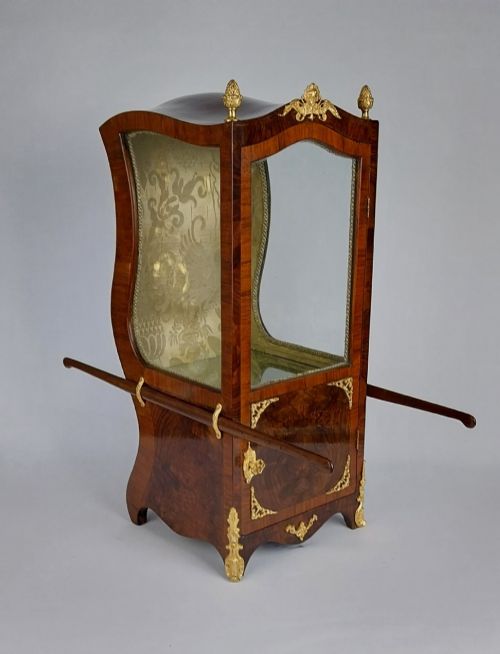
Vitrine Display Table
A vitrine display table holds small treasures under glass, combining the utility of a cabinet with the surface of a parlour table.
Vitrine Display Table
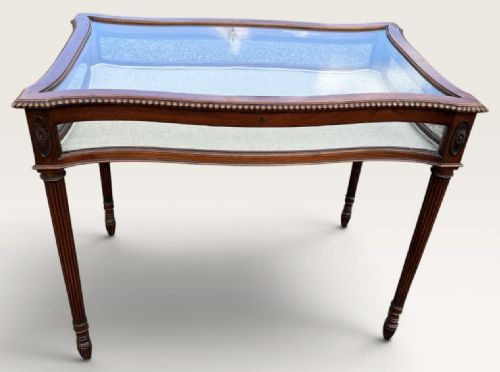
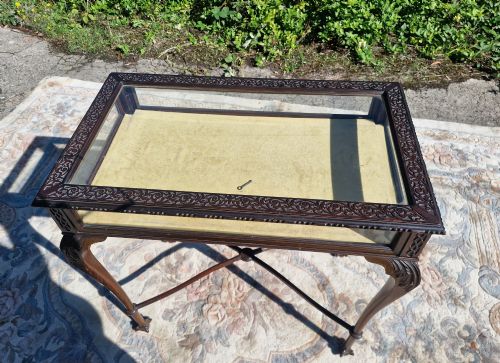
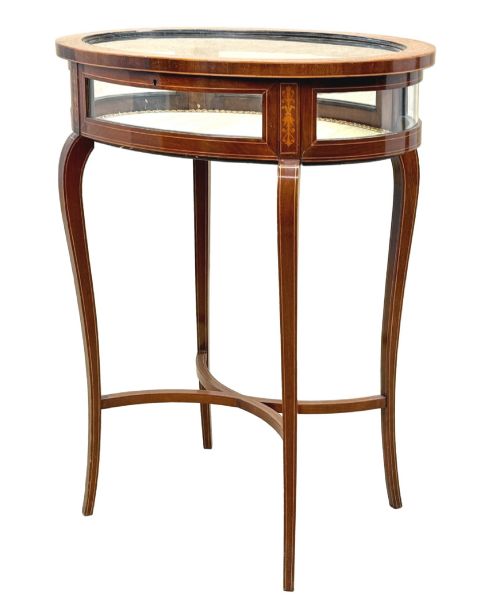
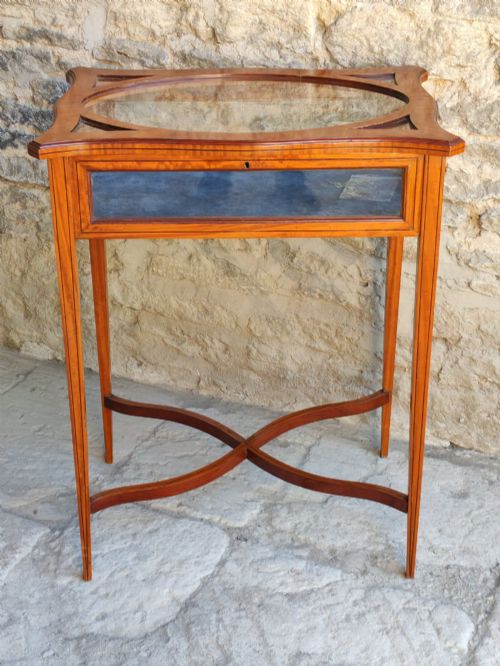
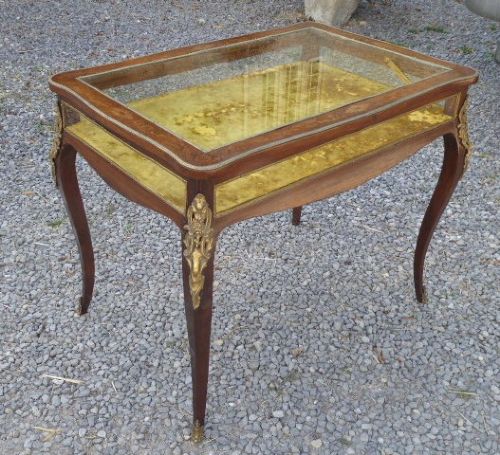
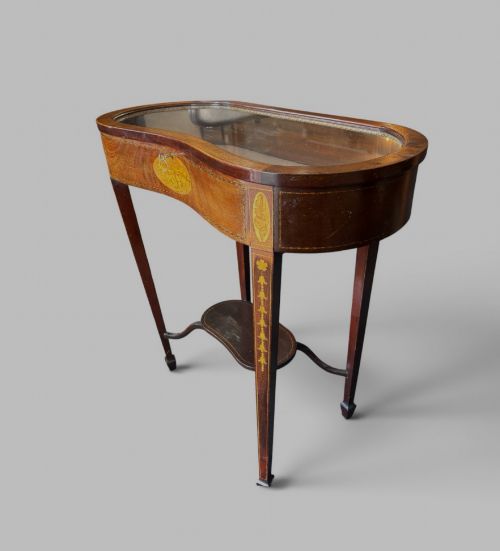
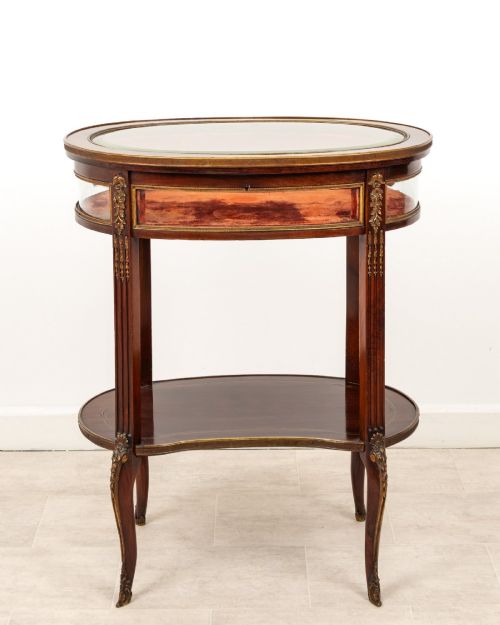
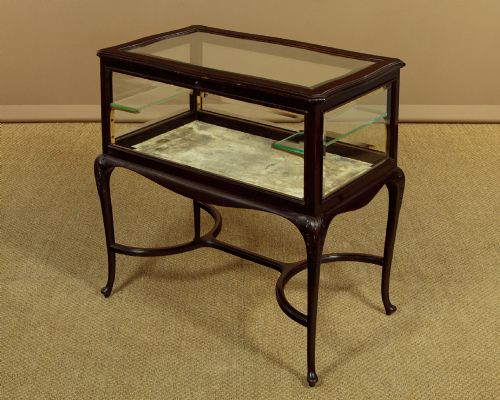
When searching for a vitrine display table, a buyer encounters glazed display surfaces raised on legs, designed to show miniature collectibles, jewellery and curiosities. The pieces on this page span the Victorian and Edwardian eras, alongside later revivals, taking forms such as oval, serpentine, kidney-shaped and rectangular tables.
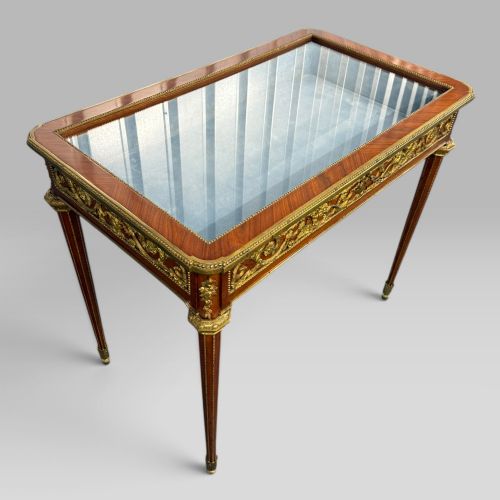
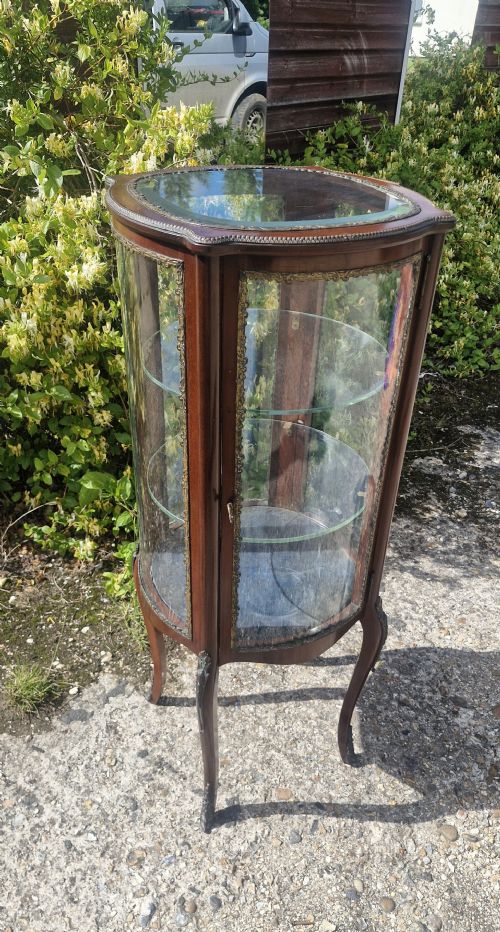
The most common version met here is the Edwardian mahogany or satinwood bijouterie table, often inlaid and glazed on top with hinged or lift-off lids. Alongside these stand French-influenced pieces employing kingwood, ormolu mounts and curved glass panels echoing Louis XV and Louis XVI styles.
Originating largely from British and continental workshops, these tables served to display personal items in drawing rooms and reception spaces. The selection includes occasional variations like shop counters, tea trolleys and small table-top vitrines, but the core focus remains the glazed display table.
How they were made
Cabinetmakers constructed the frames of these tables primarily from dense hardwoods like mahogany, satinwood, kingwood and rosewood, frequently shaping them into serpentine or kidney outlines. Timber veneers and intricate marquetry inlay provided decorative contrast on tabletops and aprons.
Glass panels were fitted into wooden or metal frames to protect the contents while offering all-round visibility, supported by brass hinges and secure locks. Cast gilt-metal, brass and ormolu mounts outlined the edges, legs and glass borders, adding weight and decorative polish to the structure.
One unexpected survivor bears later sign-written detail for Breitling watches, having traded drawing-room jewellery for trade displays.
What varies in quality
The distinction between standard pieces and the finest examples rests on the crispness of the timber carving, the delicacy of any marquetry inlay, and the precision of the mitred joints. Superior pieces utilise finer hardwoods and heavier, finely cast ormolu or gilt-bronze mounts rather than pressed metal.
Proportion and silhouette govern visual success, with serpentine, kidney and shaped oval frames demanding greater skill from the joiner than plain rectangular boxes. The quality of the glass, the smoothness of the hinge action and the integrity of the silk or velvet interior lining complete the measure of the piece.
Edwards and Roberts·François Linke
The Vitrine Display Table Glossary
- Bijouterie table
- A glazed display table designed specifically for small ornaments, jewellery and curiosities. These pieces lift open from the top or front to grant access to the lined interior.
- Ormolu
- Gilded bronze mounts applied to furniture edges and legs for decorative effect. This technique was widely utilised in French-inspired revival pieces.
- Marquetry
- Inlaid wood veneers forming detailed decorative patterns on table surfaces. Craftsmen used various contrasting timbers to build up floral or geometric designs.
- Serpentine
- A curved shape featuring a convex centre flanked by concave sides. This fluid outline appears frequently on finer table frames.
- Vitrine
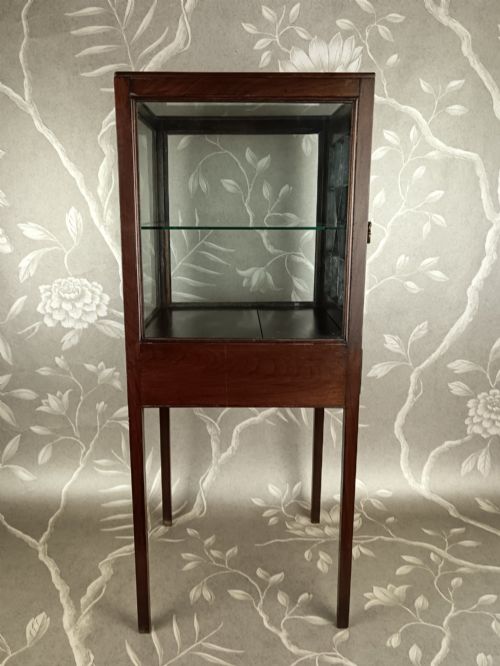
- A glass-fronted or glass-topped cabinet intended for display. The term covers both table-height cases and tall standing furniture.
Vitrine Display Table: Frequently Asked Questions
What is a vitrine display table used for?
These tables were designed to showcase small valuable items, personal jewellery, medals and curiosities within drawing rooms. The glass top allowed owners to view their collections without exposing them to dust or handling.
Today, they serve the same purpose for modern collectors, offering a secure and visible surface in living spaces and hallways.
How do I tell Edwardian from Victorian tables?
Victorian examples tend to use heavier mahogany or rosewood with robust brass mounts and deeper proportions, reflecting mid to late nineteenth-century tastes. Edwardian pieces often employ lighter satinwood, delicate marquetry inlay and slender tapered legs.
Revival styles appear across both periods, drawing heavily on French eighteenth-century designs regardless of the exact decade of manufacture.
What are the lined interiors made of?
Original interiors were typically lined with velvet, satin or fabric to cushion the displayed items and provide a contrasting background. Many surviving examples retain their period textile lining inside the display well.
Where fabric has degraded over time, conservation standards permit sensitive replacement using traditional textile types.
Are the glass tops removable?
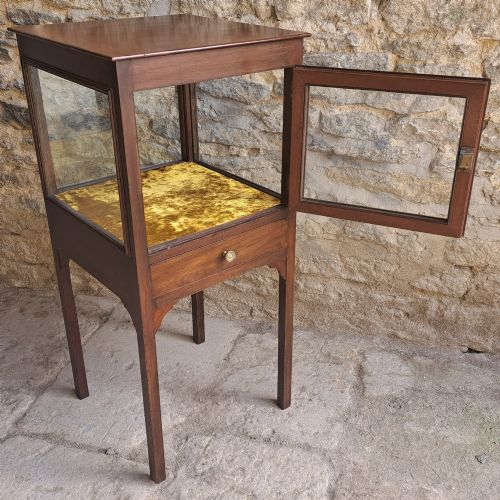
Most vitrine tables feature hinged lids that lift upwards on brass pivots or small hinges to allow access to the interior. Some variations utilise fixed glass panels with side-opening doors, while others are secured with small working locks and keys.