





Vintage Writing Desk Inkstand
A vintage writing desk inkstand organises the writer's tools while anchoring the desktop with period presence and materials.
Vintage Writing Desk Inkstand
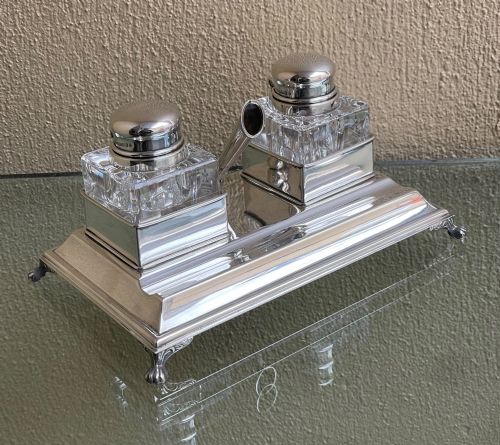
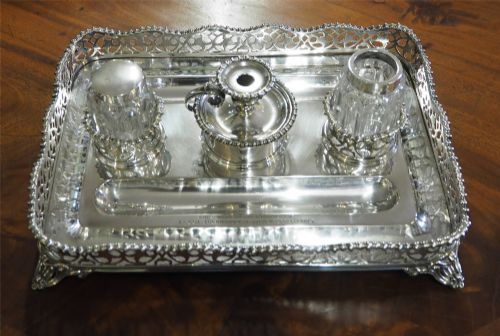
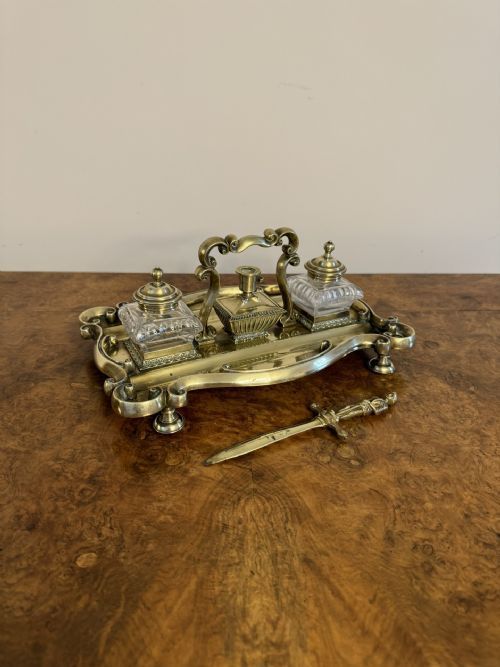
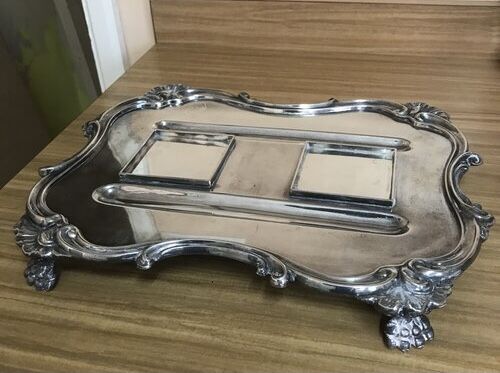
A vintage writing desk inkstand brings together inkwells, pen rests and trays in configurations spanning the Victorian, Edwardian, Art Nouveau and Art Deco periods. These pieces range from compact single glass wells to substantial multi-piece stands incorporating candlesticks or clocks.
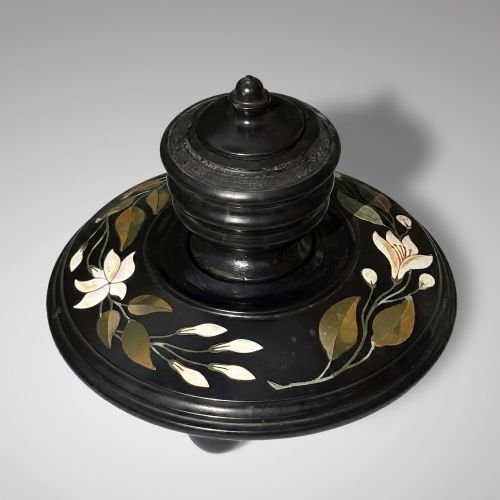
Materials vary widely across the selections, encompassing sterling silver, silver plate, brass, ormolu, marble, onyx, ceramic and papier-mâché. Buyers encounter simple capstan shapes alongside elaborate architectural trays and novelty designs.
Origins stretch from English workshops to continental makers, utilising regional specialisms like Dutch Delft faience, Ashford marble and Kashmiri hand-painted papier-mâché. Each example reflects the desk accessories demanded by its specific era of manufacture.
Materials and Technique
Metalworking techniques form the backbone of many stands, utilising cast brass, gilt bronze and ormolu combined with chased or engraved sterling silver and silver plate. Makers mounted these metal mounts onto heavy stone bases such as Sienna marble and green onyx to provide stability during use.
Glass and ceramic components required specialist moulding, cutting and firing, producing heavy cut-glass ink inserts and glazed earthenware bodies. Woodwork relies on decorative timbers like walnut, coromandel and rosewood, frequently inlaid with brass or mounted with metal hardware.
Surface decoration integrates hand-painted ceramic motifs, champlevé enamelling and papier-mâché lacquer work. Silver components typically bear hallmarks indicating the specific assay office and year of production.
Vintage Writing Desk Inkstand Retail Price Guide 2026
Typical asking prices for vintage writing desk inkstand among the pieces listed under this phrase on Sellingantiques today, from the lower quarter to the upper quarter. They describe what is for sale here now, not the wider market.
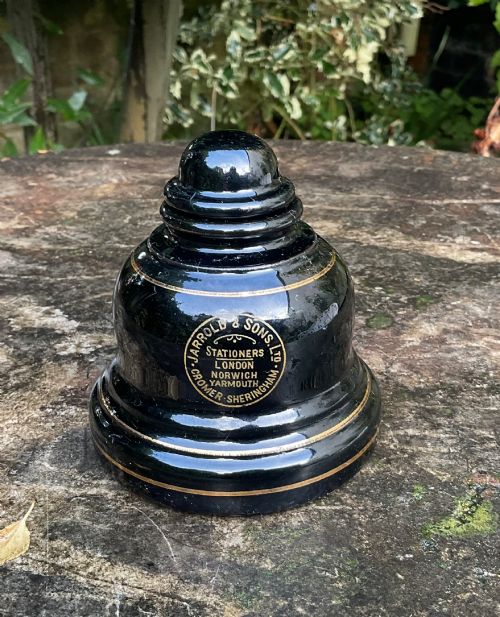
Desk accessories occasionally doubled as novelty items, including mechanical bells and miniature ships designed to amuse writers between letters.
Defining Quality
The standard of a vintage writing desk inkstand rests on the weight of its materials and the crispness of its manufacture. Solid silver and heavy cast bronze or brass elements display sharper chasing and deeper relief than plated or pressed alternatives.
Elkington·Walker And Hall·Harrods·Marson And Jones
The Vintage Writing Desk Inkstand Glossary
- Inkstand
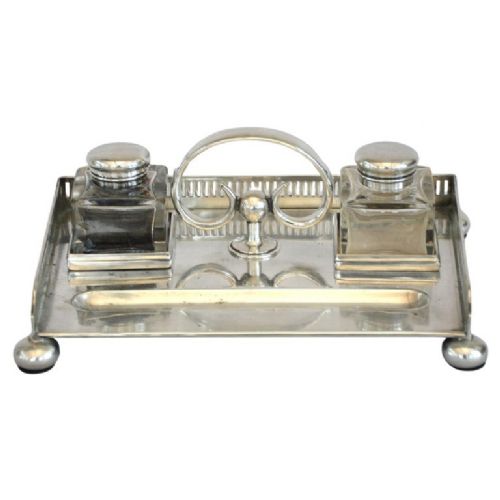
- A fitted tray or stand holding one or more inkwells alongside provision for pens. These items formed the central station for correspondence on period desks.
- Capstan inkwell
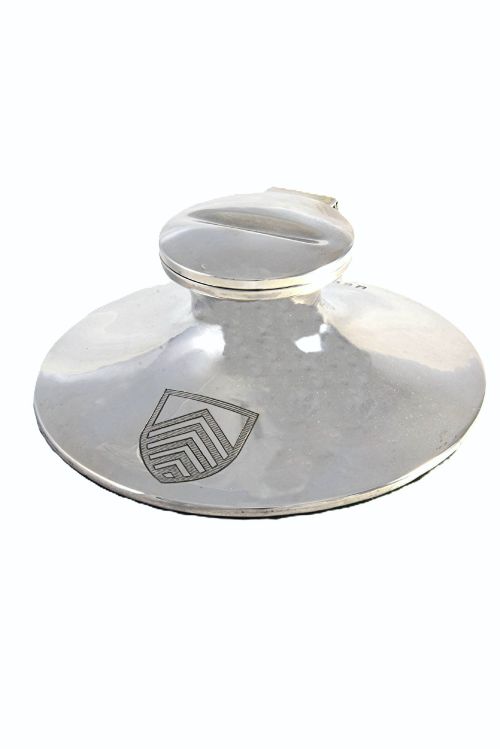
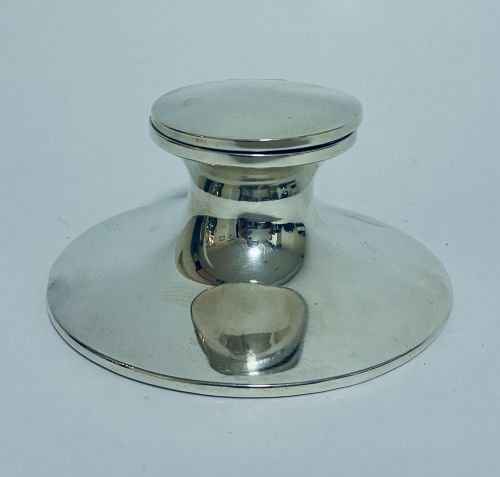
- An inkwell shaped like a ship's capstan, widening toward a heavy circular base to prevent tipping. This form gained particular popularity in silver during the late nineteenth and early twentieth centuries.
- Ormolu
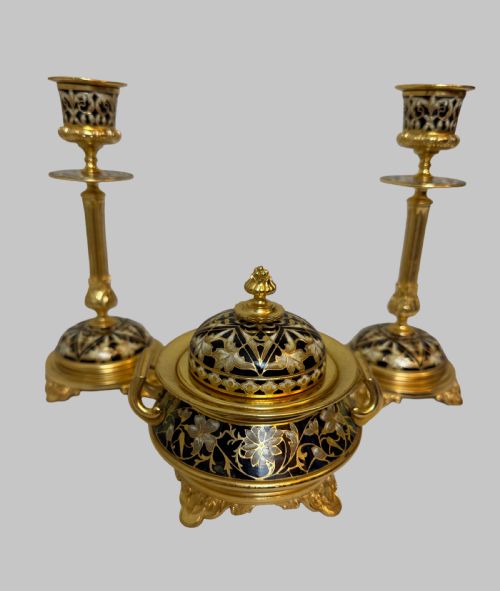
- Gilt bronze produced by applying a mercury-gilding process to cast brass or bronze. The technique yields a rich golden surface finish seen on nineteenth-century stands.
- Pounce pot
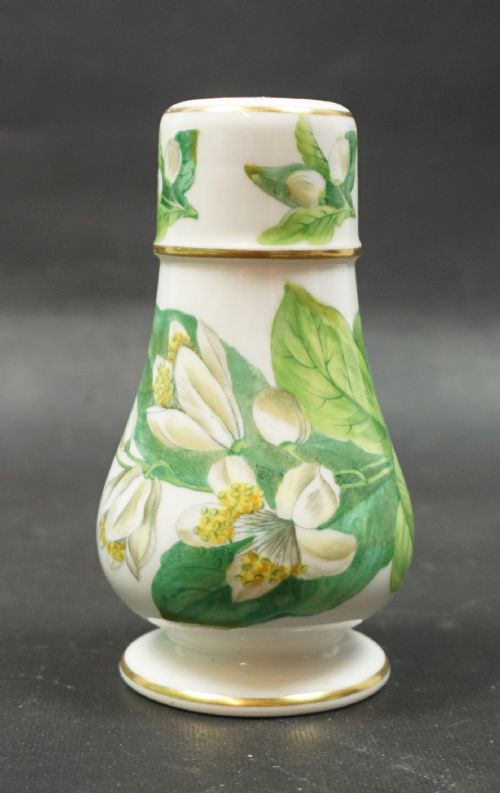
- A small shaker used to sprinkle fine sand or resin powder over freshly written ink to accelerate drying. These pots frequently accompany inkwells in desk sets.
- Champlevé
- An enamelwork technique where troughs are gouged into a metal surface, filled with vitreous enamel, and fired. It appears on decorative frames and reservoirs.
Vintage Writing Desk Inkstand: Frequently Asked Questions
What is the difference between an inkwell and an inkstand?
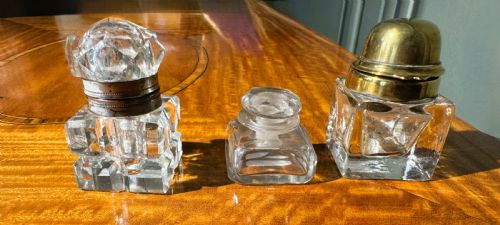
An inkwell is simply the individual vessel that holds liquid ink, usually fitted with a hinged lid to prevent evaporation.
An inkstand is the larger base or tray that holds one or more inkwells together with designated spaces for resting pens and other writing implements.
How do I identify the date of a silver inkstand?
Silver inkstands typically carry a series of hallmarks stamped directly onto the metal, indicating the assay office, the maker's mark and a date letter corresponding to the year of manufacture.
Stylistic cues such as Art Nouveau curves or Edwardian proportions further help narrow down the production period when hallmarks are rubbed.
What were pounce pots used for on a desk?
Before blotting paper became widespread, writers used pounce pots to sprinkle fine powder over wet ink to absorb excess moisture and smooth the paper surface.
These small perforated shakers are frequently found integrated into eighteenth and nineteenth-century desk sets alongside the primary inkwells.
Are glass liners original to antique inkstands?
Original glass liners were custom-moulded to fit the exact contours of the metal or stone housing of the inkwell.
Examining the rim and base for manufacturing bubbles or minor wear helps determine whether the glass insert has accompanied the stand since its creation.