





Vintage Woven Sofa
These vintage woven sofa selections bring together cane, hardwood and upholstered seating shaped by Victorian, Edwardian and revival hands.
Vintage Woven Sofa
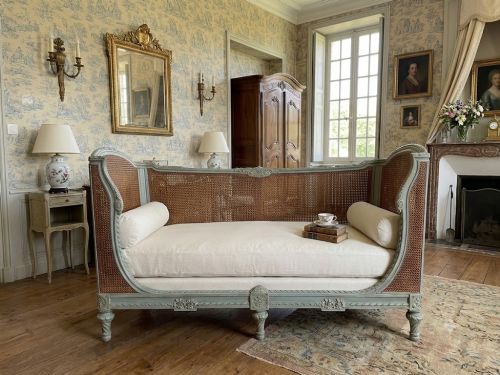
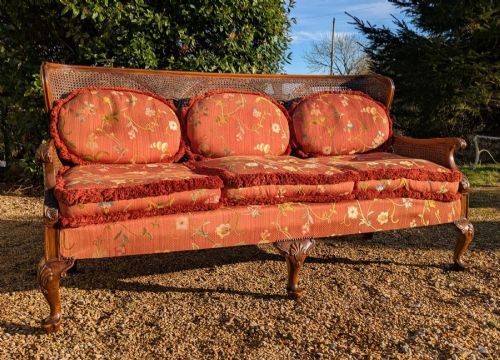
The pieces present various construction styles, notably Anglo-Indian hardwoods, painted cane frames and upholstered settees featuring feather cushions or fabric coverings. Many items combine structural timber with woven elements like cane panels or textile details.
Origins stretch from European revival workshops to Anglo-Indian production, giving collectors a choice between formal French-inspired daybeds and sturdy hardwood frameworks. The selection focuses heavily on cane and timber construction paired with soft furnishings.
How they were made
Frames rely on solid hardwoods such as walnut, beech and general hardwood timber, often shaped to mimic Louis XVI or Georgian revival aesthetics. These wooden structures provide the load-bearing framework for both daybeds and settees.
Cane weaving forms the primary decorative and structural surface for many panels, utilising pliable plant material woven into tight geometric patterns. This technique appears alongside upholstered elements filled with feathers and covered in wool, cotton, linen or general fabric.
Vintage Woven Sofa Retail Price Guide 2026
Typical asking prices for vintage woven sofa among the pieces listed under this phrase on Sellingantiques today, from the lower quarter to the upper quarter. They describe what is for sale here now, not the wider market.
Several items utilise feather fillings, ensuring that nineteenth-century relaxation involved a rather high standard of cushioning.
What varies in quality
Quality rests upon the integrity of the wooden frame and the tightness of the woven cane panels. Superior examples exhibit precise joinery in walnut or beech, while lesser items show looser framing or brittle cane.
The upholstery and internal cushioning also dictate the standard of a piece, distinguishing between feather-filled luxury and basic padding. Painted finishes and carved details reflect the artisan's investment of time during the Victorian and Edwardian eras.
The Vintage Woven Sofa Glossary
- Canapé Corbeille
- A French-style basket-shaped sofa or daybed featuring rounded upholstered or caned backs and sides. This form reflects Louis XVI revival design principles popular in the early twentieth century.
- Bergere
- An enclosed upholstered armchair or sofa with wooden frames and exposed woodwork. These pieces frequently incorporate cane work on the sides or back.
- Daybed
- A multipurpose piece of furniture functioning as both a seat and a bed for resting. Historical examples often incorporate hardwood frames and cane panels.
- Anglo-Indian
- Furniture produced in the Indian subcontinent under British colonial rule, usually combining local hardwoods with traditional British forms. These items showcase distinctive regional carving and construction methods.
- Settee
- A long upholstered seat with a back and arms, designed for more than one person. They appear across Victorian and Edwardian periods in various revival styles.
Vintage Woven Sofa: Frequently Asked Questions
What is a canape corbeille?
A canape corbeille is a French-style oval or basket-shaped daybed with enclosed sides and back. These pieces often feature painted wooden frames and integrated cane work.
Originating from Louis XVI design traditions, they were revived during the Edwardian period for formal drawing rooms and boudoirs.
How do I care for cane furniture?
Cane requires moderate humidity to prevent the natural plant material from drying out and snapping under pressure. Regular dusting with a soft brush keeps the woven surfaces clean.
Avoid placing these items near direct heat sources or in overly dry environments to preserve the flexibility of the weave.
What is an Anglo-Indian daybed?
An Anglo-Indian daybed is a nineteenth-century piece combining British furniture proportions with regional timber crafting techniques. They typically employ dense tropical hardwoods and intricate cane seating.
These items reflect the exchange of design ideas between British makers and local workshops during the colonial period.
Are these sofas suitable for daily sitting?
Most antique settees and daybeds support regular seating, though older frames and cane panels benefit from gentle treatment. Feather cushions provide soft support but require occasional plumping to maintain their loft.
Consider the structural strength of the specific hardwood frame before placing the piece in a high-traffic family room.
How do I identify a revival style?
Revival furniture borrows decorative motifs and silhouettes from earlier periods, such as eighteenth-century French or Georgian design. Makers in the nineteenth and early twentieth centuries reinterpreted these classical lines using contemporary tools.
Examination of the timber, joinery methods and secondary woods usually reveals the true nineteenth or twentieth-century manufacturing date.