




Vintage Wooden Vitrine
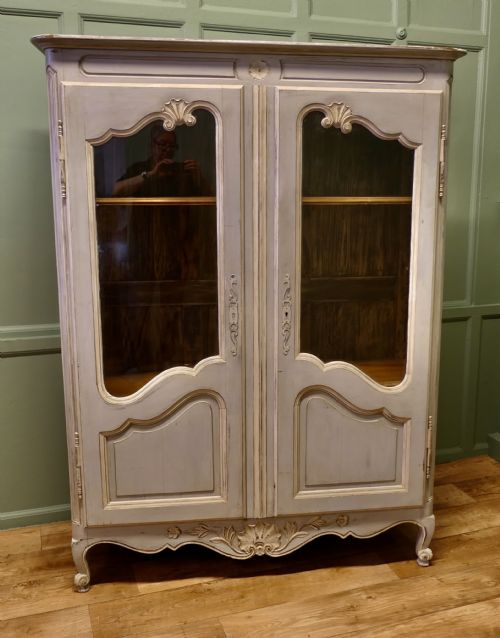
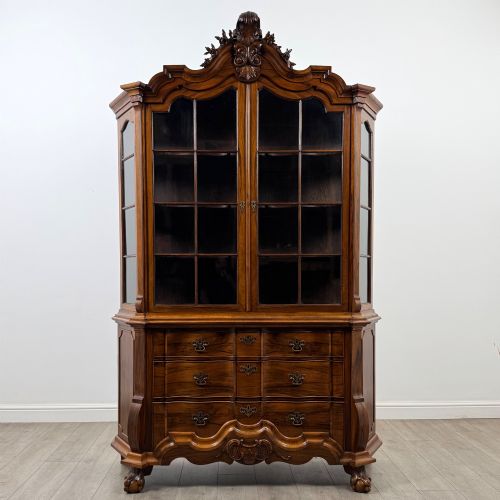
A vintage wooden vitrine brings glass and timber together to hold your collection, offering both protection and clear display for the room.
Vintage Wooden Vitrine
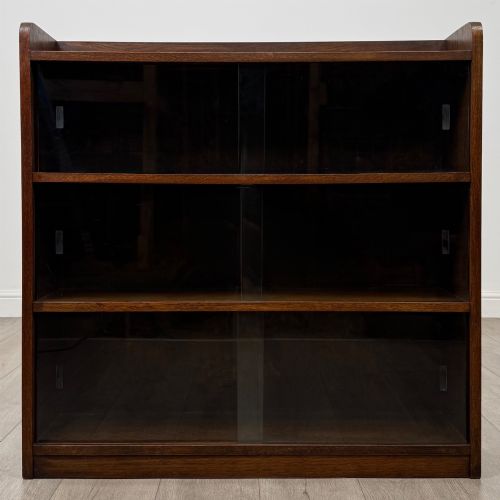
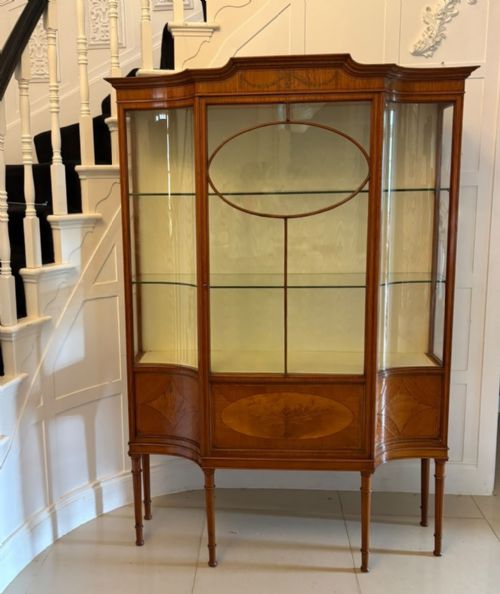
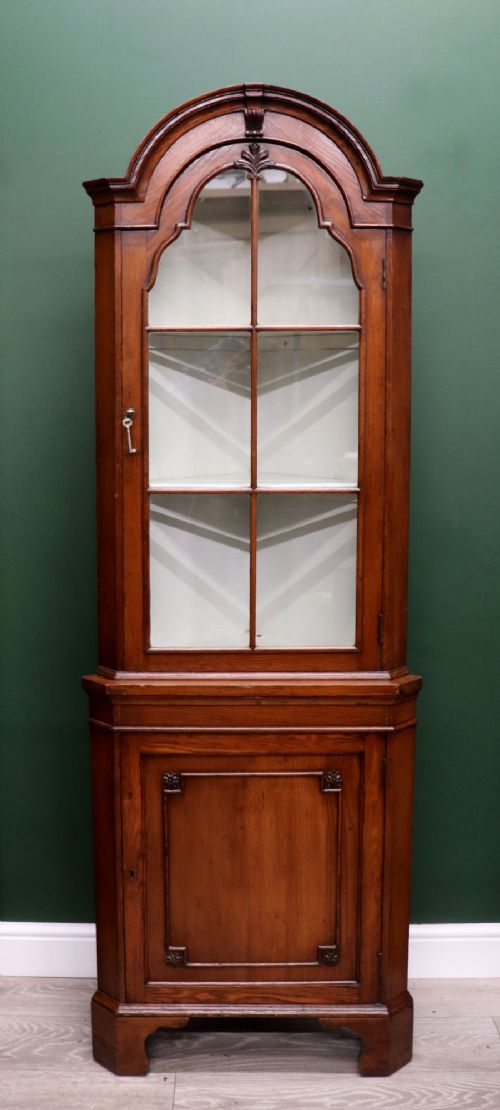
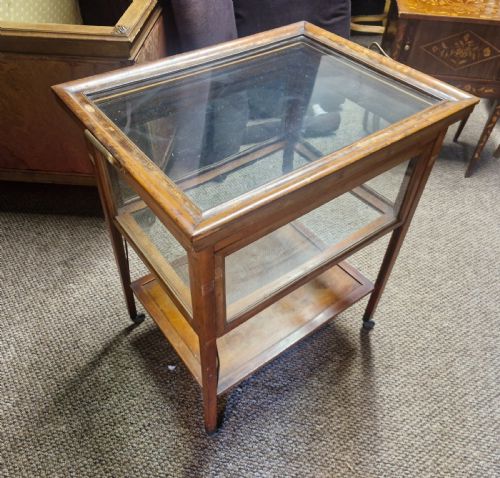
When you search for a vintage wooden vitrine, you meet display cabinets, corner cabinets, and bookcases that span the nineteenth century into the 1930s. The selection includes Edwardian satinwood and mahogany pieces, alongside French walnut models and simpler oak or tea trolleys.
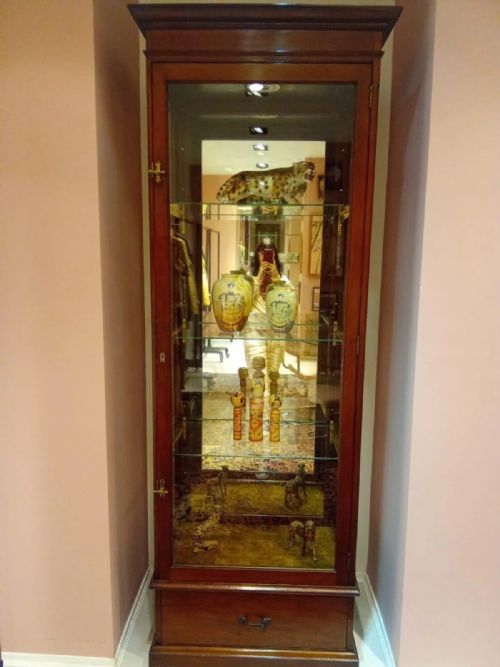
Most examples originate from the Edwardian era or the early twentieth century, taking forms such as bow front cabinets, demi lune shapes, and glazed corner cupboards. These pieces serve to showcase ceramics, books, or curiosities while keeping dust at bay behind glass doors.
How they were made
Cabinet makers utilised solid timbers and veneers such as mahogany, satinwood, walnut, kingwood, and oak over a carcase of wood. Brass hardware secures doors and hinges, while mirrored panels often line the interior backs to reflect light through the glazed compartments.
Surface ornamentation relies on marquetry inlays, painted finishes, or carved details executed in the Sheraton Revival, French Rococo, and Arts and Crafts styles. Glass panels are fitted into frames to provide unobstructed views of the interior shelves.
Current listings feature pieces spanning the Edwardian period, the nineteenth century, and the 1930s, built from mahogany, satinwood, walnut, and oak.
What varies in quality
The choice of timber and the precision of the marquetry inlay set fine pieces apart from standard commercial production. Elaborate satinwood figuring, serpentine fronts, and refined brass mounts indicate a higher grade of craftsmanship.
Structural integrity and the retention of original glass shelves and mirrored backs influence the standing of a cabinet. Finer examples display balanced proportions and careful joinery that survive intact from the nineteenth and early twentieth centuries.
Warings
The Vintage Wooden Vitrine Glossary
- Marquetry
- Decorative veneer work forming pictures or geometric patterns using various coloured woods. Craftsmen applied these thin slices of timber to the exterior surfaces of high-grade furniture.
- Bow Front
- A convex, curved front section of a cabinet that swells outward. This shape requires skilled woodworking to bend timber and match veneer grains accurately.
- Demi Lune
- A half-moon shape used for the footprint and top of specialised side cabinets. These pieces fit flush against a wall while offering a curved display surface.
- Serpentine
- A line of furniture front that curves inward centrally and outward at the ends. It demands exact carpentry to execute the undulating wooden contours.
Vintage Wooden Vitrine: Frequently Asked Questions
What is a vintage wooden vitrine used for?
These cabinets serve to display porcelain, glassware, books, and small collections while protecting them from dust in living spaces.
The glass panels and shelves allow light to circulate around the objects, making them focal points in a room.
How do I date a wooden vitrine?
Dating relies on stylistic clues such as Edwardian satinwood inlay, Victorian proportions, or 1920s commercial construction methods.
Materials and hardware, including brass fittings and mirrored backs, also point toward specific decades from the late nineteenth century onward.
Are corner cabinets considered vitrines?
Corner cabinets function similarly by utilising glass doors for display, though they are shaped specifically to fit room angles.
The evidence includes both floor-standing corner cupboards and standard display cases sharing period timber construction.
What woods are common in these cabinets?
Mahogany, walnut, oak, and satinwood appear frequently across the listings, often paired with decorative marquetry.
Craftsmen selected these hardwoods for their durability and grain patterns, supplementing them with brass and mirror glass.