
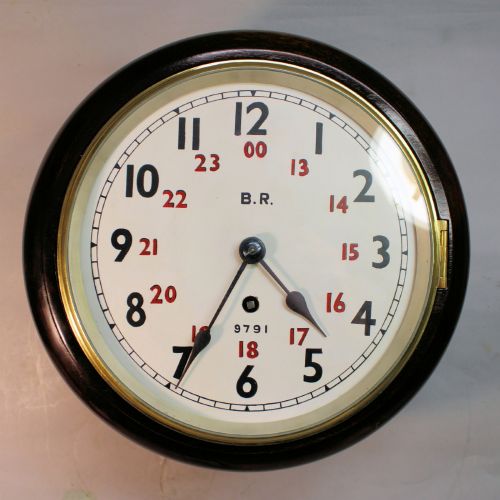
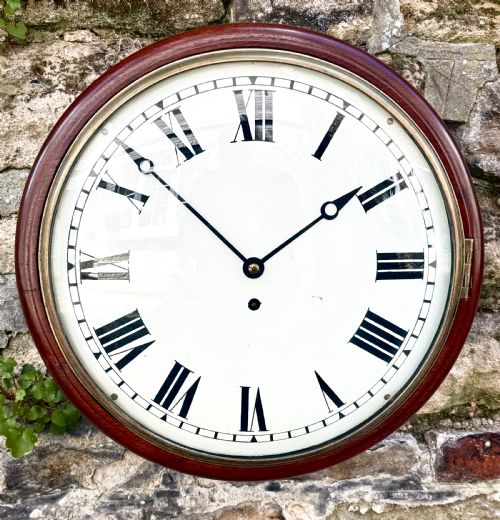


Vintage Wooden Station Clock
These vintage wooden station clocks bring the crisp, utilitarian architecture of nineteenth and twentieth-century transport hubs directly into domestic and office interiors.
Vintage Wooden Station Clock
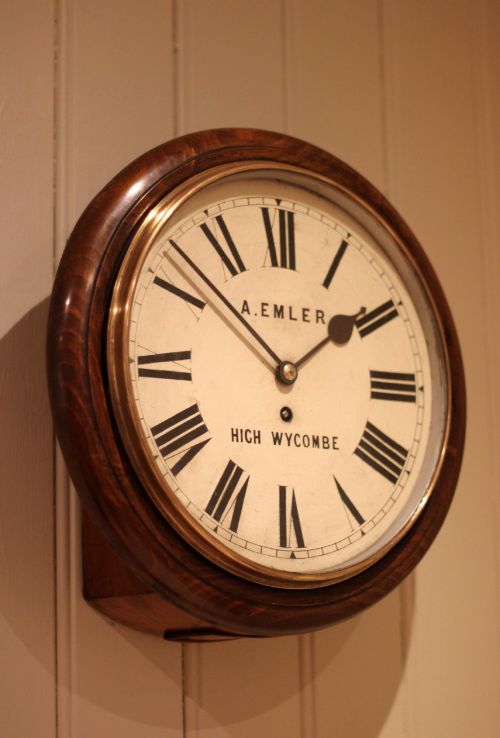
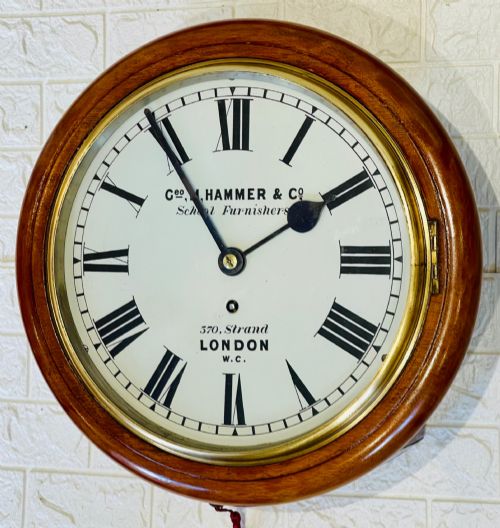
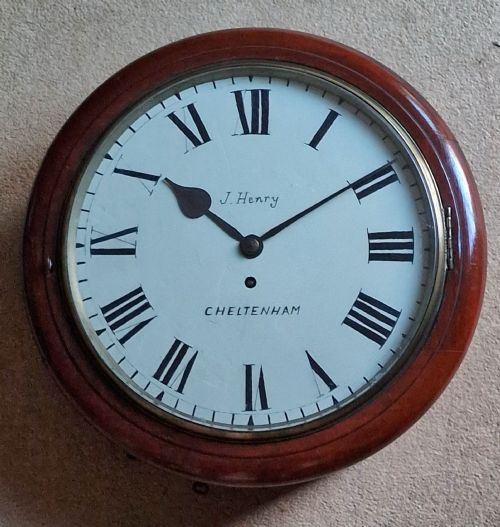
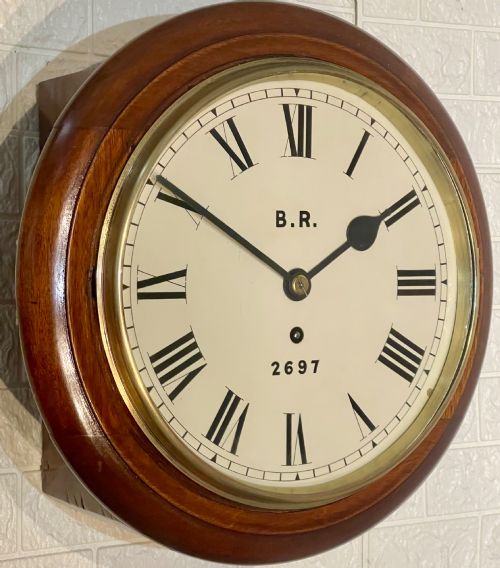
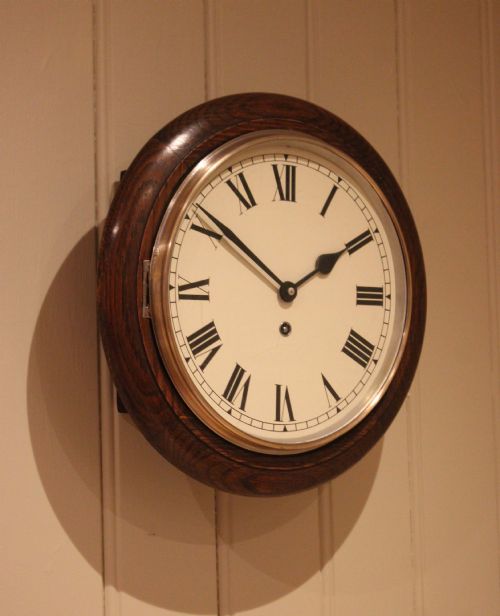
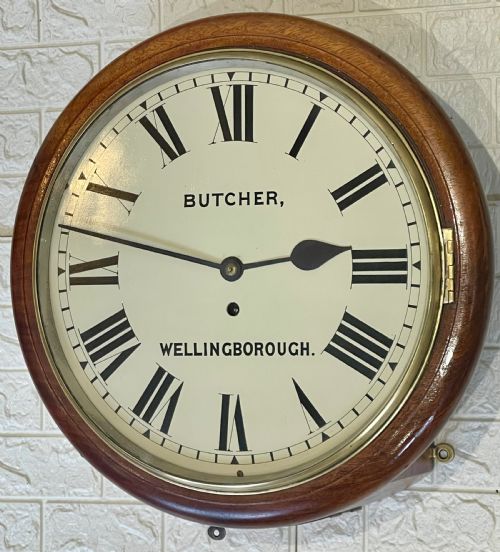
When you search for a vintage wooden station clock, you are looking at sturdy round dial timepieces that hung in railway termini, telegraph offices, and municipal buildings from the Victorian era through the mid-twentieth century. The version you are most likely to meet on this page is a wall-mounted round dial clock housed in a timber case, frequently driven by a single chain or wire fusee movement. These utilitarian pieces served as exact timekeepers for railway staff, post offices, and military installations before making the transition to private rooms.
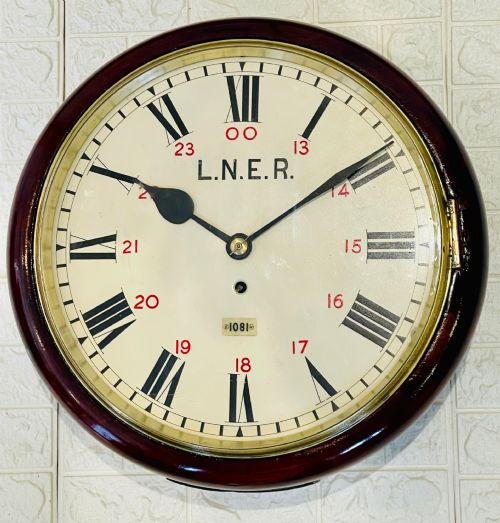
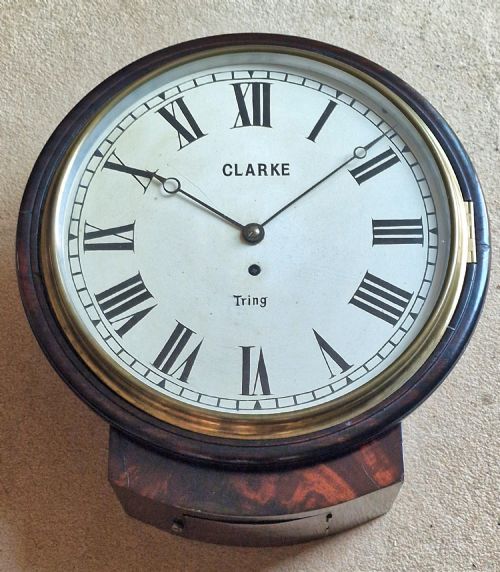
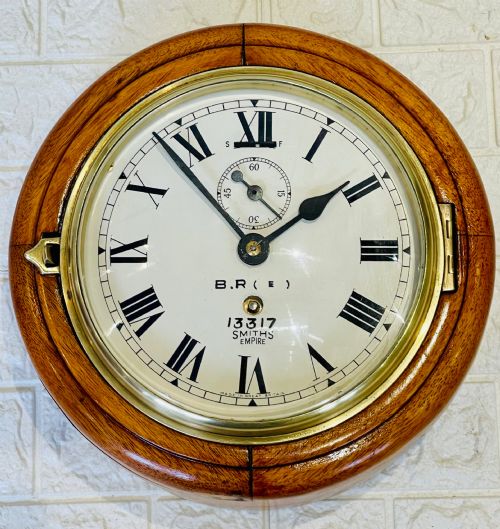
The material evidence on this page spans from the nineteenth century into the 1950s, taking in periods such as the Victorian age, the Edwardian period, and the George V reign alongside wartime Ministry pieces. Alongside standard round wall clocks, the selection includes related wall combinations such as barometers and thermometers, as well as drop dial formats and banjo clock barometers. Origins range from specific regional railway companies like the L.N.E.R, N.E.R, and L.M.S to general Post Office and military service.
How they were made
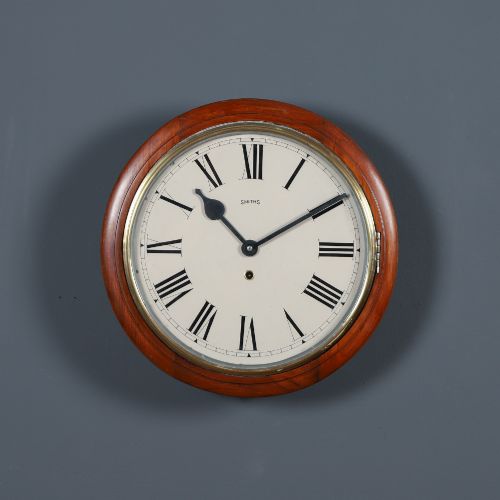
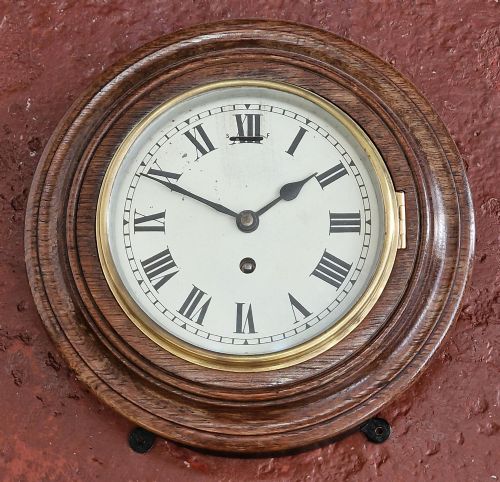
Makers housed these movements in robust timber cases turned from dense hardwoods such as mahogany, oak, beech, and walnut, ensuring the delicate internal mechanics remained protected in bustling, vibration-heavy environments. The circular wooden surrounds were constructed to withstand atmospheric changes while displaying clear paper, painted, or enamel dials protected by heavy brass bezels and glass covers.
Mechanically, these pieces relied heavily on fusee movements - both chain-driven and wire-driven - which use a cone-shaped pulley to equalize the declining force of the mainspring as it unwinds. This traditional English clockmaking technique delivered the consistent accuracy demanded by railway timetables and official telegraph networks.
Some clocks survived wartime service by the Ministry and the RAF before quietly retiring to civilian walls.
What varies in quality
The distinction between a standard utility clock and a finer example lies in the crispness of the timber framing, the complexity and pedigree of the movement, and the legibility of the dial. Pieces manufactured by recognised makers or bearing specific railway company lettering on the dial often reflect a higher standard of original commissioning and ongoing maintenance.
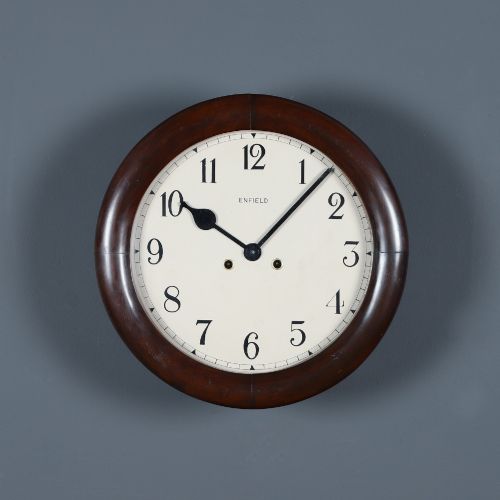
Enfield·John Walker·Zenith·Anglo Swiss Watch Co
The Vintage Wooden Station Clock Glossary
- Fusee
- A conical pulley used in older clock movements to maintain an even pull on the gear train as the mainspring loses tension. This mechanism is central to the accurate timekeeping of traditional English dial clocks.
- Dial
- The visible face of the clock where the numbers and minute markers are painted or applied. On railway clocks, these were designed for maximum legibility from a distance.
- Bezel
- The metal rim, often hinged and made of brass, that holds the protective glass in front of the clock face. It allows easy access for winding and hand-setting.
- Drop dial
- A clock case featuring an extended lower wooden box below the circular dial, often housing a pendulum or weights. This shape accommodates longer drops and distinct weights.
- Timepiece
- A clock that tells the time without incorporating a striking or chiming mechanism. Many station clocks were simple timepieces built strictly for functional punctuality.
Vintage Wooden Station Clock: Frequently Asked Questions
Where did these clocks hang?
These clocks were originally installed in railway stations, post offices, telegraph rooms, and military offices where precise timekeeping governed daily operations and transport schedules.
Today, their robust construction and clear circular faces make them striking additions to home kitchens, hallways, and studies.
How do I wind a fusee clock?
A fusee clock is wound by inserting a key into the dial aperture and turning it clockwise until the movement reaches its stop. Care must be taken not to overwind these older mechanisms.
Most traditional fusee movements require attention once a week to maintain accurate time.
What is a railway dial clock?
A railway dial clock is a wall-mounted timepiece designed specifically for transport networks, featuring a bold, uncluttered face for quick reading by staff and passengers. They were often stamped with railway company initials such as L.N.E.R or G.W.R.
These markings connect individual pieces to specific historical routes and stations across Britain.
How do I date an antique wooden clock?
Dating these pieces involves examining the timber case style, the construction of the rear box, the maker's signature on the dial, and any railway company lettering. Victorian and Edwardian examples often feature specific fusee movements and hand-painted dials.
Secondary clues include brass bezel designs and wartime government stamps from the mid-twentieth century.