


Vintage Wooden Rock Crib
These vintage wooden rock crib pieces offer tactile heritage and gentle motion, bringing centuries of craftsmanship into modern nurseries.
Vintage Wooden Rock Crib
When you search for a vintage wooden rock crib, you encounter infant beds designed to soothe babies with a rocking motion. These pieces span from the seventeenth century through the Victorian era.
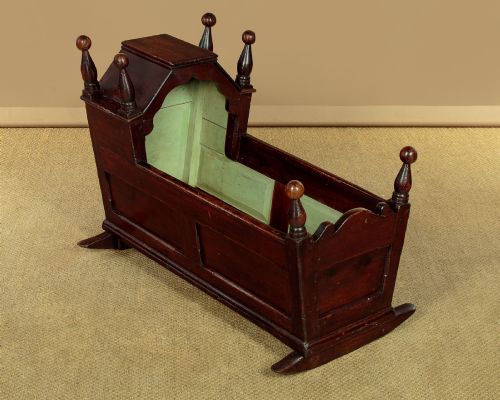
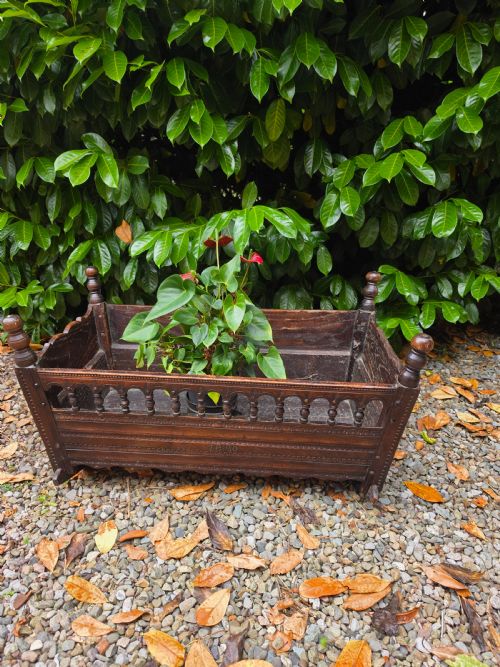
The most common examples on this page are nineteenth century pine and oak cradles, often featuring panelled construction or painted finishes.
Makers shaped these infant beds from heavy timbers, creating stable structures that sit low to the floor on curved rockers.
How they were made
Carpenters relied primarily on oak, pine, and mahogany to build these frames, joining heavy boards with traditional methods. Fruitwood and cane also appear as secondary materials in specific regional examples.
Panels often display hand-carved details or applied mouldings, while other surfaces retain original blue or neutral paint. Some variants incorporate metal hardware or upholstered elements to support the bedding.
Original blue paint survives on a Welsh pine cradle, proving our ancestors appreciated a splash of colour in the nursery.
What varies in quality
The sophistication of the timber work and the integrity of the original joints distinguish finer examples from standard utility pieces. Earlier seventeenth and eighteenth century models often exhibit intricate panel work and select hardwood grains.
Surface preservation significantly influences the character of each piece, particularly where original paint or rich patina remains untouched by modern stripping.
Heals and son
The Vintage Wooden Rock Crib Glossary
- Cradle
- A low infant bed mounted on rockers or pivots. These domestic items provided a compact sleeping space that parents could gently sway.
- Panelled
- A method of construction where a central wooden board floats within a surrounding frame. This technique accommodates the natural expansion and contraction of timber.
- Rockers
- The curved wooden runners attached to the base of the crib. They allow the entire structure to tilt smoothly back and forth.
- Canopy
- An overhead covering attached to the upper section of certain cradles. It provided shade and drafted protection for the sleeping infant.
Vintage Wooden Rock Crib: Frequently Asked Questions
How old are most wooden rocking cradles?
The pieces available range broadly across centuries, with a heavy concentration originating in the nineteenth century. You will also find earlier examples dating back to the seventeenth century.
Each period imparts distinct stylistic choices, from austere oak panels to painted Scandinavian pine surfaces.
Can I still use a vintage crib for a baby?
Safety standards for infant furniture have changed considerably since these pieces were built. Modern buyers generally utilise them as decorative storage or display items rather than for sleeping infants.
Assessing the structural stability with a professional restorer is essential if you intend any practical nursery use.
What woods were commonly used?
Oak and pine dominate the inventory, chosen for their local availability and structural strength. Mahogany and fruitwood appear in finer or later pieces.
Painters frequently finished pine surfaces, and some variants incorporated cane or metal components.
How do I identify a Georgian cradle?
Georgian pieces often display refined oak construction with decorative mouldings characteristic of the eighteenth century. Regional traits, such as Welsh pine builds, also help determine the origin.
Compare the joinery and hardware details against known period examples to confirm the era.