




Vintage Wooden Newspaper Holder
A vintage wooden newspaper holder gathers papers and journals with the warmth of figured timber and traditional joinery.
Vintage Wooden Newspaper Holder
When you search for a vintage wooden newspaper holder, you encounter a collection of traditional household items designed to keep reading materials tidy. The pieces on this page appear primarily in forms such as canterburys, freestanding magazine racks, and wall shelves. They span centuries of cabinetmaking, with examples stretching from the Georgian and Regency eras through the Victorian period and into Edwardian and later twentieth-century workshops.
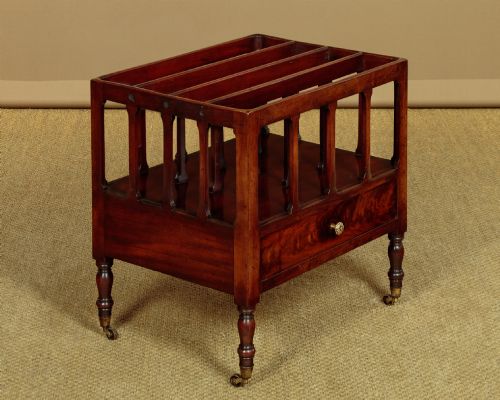
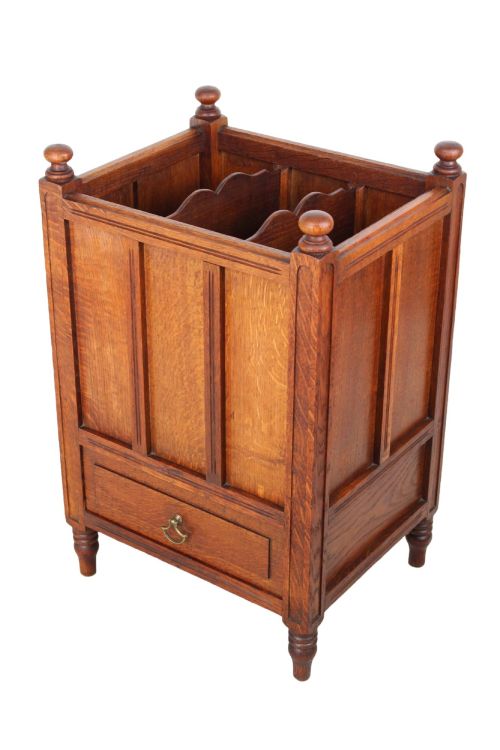
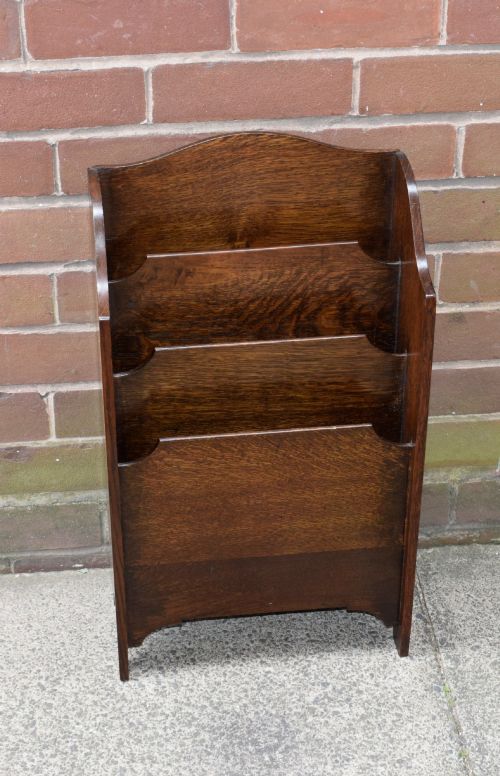
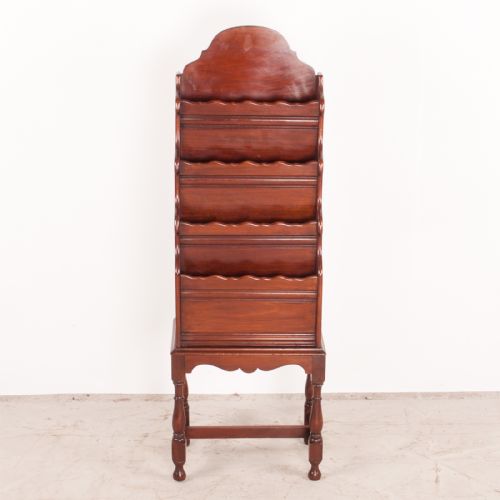
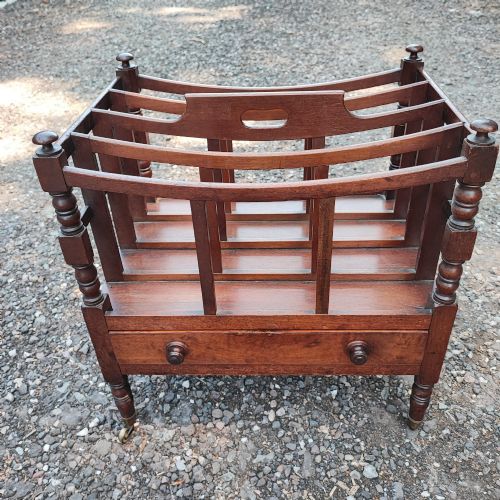
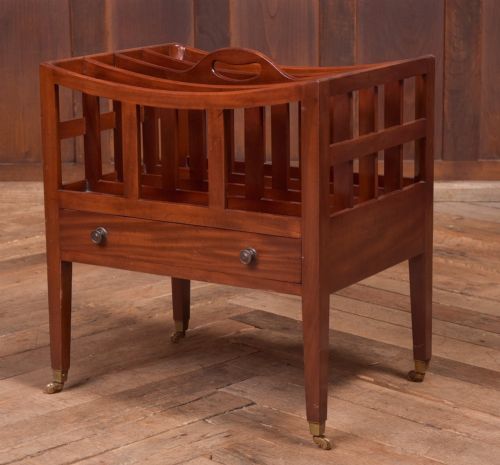
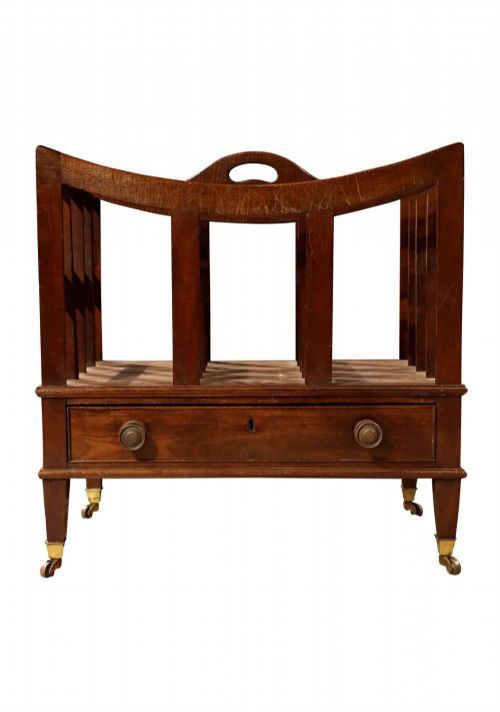
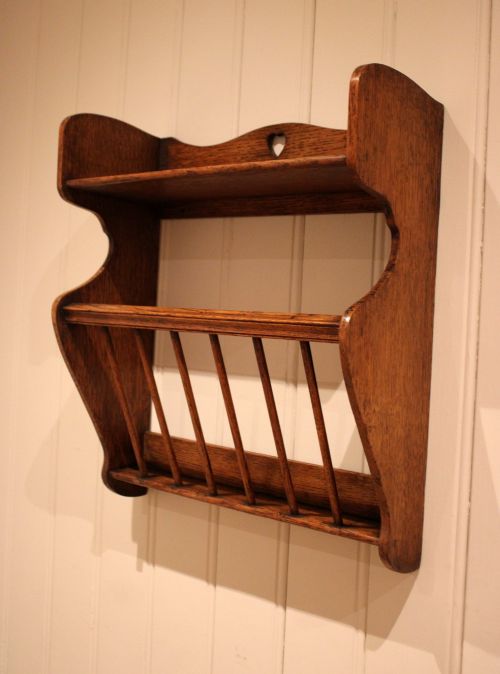
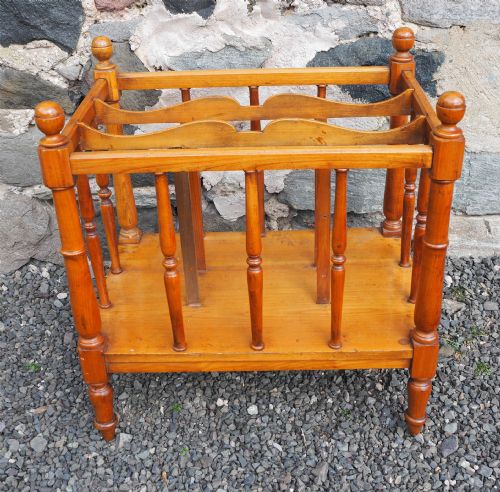
The most common version met on this page is the traditional mahogany canterbury, featuring multiple vertical divisions for sorting newspapers, journals, or sheet music. These stands often incorporate low shelves, drawers at the base, and turned legs fitted with castors for movement around a room. Alongside these formal pieces, oak and rosewood magazine racks and wall-mounted shelves represent the varied ways earlier homes managed their daily reading.
Materials and construction
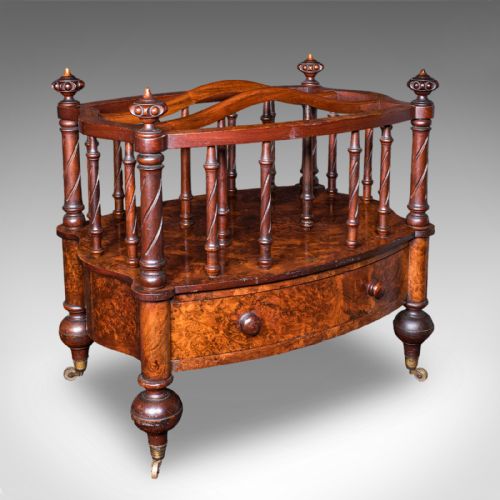
Cabinetmakers constructed these holders using dense hardwoods chosen for durability and grain pattern, with mahogany appearing most frequently alongside oak, rosewood, and burr walnut. Workshops utilised solid timber for structural framework and applied decorative veneers on larger flat surfaces to highlight natural figure. Secondary elements such as boxwood stringing and brass castors complete the construction of finer pieces.
Joinery methods reflect the period of origin, employing traditional pegged joints, dovetailed drawers, and turned uprights. Freestanding variants often utilise partitioned slats to create distinct compartments, while wall-hung versions rely on sturdy backplates and mounting brackets. Surfaces were traditionally finished with wax or polish to protect the timber while accentuating the depth of the wood.
One exceptional nineteenth-century piece is specifically attributed to J.C. Loudon, connecting the holder directly to a notable figure in British domestic design.
What separates the finer examples
Quality in these pieces rests upon the selection of timber and the precision of the cabinetmaker's hand. Superior examples display carefully matched veneers, finely turned supports, and well-proportioned divisions that balance utility with elegance. Finer items often incorporate thoughtful details such as integrated drawers or subtle inlay work.
Construction integrity distinguishes better pieces from simpler utilitarian items. The rigidity of the frame, the smoothness of drawer operation, and the retention of original brass hardware indicate the level of care invested during manufacture. Pieces that maintain their structural stability across divisions demonstrate superior original craftsmanship.
The Vintage Wooden Newspaper Holder Glossary
- Canterbury
- A low, freestanding stand with partitioned sections designed to hold newspapers, folios, or sheet music. These pieces often feature a single drawer beneath the main compartments and rest on castors.
- Folio Stand
- A larger upright rack intended for holding large books, prints, or newspapers. They provide open shelving and sturdy upright supports.
- Stringing
- Thin lines of contrasting wood inlaid into the surface of a panel to create a decorative border. This technique frequently defines the edges of Edwardian mahogany pieces.
- Turned legs
- Supports shaped on a lathe to create cylindrical, reeded, or spiralled profiles. These elements elevate the body of the stand and often terminate in brass castors.
- Veneer
- A thin layer of figured timber applied over a secondary wood core to display decorative grain patterns. Burr walnut and mahogany veneers are common on finer examples.
Vintage Wooden Newspaper Holder: Frequently Asked Questions
What is a canterbury?
A canterbury is a low stand featuring vertical divisions used to organise newspapers, magazines, or music folios. Many include a base drawer for small accessories.
Originally designed in the eighteenth century, these stands were built to keep daily reading materials tidy and easily accessible beside seating areas.
Where were these stands used?
These holders were placed in sitting rooms, parlours, and libraries where newspapers and journals accumulated. Freestanding versions allowed owners to move them near armchairs.
Wall-mounted racks offered a space-saving alternative for smaller rooms or hallways where floor space was limited.
How do I date a piece?
Dating relies on observing the timber choice, decorative styles, and construction techniques characteristic of different eras. Regency and Georgian examples often feature rich mahogany and elegant turned legs.
Edwardian items frequently display inlaid stringing or lighter oak constructions, reflecting the shift in interior tastes towards the turn of the twentieth century.
Can these hold modern magazines?
Most vintage holders accommodate standard modern periodicals within their traditional vertical divisions. The width and depth of the compartments generally match contemporary publication sizes.
Oversized folios or unusually thick journals may require specific freestanding racks designed with wider spacing between the partitions.