


Vintage Wooden Caddy
These vintage wooden caddy selections bring period craftsmanship into daily use, offering secure storage for tea, spirits, and personal items.
Vintage Wooden Caddy
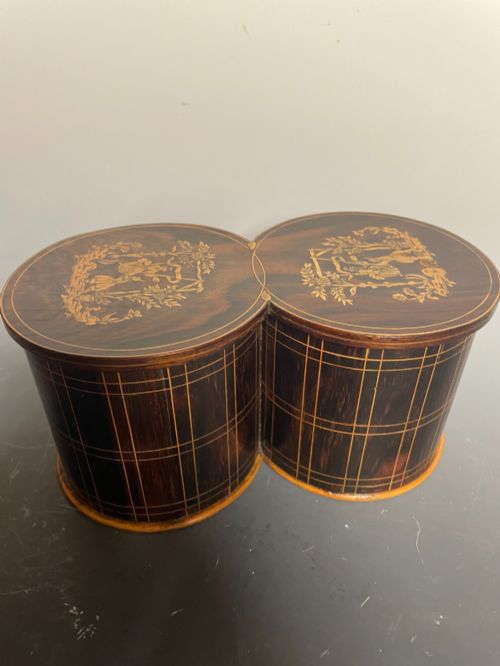
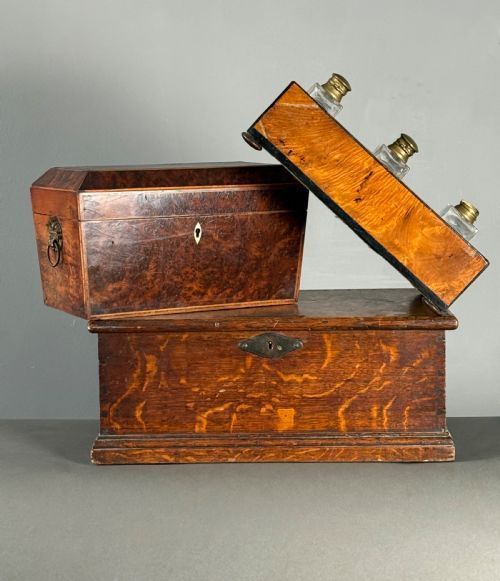
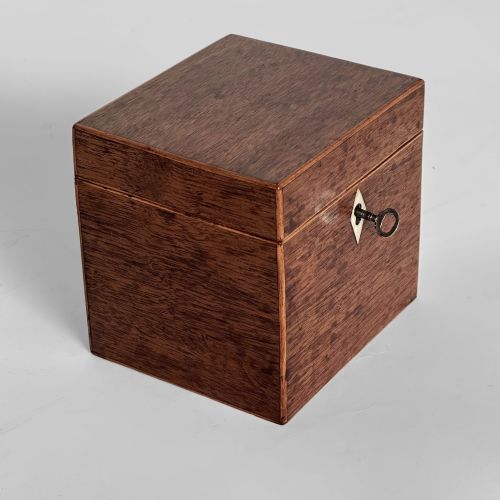
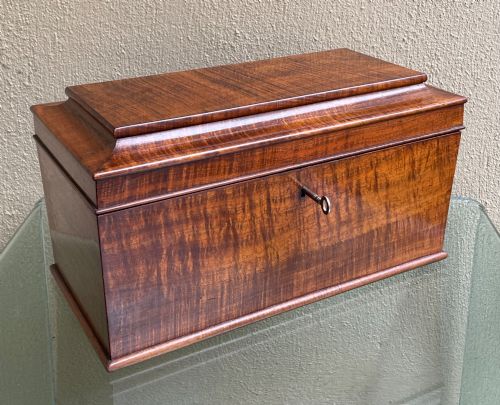
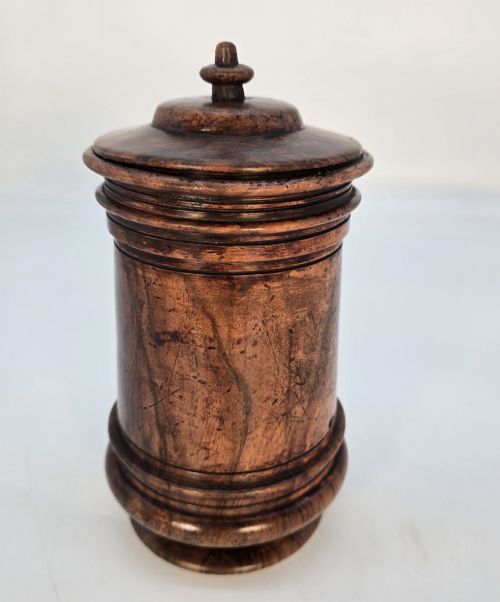
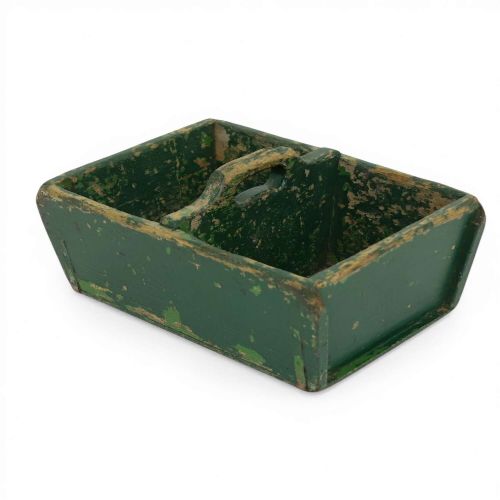
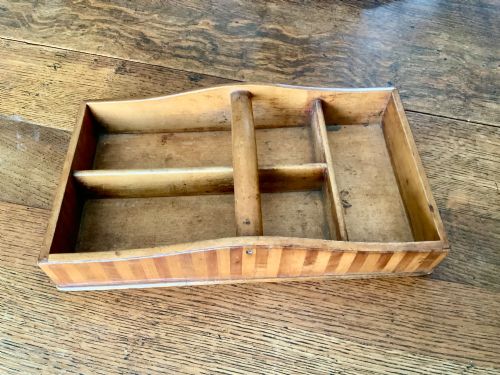
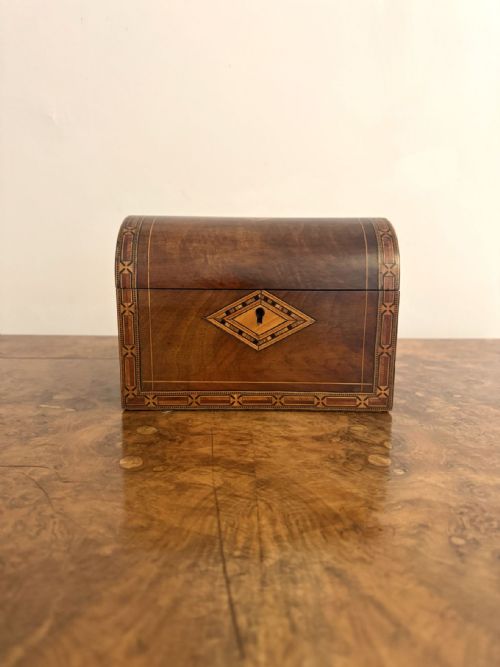
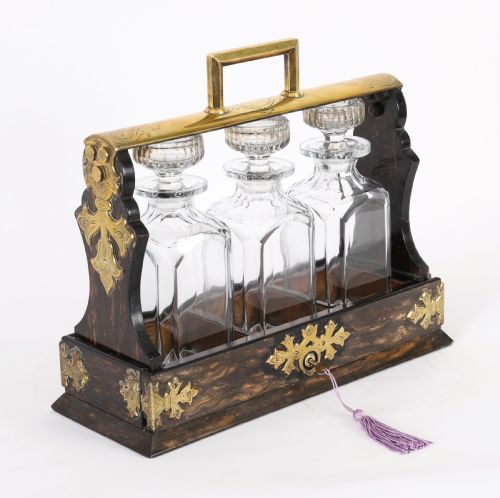
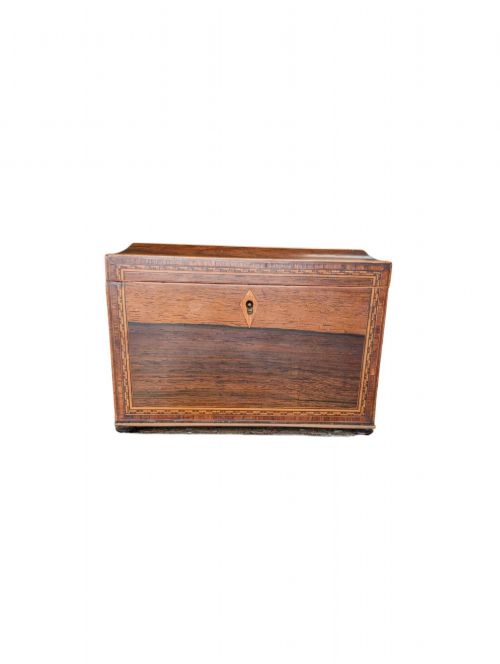
When searching for a vintage wooden caddy, you encounter domestic containers designed primarily for storing tea leaves, spirits, and small valuables across multiple historic periods. The most common forms on this page include Georgian, Regency, and Victorian tea caddies alongside fitted tantalus sets and decorative boxes.
These items originate from centuries of British and European cabinet making, ranging from simple country house oak boxes to refined mahogany and satinwood pieces with intricate inlay. Buyers seek them for their blend of functional compartmentalisation and period character.
Materials and construction
Cabinet makers utilised dense hardwoods such as mahogany, walnut, rosewood, and oak as the structural foundation for these boxes. Surface decoration frequently incorporates contrasting veneers, Tunbridge inlay, and detailed brass hardware.
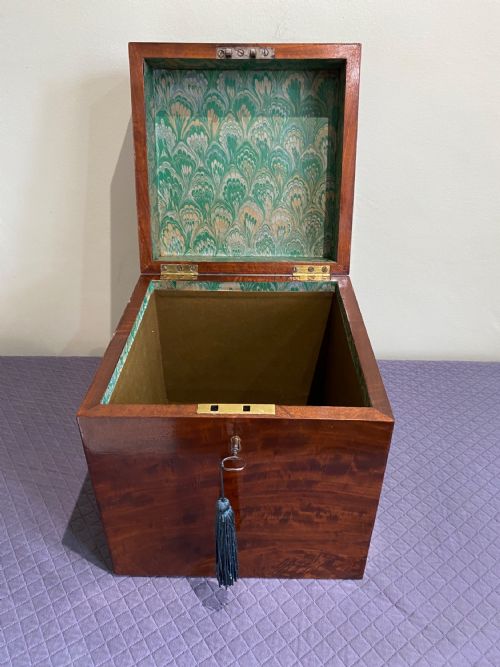
Internal arrangements often feature hinged lids, secret drawers, and fitted compartments lined to preserve delicate contents. Structural integrity relies on traditional joinery techniques suited to frequent daily handling.
Listings feature mahogany, walnut, oak, and rosewood across Georgian, Victorian, and Edwardian periods.
Distinctions in quality
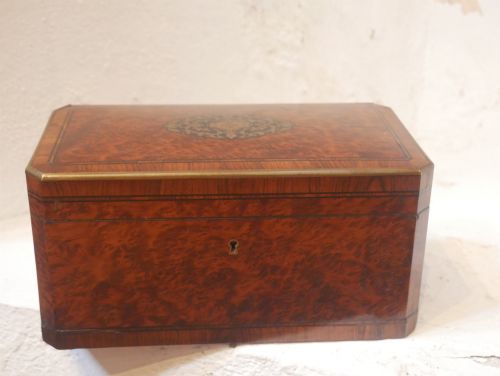
Quality differences rest upon the selection of timber, such as highly figured burr walnut or burr yew, and the precision of decorative inlays. Superior examples display crisp carving, well-fitted internal compartments, and original brass escutcheons or handles.
The sophistication of the mechanism, including functional locks with keys and concealed secret drawers, separates standard utility boxes from high-status salon pieces.
Tahan·Mappin And Webb
The Vintage Wooden Caddy Glossary
- Tunbridge inlay
- A meticulous woodworking technique creating mosaic pictures from thousands of tiny coloured wood blocks. This decorative motif appears on nineteenth-century boxes.
- Cellarette
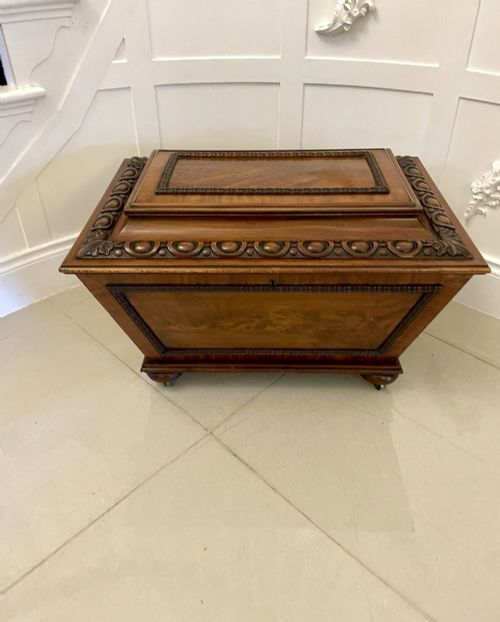
- A large freestanding or tabletop container used for cooling or storing wine bottles. Examples often feature brass banding or coopered wooden staves.
- Escutcheon
- A protective plate surrounding a keyhole, usually fashioned from brass or bone. It prevents the surrounding wood from wearing down through repeated use.
- Veneer
- A thin slice of ornamental wood applied to a primary timber base to create decorative patterns. Burr walnut and satinwood are frequently used in this manner.
Vintage Wooden Caddy: Frequently Asked Questions
What were tea caddies used for?
Tea caddies served to store expensive tea leaves securely under lock and key in the historic household. The leaves were kept safe from dampness and pilfering by domestic staff.
Inside, compartments separated different varieties of tea, often featuring a central mixing bowl for blending leaves before brewing.
How do I date a wooden caddy?
Dating relies on identifying the prevailing furniture styles, timber choices, and construction methods associated with periods like Georgian or Victorian. Details such as brass feet, lock mechanisms, and inlay patterns provide reliable chronological clues.
Changes in hardware design and timber availability help narrow the manufacture window to specific decades.
Can I use a tantalus for modern bottles?
Tantalus frames accommodate standard spirit decanters that match the original dimensions of the locking mechanism. Measuring the height and width of the bottle neck ensures a proper fit beneath the metal bar.
Many collectors house antique decanters within these frames to maintain authentic period presentation.
How do I care for antique wood?
Antique wooden surfaces benefit from occasional waxing using appropriate conservation products to maintain the natural finish. Direct sunlight and sudden changes in humidity should be avoided to prevent timber from splitting.
Gentle dusting with a soft cloth preserves the historic patina without damaging delicate inlays.