

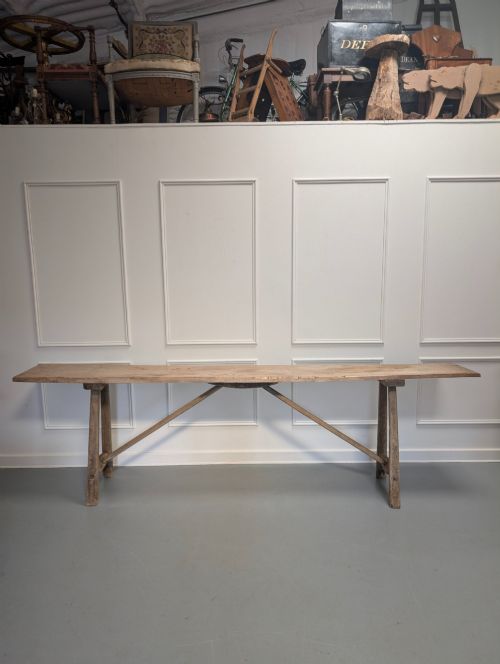
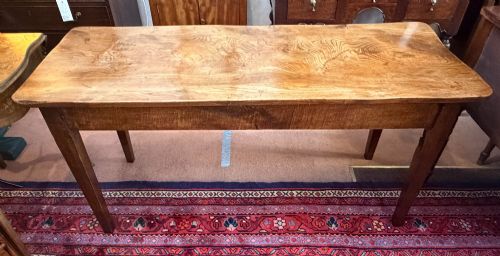
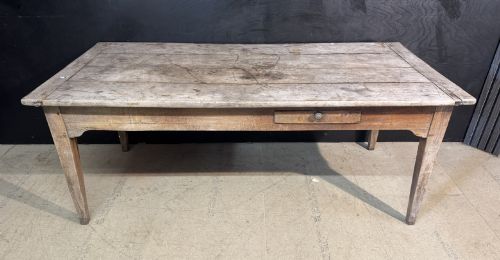
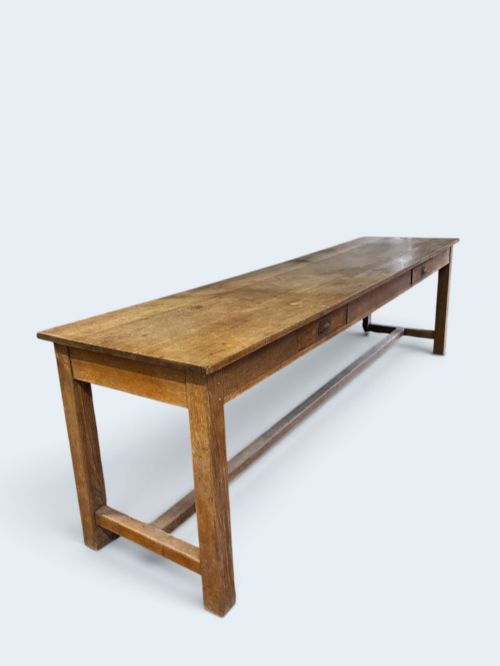
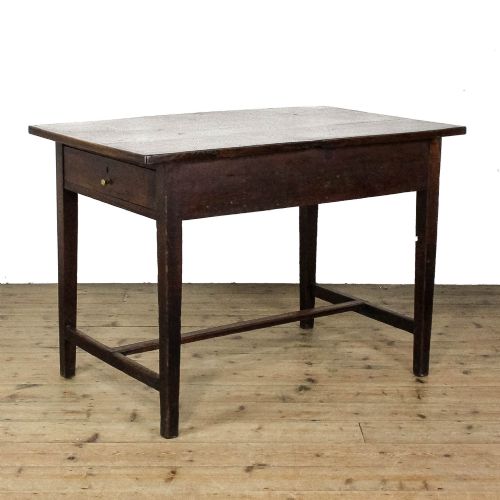
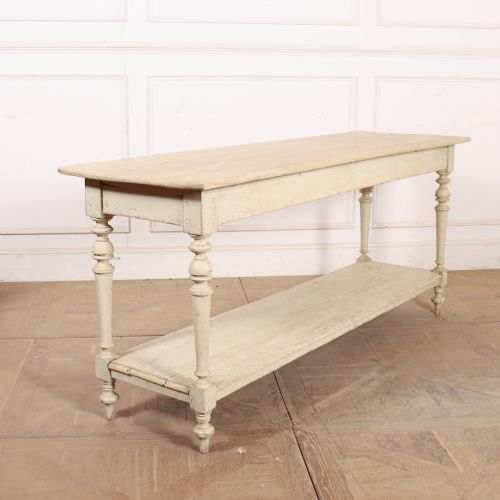
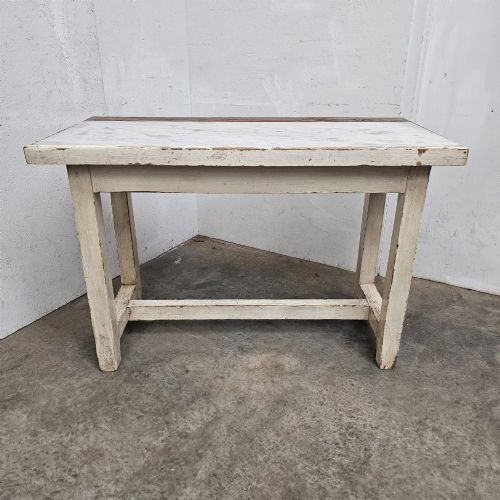
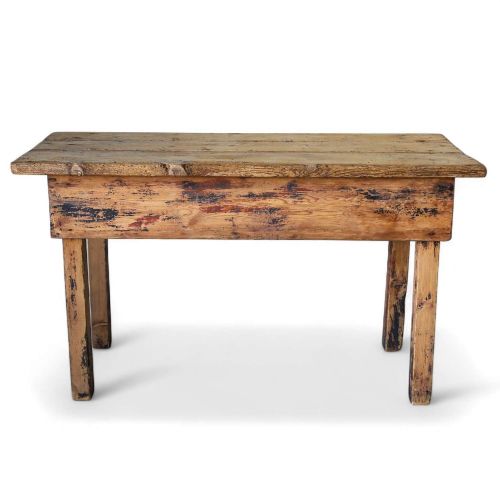


Vintage Wood Prep Table
A vintage wood prep table brings hard-wearing utility and centuries of kitchen heritage directly into a modern home.
Vintage Wood Prep Table
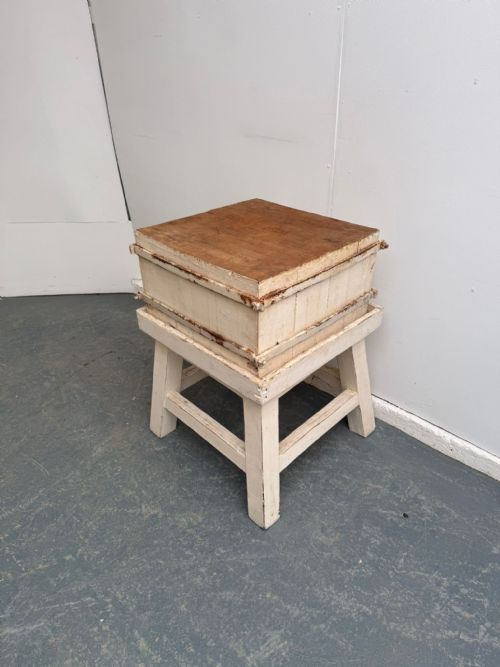
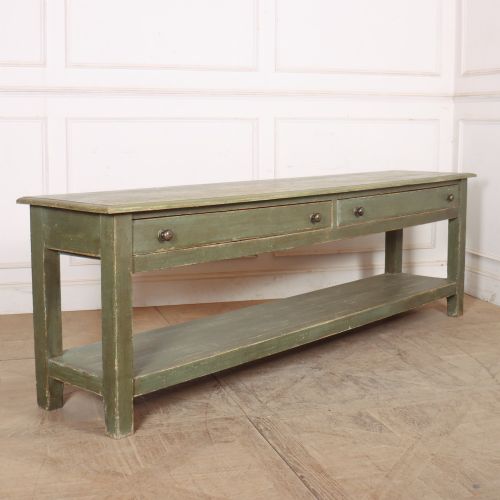
A vintage wood prep table serves as a functional work surface born from utilitarian spaces like country kitchens, butcher shops, and drapery workrooms. These surfaces encompass diverse formats ranging from robust chopping blocks on stands to long drapers tables and potboard serving pieces.
Most examples found here date from the nineteenth century through to the early twentieth century, reflecting regional European and British vernacular traditions. Buyers frequently encounter pine and oak farmhouse tables alongside French provincial chopping blocks and Scandinavian scrubbed timber designs.
The primary forms listed include kitchen tables, pastry tables, and trestle structures designed originally for heavy daily labour. Their enduring appeal lies in this honest domestic utility combined with seasoned timber patination.
Materials and construction methods
Construction relies heavily on dense hardwoods and sturdy softwoods such as pine, oak, elm, beech, sycamore, and poplar. These timbers were selected for their ability to withstand heavy slicing, pounding, and daily scrubbing.
Joinery techniques prioritize structural integrity, utilising thick planks joined to sturdy timber frames, trestle bases, or potboards. Additional reinforcement comes from iron, brass, and bronze mounts or hardware fixed to stands and block corners.
Surfaces often display remnants of historical finishes including traditional paint, such as Falu red or white lead coats, alongside scrubbed bare wood and polished marble tops.
Vintage Wood Prep Table Retail Price Guide 2026
Typical asking prices for vintage wood prep table among the pieces listed under this phrase on Sellingantiques today, from the lower quarter to the upper quarter. They describe what is for sale here now, not the wider market.
Listings feature nineteenth-century and early twentieth-century examples constructed from pine, oak, elm, sycamore, and poplar with iron and brass hardware.
Assessing quality and character
Quality rests in the depth of natural patina and the integrity of the original timber rather than uniform perfection. Tables retaining their unblemished work surface thickness and original structural framing sit at the higher end of the scale.
Trussant And Cie·Hennes France
The Vintage Wood Prep Table Glossary
- Potboard
- A lower open shelf beneath a table or serving board historically used for storing pots and pans. This platform stabilizes the legs while offering storage.
- Drapers table
- A long, narrow table traditionally used in textile shops for measuring and cutting cloth. They often incorporate multiple drawers and generous under-table clearance.
- Butchers block
- A thick, heavy block of end-grain timber designed to absorb the impact of cleavers and heavy butchery work. They frequently sit upon dedicated wooden stands or iron frames.
- Falu paint
- A traditional Swedish paint colour derived from copper mine waste, yielding a deep red matte finish. It preserves exterior timber against harsh weather and wear.
- Vernacular
- Architecture and furniture built by local craftsmen using regional materials to satisfy immediate practical needs. These pieces ignore high-style academic design conventions in favour of local utility.
Vintage Wood Prep Table: Frequently Asked Questions
Can I use an antique chopping block for food preparation?
Many solid wood blocks and tables remain entirely suitable for food preparation after a thorough surface cleaning and oiling. Thick end-grain blocks absorb knife impacts just as they did in past centuries.
Ensure any historic paint or unstable finishes on the base or non-contact areas are preserved without contaminating food zones. Unsealed scrubbed timber requires regular sanitisation.
What is the difference between a drapers table and a farmhouse table?
Drapers tables are typically narrower and longer than standard kitchen tables, designed specifically for spreading out textiles rather than family dining. They frequently include multiple small drawers situated beneath the top.
Farmhouse tables prioritize knee clearance and broader surface areas for communal dining and general household chores. Both utilise robust regional timbers but serve distinct domestic origins.
How do I identify the age of a wood prep table?
Look at the tool marks, fastener types, and timber shrinkage patterns visible on the underside and frame joints. Hand-sawn boards and handmade iron nails generally point toward nineteenth-century production.
Examine the natural wear patterns and accumulated patination on high-touch areas like table edges and corners. Regional style traits and known maker stamps also assist in narrowing down the decade.