

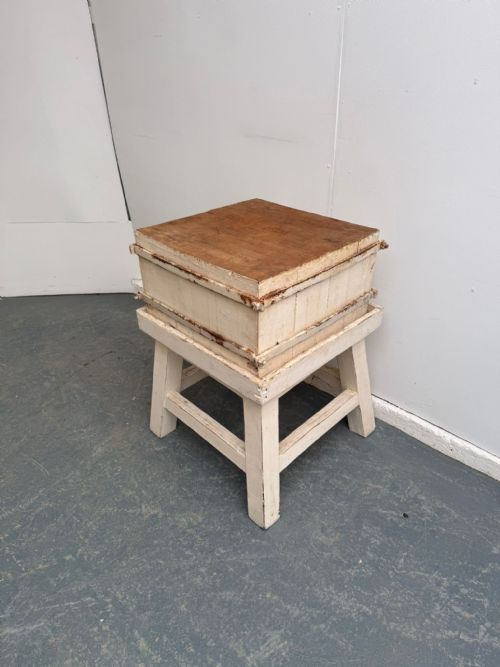


Rustic Timber Chopping Block
A rustic timber chopping block brings honest utility and heavy, working history directly into a modern kitchen.
Rustic Timber Chopping Block
A rustic timber chopping block serves as a heavy-duty food preparation surface designed for practical labour rather than polite display. When you search for a rustic timber chopping block, you are looking at substantial pieces of furniture built to withstand generations of daily chopping, cleaving, and culinary work.
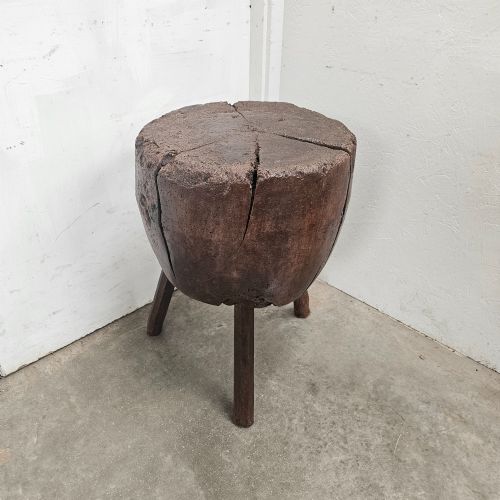
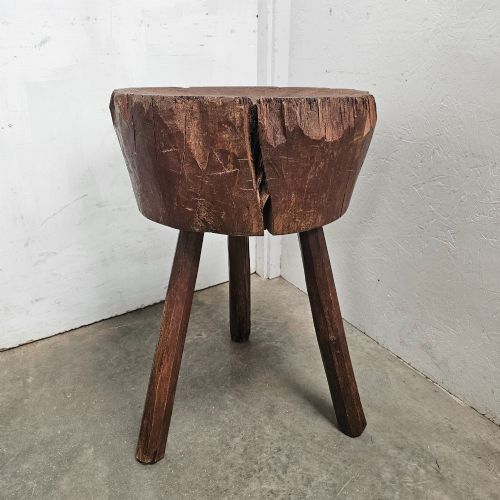
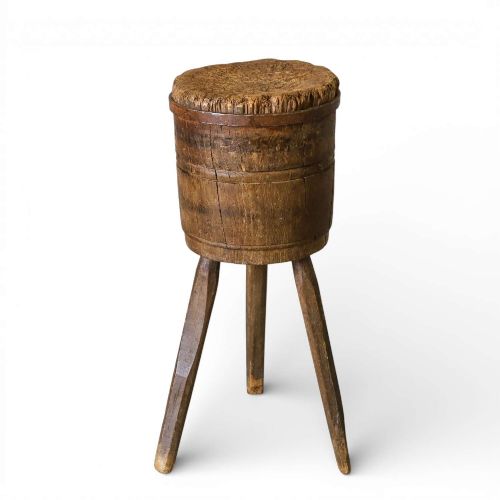
The versions most commonly met on this page originate from French workshops and Hungarian spaces, spanning the nineteenth century up to the 1930s. These pieces often take the form of freestanding butchers blocks, kitchen islands, or tree trunk game blocks.
Makers shaped these surfaces to be functional, resulting in thick timber tops supported by sturdy legs or solid timber trunks. Their forms range from simple primitive blocks to painted Victorian examples designed for demanding kitchen tasks.
Construction and materials
Makers built these blocks using dense hardwoods such as oak, beech, elm, and general hardwood to absorb the constant impact of heavy blades. These timbers were selected for their resilience, ensuring the working surface could endure years of heavy use without splintering away entirely.
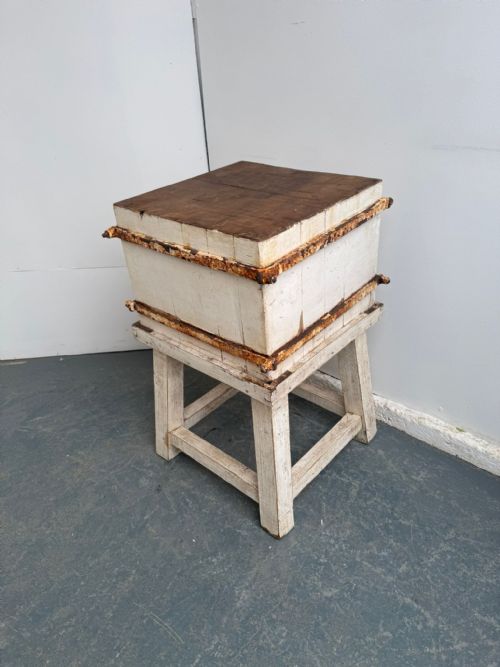
Additional strength came from integrated metal and iron components, which bound the wooden sections securely together. Some variations also incorporate painted finishes, particularly on nineteenth-century Hungarian pieces.
Rustic Timber Chopping Block Retail Price Guide 2026
Typical asking prices for rustic timber chopping block among the pieces listed under this phrase on Sellingantiques today, from the lower quarter to the upper quarter. They describe what is for sale here now, not the wider market.
Listings feature items spanning the 19th century, Victorian era, and the 1930s, constructed from oak, beech, elm, and iron.
Distinctions in quality
Quality in these surfaces rests on the density and selection of the timber used for the top block. Heavy woods like oak and beech provide a more solid foundation than softer timbers.
The structural integrity of the base, whether a solid tree trunk or joined legs, determines the stability of the block during heavy culinary work. Original surface patination accumulated through actual use separates genuine working pieces from later imitations.
The Rustic Timber Chopping Block Glossary
- Game block
- A specialised chopping block historically used for processing game and large cuts of meat. These are frequently fashioned directly from substantial tree trunks.
- Butchers block
- A thick-topped table or freestanding unit designed specifically for meat preparation. The surface consists of heavy end-grain or face-grain timber.
- Primitive country
- A style category describing furniture made with basic tools and straightforward methods for local utility. Such pieces prioritize function over refined decoration.
- Patina
- The surface sheen and wear accumulated through age and handling. On these blocks, it records the physical history of use.
Rustic Timber Chopping Block: Frequently Asked Questions
How were these blocks used originally?
These blocks served as the primary workstation for butchers and household cooks needing a durable surface for chopping meat and preparing daily meals. Their immense weight kept them stable while heavy cleavers and knives struck the wood.
Over decades, this continuous heavy labour left deep cuts, indentations, and a polished wear pattern across the top surface.
How do I care for a vintage chopping block?
Maintenance requires cleaning the surface with minimal moisture and regularly treating the exposed wood with food-safe oils to prevent drying. Avoiding harsh detergents preserves the historic timber and keeps the dry grain sealed.
Placing the block away from direct heat sources prevents the dense hardwoods from splitting or warping over time.
Can I use this for food preparation today?
Many buyers choose to use these authentic blocks for food preparation, provided the surface is thoroughly cleaned and conditioned. The thick timber tops remain entirely functional for chopping vegetables and carving meats.
Some collectors prefer to use them strictly as display islands or side tables in a kitchen to preserve their historical appearance.
How do I distinguish French blocks from Hungarian blocks?
French examples on this page tend to utilise beech, oak, and elm, often taking the form of primitive game blocks or provincial kitchen islands. Their construction emphasises exposed natural timber grains.
Hungarian blocks in the evidence frequently feature painted white finishes on Victorian frames, distinguishing them visually from unpainted French pieces.