


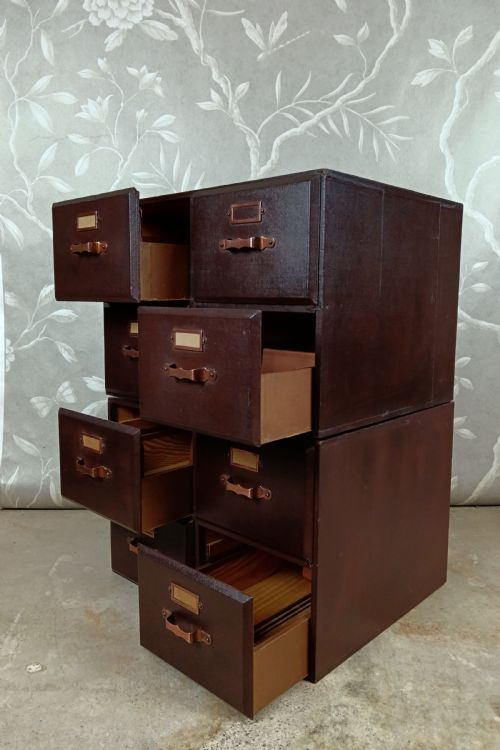


Vintage Wood Filing Cabinet
These vintage wood filing cabinets are practical workspace essentials built from solid timbers to organise correspondence and documents.
Vintage Wood Filing Cabinet
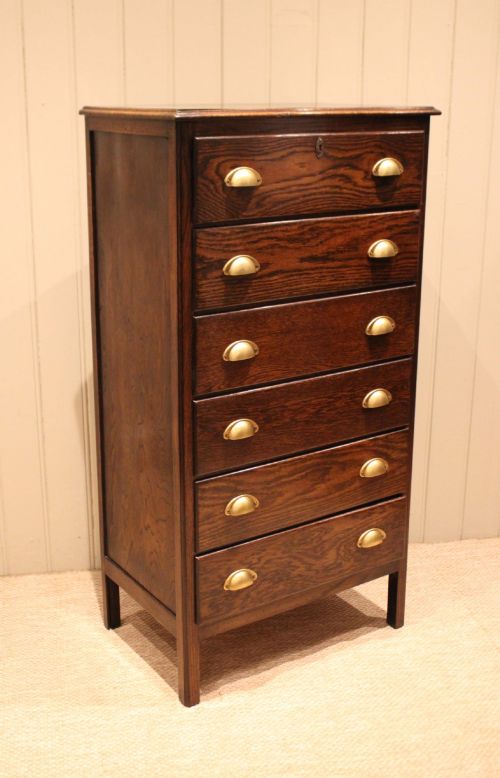
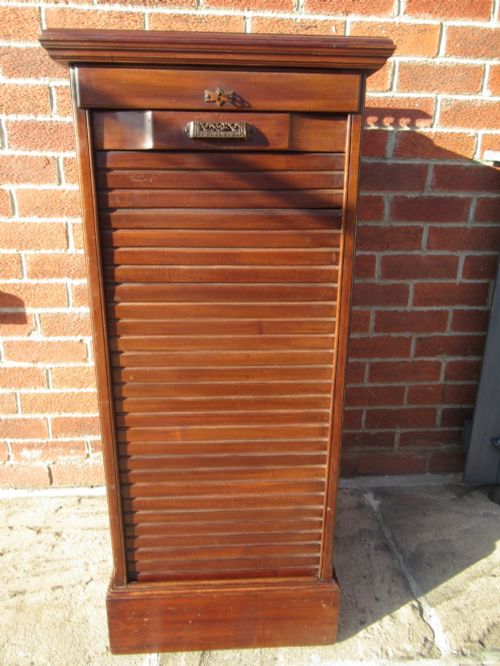
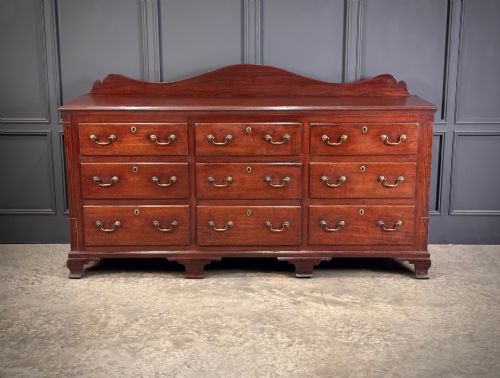
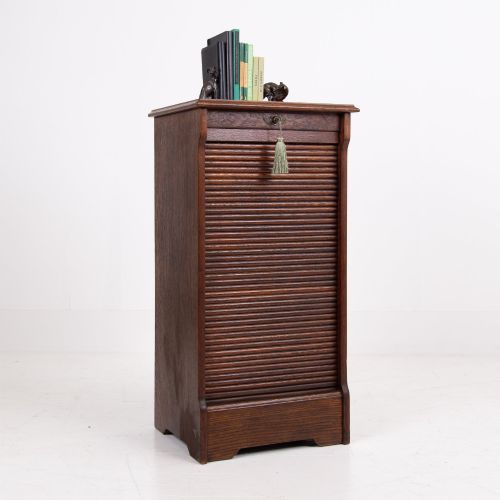
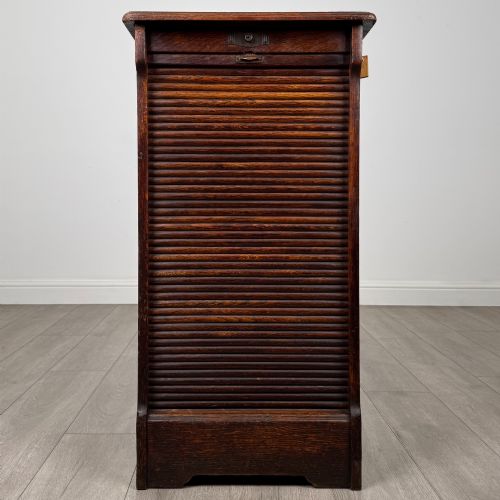
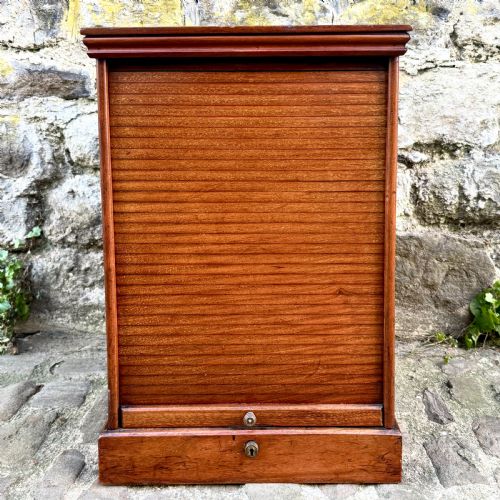
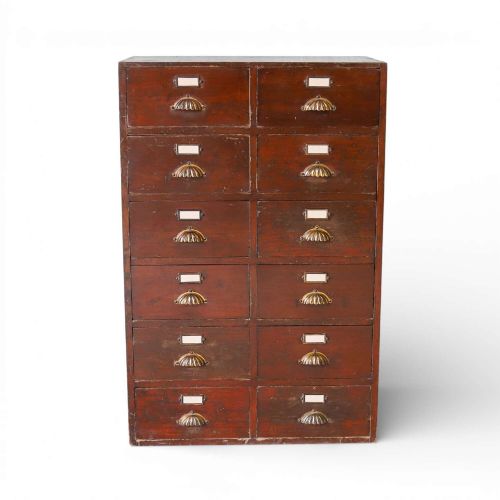
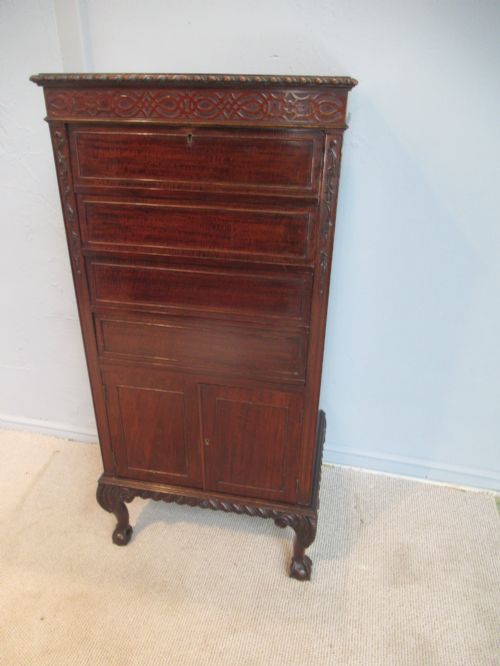
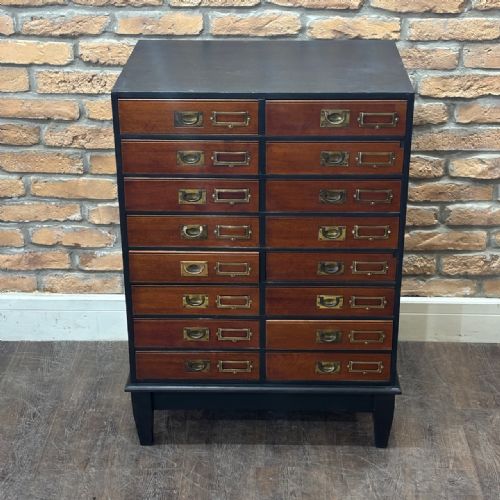
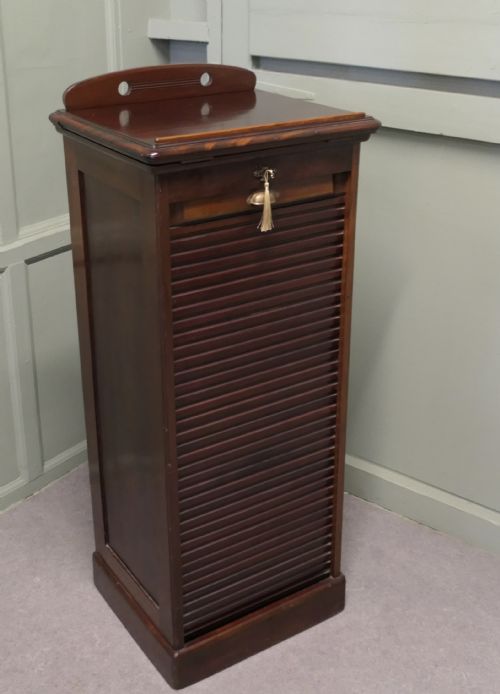
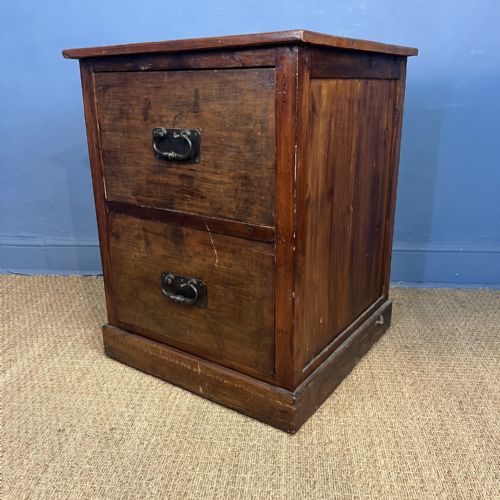
A vintage wood filing cabinet serves as a functional storage piece for documents, drawing on periods spanning the eighteenth century through to the 1930s. The selection includes multi-drawer banks, pedestal designs, and tambour front office cupboards that conceal sliding shutters.
Oak and mahogany dominate the offerings, appearing alongside walnut, rosewood, and teak in forms ranging from Edwardian library units to industrial workshop banks of drawers. Buyers encounter both utilitarian office furniture and refined domestic pieces adapted for modern paper storage.
Materials and Construction Methods
Cabinet makers utilised dense hardwoods such as oak, mahogany, and walnut to withstand daily office use, often incorporating brass for handles and label holders. Tambour doors required meticulous joinery, consisting of narrow wooden slats glued to a canvas backing to glide smoothly around curved tracks.
Drawer construction frequently employed traditional dovetail joints to ensure structural endurance under heavy loads of paper. Surfaces were finished with polish or wax to protect the timber while highlighting natural grain patterns.
Vintage Wood Filing Cabinet Retail Price Guide 2026
Typical asking prices for vintage wood filing cabinet among the pieces listed under this phrase on Sellingantiques today, from the lower quarter to the upper quarter. They describe what is for sale here now, not the wider market.
Factors That Determine Quality
Quality rests upon the selection of timber and the precision of the cabinet work, particularly in complex mechanisms like tambour shutters and patent letter files. Examples featuring original brass hardware, such as shell pulls and dedicated label holders, retain a higher degree of authenticity.
The integrity of the internal drawer divisions and the smoothness of the sliding mechanisms separate utilitarian workshop pieces from finer domestic furniture. Preservation of original surface finishes and structural soundness without excessive replacement parts dictate the standing of each piece.
Amberg’s Patent Cabinet
The Vintage Wood Filing Cabinet Glossary
- Tambour
- A flexible door or shutter formed of narrow wooden strips attached to a canvas backing, allowing it to slide around a curved track to conceal cabinet shelves.
- Wellington chest
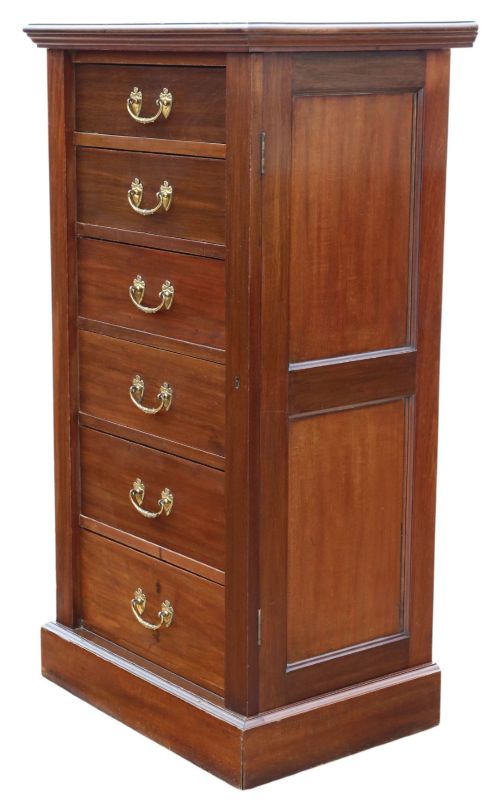
- A tall, narrow chest of drawers secured by a hinged vertical locking stile that fastens with a padlock or key, originating in the nineteenth century.
- Bank of drawers
- A multi-drawer storage unit designed for commercial or institutional use, housing numerous shallow compartments for sorting papers and documents.
- Pedestal filing cabinet
- A freestanding cabinet designed to stand beside a desk or reception counter, providing accessible vertical storage within a compact footprint.
- Shell pull
- A stamped or cast brass handle shaped like a scallop shell, commonly fitted above a label holder on nineteenth and early twentieth-century office furniture.
Vintage Wood Filing Cabinet: Frequently Asked Questions
How do I maintain wood office furniture?
Apply traditional beeswax periodically to nourish the timber and protect the polished surface from drying out.
Keep these cabinets away from direct heat sources and strong sunlight to prevent warping and fading.
Are antique filing cabinets suitable for modern paper?
Many historical drawer formats accommodate standard modern paper sizes, though older letter files were built for specific historical dimensions.
Measure the internal drawer depth and width before purchasing if you intend to store modern folders.
How do I distinguish Edwardian from Victorian cabinets?
Victorian office furniture tends to employ heavier proportions and darker finishes, reflecting mid to late nineteenth-century tastes.
Edwardian pieces often display lighter oak timbers and simpler decorative restraint associated with the early twentieth century.