




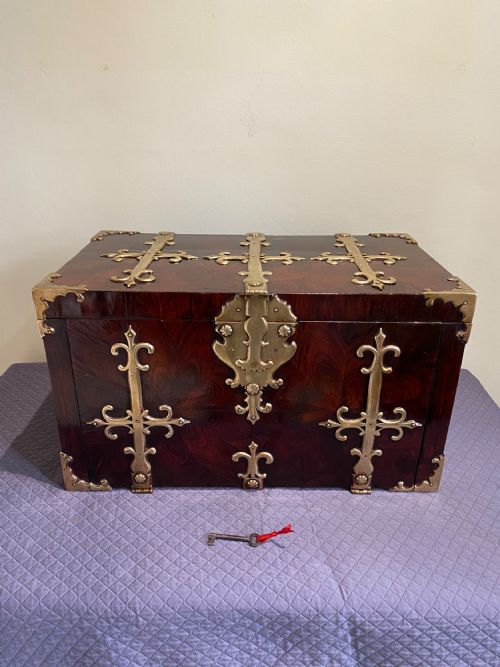


Vintage Wood Casket
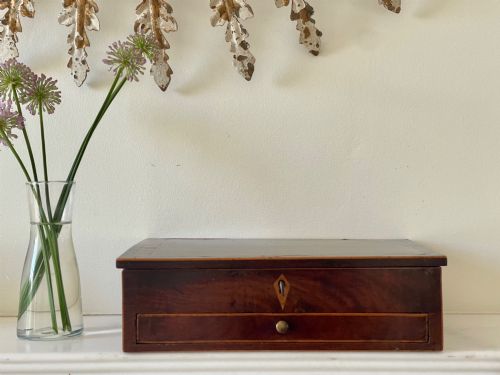
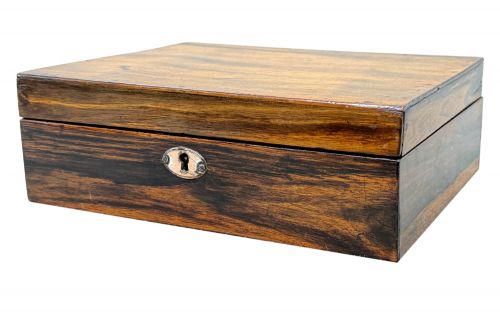
A vintage wood casket brings tactile warmth to a room while holding letters, trinkets and jewellery securely.
Vintage Wood Casket
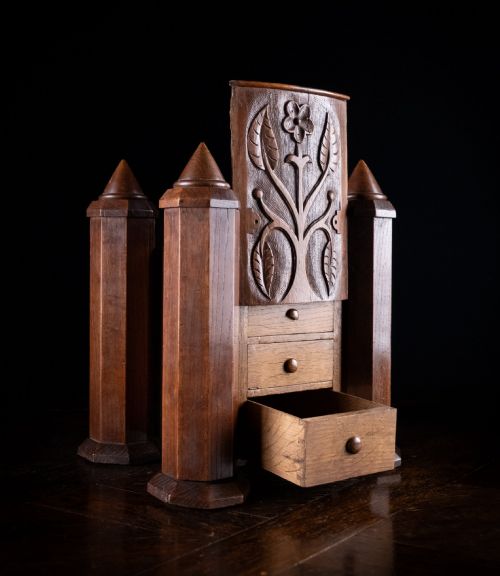
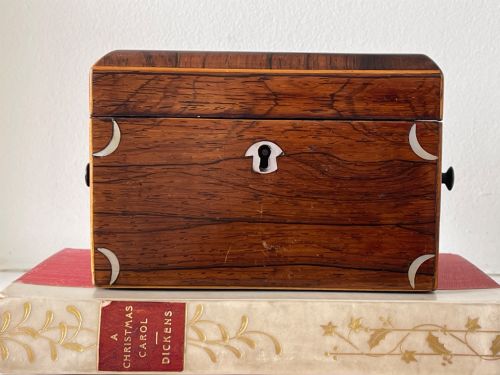
A vintage wood casket encompasses a broad selection of decorative containers, from nineteenth-century jewellery chests and Victorian trinket boxes to campaign boxes and writing cases. When searching for a vintage wood casket, buyers encounter diverse forms including stationery boxes, tea caddies, and table boxes originating from British, European, and colonial workshops. The pieces span periods from the seventeenth century through the Georgian, Regency, and Victorian eras into the early twentieth century.
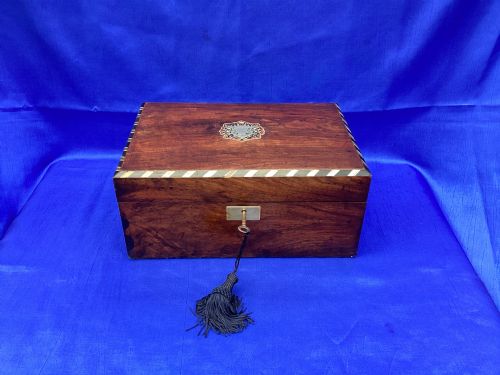
The most common versions on this page are nineteenth-century and Victorian pieces rendered in rosewood, mahogany, walnut, and oak. These frequently feature internal fitted trays, velvet or silk linings, and compartments designed for specific domestic uses such as holding letters or securing valuables.
Materials and construction methods
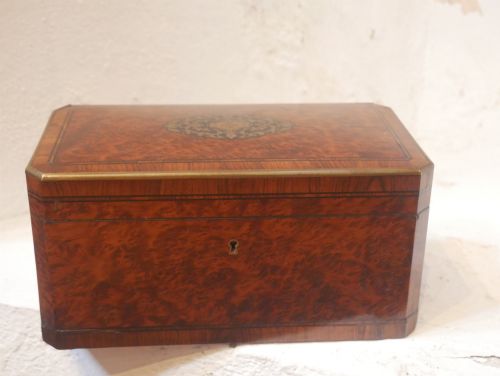
Cabinet makers utilised dense hardwoods like mahogany, walnut, and rosewood, alongside exotic timbers including coromandel, kingwood, and ebony. Many examples employ fine veneers laid over secondary wood carcases, enhanced by contrasting stringing, marquetry, and parquetry patterns.
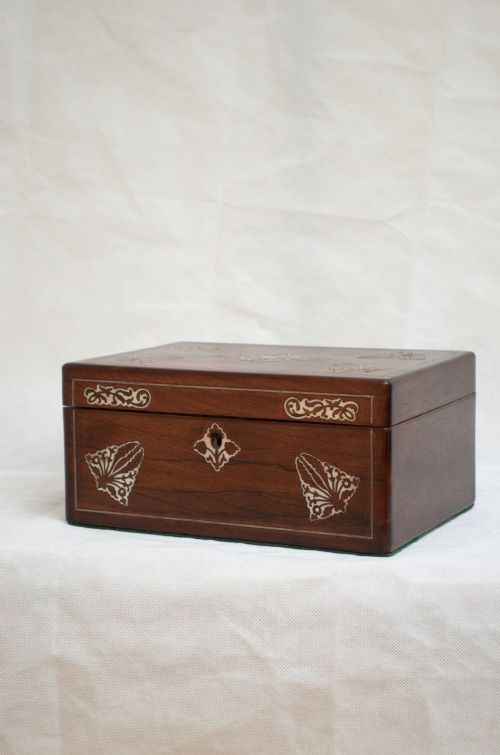
Decorative detailing relies on natural materials such as mother-of-pearl, bone, ivory, and porcupine quill inlaid into the wooden surfaces. Brass mounts, campaign handles, escutcheons, and working locks provide structural reinforcement and secure closure for travel or daily use.
Vintage Wood Casket Retail Price Guide 2026
Typical asking prices for vintage wood casket among the pieces listed under this phrase on Sellingantiques today, from the lower quarter to the upper quarter. They describe what is for sale here now, not the wider market.
Some nineteenth-century boxes utilise porcupine quills imported from distant colonies to create striking geometric patterns across the lid.
Markers of distinction
Quality reveals itself in the selection of timber grain, the precision of the veneer work, and the integration of decorative inlays like Tunbridge Ware or mother-of-pearl. Superior boxes display seamless corner joints, harmonious wood matching across all surfaces, and intact interior trays rather than later replacements.
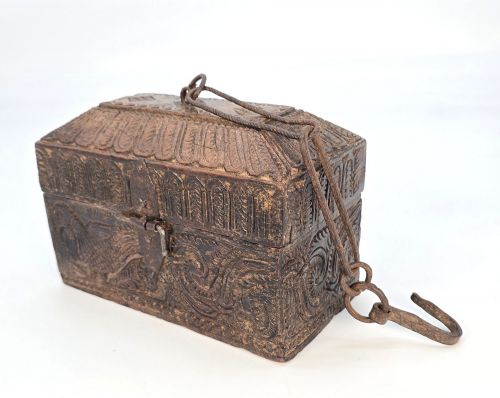
Hardware and mechanisms also differentiate the tier of a piece, with original working locks, heavy brass campaign mounts, and finely cast escutcheons indicating superior workshop production. The presence of hand-carved elements, such as those found on Anglo-Indian or Black Forest boxes, demonstrates the artisan's skill level.
Tahan
The Vintage Wood Casket Glossary
- Escutcheon
- A protective metal plate surrounding a keyhole. This brass or bone fitting prevents the surrounding wood from wearing down with repeated use.
- Marquetry
- Decorative veneer patterns formed by fitting together small pieces of wood, shell, or ivory. Artisans arrange these elements to create pictorial or geometric designs across the lid and sides.
- Campaign box
- Portable storage fitted with recessed brass handles and corner brackets. Designed for military officers travelling on duty, these boxes utilise sturdy hardwoods to withstand rigorous transit.
- Tunbridge Ware
- Woodworking characterised by mosaic designs made from thousands of tiny tinted wood blocks. Named after the English town where the technique flourished, this method creates intricate geometric or floral scenes.
Vintage Wood Casket: Frequently Asked Questions
What were vintage wood caskets originally used for?
These boxes served multiple domestic and travel functions in past centuries. Wealthy households relied on them to store personal correspondence, loose jewellery, tea leaves, or spices.
Larger variants accompanied individuals on journeys, holding writing materials, currency, or grooming tools. Their sturdy construction and locking mechanisms kept valuable possessions secure both at home and on the move.
How do I care for a wood casket?
Keep the wood conditioned by applying a suitable wax polish periodically to prevent the timber from drying out. Avoid placing the box in direct sunlight or near heat sources to protect delicate veneers and natural inlays.
Handle internal velvet or silk linings with care, using a soft brush to remove dust from tight corners. Ensure brass hardware remains clean and dry to prevent tarnishing.
How do I identify the period of a box?
Examine the construction methods, wood types, and decorative styles visible on the piece. Georgian and Regency pieces often feature flame mahogany or rosewood with restrained brass inlay, while Victorian examples frequently incorporate heavy carving, coromandel, or Tunbridge Ware.
Internal fittings, lock types, and hinge styles also provide clues to the era of manufacture. Secondary woods used inside the box help narrow down the geographic origin and date.
Can I use these boxes for modern storage?
These caskets adapt readily to contemporary living spaces for organising modern items. They provide secure, decorative storage for watches, cufflinks, keys, or stationery supplies on desks and dressing tables.
Their compartmentalised interiors help keep small accessories separated and protected. Placing them in a room adds tactile warmth and historical character.