
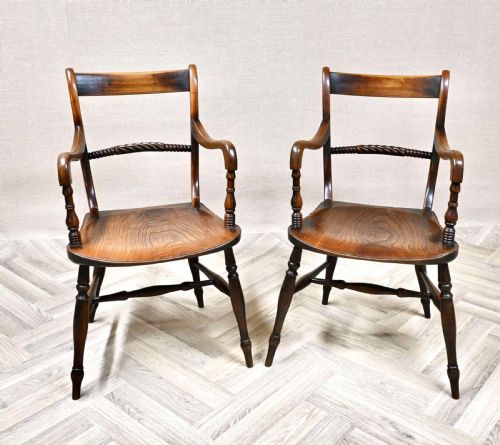
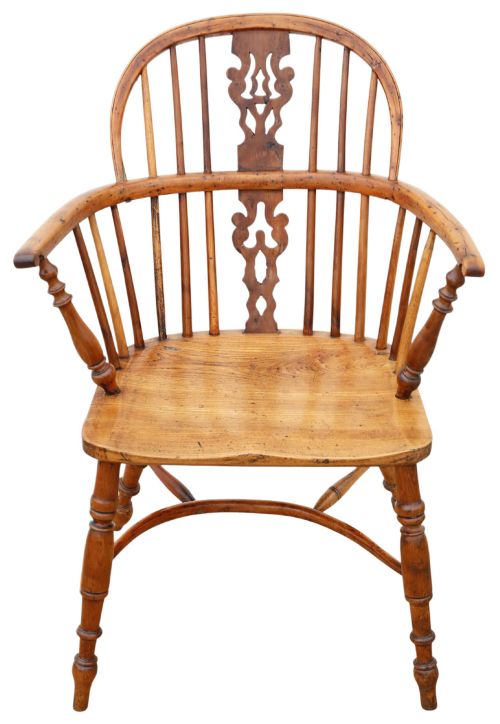
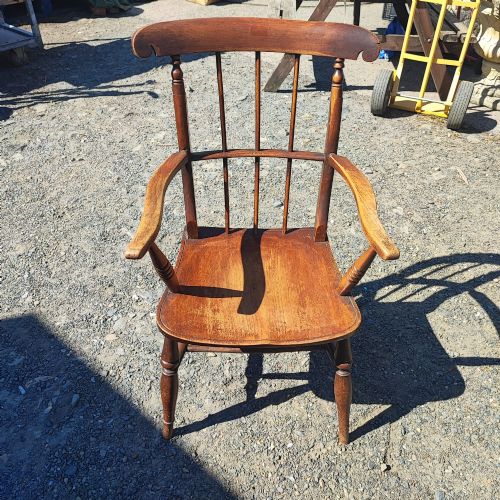
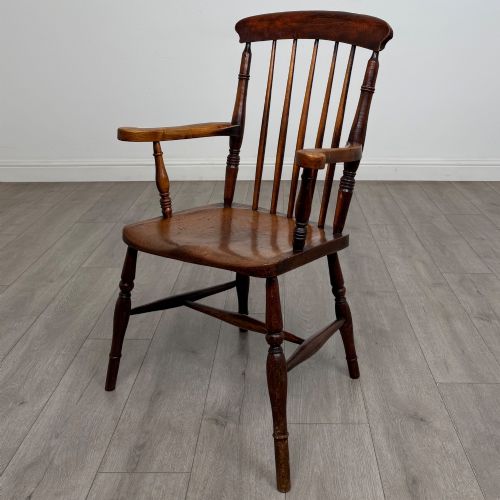

Vintage Windsor Armchair
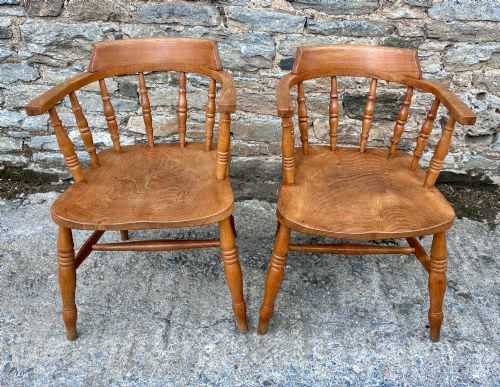
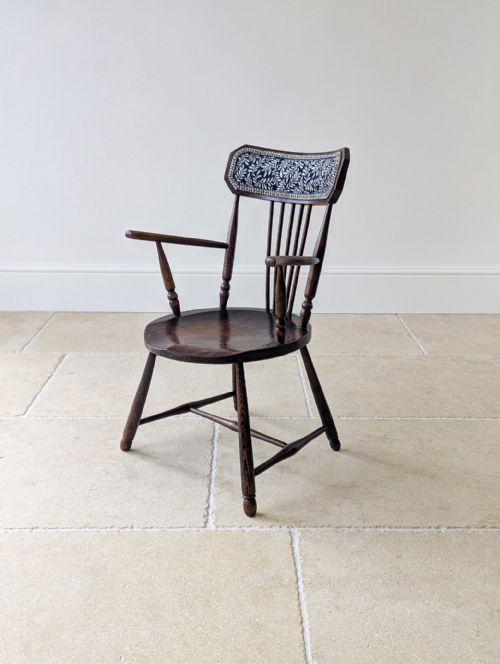
These vintage windsor armchair examples bring honest vernacular timber and solid construction straight into a modern room.
Vintage Windsor Armchair
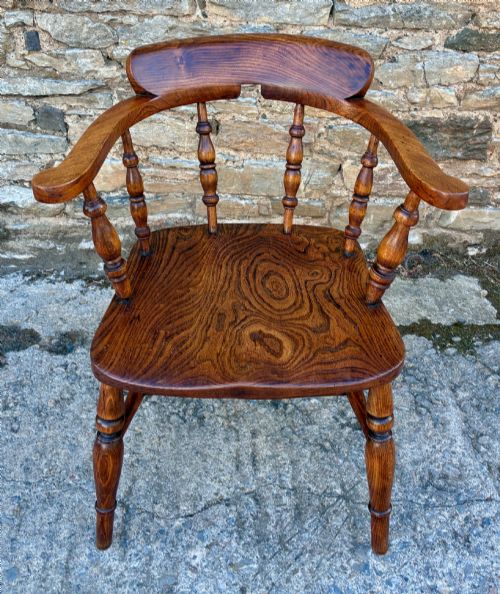
A vintage windsor armchair unites traditional English country carpentry with a distinct stick-back or hoop-back frame built for daily seating. You will most frequently encounter 19th-century and Victorian pieces shaped from ash, elm, and beech across farmhouse and kitchen contexts.
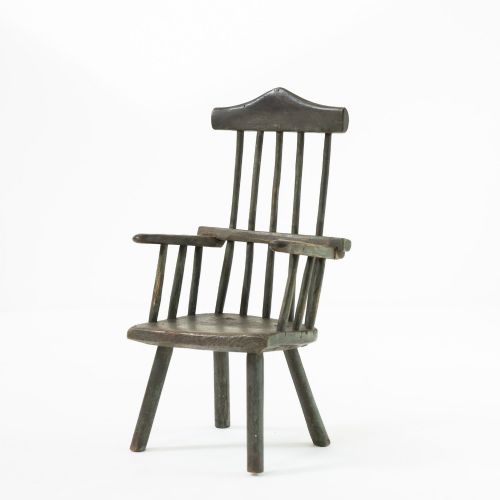
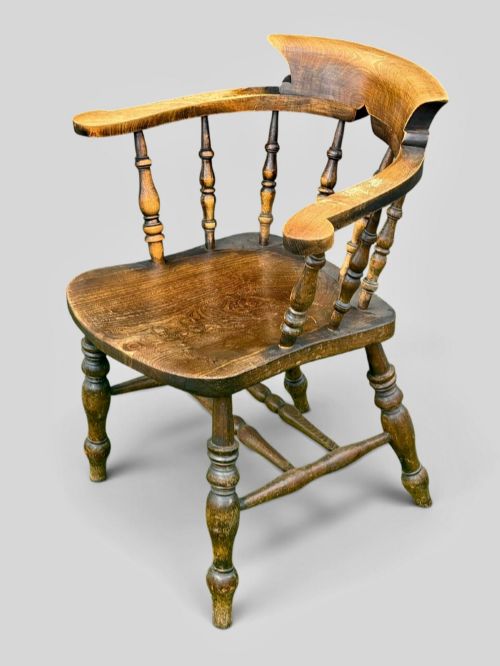
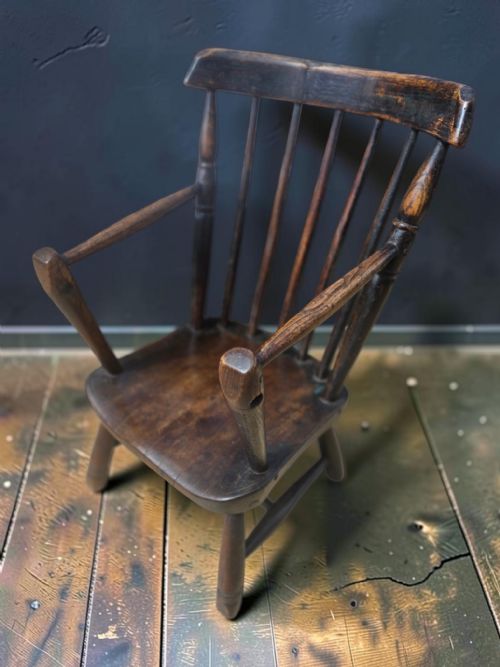
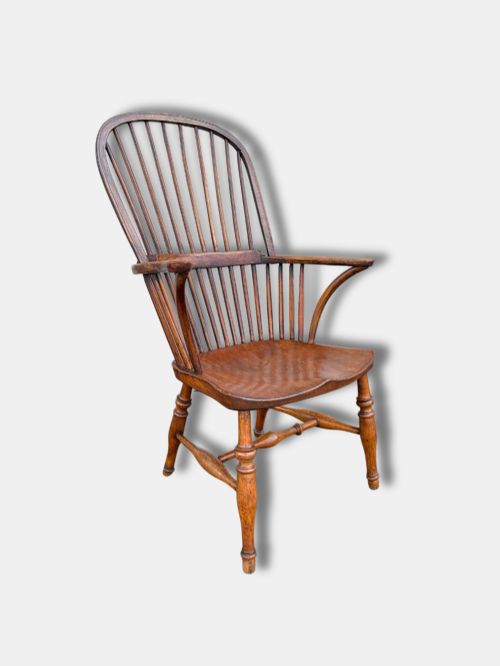
The form spans low-back smokers bows, high comb-back chairs, and children's versions designed with the same pegged joinery as full-size seats. Makers relied on regional variations from the Thames Valley to Scotland, producing armchairs, rocking chairs, and captains chairs with robust saddle seats.
How they were made
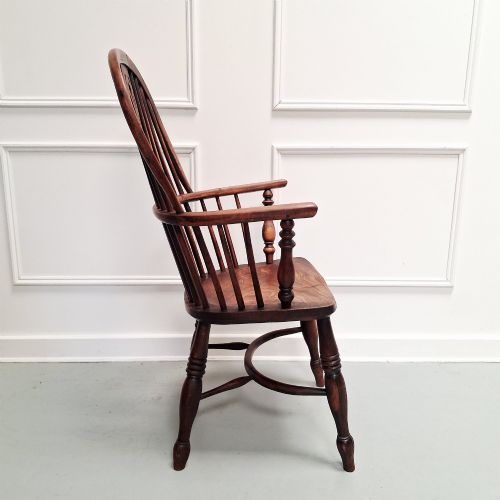
Craftsmen shaped solid elm seats by hand-sculpting the timber into a comfortable saddle contour to support the sitter. Spindles and bow backs were turned from straight-grained ash or beech, then steam-bent to form the continuous curved armrests and upper rails.
Makers locked the components together using through-wedged tenon joints and simple pegged construction without relying on metal fixings. Yew wood examples demanded particularly skilled turning, utilising the dense grain found in older branches for structural strength.
Makers occasionally sized these sturdy frames down, leaving us charming children's armchairs built with the exact same joinery as adult seats.
What varies in quality
The depth and comfort of the sculpted seat separate everyday utility work from finer vernacular output. A well-carved elm seat shows thoughtful shaping that follows the contours of the body rather than a flat plank.
Timber selection dictates the distinction between standard workshop production and superior examples constructed in figured yew. Grain definition in the arms and back spindles reveals the care taken in material selection during the workshop stage.
J Spencer·Gabbitass Worksop maker
The Vintage Windsor Armchair Glossary
- Smoker's Bow
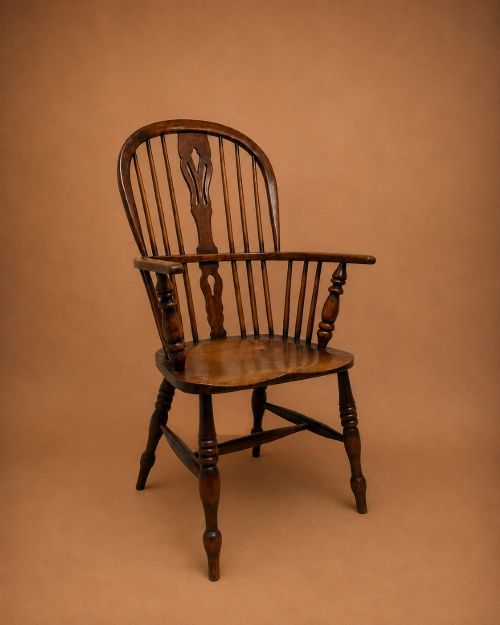
- A low-back captain's chair with a rounded continuous rail wrapping around the arms, commonly found in 19th-century settings.
- Comb Back
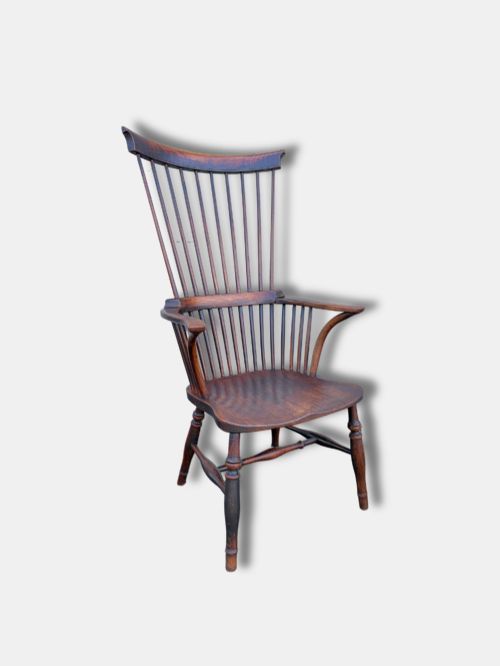
- A Windsor chair style featuring an extended high back topped with a horizontal headrest piece resembling a decorative comb.
- Saddle Seat
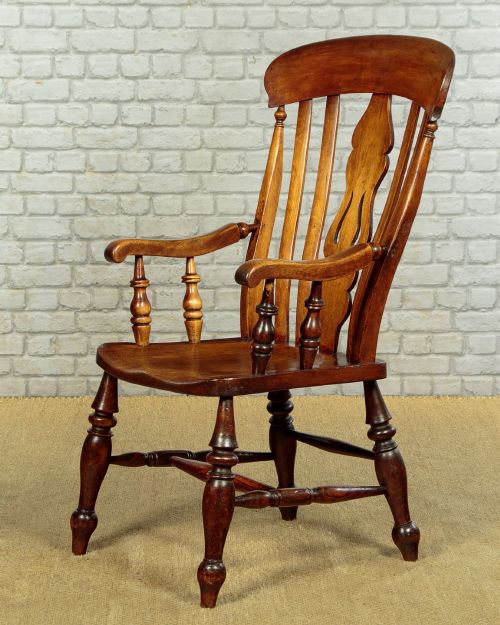
- A wooden seat base scooped out by hand using an adze and scorp to create an ergonomic hollow for the sitter.
- Stretcher
- The horizontal wooden rod connecting the legs below the seat to provide structural rigidity and prevent splaying.
- Hoop Back
- A single piece of steam-bent timber curved round to form the backrest and arm support in one flowing line.
Vintage Windsor Armchair: Frequently Asked Questions
What is a windsor armchair?
A windsor armchair is a traditional wooden seat where the legs and back spindles are wedged directly into a solid sculpted seat rather than built around a frame.
These pieces rely on pegged joinery and steam-bent wood to achieve structural stability without heavy upholstery.
How do I style a windsor chair?
These chairs fit naturally around dining tables, at a desk, or as a standalone reading seat in a corner.
Their honest timber construction and vernacular lines blend easily with both rustic interiors and modern minimalist spaces.
Are windsor chairs comfortable?
The deep, hand-sculpted saddle seats provide surprising ergonomic support despite lacking cushions or fabric padding.
High-back and comb-back variations offer solid head and shoulder support for extended periods of sitting.
How do I date a windsor chair?
Dating relies on identifying timber combinations, tool marks on the seat base, and the profile of the turned spindles and legs.
Earlier 18th and early 19th-century examples often feature thicker yew or ash components and wider, deeper saddle carvings.