



Vintage Wellington Locking Chest
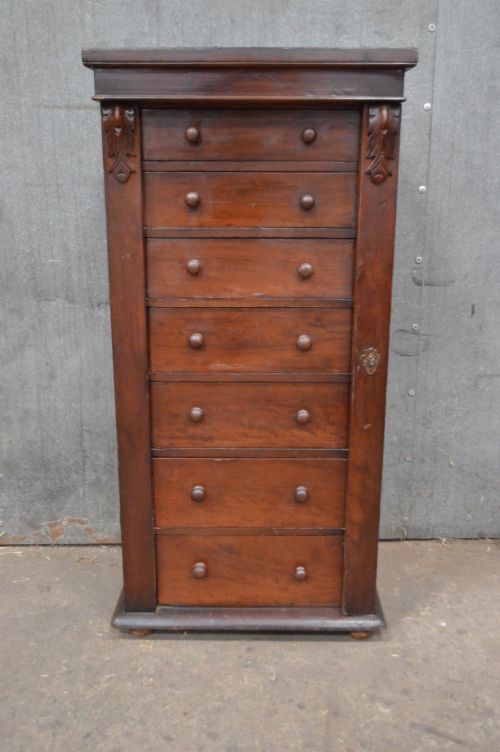
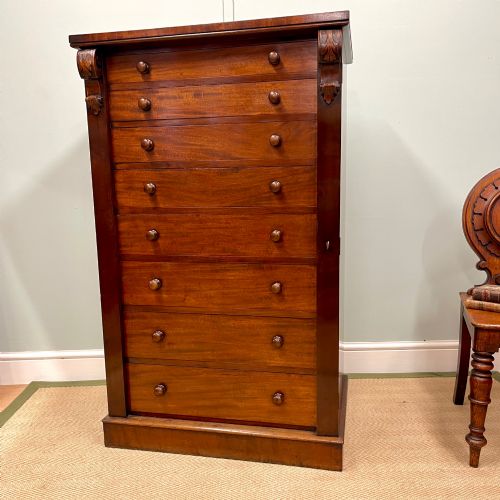
A vintage wellington locking chest is a tall, narrow cabinet secured by a locking side pilaster, prized for its clever security and elegant proportions.
Vintage Wellington Locking Chest
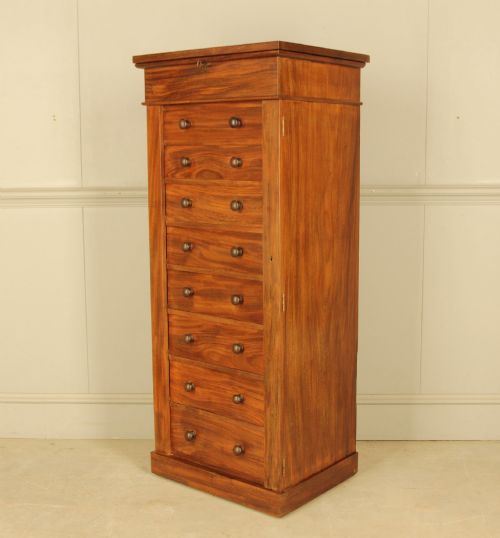
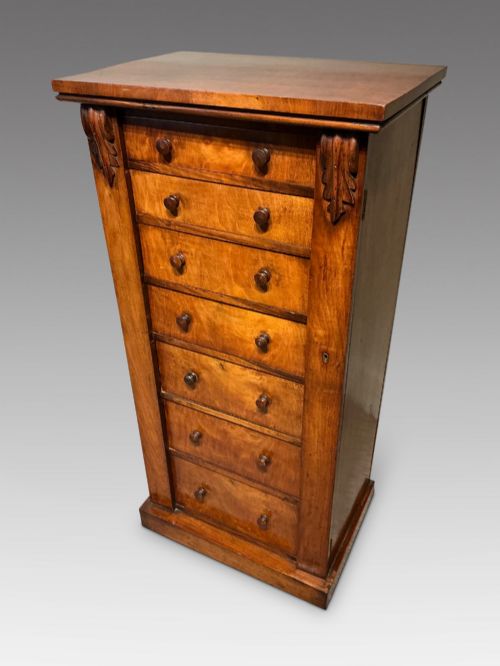
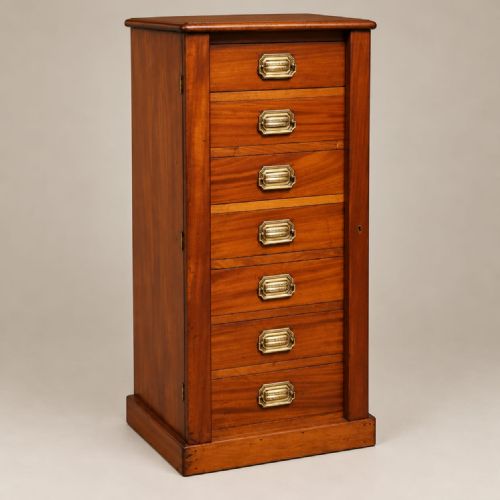
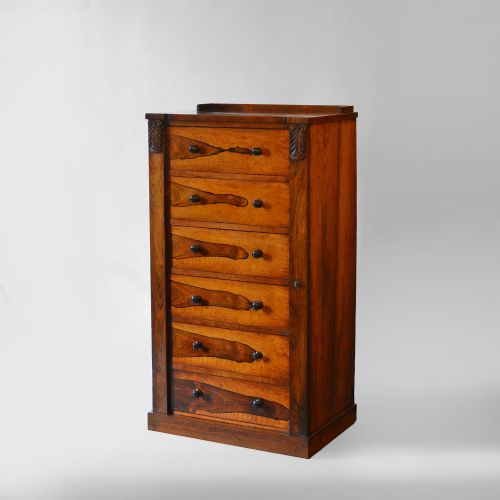
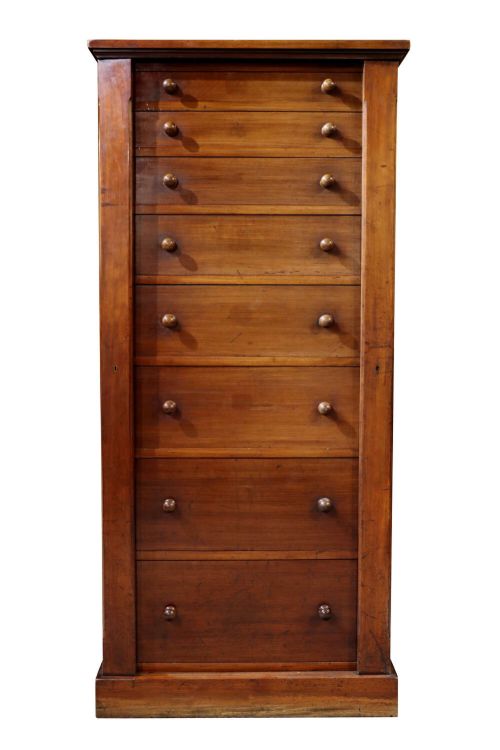
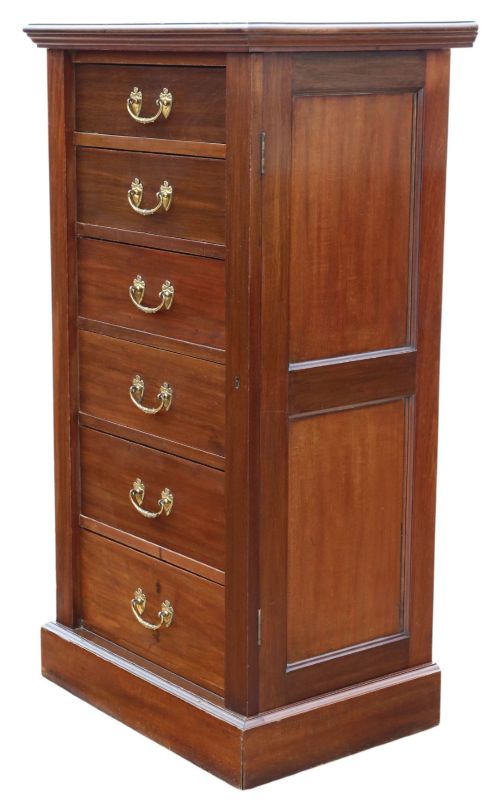
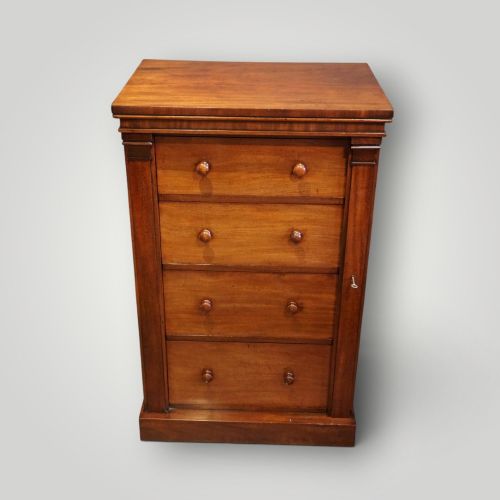
When searching for a vintage wellington locking chest, buyers will encounter tall, narrow case pieces predominantly from the Victorian and 19th Century periods. These cabinets typically feature a bank of several drawers secured by a hinged locking stile on the right or left edge, designed to keep contents private.
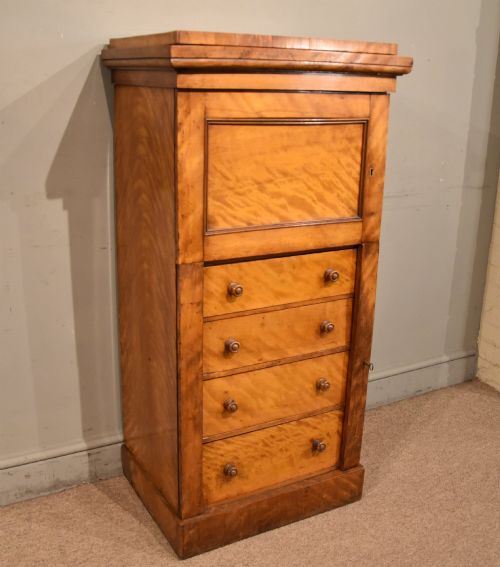
The version most commonly found on this page is constructed from mahogany, often with four to eight drawers, though examples in oak, walnut, and satin birch appear frequently. Alongside standard drawer configurations, some pieces incorporate specialised interiors such as hinged fall fronts or secrétaire writing compartments.
Origins span standard British cabinetmaking traditions to occasional continental variants, including 19th Century French pieces and Edwardian interpretations. The form functions effectively in compact spaces where traditional wide chests of drawers prove too cumbersome.
How they were made
Cabinetmakers utilised solid timbers and decorative veneers over secondary woods, selecting dense hardwoods like mahogany, oak, and walnut for structural integrity. Flame mahogany veneer, burr walnut, and pollard oak were carefully applied to primary surfaces to showcase dramatic natural grain patterns.
The defining mechanical feature involves a hinged wooden locking bar or pilaster that swings outward only when the top drawer is unlocked. This mechanism secures all drawers simultaneously via small internal stops, requiring precise joinery to operate smoothly alongside traditional dovetail drawer construction.
Vintage Wellington Locking Chest Retail Price Guide 2026
Typical asking prices for vintage wellington locking chest among the pieces listed under this phrase on Sellingantiques today, from the lower quarter to the upper quarter. They describe what is for sale here now, not the wider market.
Some chests include a diminutive childs version, proving that even 19th-century nobility needed miniature security for tiny valuables.
What varies in quality
Quality rests upon the selection and matching of timber veneers, where highly figured grain and book-matched panels distinguish superior examples from plain utility pieces. The crispness of hand-cut dovetails and the integrity of the locking mechanism dictate the standard of workshop execution.
Gillows of Lancaster·Druce and Co
The Vintage Wellington Locking Chest Glossary
- Wellington chest
- A tall, narrow chest of drawers secured by a hinged locking stile on one side that fastens over the drawer edges. This specific form emerged in the early 19th century and remained popular through the Victorian era.
- Locking stile
- The vertical wooden bar on the front edge of the chest that swings outward to release the drawers once the main lock is opened. It acts as the primary security device for the entire stack.
- Secrétaire
- A desk drawer or fitted compartment that drops open to reveal a writing surface and small pigeonholes. In these chests, this feature is integrated discreetly within the bank of drawers.
- Scumble paint
- A decorative surface finish applied with a translucent glaze over a lighter base colour to simulate natural wood grain. This technique appears on country house furniture.
- Flame mahogany
- A veneer cut from the fork of the mahogany tree where the branch meets the trunk, producing a rippling, flame-like pattern. It was utilised on high-status Victorian case pieces.
Vintage Wellington Locking Chest: Frequently Asked Questions
What is a wellington chest?
A wellington chest is a tall, slender set of drawers distinguished by a hinged locking pilaster down one side. This bar secures every drawer simultaneously when locked.
Originally designed for gentlemen to store linen, documents, or valuables securely, the form maximises vertical storage while occupying minimal floor space.
How does the locking mechanism work?
The locking stile is a hinged wooden flap attached to the front frame that covers the left or right edges of the drawers. When the top drawer is pushed completely closed and locked with a key, a rebate or pin catches the bar so it cannot swing open.
Opening the top drawer releases the locking bar, allowing the lower drawers to be pulled out individually in sequence.
Where should I place one at home?
These chests excel in tight spots where standard wider furniture will not fit, such as narrow hallways, alcoves, or beside a bed as a tall bedside table. Their vertical emphasis draws the eye upward, making them useful in rooms with high ceilings.
Ensure there is adequate clearance on the locking side so the vertical stile can swing open fully without hitting adjacent walls or furniture.
How do I date a vintage piece?
Dating relies on examining the secondary timbers, construction methods, and hardware styles. Mid-19th century and Victorian examples typically feature hand-cut dovetails and heavy mahogany construction, while Edwardian pieces often incorporate lighter satinwood or inlaid stringing.
The presence of original locks, key escutcheons, and surface wear also provides clues to the manufacturing decade.