

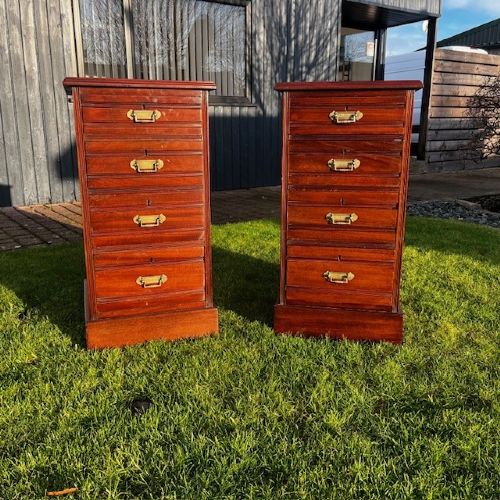


Vintage Wellington Drawers
Vintage wellington drawers are narrow, tall locking chests built for private papers, which bring compact vertical storage and traditional character to any room.
Vintage Wellington Drawers
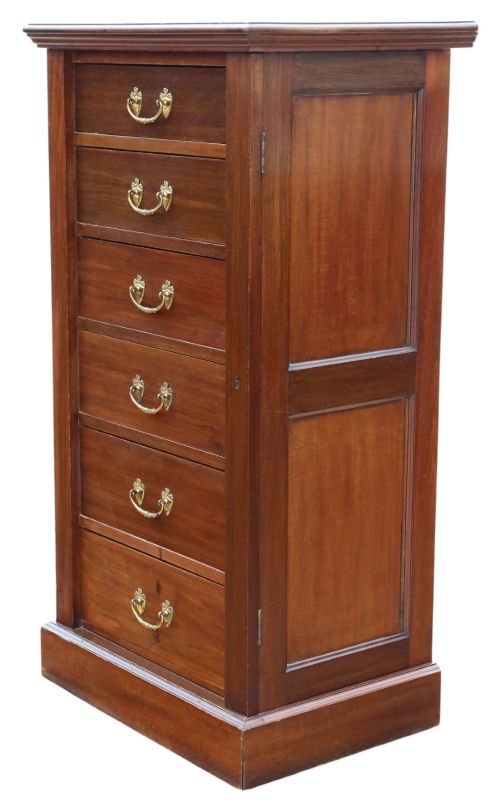
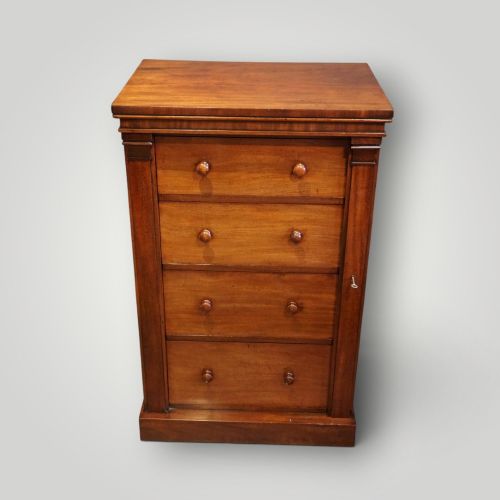
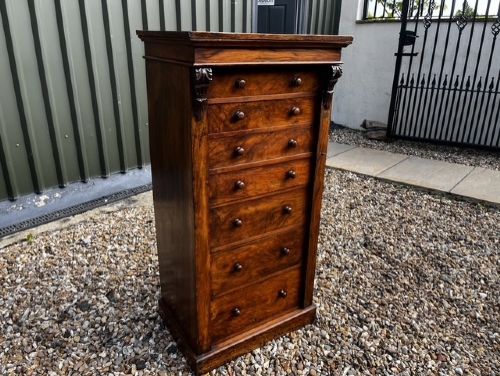
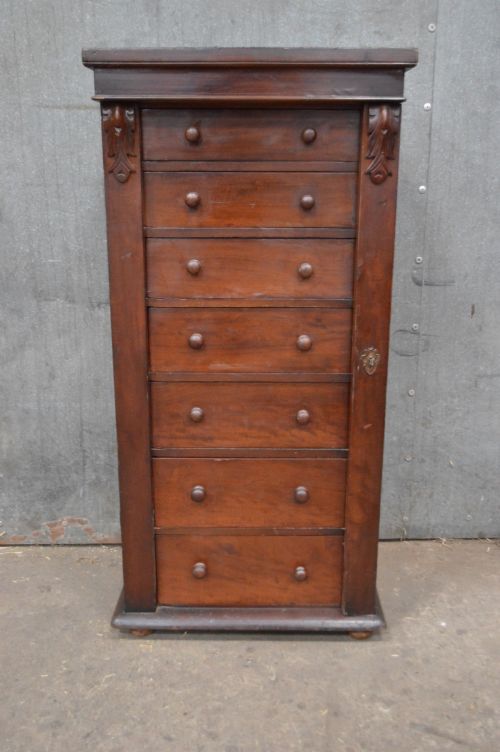
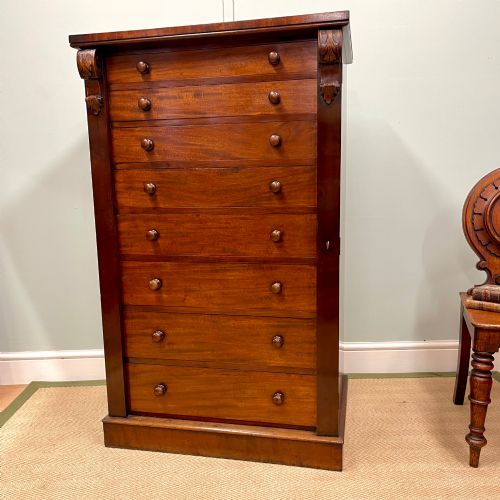
Vintage wellington drawers, frequently encountered as tall Victorian and Edwardian pedestal chests, offer a slim footprint designed to fit tight spaces while providing numerous tiers of storage. These pieces typically feature a hinged locking stile on one side that secures all the drawers when locked in place, a characteristic mechanism that defines the form.
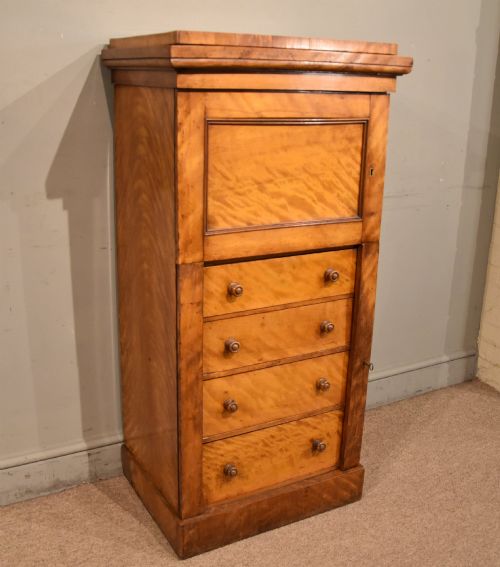
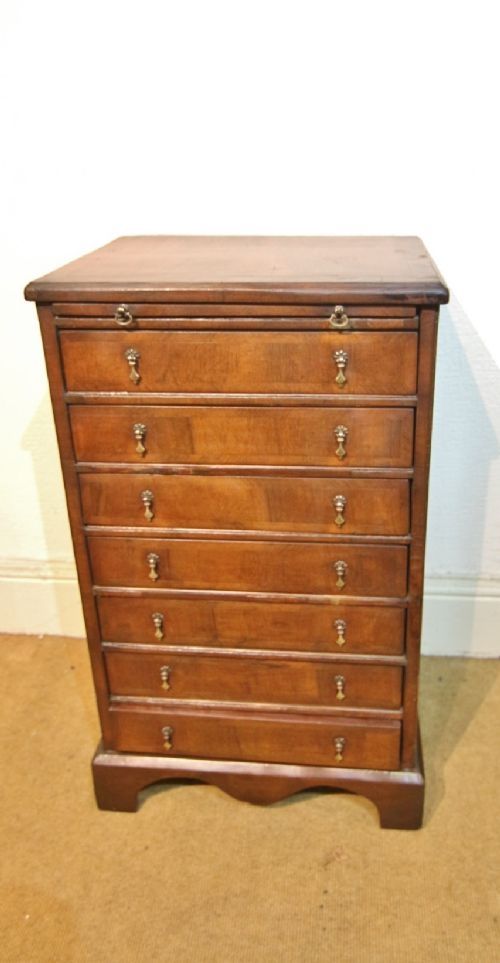
The selections available range from standard mahogany and walnut models to variations in oak, satinwood, pine, ash, and rosewood. Buyers also encounter specialised forms such as secretaire chests with drop-down writing surfaces, collectors chests, and bedside variants.
Origins span standard nineteenth-century workshops through to Edwardian interpretations and Anglo-Indian carved pieces, reflecting diverse regional cabinet-making traditions. The core identity remains consistent: a tall, narrow stack of drawers governed by a single locking locking bar.
How they were made
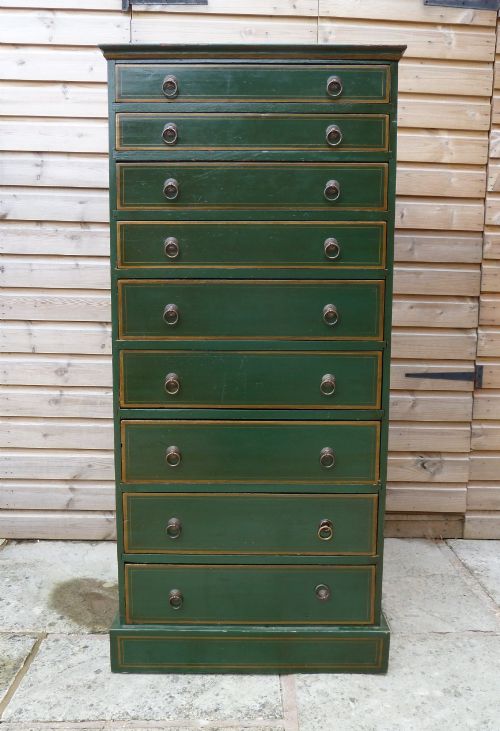
Cabinet-makers relied heavily on dense timbers such as mahogany, walnut, and pollard oak, often enhanced with flame mahogany veneer, satin birch, or satinwood to create rich exterior surfaces. Carved details, inlaid elements, and scumble paint finishes appear on specific regional and period examples.
The defining structural mechanism relies on a sturdy locking stile hinged to one side of the carcass, which swings over the drawer edges and is secured with a small brass lock. Drawers themselves utilise traditional dovetail joinery to ensure durability across tall, narrow proportions.
Periods represented across the inventory include Victorian, Edwardian, Georgian style, 19th Century, 1800, 1850, 1860, 1870, 1880, 1900, 1910, 1920, and 1930.
What varies in quality
The grade of timber selection and figuring marks the primary division in quality, ranging from plain painted pine or standard hardwoods to highly figured flame mahogany veneers and pollard oak. Crispness in applied carvings, inlaid stringing, and internal drawer construction also separates standard workshop output from exceptional cabinet-making.
The integrity and smooth operation of the locking stile mechanism, alongside the presence of original brass hardware and working locks with keys, heavily influence the standing of any given piece. Well-preserved original surfaces, whether polished wood or period scumble paint, retain greater integrity than heavily refinished examples.
The Vintage Wellington Drawers Glossary
- Wellington Chest
- A tall, narrow pedestal chest of drawers featuring a hinged locking stile on one side that secures the entire stack. This distinct locking mechanism is the hallmark of the design.
- Secretaire
- A cabinet or chest incorporating a hinged writing drawer that folds down to reveal a fitted interior of small drawers and pigeonholes. It combines desk functionality with vertical drawer storage.
- Scumble Paint
- A decorative paint technique involving translucent glazes dragged or mottled over a base coat to imitate more expensive wood grains. It appears on country house furniture.
- Flame Mahogany
- A veneer cut from the branch junction of a mahogany tree, yielding a fiery, flamelike grain pattern. Cabinet-makers reserved this timber for the primary drawer fronts of high-status furniture.
- Stile
- A vertical framing member of a cabinet carcass or door. In this context, the locking stile acts as the swinging bar that blocks the drawer edges.
Vintage Wellington Drawers: Frequently Asked Questions
What is a wellington chest?
A wellington chest is a tall, narrow set of drawers distinguished by a hinged locking stile down one vertical edge. This swinging wooden bar fastens over the drawer fronts to secure the contents with a single key.
Originally designed in the nineteenth century as compact gentlemen's wardrobes or private paper cabinets, they maximise vertical storage while occupying minimal floor space.
How do you lock the drawers?
To lock the chest, you first push all drawers completely flush into the carcass. Then you swing the hinged locking stile into place over the drawer edges and engage the key in the built-in lock.
This action throws bolts or blocks behind the stile, preventing any individual drawer from opening until the stile is unlocked and swung clear.
Where were they used?
These chests served primarily in private studies, bedrooms, and dressing rooms as secure places to store personal journals, linen, or collection specimens. Their narrow proportions made them suitable for placement in tight bedroom alcoves.
Later Edwardian and country house examples often functioned as bedside tables, nightstands, or specialised office storage units.
How do I date these chests?
Dating relies on examining the secondary timbers used inside the drawers, the style of the brass hardware, and the predominant wood veneers of the period. Earlier nineteenth-century examples often feature solid mahogany or walnut with hand-cut dovetails.
Later Victorian and Edwardian pieces frequently showcase inlaid stringing, satinwood highlights, or alternative hardwoods like ash and oak.