

Vintage Watch Chain Necklace
A vintage watch chain necklace transforms utilitarian pocket watch chains into distinctive neckpieces designed for everyday wear.
Vintage Watch Chain Necklace
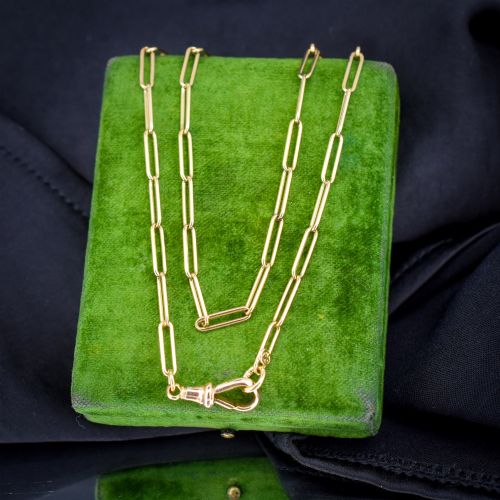
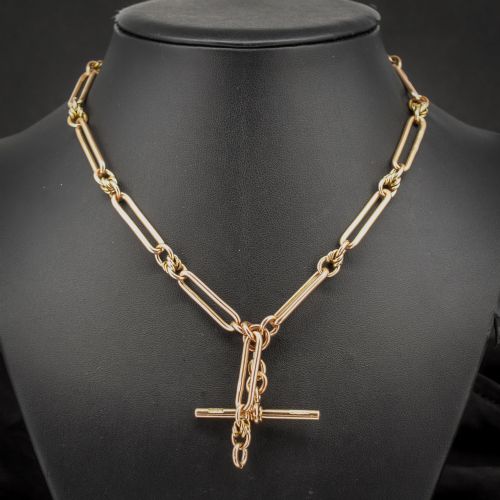
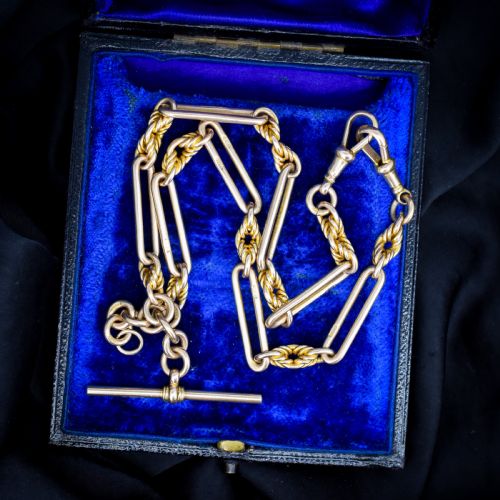
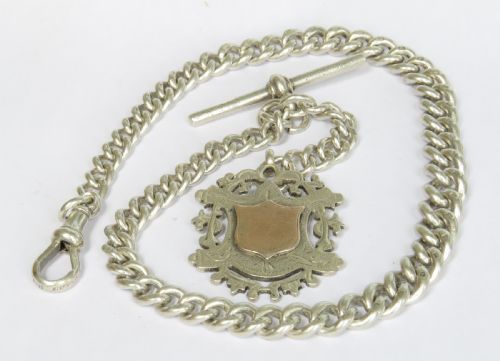
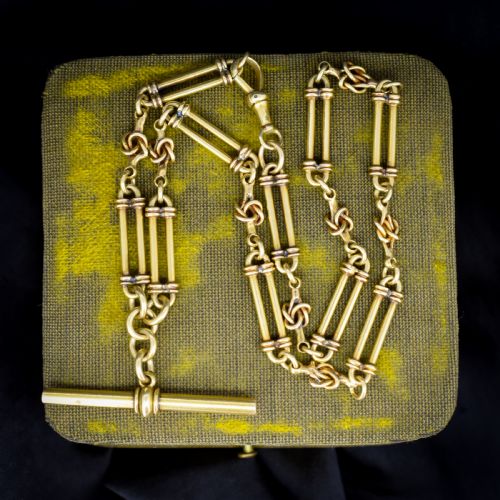
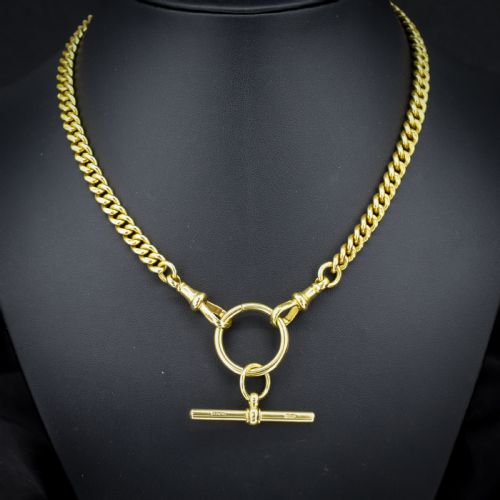
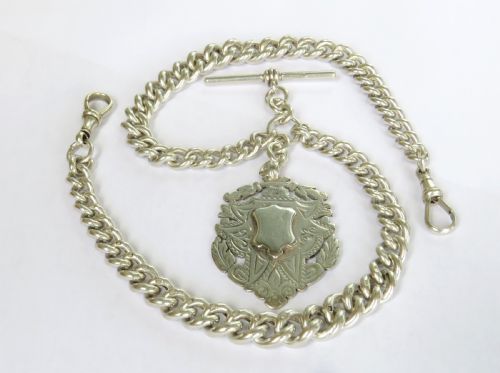
A vintage watch chain necklace repurposes traditional nineteenth and early twentieth-century pocket watch chains, specifically Albert chains, for wear around the neck. These pieces span the Victorian, Edwardian, and Art Deco periods, encompassing both British hallmarked examples and continental European silver and gold items.
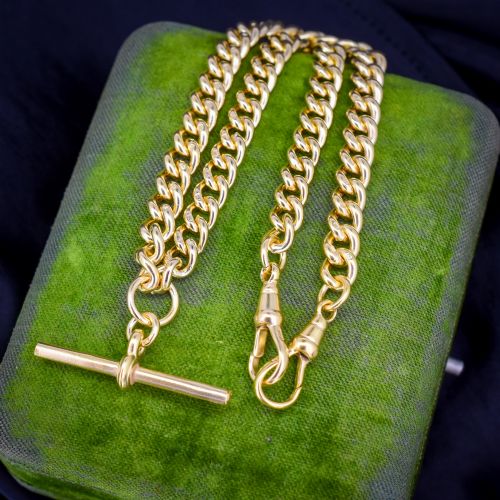
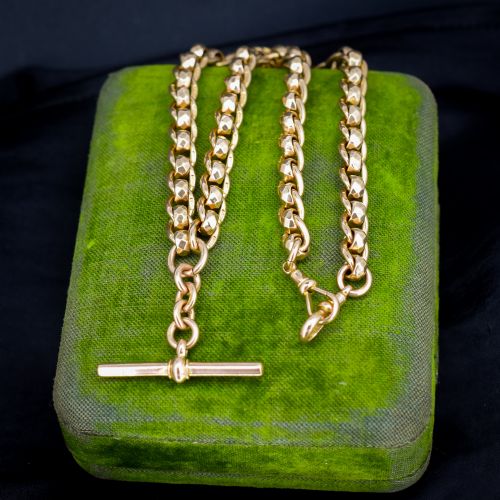
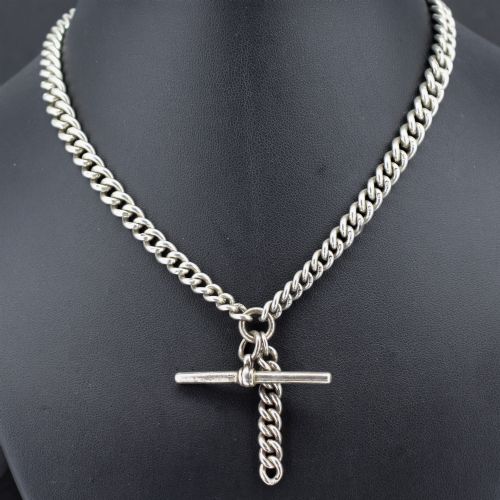
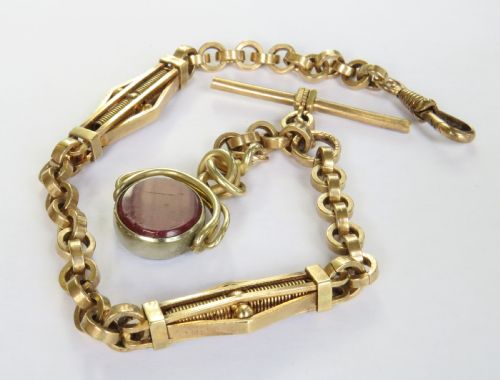
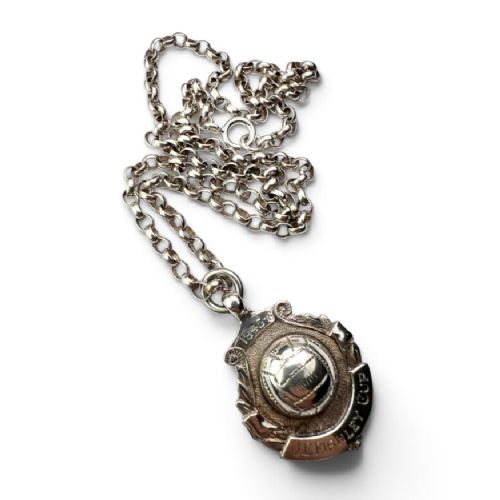
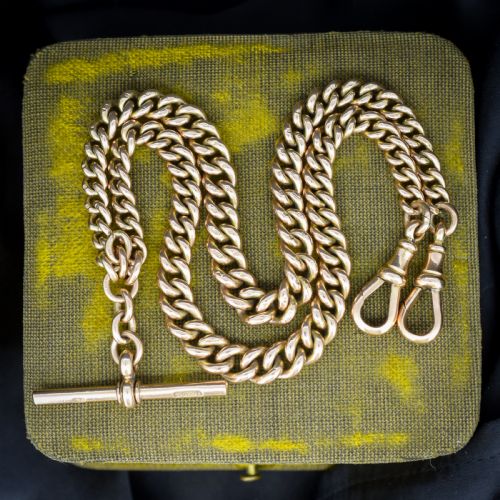
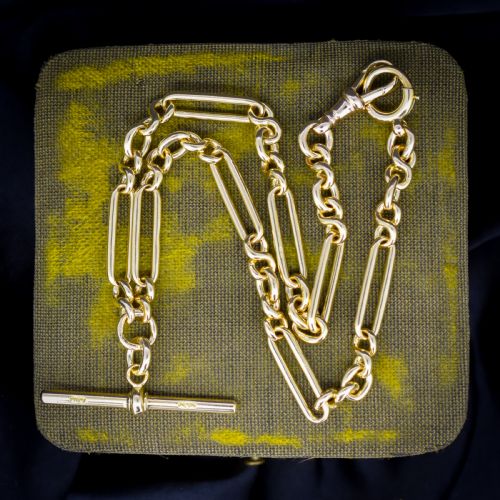
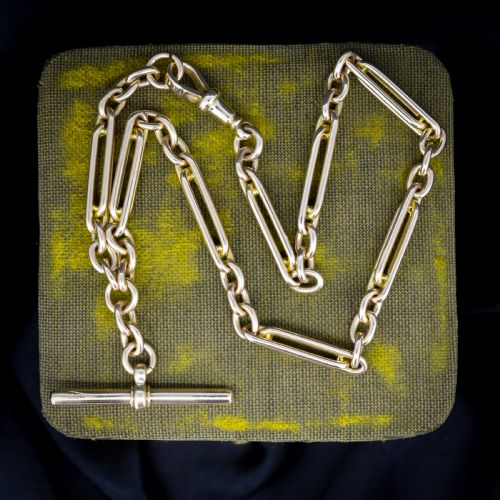
The configurations include single and double strands fitted with original swivel dog clips, T-bars, and occasionally fobs or pendant drops. Lengths vary from short choker styles to long guard chains, reflecting their original function of securing timepieces in waistcoat pockets.
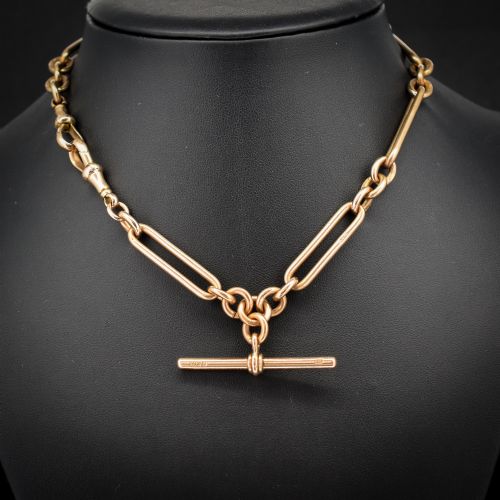
The primary iterations encountered are curb link and trombone link variations, frequently paired with love knots, fetter links, or oval links. These designs bridge historical gentleman's horological accessories and contemporary decorative jewellery.
Materials and Construction
Metals span sterling silver and solid golds in yellow, rose, and white hues across 9ct, 10ct, 12ct rolled gold, 15ct, 18ct, and 18K standards, occasionally incorporating platinum. Individual links are shaped into uniform or graduated curb, trombone, figaro, and fancy patterns.
Construction relies on durable hand-assembling techniques, with many Edwardian and Victorian pieces featuring hallmarks stamped on every individual link. Functional elements such as spring-loaded dog clips, bolt rings, and crossbars are integrated directly into the link architecture.
Vintage Watch Chain Necklace Retail Price Guide 2026
Typical asking prices for vintage watch chain necklace among the pieces listed under this phrase on Sellingantiques today, from the lower quarter to the upper quarter. They describe what is for sale here now, not the wider market.
Listings feature silver and gold ranging from 9ct to 18ct, spanning the Victorian, Edwardian, and Art Deco periods.
Standards of Craftsmanship
Quality rests in the substantial weight of the precious metal and the complexity of the link formation, ranging from lightweight hollow components to heavy solid links exceeding forty grams. The presence of complete hallmarks on every link signals superior manufacturing origin.
The integrity of original operating hardware - such as swivel dog clips maintaining spring tension and secure T-bars - differentiates well-preserved pieces from those with modern replacements or excessive link wear.
The Vintage Watch Chain Necklace Glossary
- Albert Chain
- A type of watch chain designed to secure a pocket watch, featuring a T-bar at one end and a swivel dog clip at the other.
- Trombone Link
- A watch chain link pattern composed of alternating long rectangular bars and short circular or oval rings.
- Dog Clip
- A small spring-loaded swivel clasp attached to watch chains for fastening to pocket watches or fobs.
- T-Bar
- A short crossbar attached to the centre of an Albert chain, originally slotted through a waistcoat buttonhole.
- Guard Chain
- An extra-long chain worn around the neck, often utilised to secure pocket watches or lorgnettes.
Vintage Watch Chain Necklace: Frequently Asked Questions
How do I wear a watch chain as a necklace?
These pieces function as necklaces by fastening the dog clip to a loop, ring, or directly onto the chain itself at your preferred length. The T-bar and any attached fobs are typically left to drape at the front as a decorative pendant feature.
Adjustment depends on the original length, with shorter examples sitting high on the collarbone while longer guard chains wrap multiple times or hang low down the chest.
What is the difference between an Albert chain and a standard chain?
An Albert chain incorporates specific functional components designed for nineteenth-century timekeeping, notably a T-bar for buttonhole anchoring and swivel dog clips for watch attachment. Standard necklaces lack these structural elements and are manufactured purely for ornamentation.
Many antique watch chains retain these exact horological fittings even when converted and worn primarily as necklaces today.
How can I tell the period of a gold or silver chain?
Dating relies heavily on hallmarks stamped onto the metal, which indicate assay offices, purity standards, and specific year ciphers corresponding to Victorian, Edwardian, or Art Deco eras. Link styles also offer clues, as trombone and fancy love knot patterns gained particular popularity around the turn of the twentieth century.
Documented maker's marks and regional British or continental European import stamps further clarify the exact decade of manufacture.
Are these chains solid gold or plated?
The listings encompass both solid precious metals, such as 9ct, 15ct, and 18ct gold alongside sterling silver, and rolled gold variations. Hallmarks on individual links or clasps confirm solid metal purity standards.
Rolled gold items feature a mechanical layer of gold bonded to a base metal core, offering the appearance of solid gold from earlier manufacturing traditions.