




Vintage Washstand Pitcher Bowl
These vintage washstand pitcher bowl sets bring heavy porcelain utility and floral pattern into a bedroom, offering a charming slice of daily domestic history.
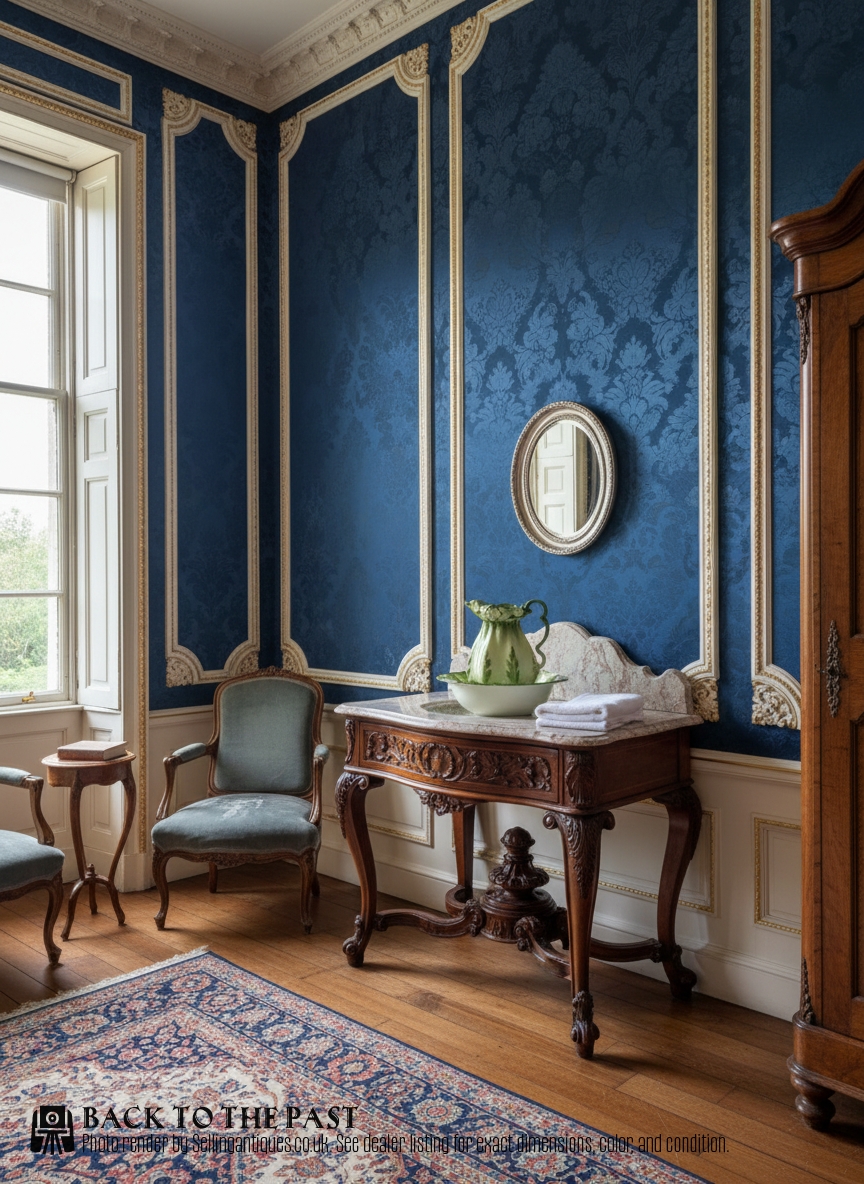
Vintage Washstand Pitcher Bowl
When you search for a vintage washstand pitcher bowl, you encounter matching jug and basin sets that once stood on wooden bedroom furniture before indoor plumbing became universal. These sets served for morning washing and grooming, containing large water pitchers paired with deep bowls for daily ablutions.
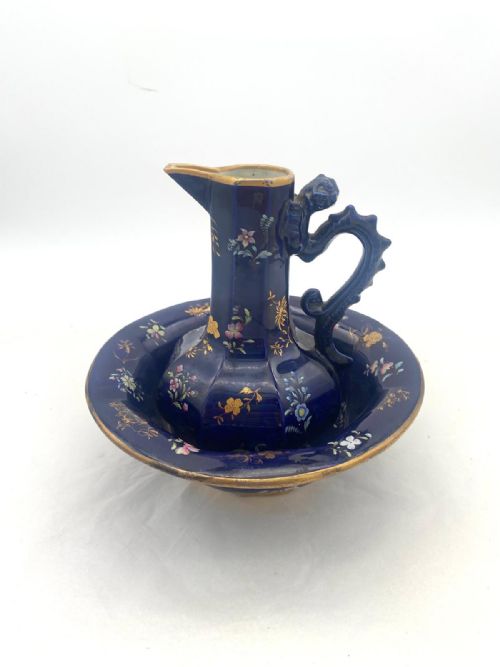
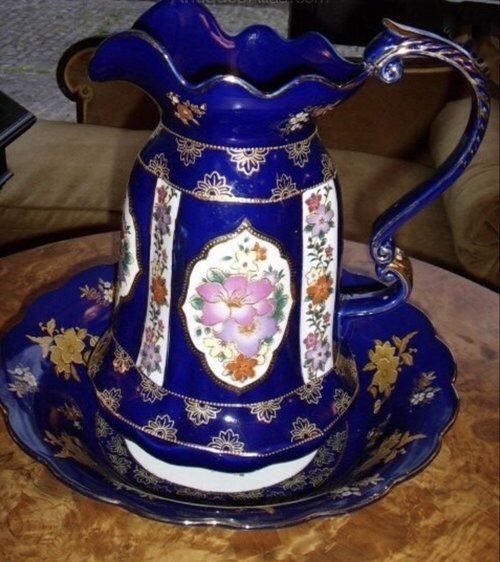
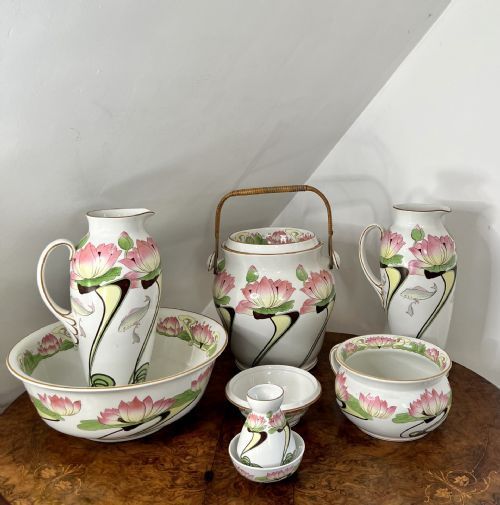
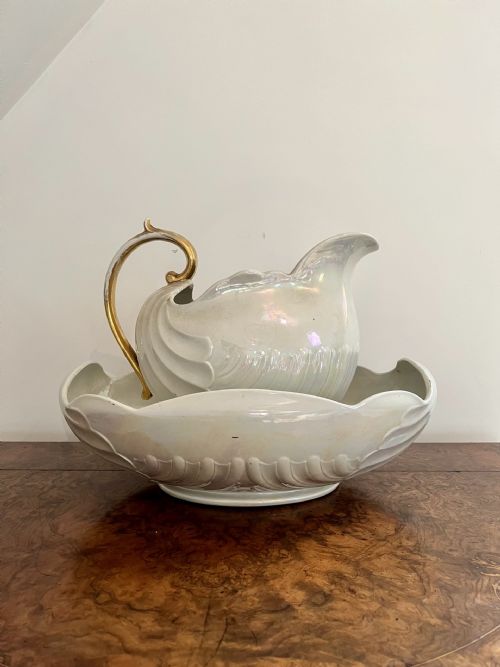
Most examples on this page date from the Victorian and Edwardian eras, spanning from the late nineteenth century into the early twentieth century. You will find earthenware, ironstone, and porcelain forms decorated with cobalt blue glazes, floral motifs, and occasional gilt touches.
The objects appear under various historical names including wash sets, basin sets, and bathroom sets, reflecting their original purpose. They survive as decorative ornaments, umbrella stands, or large floral displays within modern homes.
How they were made
Potters shaped these vessels using durable ceramic bodies such as ironstone and earthenware, finished with protective glazes to hold water safely. Ironstone provided a heavier, denser utility ware, while finer porcelain allowed for thinner walls and delicate decorative work.
Decoration relied on cobalt blue pigment, floral transfers, and applied gold leaf or gilt detailing fired onto the ceramic surface. Some specialised pieces integrated transfer printing with hand-painted highlights, executed by established potteries of the nineteenth and twentieth centuries.
Victorian households relied on these heavy jugs for morning wash routines long before anyone thought of a quick shower.
What varies in quality
Quality shows in the weight and resonance of the ceramic body, alongside the crispness of the transfer-printed or hand-painted floral design. Thick, heavy ironstone offers robust durability, whereas refined porcelain demonstrates greater delicacy and translucency in the basin walls.
The artistic merit of the glaze work and the presence of supplementary details like gold leaf or moulded octagonal shapes distinguish standard utility sets from superior examples. Maker attribution also plays a role, with established potteries achieving finer definition in both form and pattern.
Masons Ironstone·Doulton Burslem·mark Jones & Sons·Shelley
The Vintage Washstand Pitcher Bowl Glossary
- Ironstone
- A heavy, durable type of earthenware patented in the nineteenth century for hard-wearing domestic utility vessels. It resists chipping better than standard pottery.
- Earthenware
- Porous ceramic pottery fired at lower temperatures, typically glazed to ensure it holds water. It forms the body of many historical basin sets.
- Porcelain
- A fine, hard, white ceramic fired at high temperatures until vitrified and partially translucent. It provides a smoother surface for intricate floral painting.
- Cobalt blue
- A deep, stable blue pigment used extensively under the glaze for durable ceramic decoration. It withstands high kiln temperatures without fading.
- Gilt
- A thin layer of gold leaf or gold paint applied to ceramic rims and handles for ornamentation. It adds a reflective highlight to the finished piece.
Vintage Washstand Pitcher Bowl: Frequently Asked Questions
How were washstand pitcher bowls used?
These sets sat upon a wooden washstand in a bedroom before plumbed bathrooms existed. The pitcher held clean water while the deep basin caught it during morning washing.
Servants filled the pitchers daily from hot water supplies downstairs. Afterwards, the contents emptied out into slop buckets kept in the washstand cupboard below.
Can I use these for fresh flowers?
Many people repurpose the large pitchers and basins as decorative flower holders today. Their wide openings suit generous seasonal arrangements and leafy branches.
Glazed ceramic interiors hold water safely for cut flowers. You should still check for hairline cracks before filling them to prevent slow leaks on furniture.
How do I date a set?
Pottery marks on the underside often name the factory or patent date, helping narrow down the manufacturing decade. Stylistic clues like Victorian floral transfers or Art Nouveau curves also point to specific eras.
Heavier ironstone bodies typically suggest nineteenth-century manufacture, while lighter porcelain sets often align with Edwardian or later twentieth-century production.
How do I clean and care for them?
Wash ceramic sets gently by hand using warm water and mild soap to protect the vintage glaze. Avoid harsh scouring pads that can scratch transfer-printed patterns or wear away gold leaf.
Keep them away from sudden temperature shifts to prevent thermal shock in the aged ceramic. Display them on stable, flat surfaces away from heavy foot traffic.