




Edwardian Wash Basin Set
These edwardian wash basin set pieces bring functional ceramic washware into the bedroom, offering period charm for modern interiors.
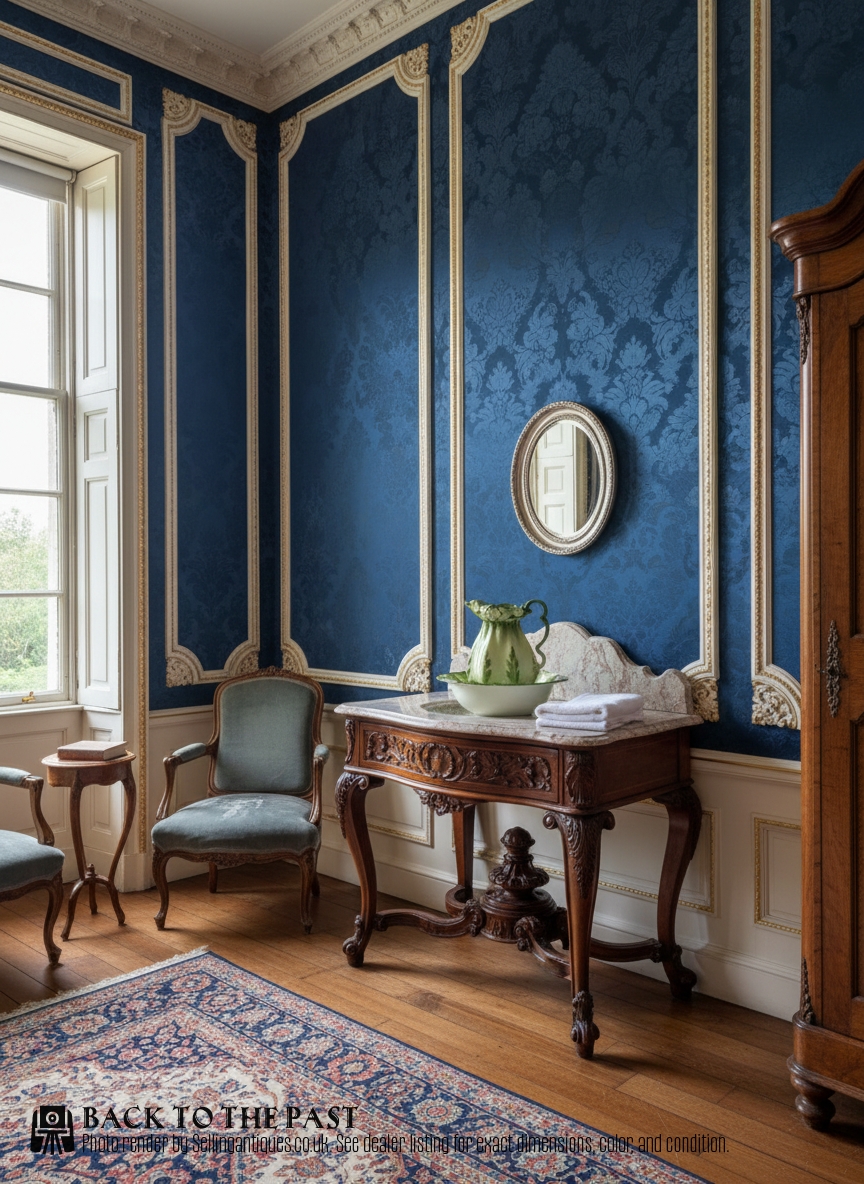
Edwardian Wash Basin Set
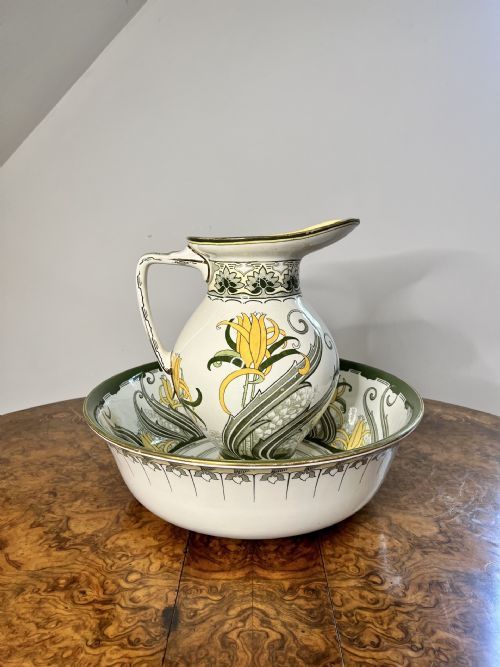
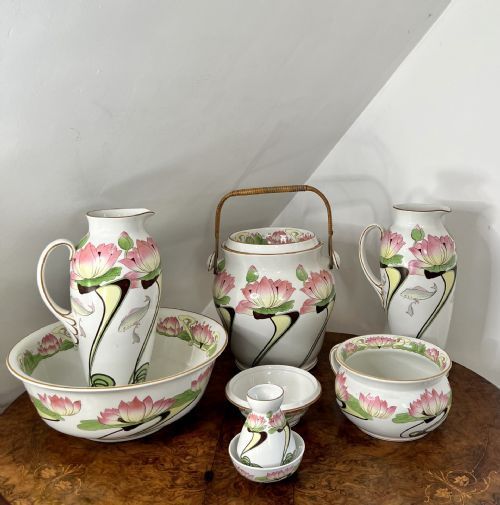
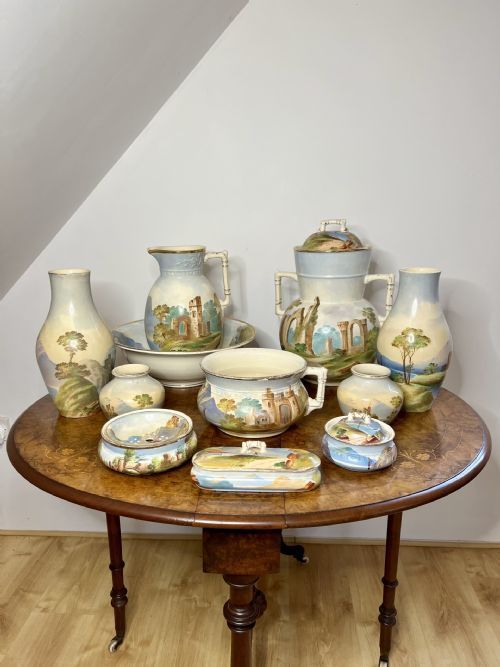
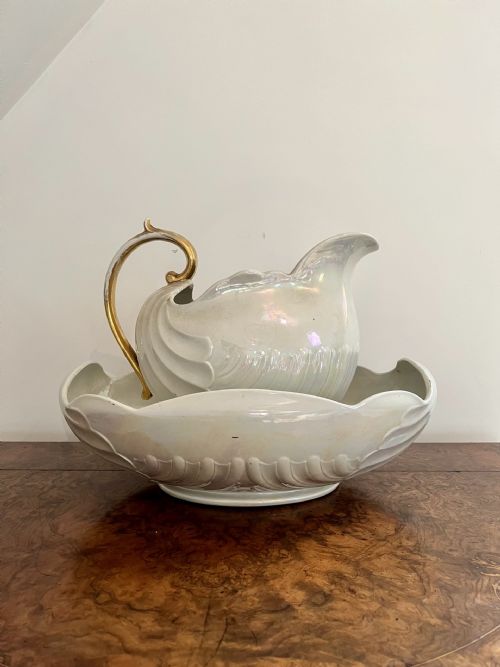
An edwardian wash basin set comprises matching ceramic vessels designed for personal hygiene before plumbed bathrooms became standard in every home. These groupings typically include a large wash bowl and a matching water jug, often accompanied by smaller accessory pieces for daily grooming.
Most examples found here date from the Edwardian era, spanning the early decades of the twentieth century, with styles ranging from traditional white earthenware to decorative Art Nouveau patterns. Collectors encounter various designations for these items, including wash sets, bathroom sets, and jug and bowl sets.
Makers utilised these sets on dedicated washstands within bedrooms or dressing rooms prior to the widespread installation of indoor running water. Today, buyers select them for decorative display or functional use in period properties.
Materials and manufacture
Potters shaped these vessels primarily from earthenware and porcelain, applying an impermeable glaze to contain water effectively. Many pieces received hand-painted or transferred surface patterns, including blue and white designs and occasional gold leaf accents.
Some configurations combined ceramic washware with bentwood frames designed specifically as wash or shaving stands. Production methods relied on traditional ceramic casting and firing techniques common to British potteries of the period.
Listings for this phrase include ceramic and earthenware washware alongside wooden washstands equipped with jugs and bowls.
What separates the best examples
Quality in an edwardian wash basin set rests upon the crispness of the ceramic moulding and the complexity of the glazed decoration. Pieces bearing clear marks from established potteries generally command greater interest from collectors.
The sophistication of the surface design, such as Art Nouveau motifs or intricate blue and white transfers, distinguishes standard utility ware from finer chamber sets. Intact sets comprising multiple matching accessory items demonstrate superior completeness.
Mark Jones And Sons·Shelley·Doulon Burslem·Medway
The Edwardian Wash Basin Set Glossary
- Earthenware
- A porous pottery body that requires a fired glaze to hold water. It forms the foundation of most domestic washware.
- Glaze
- A glassy coating fused to the ceramic body during firing. It provides a smooth, waterproof surface suitable for washing.
- Art Nouveau
- A decorative style characterised by organic, flowing lines and natural motifs. It appears frequently on ceramic designs from the early twentieth century.
- Bentwood
- Wood softened by steam and bent into curved shapes. This technique was frequently utilised in the construction of lightweight wash and shaving stands.
Edwardian Wash Basin Set: Frequently Asked Questions
What pieces belong in a complete set?
A standard set centres around a large basin and a matching water pitcher designed for daily washing. Additional vessels such as soap dishes, toothbrush holders, and chamber pots often completed the ensemble.
Finding a grouping with all original accessory pieces intact remains uncommon, as individual items frequently suffered breakage over decades of domestic use.
How were these sets used originally?
Before modern indoor plumbing became standard, residents used these ceramic vessels in bedrooms for morning washing and grooming. Water was heated elsewhere and brought up in the large jug to fill the basin on the washstand.
Soap dishes and smaller vessels held personal hygiene items, keeping the dressing area organised before bathrooms moved indoors.
Can I use these sets with modern plumbing?
These antique ceramic pieces function well for display, planting, or gentle decorative use in contemporary bathrooms and bedrooms. Daily utilitarian use requires caution due to the age of the ceramic body and historical glazes.
Thermal shock from very hot water or accidental impacts can damage glazed earthenware that survived over a century of gentle handling.
How do I identify an Edwardian piece?
Edwardian washware generally exhibits softer forms than Victorian wares, frequently incorporating Art Nouveau styling or clean white earthenware bodies. Production dates cluster around the early nineteen hundreds, reflecting the aesthetic preferences of the reign.
Maker stamps on the underside of the ceramic pieces often provide definitive clues to the manufacturing date and pottery of origin.