
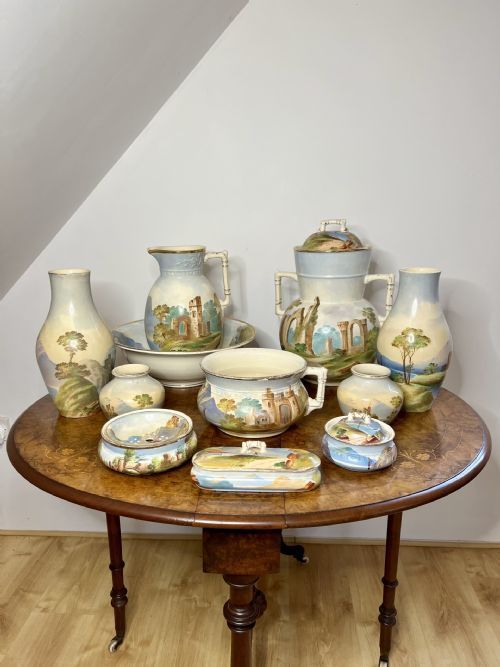


Earthenware Wash Basin Set
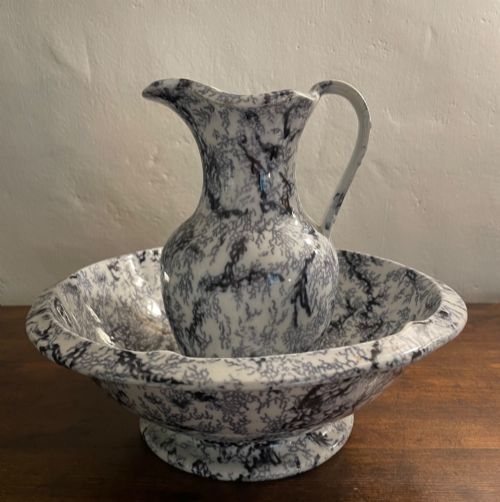
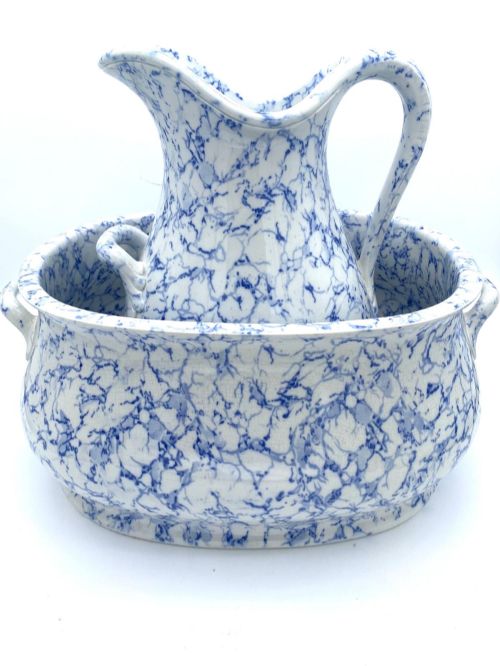
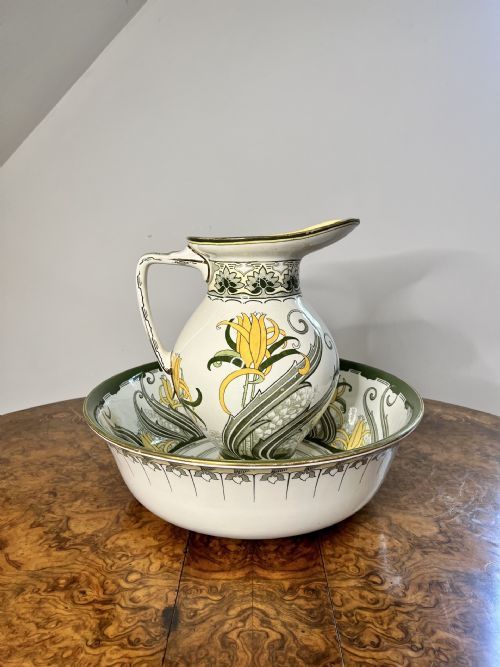
These earthenware wash basin set pieces are heavy ceramic sets built for the bedroom, offering tactile charm and period utility.
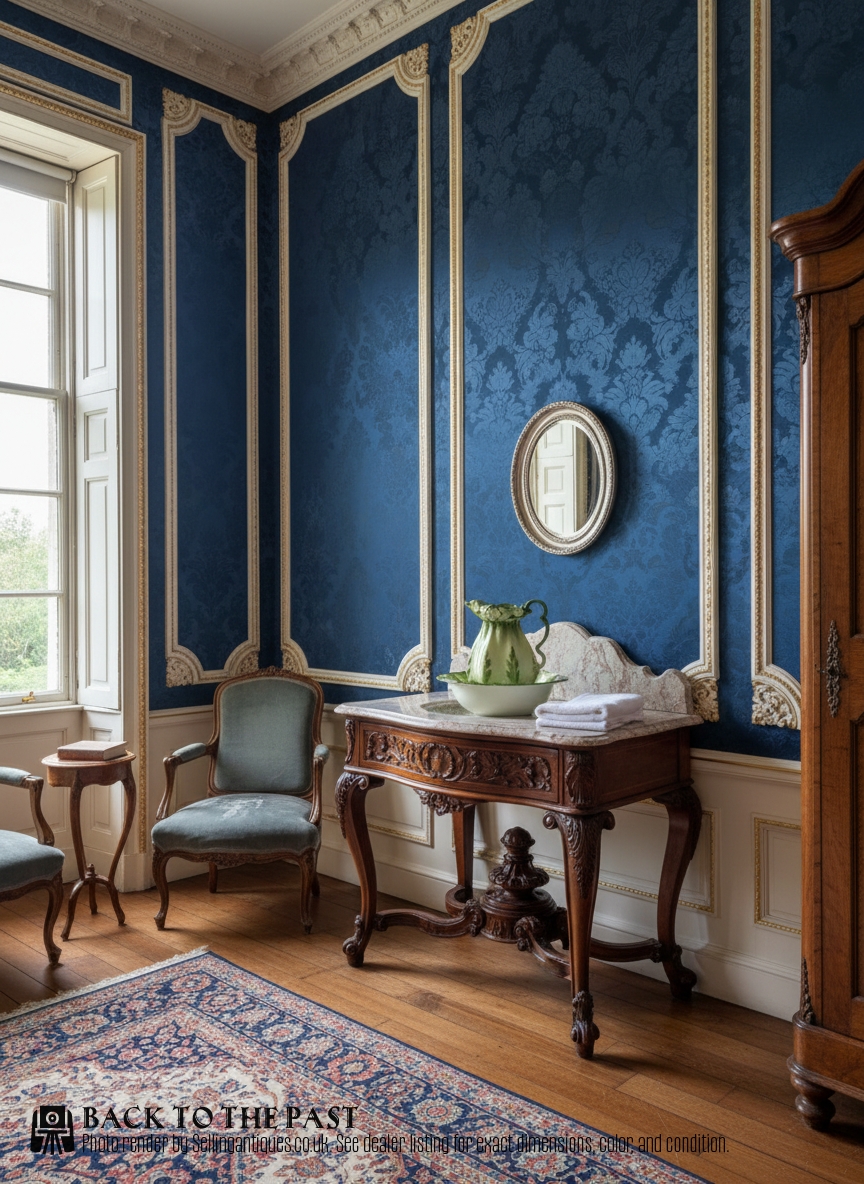
Earthenware Wash Basin Set
An earthenware wash basin set brings together a large water jug and a matching deep bowl, designed before indoor plumbing became common. These sets sat upon bedroom washstands to handle the daily washing routine with sturdy practicality.
Most examples found here hail from the Edwardian and Victorian eras, spanning from eighteen-eighty to nineteen-ten. Alongside these sit earlier pieces from the eighteen-hundreds, including Staffordshire flow blue and Minton items.
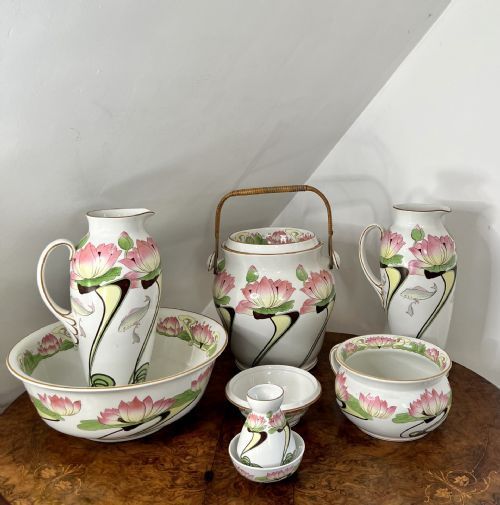
The forms vary from simple blue and white utility items to elaborate bathroom sets featuring gold leaf and enamel decoration. Buyers will frequently encounter Edwardian jug and bowl sets alongside distinct Victorian iterations.
How they were made
Potters shaped these vessels from earthenware and glazed ceramic, firing them to create a hard body capable of holding water safely. Applied glazes provided a smooth, waterproof surface that resisted staining from daily use.
Makers embellished many surfaces with transfer-printed patterns like flow blue, while select luxury items received hand-painted details or gold leaf highlights. Certain sets paired the ceramic ware with cane or wicker accessories for transport and display.
Materials across the selection range from plain glazed earthenware to those enhanced with gold leaf and enamel.
What varies in quality
Quality rests in the crispness of the transfer printing and the richness of the glaze application across both jug and bowl. Superior examples display precise pattern alignment and deep, even colouration without pooling or fading.
The artistic ambition of the form dictates the upper tier of the range, separating standard utility ware from pieces with intricate mouldings and gilded highlights. Heavier potting and refined handle pulls likewise distinguish better workshops.
Minton·Doulon Burslem·Mark Jones & Sons
The Earthenware Wash Basin Set Glossary
- Earthenware
- A porous type of pottery fired at lower temperatures, requiring a vitreous glaze to hold liquids securely. It forms the primary body material for these bedroom sets.
- Flow Blue
- A cobalt blue transfer printing technique where the colour intentionally bled slightly into the white glaze during firing. This created a soft, hazy aesthetic popular in nineteenth-century ceramics.
- Edwardian
- A stylistic period spanning the reign of Edward the Seventh, marked by lighter domestic aesthetics and floral motifs. Pieces from this era frequently appear in pastel or blue and white colourways.
- Victorian
- The broad design era encompassing the nineteenth century, known for heavier proportions and robust forms. Wash sets from this period often display deep relief moulding and dense decoration.
- Footbath
- A large basin designed specifically for soaking the feet, often matching the pattern of the accompanying water jug. These oversized vessels represent the grander end of bedroom washing equipment.
Earthenware Wash Basin Set: Frequently Asked Questions
What pieces make up a complete set?
A standard set combines a tall water pitcher with a wide, deep basin designed to catch splashes during washing.
Larger configurations occasionally include soap dishes, toothbrush holders, and matching slop pails.
How were these sets used originally?
Servants filled the jugs with warm water from the kitchen before bringing them up to bedrooms for morning washing.
The large basin received the water for face and hands before the used contents were emptied.
Can I use these sets for display?
These ceramic pieces make striking decorative displays on sturdy sideboards, tables, or dedicated washstands.
Their substantial weight requires solid furniture surfaces that can safely support heavy earthenware.
How do I distinguish Victorian sets?
Victorian examples tend to feature heavier earthenware bodies, deeper relief mouldings, and robust structural proportions.
They often display darker cobalt decoration compared to the lighter palettes of later decades.