



Green Art Nouveau Pottery
Green art nouveau pottery brings fluid organic forms and rich botanical glazes into a room, capturing the defining decorative spirit of the turn of the twentieth century.
Green Art Nouveau Pottery
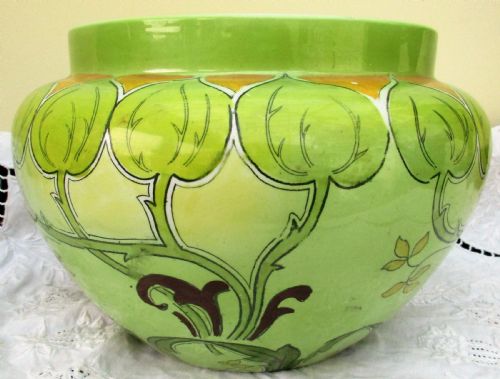
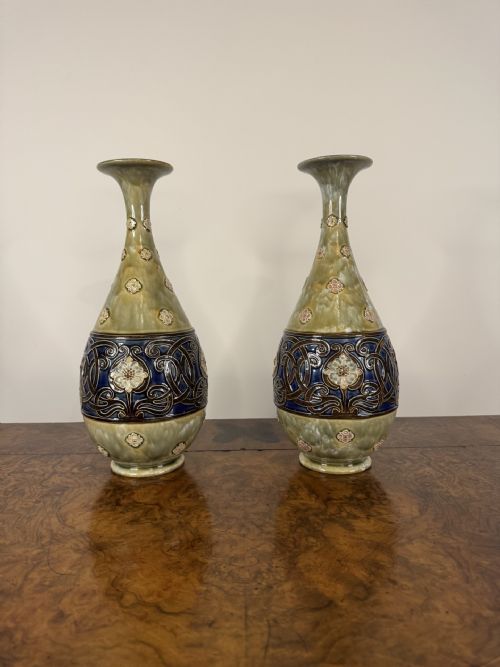
Green art nouveau pottery encompasses vessels, jardiniere stands, figurative sculpture and tea services produced primarily between the late nineteenth century and the nineteen-twenties. These works unite the naturalistic curves of the art nouveau and arts and crafts movements with rich green glazes spanning deep forest tones to lustrous olive shades.
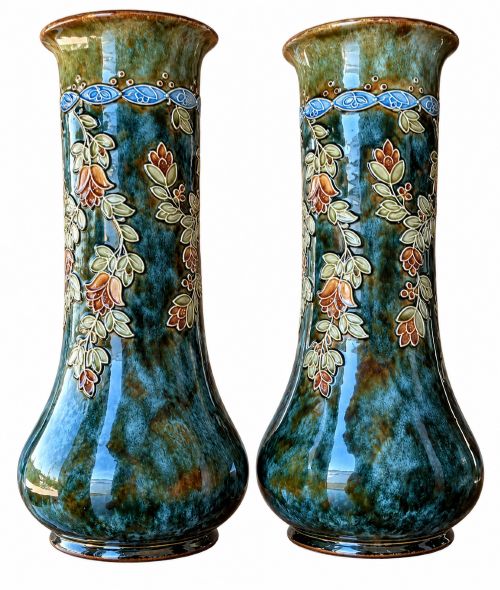
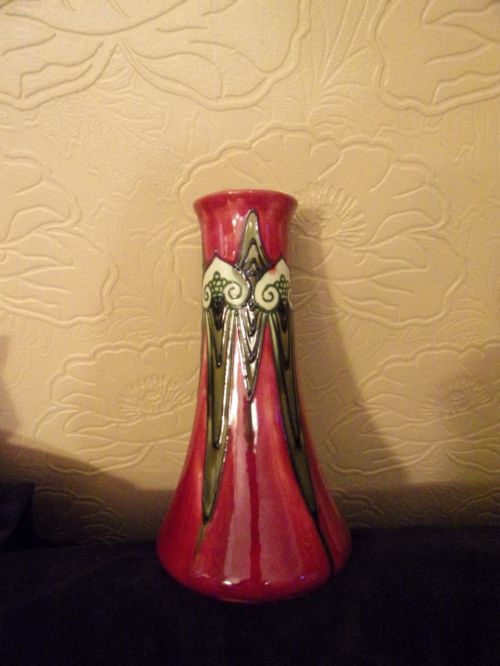
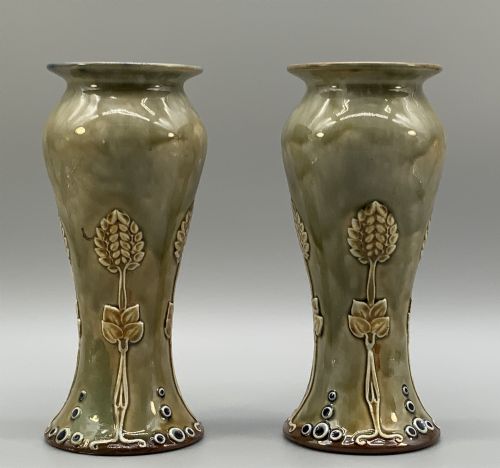
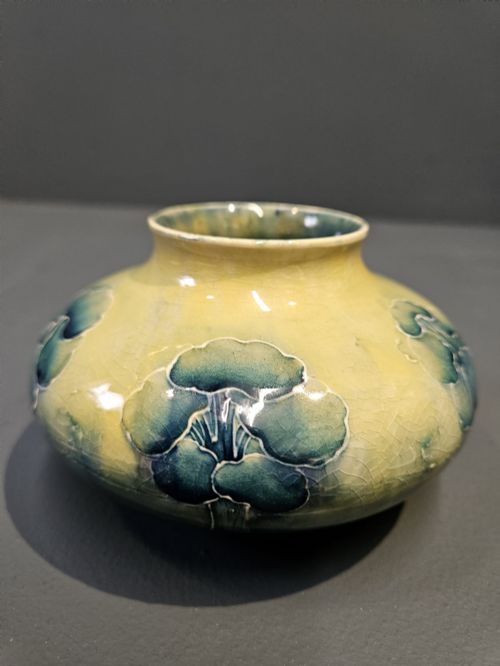
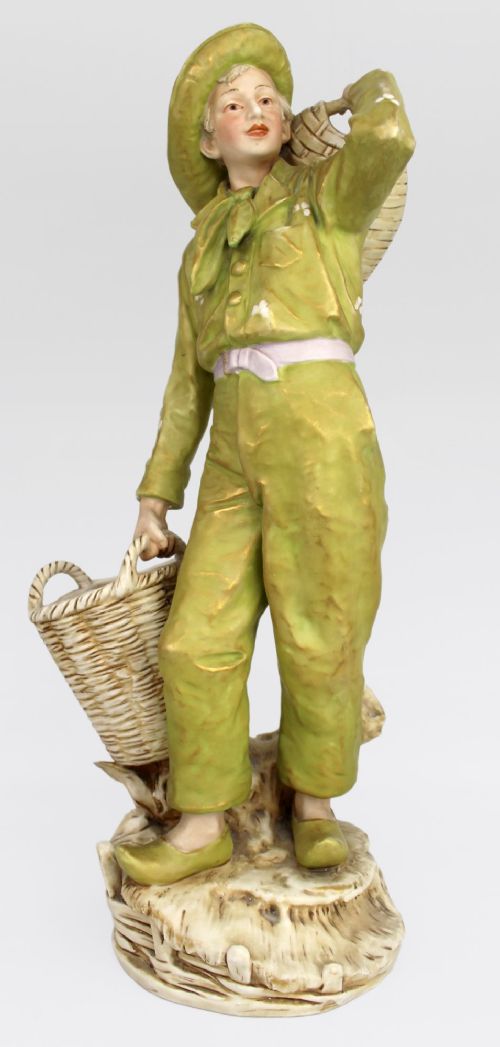
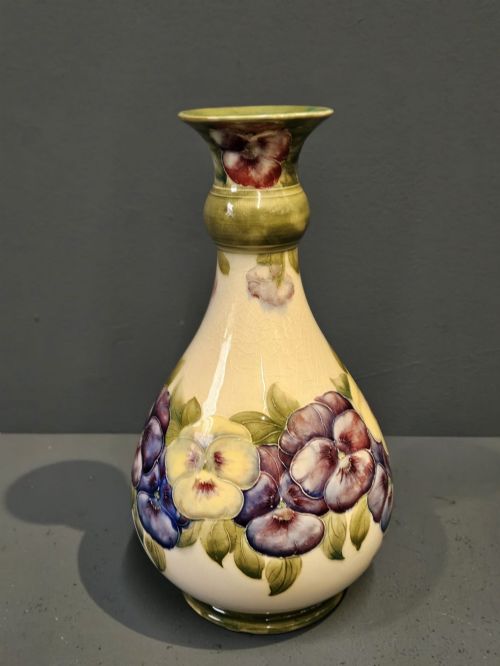
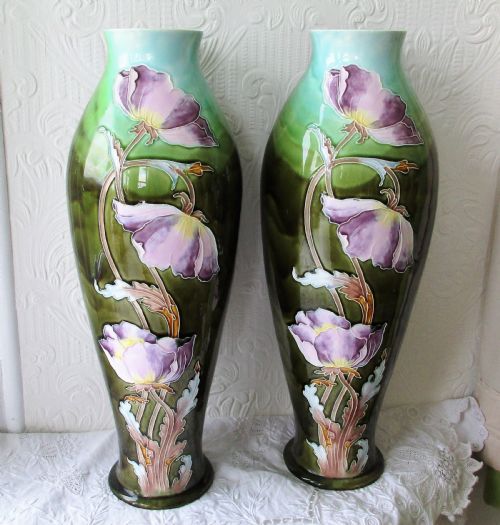
Vases and jardiniere vessels dominate the available examples, often displaying stylized floral motifs like pansies, poppies and sunflowers. Figures and ewers also appear, demonstrating the same characteristic emphasis on whiplash lines and botanical symmetry.
The objects originate from major British potteries like Doulton and Moorcroft alongside continental manufacturers in Austria, Hungary and France. This variety allows collectors to find both small mantel pieces and large floor-standing vessels.
Materials and Technique
Makers shaped these pieces from earthenware, stoneware and terracotta, utilising both throwing and casting methods to achieve complex organic profiles. Stoneware bodies provided durability for large pieces, while earthenware offered a porous base suited for absorbing intricate coloured glazes.
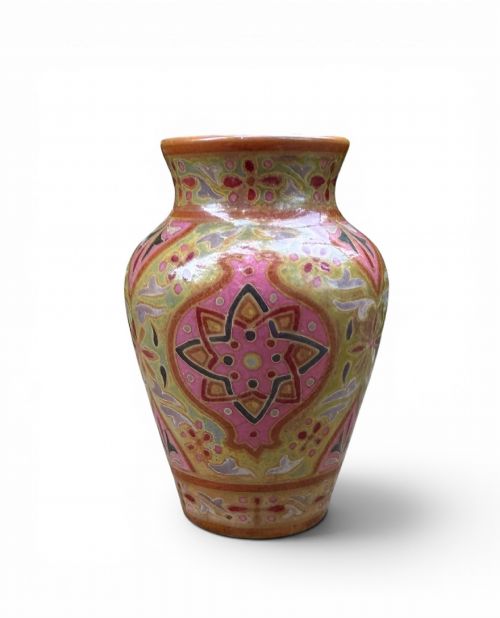
Techniques such as tube-lining, where liquid clay outlines the decorative design before glazing, created raised barriers that kept coloured glazes separate during firing. Lustre finishes and specialised enamel applications added iridescent surface qualities that reacted dynamically with light.
Assessing Quality
Quality rests on the crispness of the modelled detail and the control of the glaze execution. Pieces where tube-lined or hand-painted botanical motifs remain sharp and evenly glazed show superior workshop standards.
The reputation of the designer and the specific studio or pottery dictate the standing of a piece. Works bearing documented attribution to known designers or prominent exhibition potteries demonstrate greater artistic ambition.
Royal Doulton Lambeth·William Moorcroft·Ernst Wahliss·Royal Dux Bohemia·Zsolnay Pecs
The Green Art Nouveau Pottery Glossary
- Tube-lining
- A ceramic decoration technique where a fine trail of liquid clay is squeezed onto the unglazed body to form raised outlines for coloured glazes. This method creates defined partitions that hold pools of glaze during firing.
- Stoneware
- A heavy, dense ceramic fired at high temperatures until vitrified and rendered completely impermeable to liquid. This body type supports robust decorative vessels and garden ornaments.
- Terracotta
- A porous, unglazed or glazed red earthenware fired at relatively low temperatures. Sculptors frequently utilised this material for figurative groups and large decorative pieces.
- Secessionist
- A stylistic branch of art nouveau associated with central European artistic reform movements. Pieces in this style emphasise geometric integration with floral curves.
- Earthenware
- Pottery fired at lower temperatures that remains slightly porous unless sealed with an opaque or transparent glaze. It serves as the primary base for much nineteenth-century decorative pottery.
Green Art Nouveau Pottery: Frequently Asked Questions
How do I identify art nouveau pottery?
Look for asymmetrical botanical motifs, whiplash curved lines, and stylized representations of stems, flowers, and seed pods. The forms often mimic natural growth patterns rather than rigid geometric symmetry.
Glazes in these works lean heavily toward organic greens, blues, and earthy tones that complement the flowing sculptural shapes of the ceramic body.
Where were these ceramics made?
Production centred in established pottery hubs across Britain, with significant contributions from London and Staffordshire studios. Continental manufacturers in Austria, Hungary, France, and Germany also exported large quantities.
Major firms operated specialised art pottery departments where individual artists signed or monogrammed their finished vessels.
How should I clean my pottery?
Dust the surface gently with a soft, dry cloth to remove everyday accumulation. Avoid using harsh chemical cleaners, abrasive scouring pads, or excessive water, particularly on earthenware or pieces with delicate enamel work.
Many antique glazes carry tiny network cracks known as crazing, which can absorb moisture and staining agents if immersed in liquid for cleaning.
Are these pieces waterproof?
Stoneware vessels are generally impervious to water due to their high-firing vitrification process. Earthenware and terracotta items, however, often feature porous bodies that may seep moisture through the clay or internal glaze crazing.
Utilise a discreet glass or plastic liner inside antique jardinieres and decorative vases if you plan to display fresh cut flowers with water.