

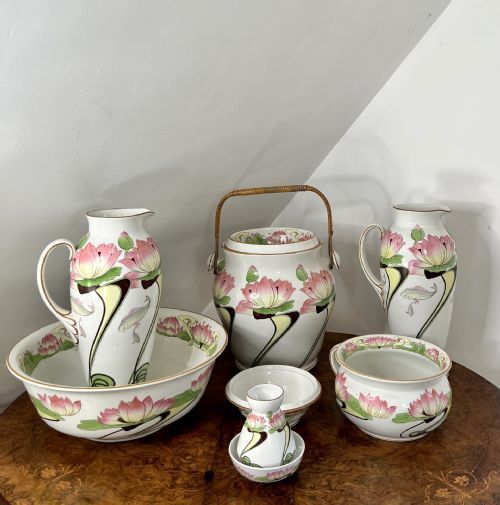


Vintage Wash Bowl
A vintage wash bowl brings utilitarian history indoors, offering deep ceramic and metal basins meant for daily washing before modern plumbing.
Vintage Wash Bowl
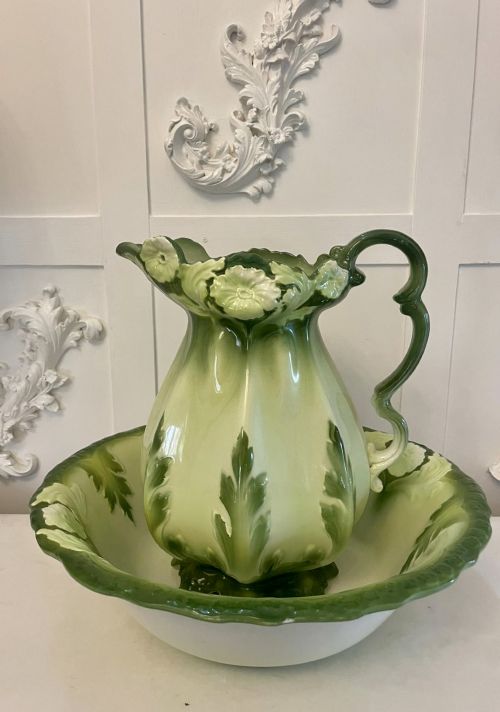
A vintage wash bowl encompasses diverse ceramic, earthenware, and metal vessels originating primarily from the nineteenth century through the Edwardian era. Collectors encounter matching jug and basin sets alongside standalone basins, footbaths, and utilitarian metal pans.
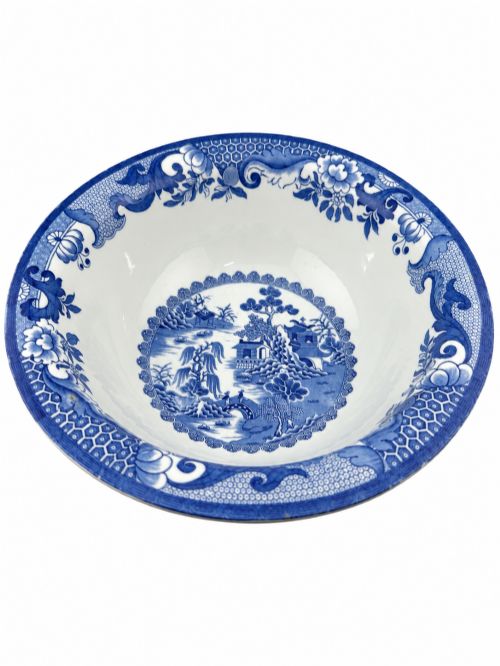
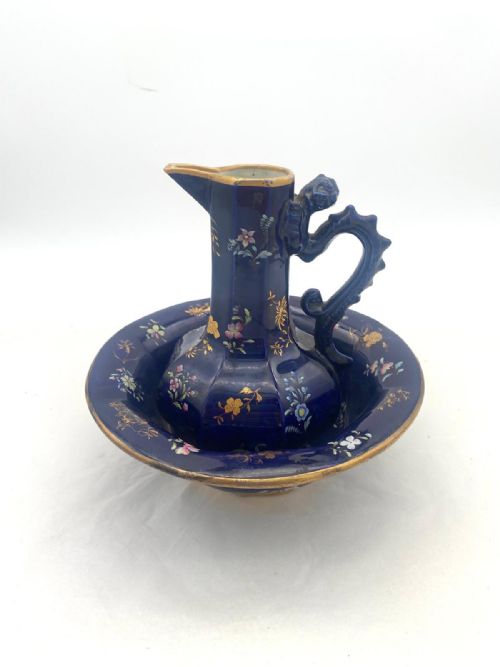
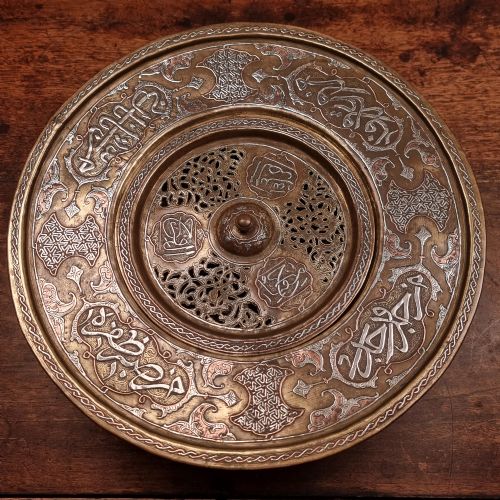
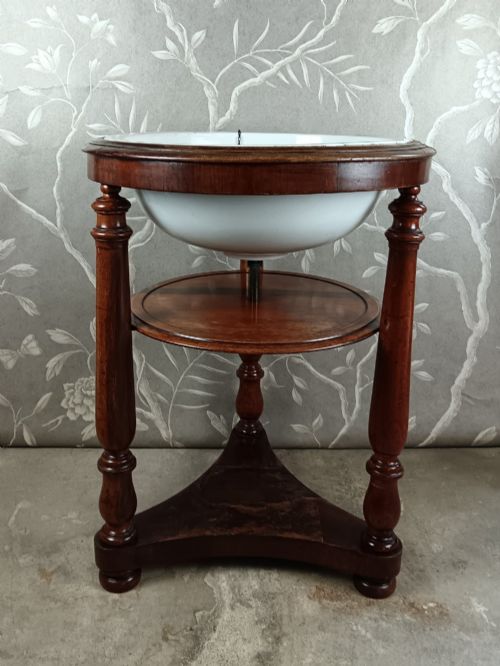
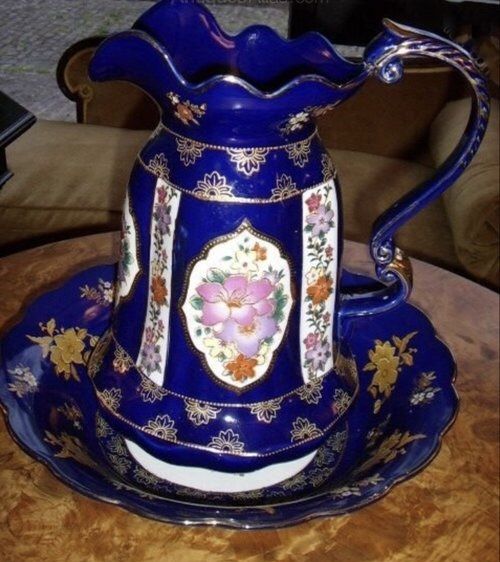
The aesthetic spans floral transferware, cobalt blue glazes, blue and white chinoiserie, and stark enamel finishes. Common forms range from heavy ironstone basins to campaign mahogany washstands and brass or copper vessels.
Materials and construction
Makers utilised earthenware, ironstone, porcelain, and creamware, often finishing the ceramics with rich coloured glazes or blue and white transfer printing. Ironstone provided durability for daily use, whilst finer porcelain allowed for delicate floral motifs.
Metal versions rely on heavy copper, brass, and enamel, formed into robust pans and bowls built to hold water without leaking. Wood enters the category through mahogany and bentwood washstands designed to house the ceramic basins.
Vintage Wash Bowl Retail Price Guide 2026
Typical asking prices for vintage wash bowl among the pieces listed under this phrase on Sellingantiques today, from the lower quarter to the upper quarter. They describe what is for sale here now, not the wider market.
Periods represented include George III, Regency, Victorian, Edwardian, and the 1930s.
Distinctions in quality
Quality rests in the crispness of the transfer printing, the depth of the glaze, and whether the basin retains its matching jug. Potteries that applied intricate hand-painted details or gold leaf accents produced pieces of superior visual weight.
For metal items, the thickness of the copper or brass and the integrity of the riveted joints determine the standard. Complete sets that preserve their original pairing demonstrate greater historical cohesion than mismatched groupings.
Mason s·Minton·Mann Co·Doulton Burslem·Mark Jones Sons·Shelley
The Vintage Wash Bowl Glossary
- Ironstone
- A heavy, durable type of earthenware patented in the nineteenth century. It resists chipping better than standard pottery and forms the body of many large basins.
- Transferware
- Pottery decorated by pressing a printed design from an engraved copper plate onto tissue paper, which is then transferred onto the unglazed ceramic. This technique allowed for repeatable blue and white scenes.
- Spongeware
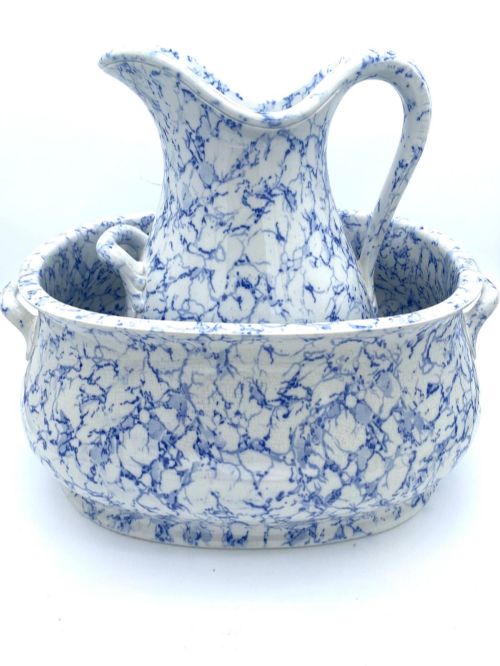
- Earthenware decorated by dabbing colour onto the surface with a sponge or cloth. This created mottled patterns common on nineteenth-century utilitarian bowls.
- Flow blue
- A style of cobalt blue transfer printing where the colour bled slightly into the white glaze during firing. The technique produced a hazy, soft-edged pattern across the ceramic surface.
- Creamware
- A refined earthenware developed in the eighteenth century with a pale yellowish-white glaze. It offered a lighter, more delicate alternative to heavy salt-glazed stonewares.
Vintage Wash Bowl: Frequently Asked Questions
How were these bowls originally used?
These basins served as personal washing vessels placed atop wooden washstands in bedrooms before indoor plumbing became standard. They held water brought up in matching jugs for morning and evening hygiene routines.
Beyond personal washing, larger versions functioned as footbaths, laundry pans, or cream-setting vessels in rural and domestic kitchens.
How do I distinguish Victorian sets from Edwardian ones?
Victorian examples often lean towards heavier ironstone bodies, deep cobalt colours, and ornate chinoiserie or flow blue patterns. They reflect a period of dense decoration and robust earthenware.
Edwardian sets frequently display lighter floral designs, pastel tones, and simpler porcelain forms. The accompanying stands and bathroom sets from this later period show a shift toward brighter, airier domestic interiors.
Can I use a vintage wash bowl for daily tasks?
Most ceramic and metal bowls remain structurally sound enough to hold water, but antique pieces require careful handling to avoid thermal shock or chipping. Glazes from the nineteenth century may also not meet modern food-safety standards.
Many collectors prefer to utilise them as decorative planters, storage vessels, or display pieces rather than for active washing.
What does a complete wash set include?
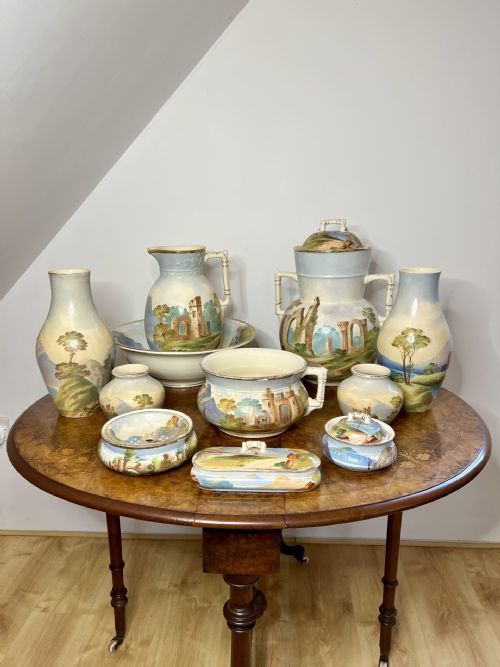
A standard period set typically pairs a large wash basin with a tall water jug, designed to sit together within a dedicated washstand. Additional matching accessories often included soap dishes, chamber pots, and toothbrush holders.
Finding every original piece of a bathroom set together remains uncommon due to breakage over decades of use.