

Vintage Walnut Credenza Cabinet
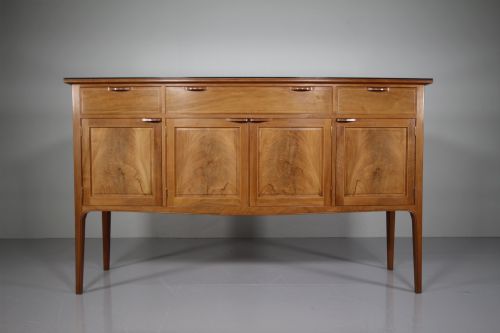
A vintage walnut credenza cabinet brings warmth and presence to a room, offering generous storage through figured grain and traditional craftsmanship.
Vintage Walnut Credenza Cabinet
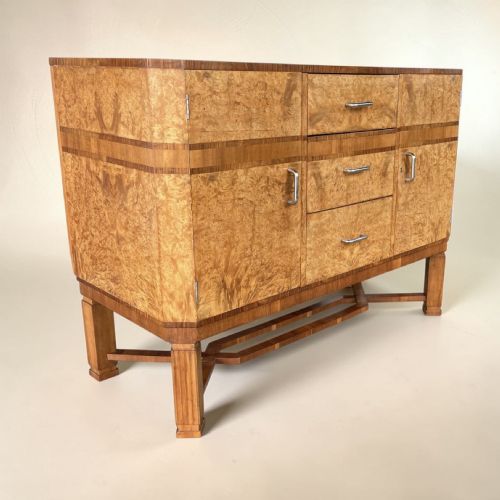
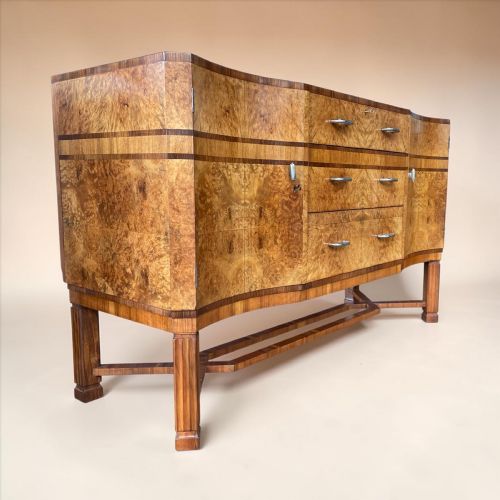
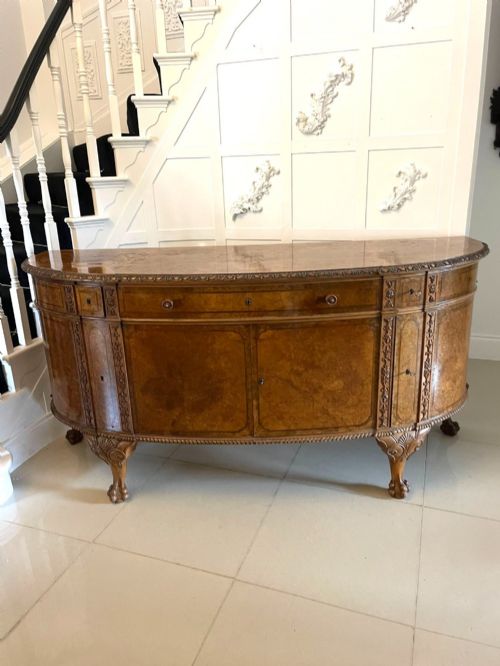
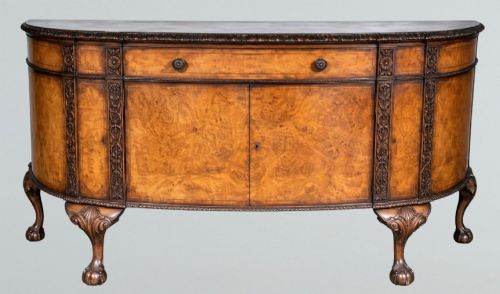
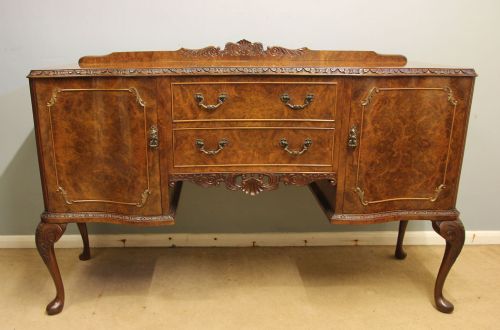
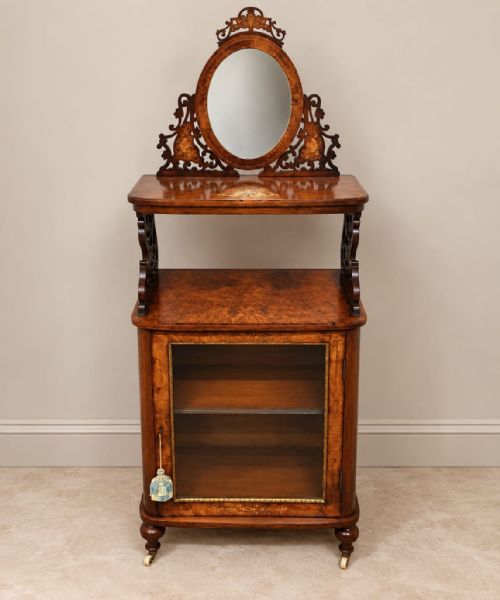
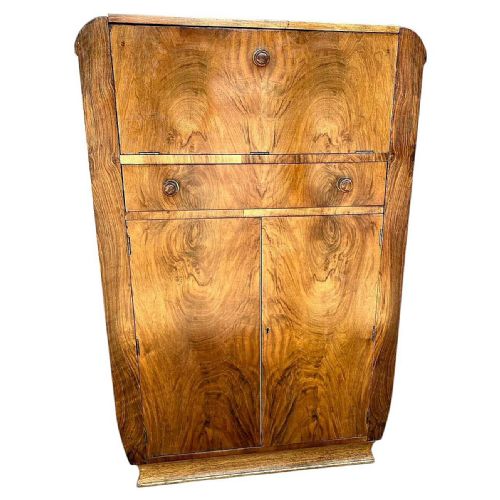
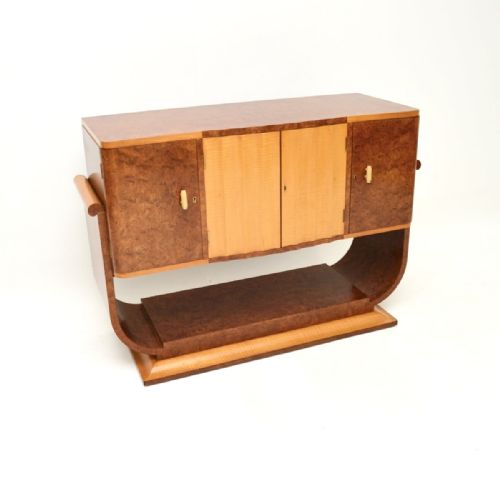
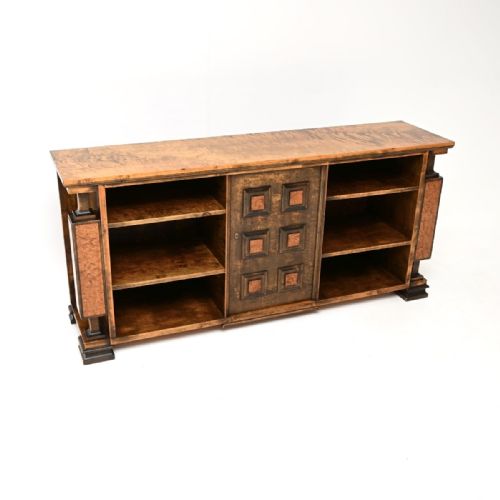
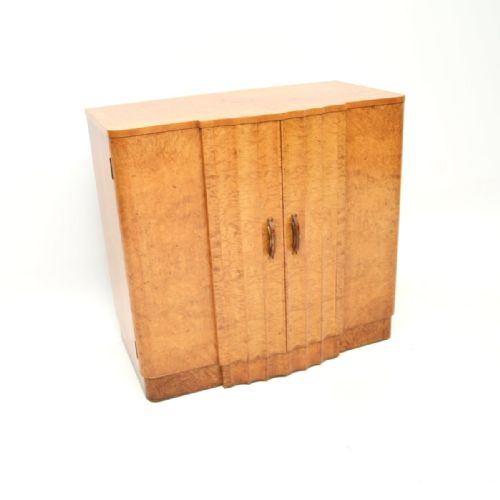
A vintage walnut credenza cabinet encompasses low storage furniture designed for domestic interiors, spanning forms such as sideboards, side cabinets, and cocktail units. The selection on this page draws heavily from early twentieth-century production, alongside Victorian and nineteenth-century examples that exhibit deep wood tones.
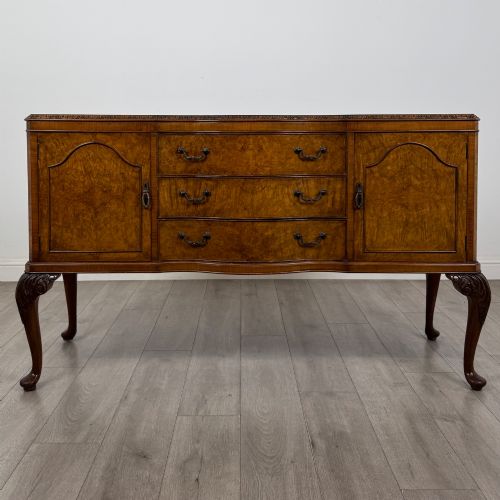
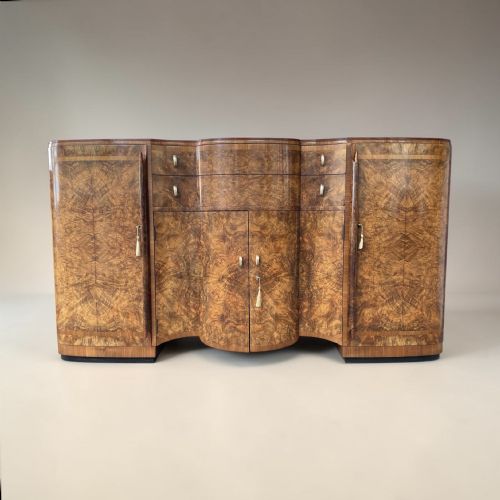
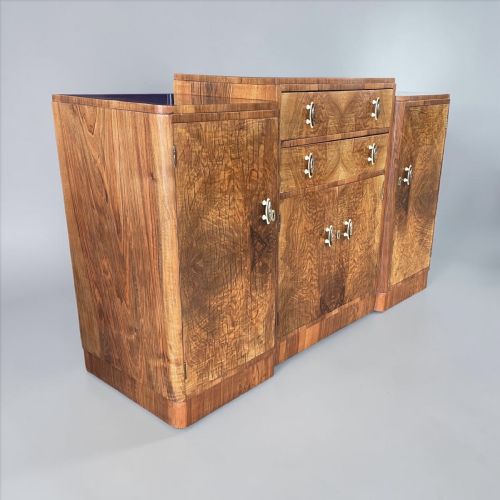
Buyers encounter diverse stylistic expressions within these categories, ranging from clean geometric lines of the Art Deco period to revivalist Queen Anne and French provincial designs. These pieces function primarily as living room or dining room storage, frequently incorporating specialised internal fittings like cutlery sets or drinks compartments.
Materials and construction methods
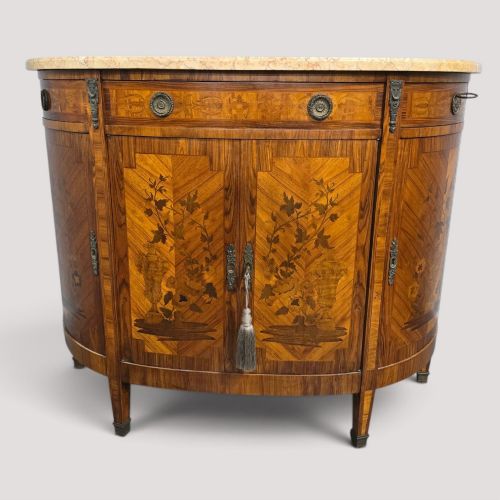
Makers relied on solid walnut and decorative veneers, particularly burr walnut and figured walnut, to achieve striking surface patterns across doors and panels. Brass hardware, marble tops, and ormolu mounts appear frequently as complementary elements that punctuate the dark timber.
Advanced cabinet-making techniques allowed for serpentine and bow-fronted carcases, alongside curved tambour doors and detailed marquetry inlay. Secondary timbers such as sycamore or satin birch often provide contrast in interior compartments or decorative banding.
Several cabinets conceal twelve-piece cutlery sets, ready for a dinner party that was planned ninety years ago.
Distinguishing quality in walnut furniture
The selection of timber grain dictates much of the visual appeal, with highly figured burr walnut veneers representing a more ambitious standard of cabinet work than plain sawn boards. Mastery in matching veneer patterns across multiple doors or serpentine fronts indicates superior workshop execution.
Structural integrity relies on the precision of joinery in complex curved carcases and the integration of secondary materials like marble tops or brass fittings. Signed pieces by established makers carry distinct evidence of design ambition and refined finishing.
Maurice Adams·Edward Barnsley·Harry and Lou Epstein·Hille
The Vintage Walnut Credenza Cabinet Glossary
- Burr walnut
- A wood harvested from the abnormal growth of a walnut tree, yielding swirling, knotty grain patterns prized for decorative veneer work. It appears frequently on door fronts of twentieth-century cabinets.
- Credenza
- A low dining or living room cabinet originally developed in Italy, typically featuring cupboards and sometimes a central open section. In British usage, the term overlaps closely with sideboard and side cabinet.
- Serpentine front
- A furniture front shape that curves outward in the centre and inward at the sides, creating a wave-like contour. This form demands advanced carpentry skills when executed in solid walnut or veneer.
- Marquetry
- The art of applying pieces of veneer to a structure to form decorative patterns or pictures. Examples often incorporate floral or geometric motifs across cabinet doors.
- Ormolu
- Gilded bronze mounts applied to furniture for decorative effect, common in French revival pieces. They provide a metallic contrast to dark walnut surfaces.
Vintage Walnut Credenza Cabinet: Frequently Asked Questions
How do I date a walnut cabinet?
Dating relies on combining stylistic markers with construction details, such as the geometric symmetry of Art Deco against the carved flourishes of Victorian pieces.
Hardware, internal drawer linings, and the specific application of burr walnut veneer also point toward particular decades of manufacture.
How do I care for vintage walnut furniture?
Walnut benefits from stable room temperatures and protection from direct sunlight to prevent the timber and veneer from drying out or fading.
Applying a traditional beeswax polish helps maintain the lustre of the grain without building up synthetic residues.
Can these cabinets be used for media storage?
Many sideboards and side cabinets offer deep internal shelving and enclosed space suitable for modern media equipment or general household items.
Checking internal depth dimensions ensures compatibility with specific electronics before placement.