
Vintage Walnut Console
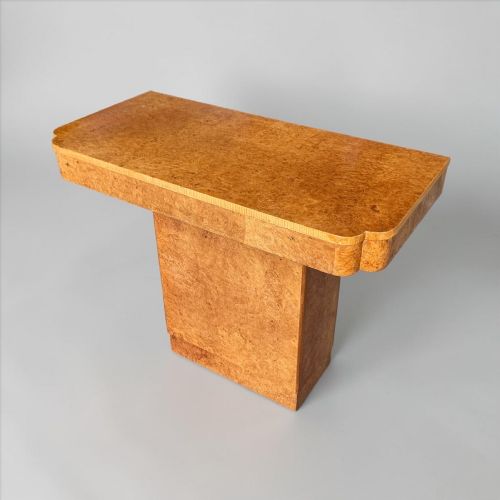
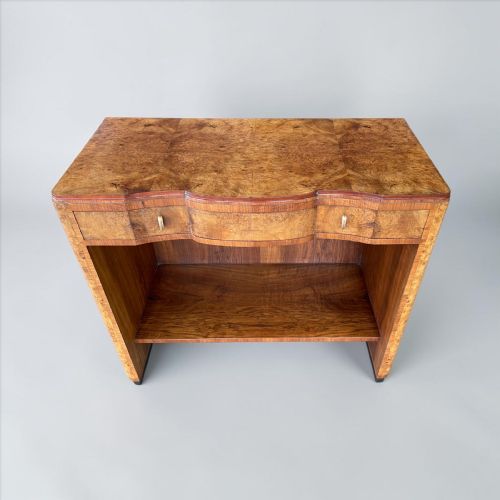
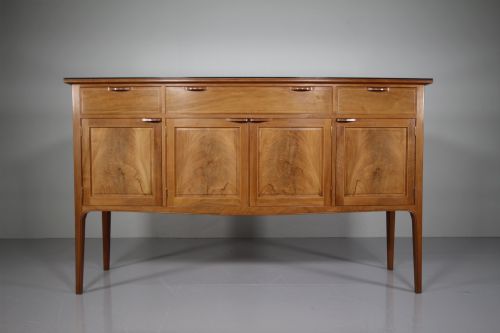
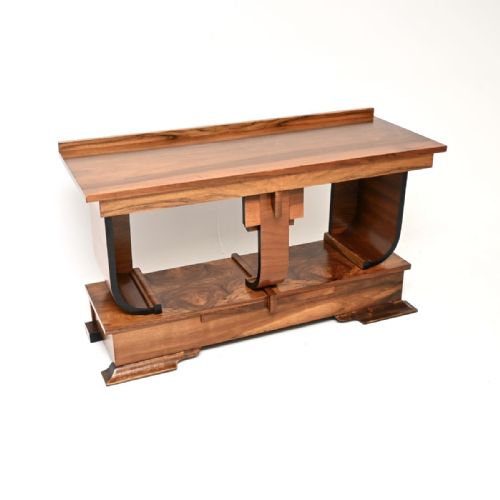
A vintage walnut console brings striking grain and useful surface area to a hallway or reception room.
Vintage Walnut Console
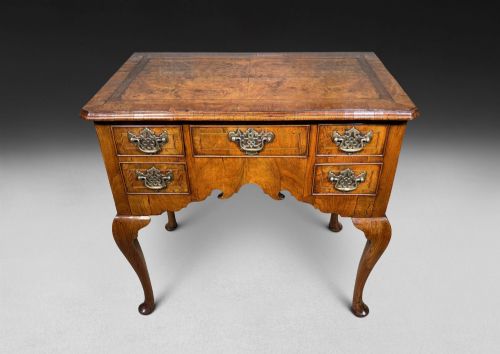
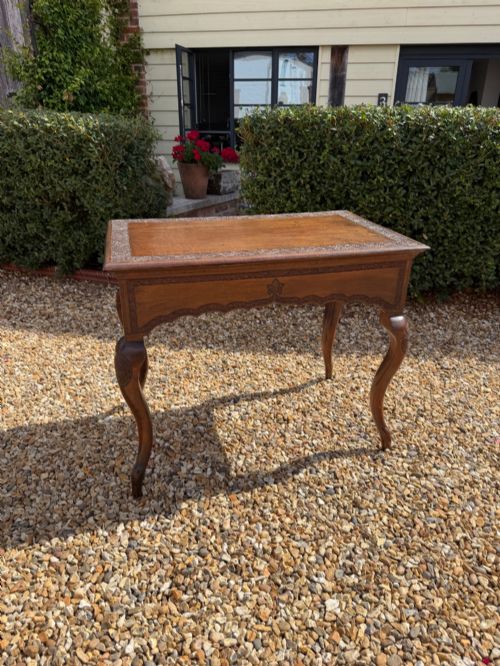
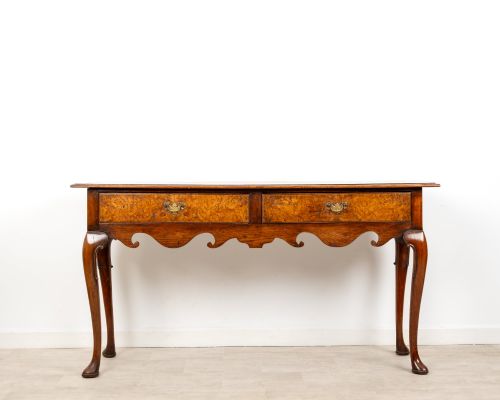
A vintage walnut console is typically a narrow table designed to sit flat against a wall, frequently appearing alongside related forms such as lowboys, side tables, and card tables. These pieces span several centuries and styles, drawing heavily on eighteenth-century traditions alongside later revivals.
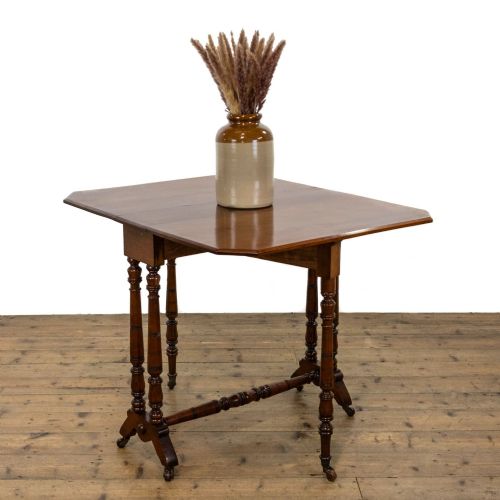
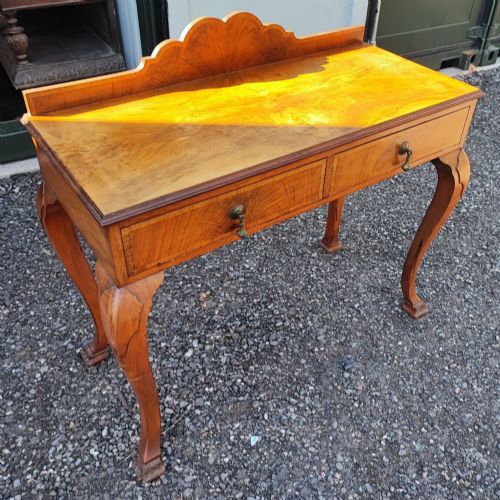
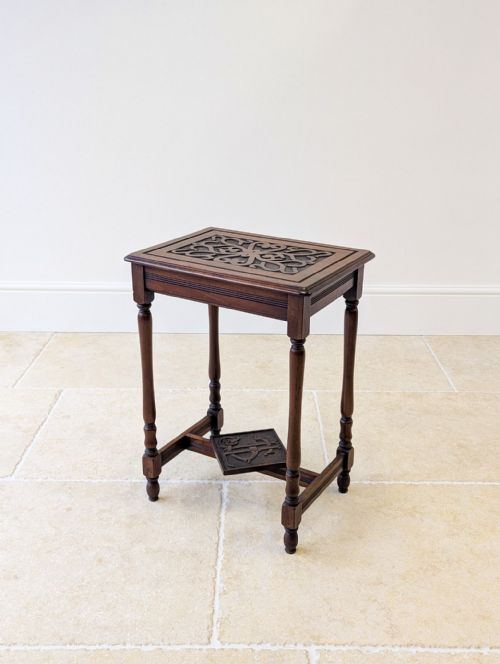
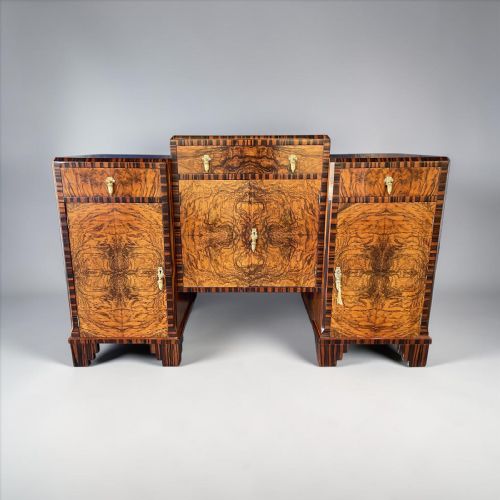
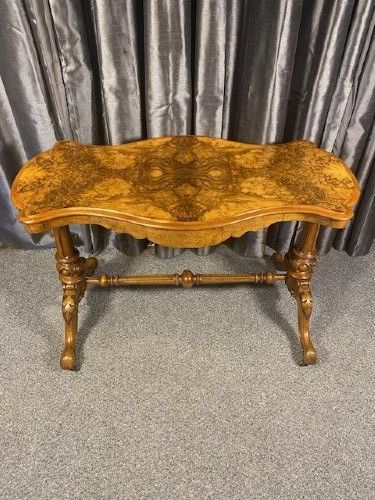
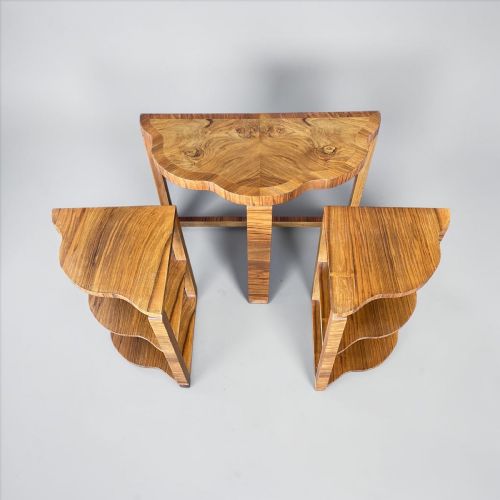
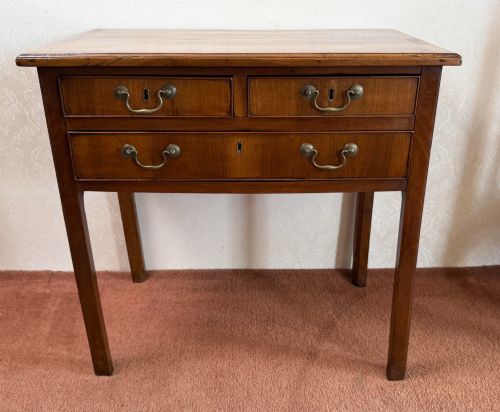
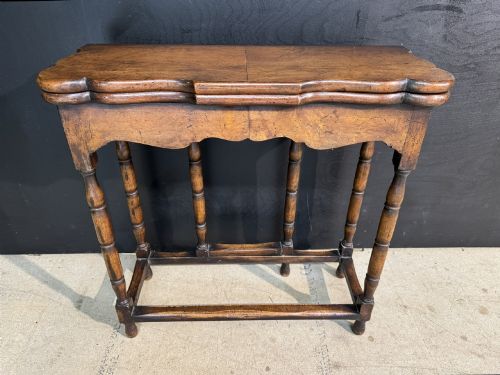
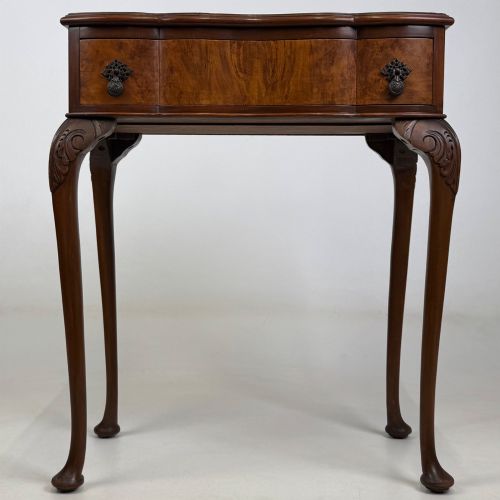
The selections available here range from formal eighteenth-century lowboys and nineteenth-century Victorian pieces to twentieth-century Art Deco interpretations and Edwardian Queen Anne style reproductions. Buyers will encounter both simple rectangular surfaces and shaped demi-lune or folding card tables.
Makers and designers from notable twentieth-century workshops sit alongside anonymous cabinetmakers from earlier eras. Common functional variants include versions fitted with drawers for small storage or topped with marble.
Materials and construction methods
Makers utilised solid timber alongside figured walnut veneer and burr walnut, selecting pieces for rich grain patterns and warm natural tones. Secondary woods provide structural stability inside drawers and beneath tabletops.
Decorative detailing relies on brass hardware such as handles and escutcheons, occasionally paired with marble inserts on French and revival side tables. Surface finishes depend on hand-applied polishes that highlight the natural figure of the wood.
Listings feature walnut, burr walnut, and marble across periods spanning from the eighteenth century through to Art Deco designs.
Factors influencing quality and craftsmanship
The standard of a console is defined by the choice of veneer and timber selection, particularly where burr or figured walnut displays complex, symmetrical grain patterns across the top. Superior examples show careful book-matching and precise alignment.
Joinery standards separate standard production from workshop pieces, visible in the tightness of drawer joints and the crispness of carved details on revival styles. Stamped maker marks or documented attributions add distinction to twentieth-century pieces.
Maurice Adams·Edward Barnsley·Hille·Epstein
The Vintage Walnut Console Glossary
- Console table
- A table designed to be fixed or placed against a wall, often featuring a shallow depth to save floor space in hallways and reception rooms.
- Burr walnut
- Timber taken from a tree growth or burl, prized by cabinetmakers for its swirling, highly decorative grain patterns.
- Lowboy
- A small seventeenth or eighteenth-century dressing or side table featuring one or more rows of drawers beneath the top surface.
- Demi-lune
- A half-moon shape commonly found on console and card tables designed to fit flush against a wall.
- Veneer
- A thin layer of figured wood applied over a stable secondary timber base to create decorative surfaces without excessive weight.
Vintage Walnut Console: Frequently Asked Questions
How do I style a console table?
Position the table flat against a hallway or living room wall where floor space is limited. Pair it with a mirror or a lamp to create a balanced focal point.
Keep decorative items minimal to allow the walnut grain and construction details to remain visible.
What is the difference between a console and a lowboy?
A console is generally built purely as a display or serving surface to stand against a wall. A lowboy functions as a small desk or table featuring integrated drawers beneath the top.
Both share a shallow profile that suits narrow spaces, though lowboys typically date from earlier decorative periods.
How do I identify Art Deco walnut furniture?
Art Deco pieces from the twentieth century rely on clean geometric lines, smooth curves, and highly figured burr walnut veneers. They often dispense with traditional carved ornamentation in favour of polished expanses of wood.
Designers from this period frequently produced matching sideboards, cabinets, and console tables as cohesive suites.
Are these tables suitable for daily use?
These tables function well for everyday tasks such as holding correspondence, keys, or decorative objects. Their solid construction and durable wood surfaces withstand normal household activity when treated with reasonable care.
Protecting the polish from excessive moisture and direct heat preserves the finish over time.