




Vintage Walnut Chevets
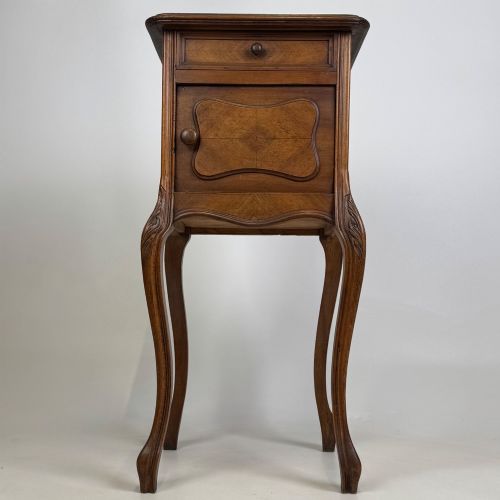
These vintage walnut chevets bring practical French charm to the bedside, offering rich grain and compact storage.
Vintage Walnut Chevets
Vintage walnut chevets are French bedside cabinets and tables designed for domestic use, predominantly appearing in styles influenced by the Louis XV and Rococo revivals. Buyers seeking these pieces encounter a selection spanning the late nineteenth century through to the nineteen-thirties, reflecting diverse craftsmanship from Victorian and Edwardian periods.
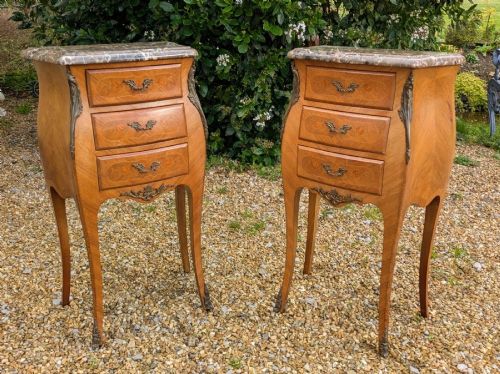
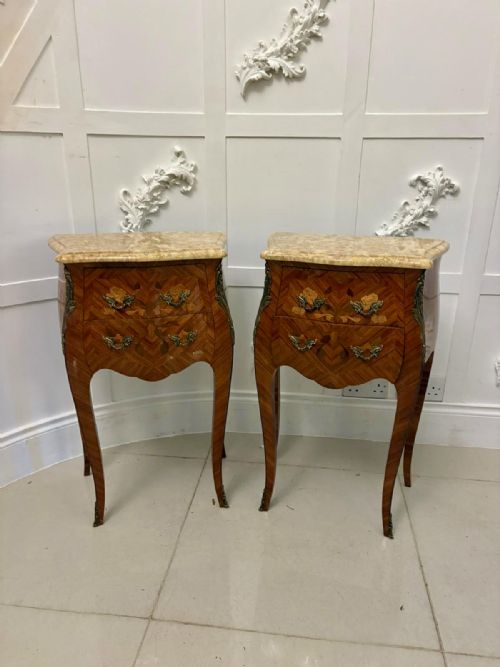
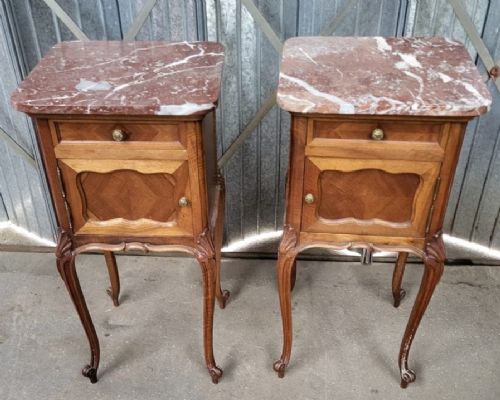
The form typically manifests as small cupboards, chests with drawers, or open lamp tables, frequently topped with marble slabs in shades such as Belgian Sainte-Anne. These items serve as functional nightstands that introduce period character into modern bedrooms without dominating the floor space.
Most examples originate from French workshops and exhibit characteristic proportions, often sold in matching pairs alongside occasional single cabinets. The walnut timber provides a warm foundation, sometimes accented by contrasting fruitwood or kingwood details.
Materials and construction methods
Metal mounts in brass and ormolu edge the furniture, providing functional handles, key escutcheons, and decorative feet that echo Louis XV aesthetics. Heavy marble tops are fitted directly to the cabinet carcases, providing a durable and cool surface suited for bedside use.
Listings feature walnut, marble, brass, and marquetry across Victorian, Edwardian, and early twentieth-century periods.
Distinguishing quality in walnut chevets
Quality rests upon the precision of the marquetry and the selection of the walnut veneer, where thoughtful grain matching elevates an ordinary cabinet into a refined piece of furniture. Superior examples display crisp casting in their ormolu or brass mounts and seamless integration of heavy marble slabs.
Construction integrity defines the upper tier, visible in smooth drawer actions, well-fitted doors, and the original stability of the timber carcase. Pieces retaining subtle details like secret compartments or intact period hardware demonstrate a higher standard of original workshop production.
The Vintage Walnut Chevets Glossary
- Chevet
- A French term for a bedside table or small cabinet designed to sit beside a bed. These compact pieces often feature a combination of cupboards and drawers.
- Marquetry
- Decorative veneer work where pieces of various coloured woods are assembled to form pictorial or geometric patterns. This technique decorates many French revival cabinet doors.
- Ormolu
- Gilded bronze mounts applied to furniture for decorative and protective purposes. They are characteristic of Louis XV and Rococo revival pieces.
- Veneer
- A thin layer of superior walnut timber applied to a base wood surface. Quarter-veneer arrangements use four matched slices to create a symmetrical grain pattern.
Vintage Walnut Chevets: Frequently Asked Questions
What is a chevet?
A chevet is a traditional French bedside table or small cabinet designed to hold nighttime essentials within easy reach.
These pieces typically combine a small cupboard space with a drawer or a marble surface on top.
How do I style a bedside cabinet?
Bedside cabinets work well paired on either side of a bed to create a symmetrical look in a bedroom. Their marble tops offer a durable surface for lamps, books, and small decorative items.
Mixing these antique wooden forms with contemporary interiors adds warmth and practical storage to the room.
Are these cabinets French in origin?
The majority of these pieces originate from France, following design traditions established during the eighteenth century. Makers frequently adopted Louis XV and Rococo revival styles during the nineteenth and early twentieth centuries.
Cabinetmakers utilised regional timbers and classic French hardware to construct these domestic items.
How do I identify the period?
Dating relies on observing construction techniques, hardware styles, and the specific revival movement represented, such as Louis XV or Edwardian adaptations. Materials like Belgian Sainte-Anne marble and particular veneer patterns also help place a piece within its historical window.
Comparing the joinery methods and decorative motifs offers further clues to the manufacturing decade.