


Vintage Walnut Bar
These vintage walnut bar pieces are designed for entertaining, combining rich timber grain with fitted compartments for serving drinks in style.
Vintage Walnut Bar
A vintage walnut bar encompasses a range of cocktail cabinets, drinks cabinets, and serving trolleys designed for hospitality. Buyers searching this phrase meet pieces primarily from the Art Deco period, alongside earlier Edwardian and Victorian forms.
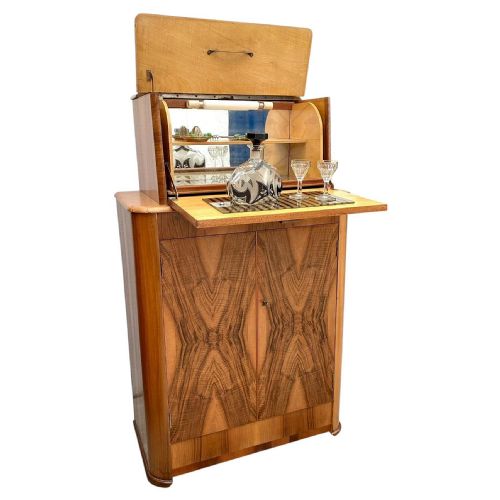
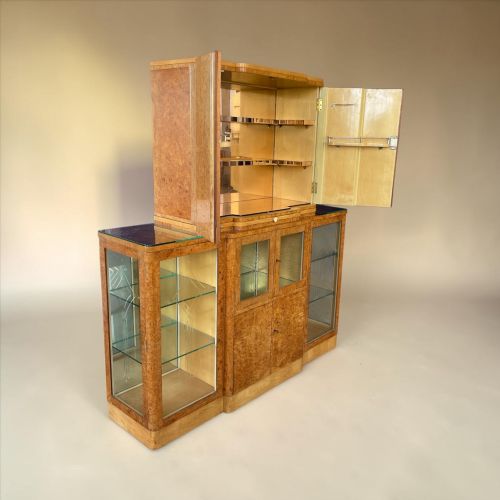
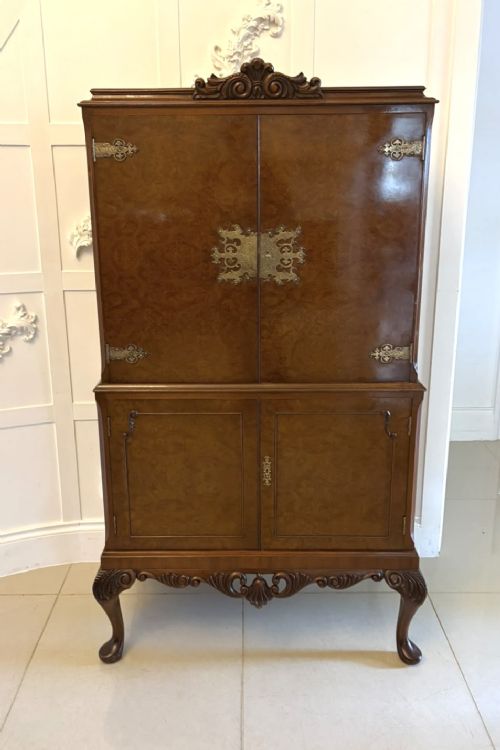
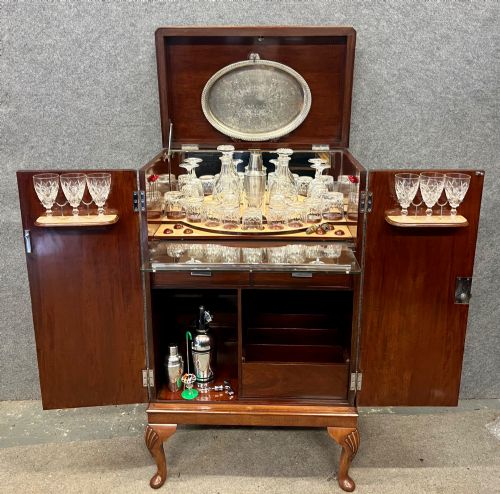
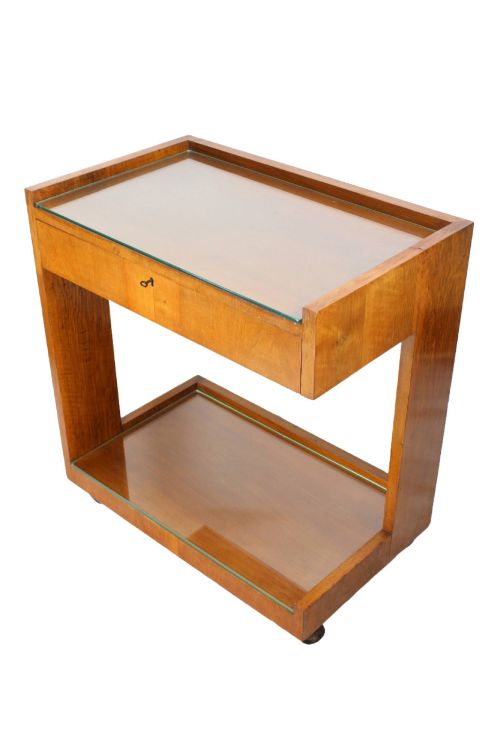
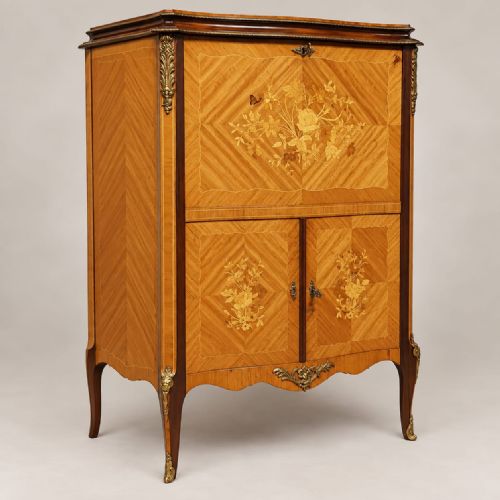
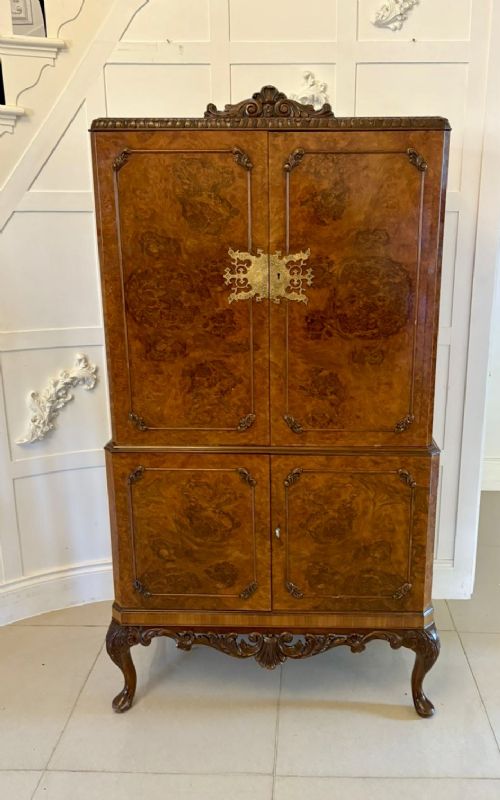
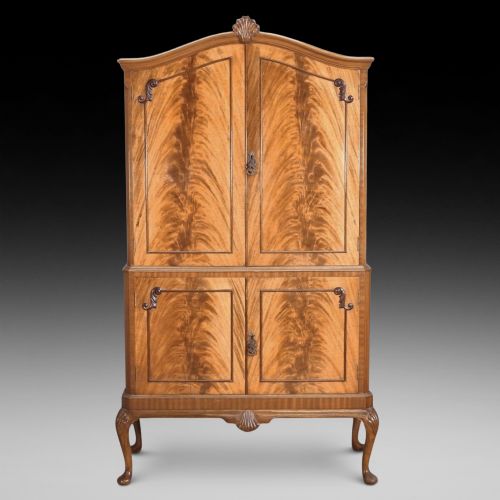
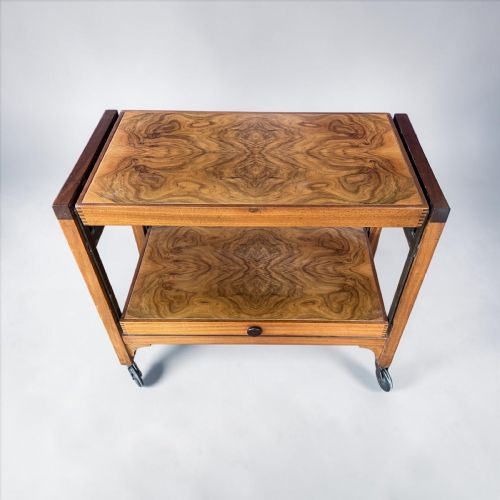
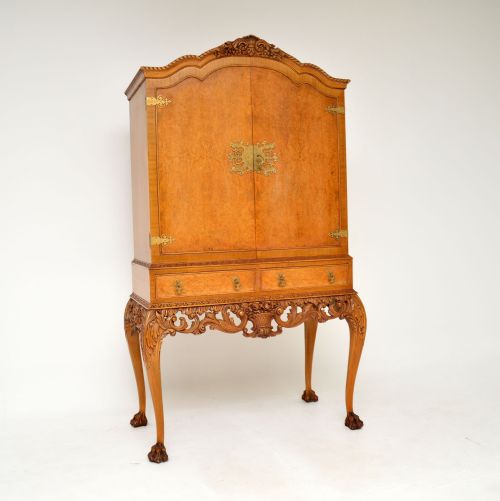
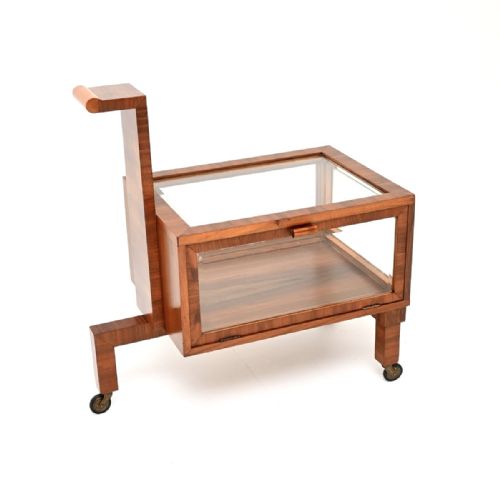
The most common form on this page is the cocktail cabinet, often fitted with drop-down serving surfaces and mirrored interiors. Alongside these stand mobile serving trolleys and bar carts on wheels, designed to move refreshments between rooms.
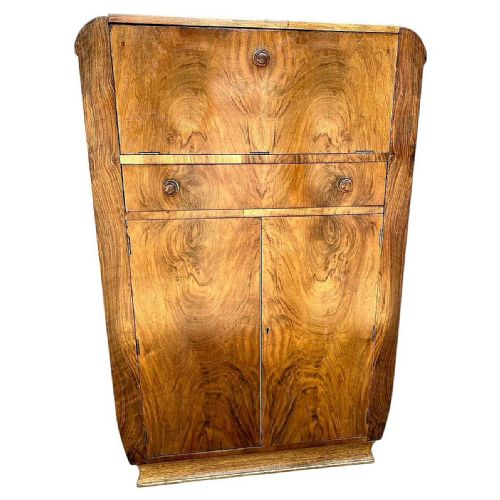
Stylistic influences span from strict geometric Art Deco lines to Queen Anne Revival curves and Georgian Revival casework. Walnut veneer and solid timber construction unite these varied forms across the decades.
Materials and construction
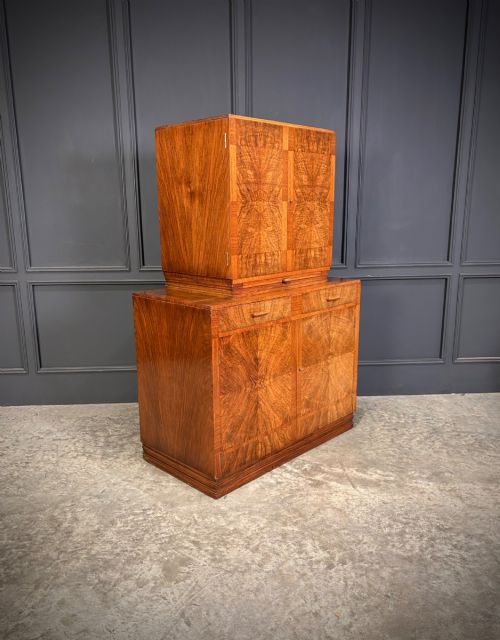
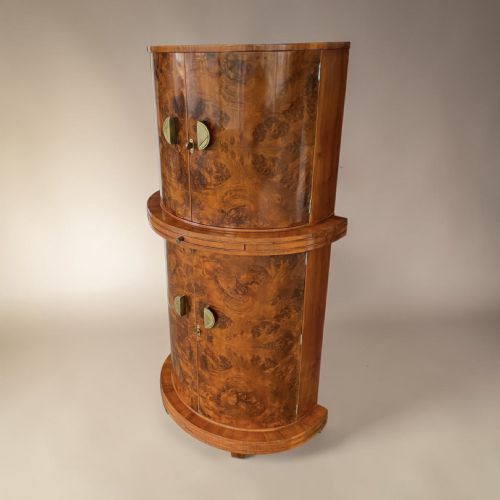
Makers utilised walnut and burr walnut veneers over solid timber carcases to achieve rich, patterned grain figures on cabinet doors and tabletops. These wooden surfaces are frequently paired with contrasting glass, mirrored panels, and chrome or brass hardware.
Engineering mechanisms define the more complex items, including metamorphic serving trolleys, revolving dry bar cabinets, and pop-up table surfaces. Cabinet interiors often incorporate specialist storage for bottles and glassware alongside mirrored serving ledges.
Vintage Walnut Bar Retail Price Guide 2026
Typical asking prices for vintage walnut bar among the pieces listed under this phrase on Sellingantiques today, from the lower quarter to the upper quarter. They describe what is for sale here now, not the wider market.
Listings span the Victorian era through the 1940s, with the 1930s representing the largest concentration of drinks cabinets and serving trolleys.
Distinctions in quality
Quality rests on the choice of timber figure, particularly the complexity and depth of the burr walnut grain selected for the primary display surfaces. Finer cabinets show careful matching of veneer panels across doors and drawers to create symmetrical patterns.
The sophistication of the internal mechanism distinguishes standard examples from exceptional ones, such as smooth-running metamorphic actions and integrated electrical fittings. Superior execution extends to the quality of the internal mirrors, glass shelves, and metal mounts.
Epstein·Hille·Harry and Lou Epstein·Incorporall
The Vintage Walnut Bar Glossary
- Burr walnut
- A timber harvested from walnut tree growths that produces highly swirled, knotty grain patterns. It is sliced into thin veneers for decorative cabinet fronts.
- Metamorphic
- Describing furniture designed to transform its shape or function through folding or sliding mechanisms. These pieces shift from a compact console or table into an active serving station.
- Cocktail cabinet
- A dedicated piece of furniture for mixing and serving drinks, usually containing a mirrored interior, glass shelves, and a pull-down or lift-up preparation surface.
- Art Deco
- A design style dominant in the 1920s and 1930s characterised by streamlined geometric forms, symmetry, and modern industrial materials. It defines the majority of the drinks furniture seen here.
Vintage Walnut Bar: Frequently Asked Questions
What is a cocktail cabinet?
A cocktail cabinet is a specialised furniture piece designed to store bottles, glassware, and mixing equipment for home entertaining. These pieces typically feature a drop-down flap that serves as a preparation shelf.
Inside, the cabinets often include mirrored backs, glass shelving, and dedicated slots for accessories. They gained immense popularity during the Art Deco era for domestic entertaining.
How do you use a bar cart?
A bar cart provides a mobile surface for holding bottles, glassware, and barware during gatherings. Fitted with wheels or castors, it allows hosts to transport drinks between rooms with ease.
Many examples feature two tiers of shelving with guard rails to keep items secure during movement. They function as both practical serving stations and decorative display furniture.
How do I identify Art Deco furniture?
Art Deco furniture is characterised by clean geometric lines, symmetrical compositions, and a distinct lack of heavy traditional ornamentation. Pieces from this era often showcase dramatic wood veneers like burr walnut.
Look for streamlined silhouettes, curved corners, and contrasting materials such as chrome and mirrored glass. These design choices reflect the modernist aesthetic of the 1920s and 1930s.
What is burr walnut?
Burr walnut is a decorative wood veneer taken from growths on walnut trees where the grain has grown in a deformed, swirling pattern. This produces complex, eye-catching textures filled with knots and organic movement.
Cabinet makers prize this material for prominent surfaces like cabinet doors and tabletops. Because the grain is so active, craftsmen carefully book-match the veneer sheets to create symmetrical patterns.