

Vintage Vitrine Display Case
A vintage vitrine display case holds precious objects behind glass, bringing architectural elegance and curated visibility to any room.
Vintage Vitrine Display Case
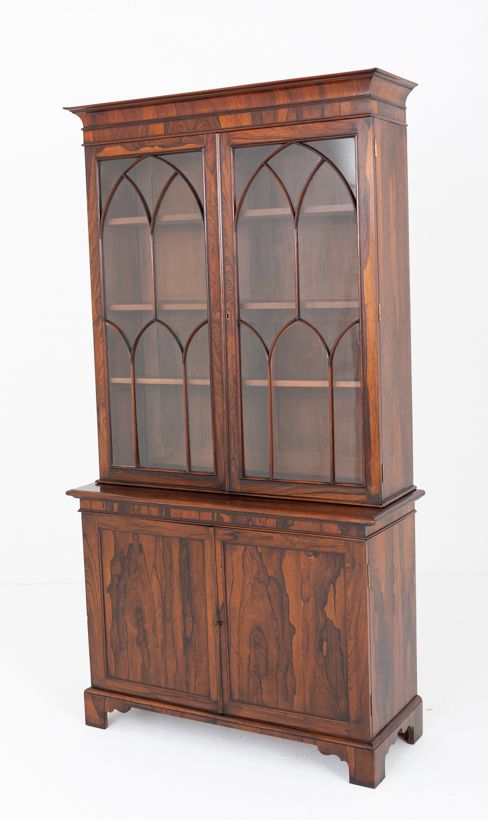
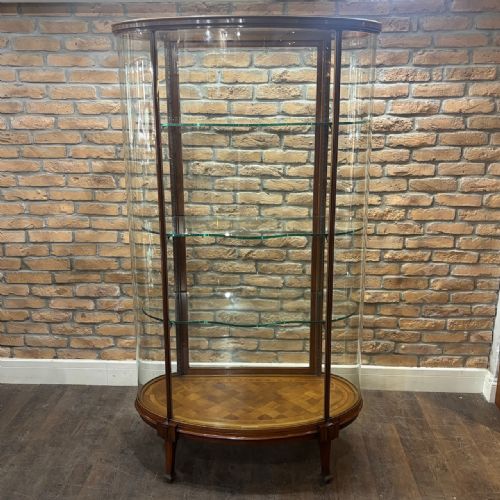
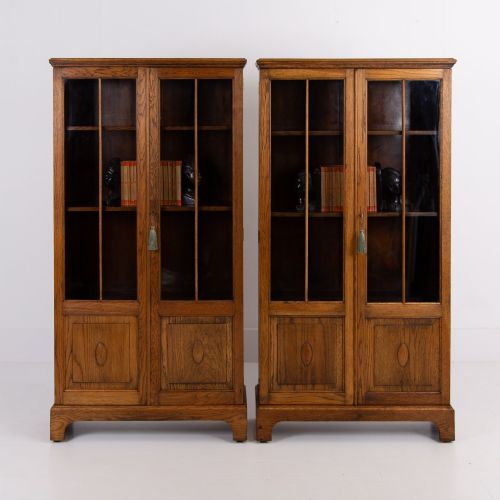
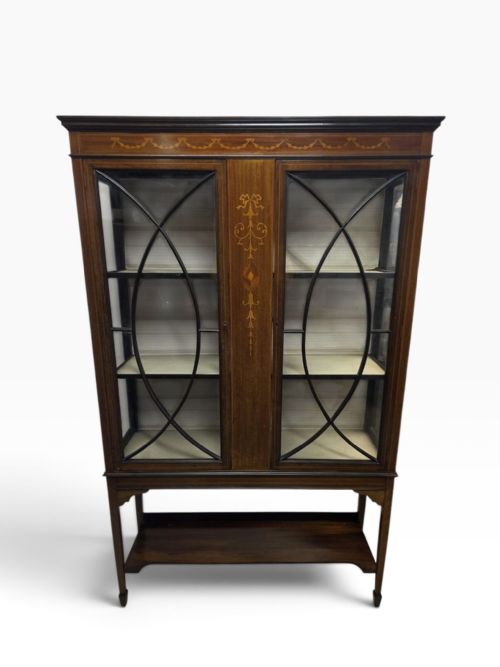
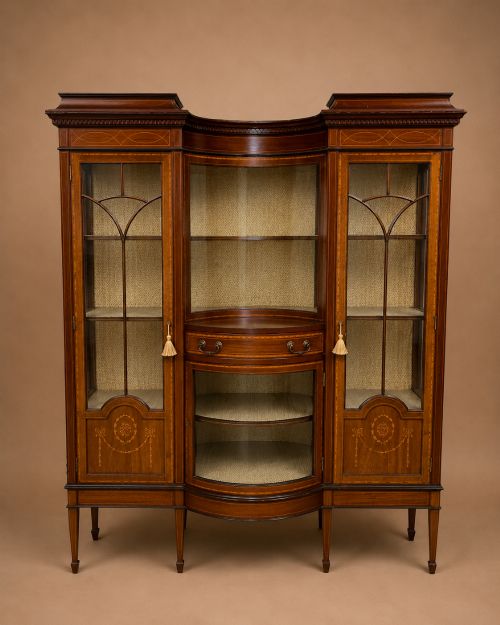
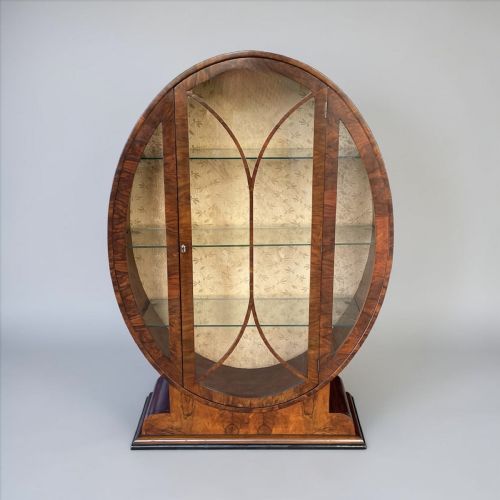
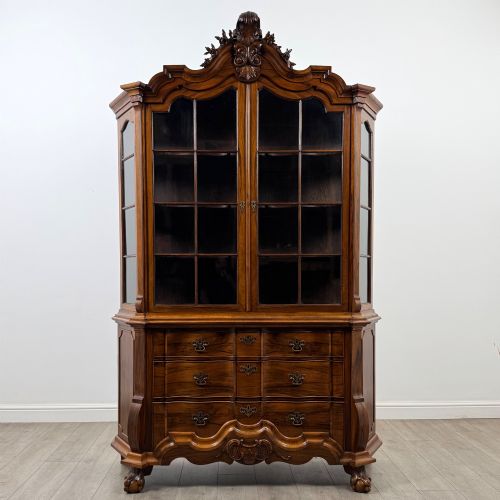
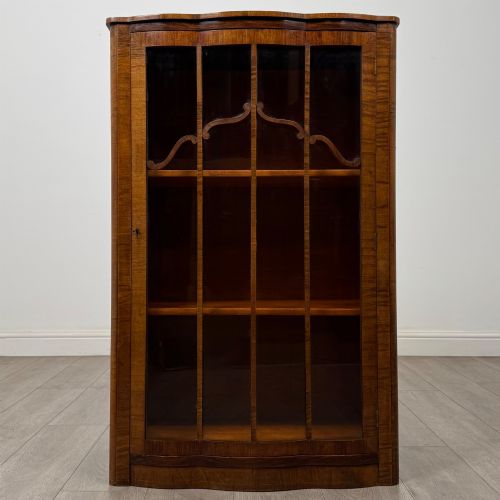
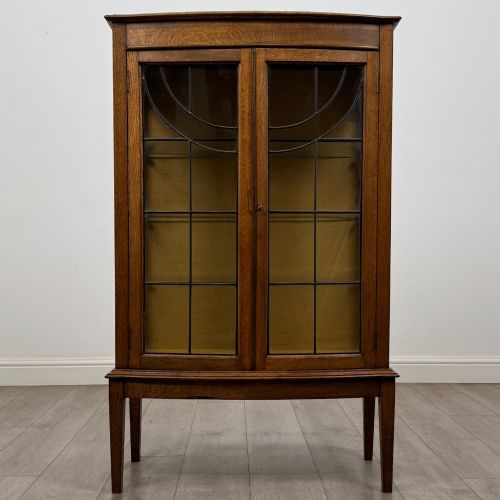
A vintage vitrine display case encompasses a variety of glass-fronted storage forms, ranging from towering floor-standing bookcases to delicate countertop bijouterie tables. The pieces available span multiple decades and stylistic revivals, with Edwardian and 1930s examples appearing frequently alongside nineteenth-century iterations.
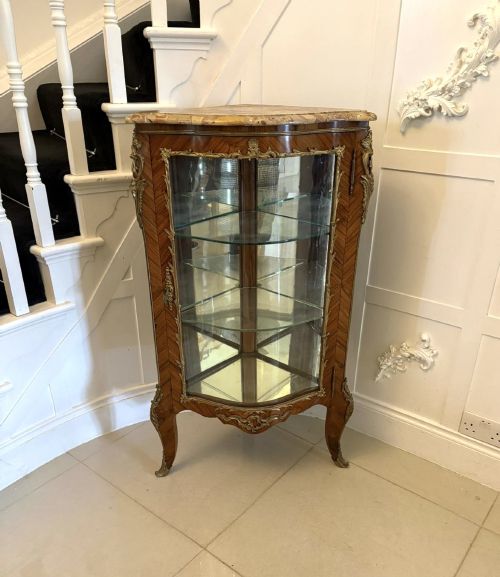
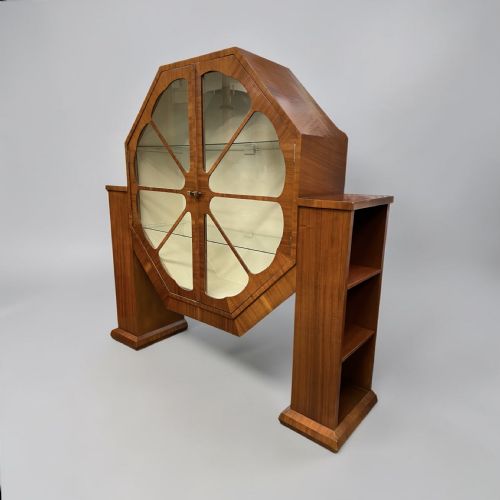
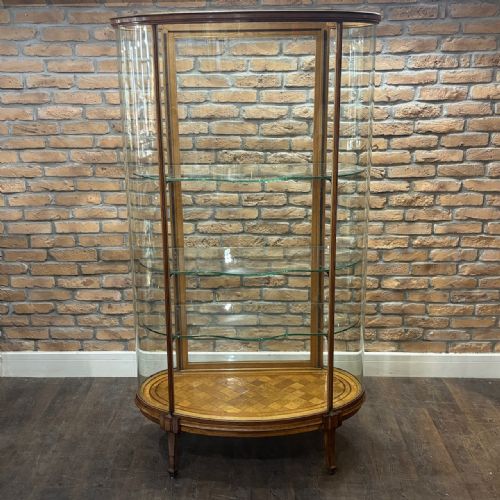
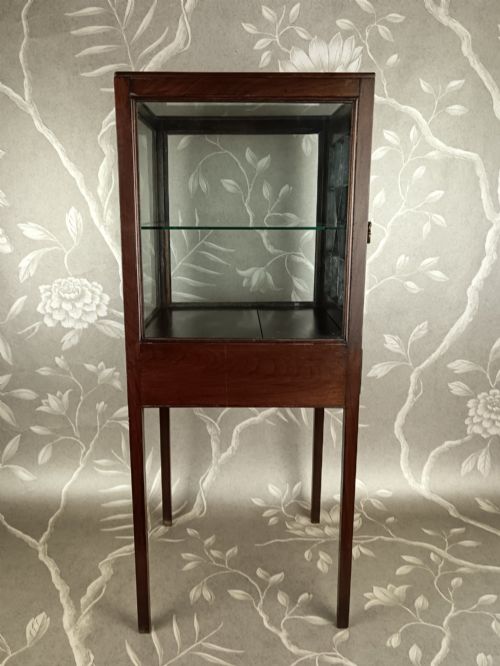
Buyers encounter numerous configurations designed for specific spatial needs, including corner cabinets, serpentine shapes, and pedestal units. These items originate from diverse stylistic traditions, including Sheraton Revival, Louis XV Revival, Art Deco, and utilitarian shop environments.
The fundamental purpose remains the presentation and protection of cherished collections, whether through upright shelving or horizontal tabletop glazing. Mahogany, oak, and walnut form the structural backbone of these cabinets, frequently accented with fine inlay work or glazed panels.
Materials and Technique
Cabinetmakers utilised dense hardwoods such as mahogany, oak, walnut, and rosewood to construct the primary frames of these glazed units. Satinwood and kingwood frequently appear as decorative veneers, often enhanced with intricate stringing and marquetry inlay.
Glass panels dominate the construction, secured within timber doors or metal frameworks to maximise light penetration for interior items. Ormolu mounts, brass hardware, and fabric linings provide structural and aesthetic finishing touches across various revival and Art Deco designs.
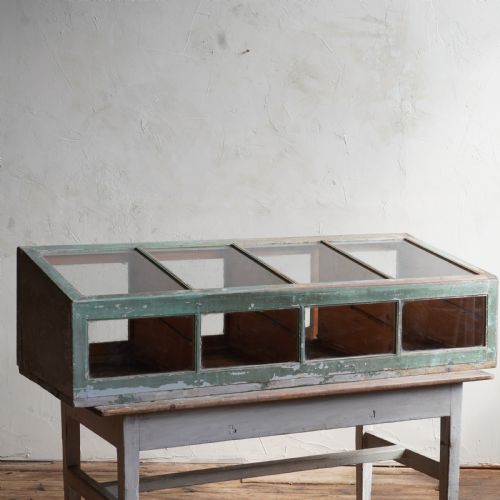
Some upright shop display units survived decades of commercial trade before finding new life exhibiting private collections at home.
Assessing Craftsmanship
The refinement of timber selection and veneer matching defines the upper tier of these pieces, separating utilitarian shop fittings from domestic drawing-room furniture. Superior examples exhibit precise joinery, harmonious proportions, and integrated decorative elements like hand-carved mahogany or cast ormolu mounts.
F. Sage & Co
The Vintage Vitrine Display Case Glossary
- Vitrine
- A glass-fronted cabinet designed specifically for the display of objects of curiosity or porcelain. These cases prioritise visibility from multiple angles.
- Bijouterie table
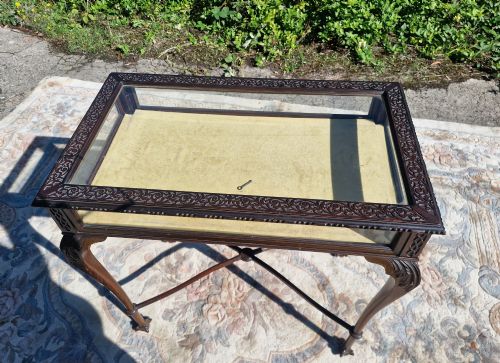
- A shallow glazed display table designed to hold small personal ornaments, jewellery, or medals. They often feature hinged lids and fabric-lined interiors.
- Ormolu
- Gilded bronze ornamentation applied to furniture, popular in French-influenced and revivalist cabinet making. It adds metallic contrast to dark timber surfaces.
- Inlay
- A decorative technique where contrasting pieces of wood, metal, or shell are inserted into the primary surface. Sheraton Revival and Edwardian pieces frequently utilise this method.
- Serpentine
- A curved shape consisting of a convex centre flanked by concave ends, creating a flowing wave-like front. This contour demands advanced woodworking skill to glaze and fit.
Vintage Vitrine Display Case: Frequently Asked Questions
What is a vitrine used for?
These cabinets serve to exhibit and protect delicate collections, ceramics, and ornaments behind protective glass panels.
Interior shelving and glazed doors allow natural light to illuminate the displayed items while keeping dust away.
How do I date an Edwardian display case?
Edwardian pieces often feature lighter woods like satinwood, delicate mahogany inlay, and Sheraton Revival stylistic motifs.
Construction methods from this era balance traditional hand joinery with early machine-produced components.
Where should I place a corner cabinet?
Corner cabinets make efficient use of unutilised room junctions while adding architectural interest to empty wall angles.
They work well in dining rooms or living spaces to display glassware without obstructing main pathways.
What distinguishes a bijouterie table?
Bijouterie tables combine a glazed tabletop compartment with supportive legs, functioning as horizontal display cases.
They were traditionally used in drawing rooms to exhibit small personal treasures close to eye level.