


Vintage Village Scene
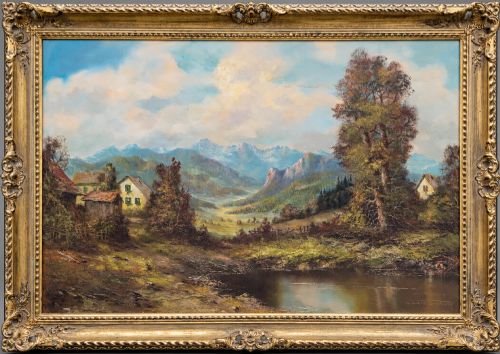
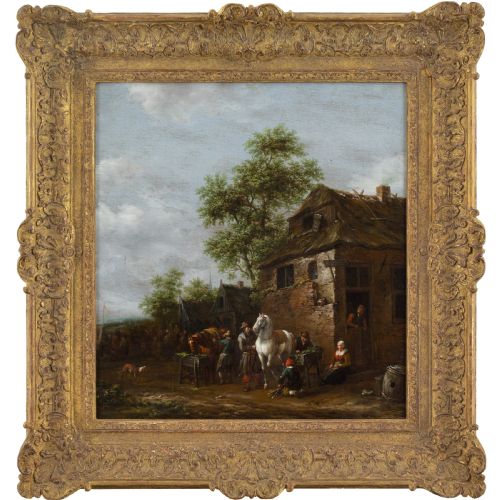
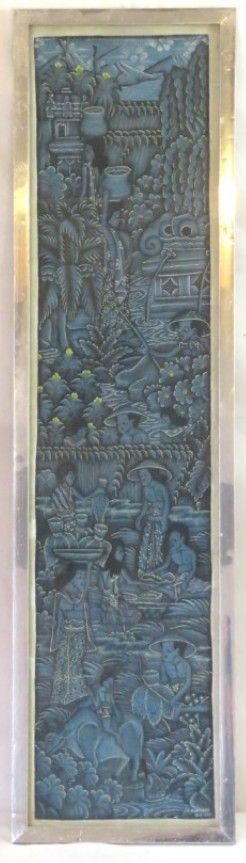
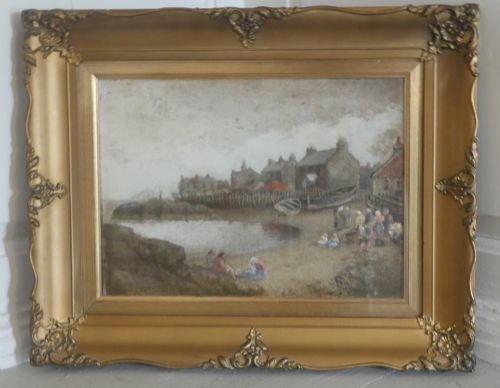
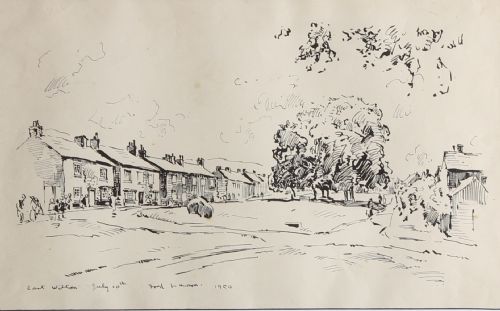
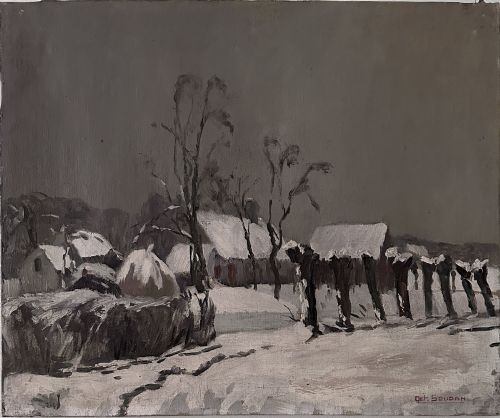
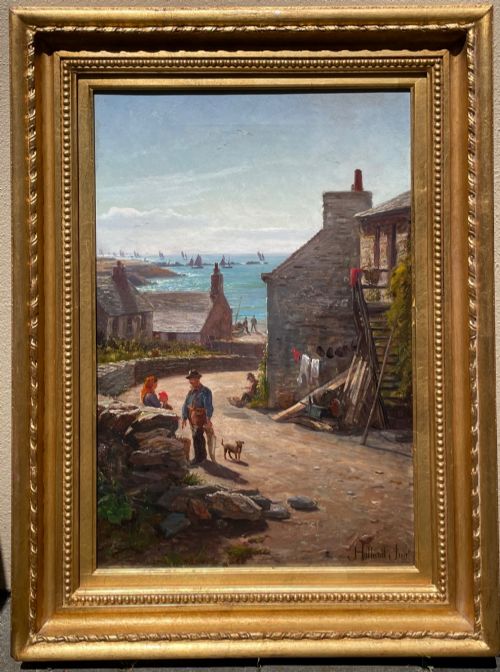
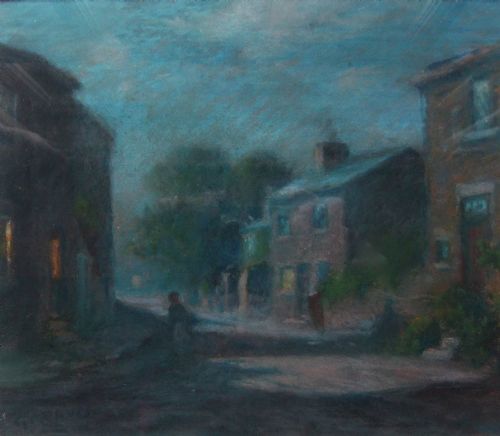
These vintage village scene works capture rural life on canvas, paper and board through the eyes of artists spanning multiple decades.
Vintage Village Scene
A vintage village scene brings together painted depictions of rural settlements, coastal harbours and country lanes originating from the nineteenth, twentieth and mid-century periods. Buyers searching for a vintage village scene encounter works that range from British watercolours of Devon and Yorkshire to continental oils of French and Dutch settlements.
The assortment on this page draws on diverse regional traditions, including works associated with the St Ives and Newlyn schools alongside folk art and impressionist interpretations. These pieces record historical rural architecture, street markets and local inhabitants through varied regional and international lenses.
Framed watercolours and oil paintings dominate the available offerings, reflecting how artists recorded community life across changing seasons and rural geographies. Each piece preserves a distinct architectural or topographical record from periods spanning the Victorian era to the mid-twentieth century.
Materials and methods
Artists relied on oil paint applied to canvas or wood board, alongside watercolours and gouache executed on paper or fabric supports. These traditional mediums allowed painters to build up textured brushwork or translucent washes suited to capturing outdoor light and rural atmosphere.
Pastel and ink drawings also appear within the selection, offering linear precision and softer blended tones for topographical studies. The application of gold leaf occasionally frames or enhances the presentation of these painted compositions.
Several artists captured French, Dutch and British villagers braving winter snow or gathering by bustling rural harbours.
Assessing the works
Quality rests upon the artist's handling of spatial depth, light and atmospheric perspective within the composition. Stronger examples demonstrate confident brushwork and a coherent tonal balance that brings life to the depicted settlement.
Condition of the physical support, whether canvas, paper or wood panel, influences the integrity of the piece over time. The preservation of original pigment vibrancy and the clarity of artist signatures or inscriptions further distinguish individual works.
Karl Gatermann·Barent Gael·Edward Mills·Fred Lawson·John Holland·William Greaves·Arthur Tucker·Mercedes Legrand·M. C. Hider·Charles Vickers·Louie Stanley Maurice Prince·George Gregory·John Smith Atherton·Joseph W. Milliken·V. Zirakian·William Lee Hankey·Robert McGregor·Walter Henry Sweet·Herbert Royle·Maurice Asselin·A. Michaelis·David Heward
The Vintage Village Scene Glossary
- Watercolour
- A paint consisting of pigment suspended in a water-soluble binder, traditionally applied to paper to create translucent washes.
- Impressionism
- A nineteenth-century painting style focusing on the accurate depiction of light and its shifting qualities rather than fine detail.
- Gouache
- An opaque water-based paint that includes a white pigment filler, producing heavier and more solid colour fields than traditional watercolour.
- Pastel
- A dry art medium in the form of a stick, composed of powdered pigment and a binder, used to achieve soft colour gradients.
- Provenance
- The documented history of ownership and origin surrounding a work of art, establishing its authenticity and past journey.
Vintage Village Scene: Frequently Asked Questions
What periods do these paintings represent?
The works span from the seventeenth century through the Victorian and Edwardian eras into the mid-twentieth century. Most examples date from the early nineteen-hundreds up to the nineteen-sixties.
This broad chronological range encompasses traditional nineteenth-century landscapes alongside mid-century modernist and folk art interpretations of rural communities.
What mediums were used for these rural scenes?
Painters utilised oil paint on canvas and wood board, as well as watercolours, gouache and pastels on paper. Ink drawings also appear among the records.
Support materials reflect the specific medium chosen by the artist, with canvas and panel favoured for oils and paper for watercolours and drawings.
How should I care for vintage art on paper?
Works on paper, including watercolours and pastels, require protection from direct sunlight to prevent fading and discolouration. Acid-free framing materials help preserve the integrity of the paper over time.
Displaying these pieces in rooms with stable humidity levels prevents moisture damage and warping of the backing boards.