


Vintage Venice Canvas Art
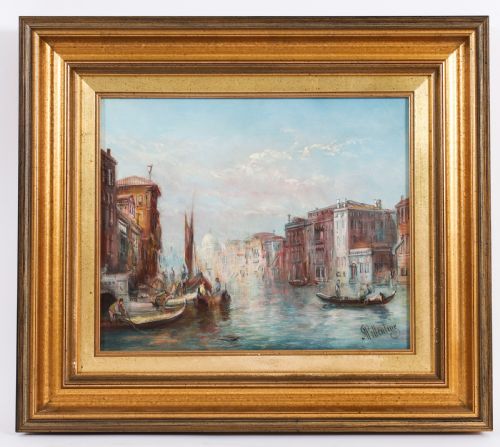
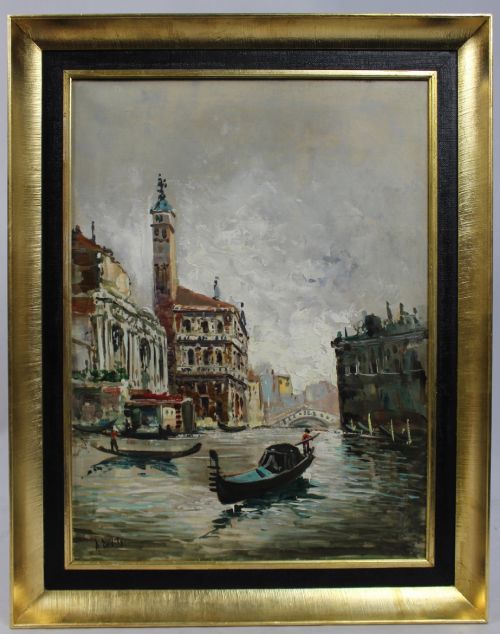
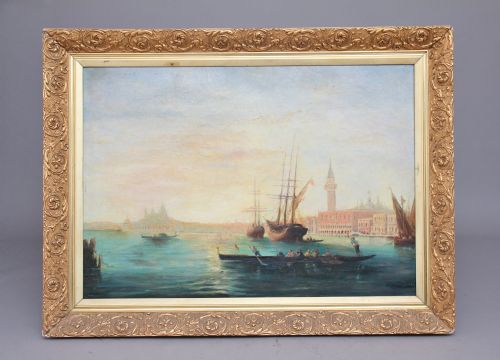
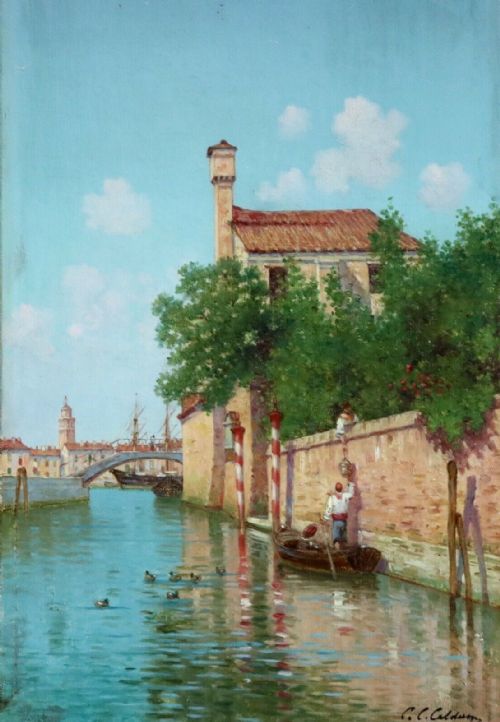
Vintage Venice canvas art brings the canals, lagoons and palazzos of the floating city into the room through oil paint on fabric.
Vintage Venice Canvas Art
Vintage venice canvas art encompasses oil paintings on canvas depicting Italian cityscapes, grand canals, lagoons and historic palazzos.
The works span the nineteenth century through the mid-twentieth century, capturing scenes from the nineteenth-century veduta tradition to mid-century impressionism.
Subjects range from the Grand Canal and the Bridge of Sighs to quiet waterways and Venetian mansions painted by European artists.
How they were made
These works are painted in oil paint applied directly onto stretched canvas surfaces.
Many of the period frames utilise carved wood, gesso and gilding to complement the painted scenes.
Gondolieri persist in navigating the canvas waters, silently poling beneath painted stone bridges decade after decade.
What varies in quality
Quality rests in the handling of light on water and stone, distinguishing works by named painters from anonymous studio output.
The depth of the composition and the preservation of the original canvas and oil layer define the better examples.
Alfred Pollentine·Antonio DeVity·Claude Jousset·Marc Aldine·E. Perez Senet·Emanuele Cappello·Charles Clement Calderon
The Vintage Venice Canvas Art Glossary
- Veduta
- A detailed, realistic painting of a cityscape, highly popular in Venice during earlier centuries. These topographical views recorded landmarks for travellers on the Grand Tour.
- Impressionism
- A style focusing on the accurate depiction of light and its shifting qualities rather than fine detail. Painters worked to capture the immediate visual impression of a scene.
- Giltwood
- Wood that has been coated with gold leaf or a gold-coloured metallic finish. It frequently surrounds period oil paintings to enhance their visual weight.
- Gesso
- A plaster-like mixture applied to wood frames as a base for gilding. It provides a smooth surface for intricate moulding.
Vintage Venice Canvas Art: Frequently Asked Questions
How do I date a Venetian oil painting?
Dating relies on stylistic clues, artist signatures and the construction of the canvas support and stretcher frames. Nineteenth-century works often favour traditional veduta compositions, whilst twentieth-century pieces lean towards impressionist brushwork.
Examining the materials at the back of the piece, including the type of wood and canvas weave, helps narrow down the period.
What is the difference between French and Italian impressionism here?
French impressionists visiting Venice interpreted the light and water through looser brushstrokes and atmospheric colour palettes. Italian painters often retained a stronger structural clarity in their depiction of canals and architecture.
Both approaches capture the specific light quality of the Venetian lagoon during different decades.
How should I hang canvas art in my home?
Canvas paintings require stable indoor environments away from direct sunlight and excessive humidity to protect the oil paint layer. Proper picture lighting enhances the texture of the brushwork and the depth of the canal scenes.
Ensure the wall fixings match the weight of the framed piece securely.
Are these paintings signed by the artists?
Several pieces feature signatures from listed European and British painters working across the nineteenth and twentieth centuries. Signatures are typically found in the lower corners of the canvas.
Unsigned works rely on stylistic attribution and period framing to indicate their origin.