

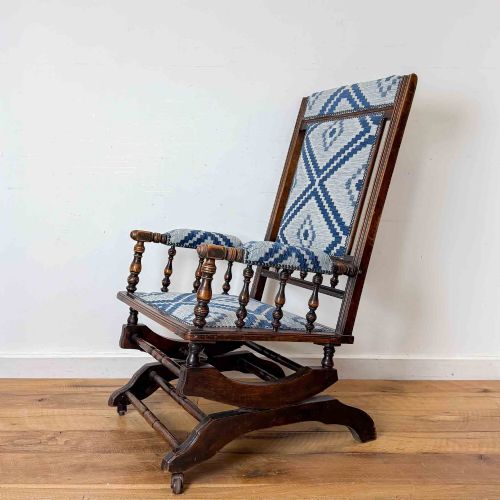


Vintage Upholstered Rocker
These vintage upholstered rocker pieces are classic rocking chairs designed for comfort, emerging in periods from the nineteenth century to the twentieth.
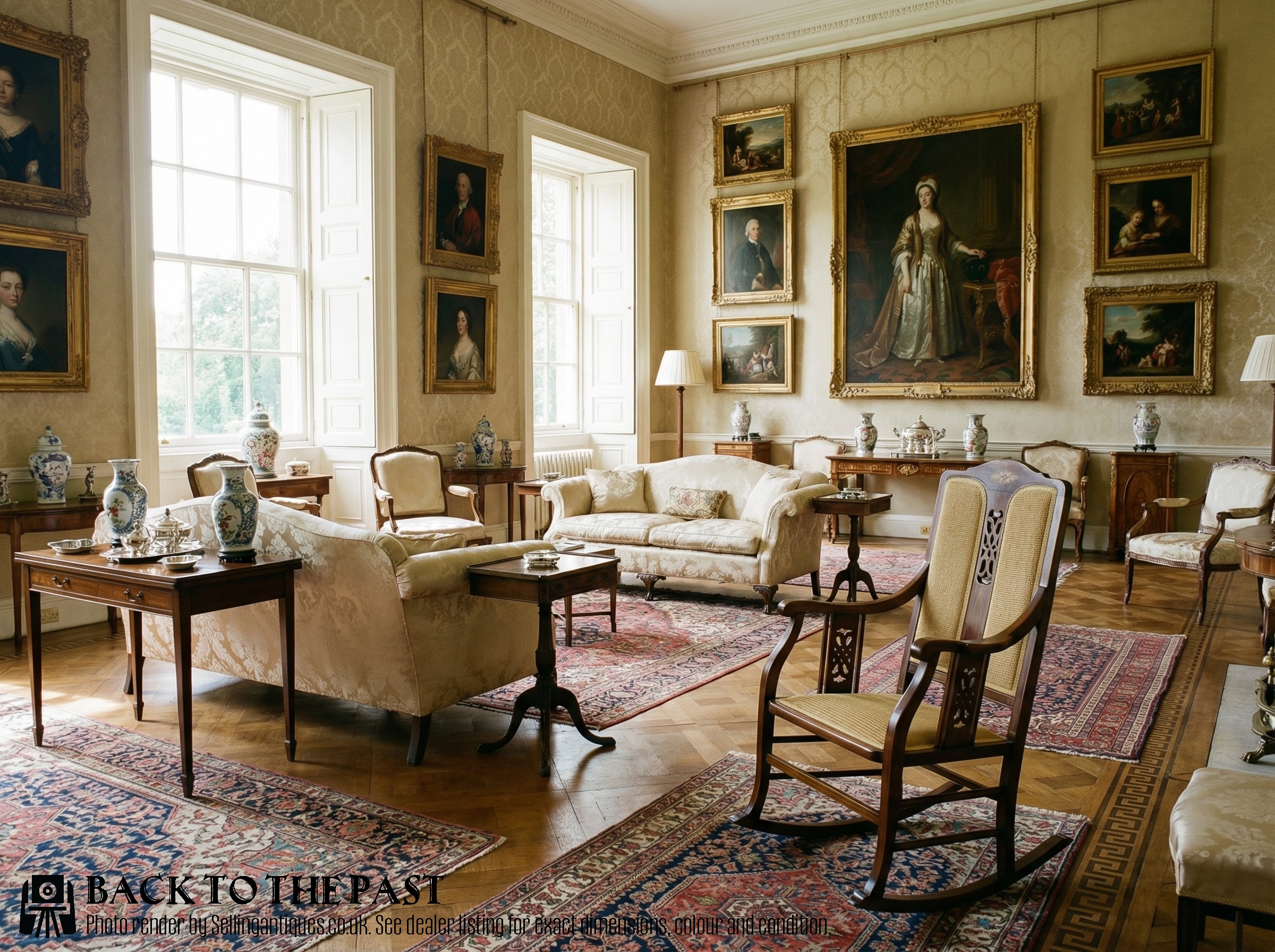
Vintage Upholstered Rocker
A vintage upholstered rocker takes the form of a rocking chair, designed with mounted rockers for movement and support. These pieces span from the nineteenth century through the Edwardian era and up to 1920.
The versions most commonly met on this page include Victorian styles, Edwardian low rocking chairs, and traditional American designs. Formats range from standard armchairs to child sizes and low nursing chairs.
Makers drew on various regional influences, including traditional American forms alongside British Victorian and Edwardian aesthetics. The primary function remains a seated rocking experience tailored for domestic spaces.
What varies in quality
Quality rests upon the selection of timber and the precision of the frame joinery. Finer examples utilise dense hardwoods like mahogany and walnut, offering superior structural longevity.
The execution of the upholstery and the retention of original fabric or leather define the character of the upper tier. Detail work such as inlaid wood or ebonised finishes further separates standard workshop output from finer pieces.
Vintage Upholstered Rocker Retail Price Guide 2026
Typical asking prices for vintage upholstered rocker among the pieces listed under this phrase on Sellingantiques today, from the lower quarter to the upper quarter. They describe what is for sale here now, not the wider market.
Listings feature rocking chairs spanning the nineteenth century, 1890, 1900, 1920, the Victorian era, and the Edwardian period.
The Vintage Upholstered Rocker Glossary
- Rocking chair
- A chair mounted on curved pieces of wood that allow the occupant to rock back and forth. This is the defining form across all items listed here.
- Button back
- An upholstery style where depressions are formed in the padding by sewing buttons through to the frame at regular intervals. This technique secures the filling and creates a patterned surface.
- Nursing chair
- A low-seated chair traditionally designed for feeding infants, often upholstered for comfort. Edwardian examples frequently feature this lower posture.
- Bentwood
- Wood that has been heated and bent into curved shapes to form structural parts of a chair. Ebonised bentwood offers a sleek profile.
Vintage Upholstered Rocker: Frequently Asked Questions
What periods do these rockers span?
The pieces on this page span the nineteenth century, including specific decades such as 1890 and 1900, alongside Victorian and Edwardian eras up to 1920.
This broad timeline encompasses diverse regional interpretations, from traditional American forms to British domestic seating.
How were rocking chairs used historically?
Rocking chairs served as functional domestic seating for relaxation, sewing, and nursing infants in domestic interiors.
Low rocking chairs specifically aided caregivers by placing the sitter closer to the floor for comfort and ease of movement.
What woods are commonly found?
Frameworks utilise woods such as mahogany, walnut, oak, fruitwood, beechwood, and dark hardwood.
Selected pieces also incorporate ebonised finishes and inlaid woodwork to enhance the visual appeal of the frame.
How do I identify an Edwardian rocker?
Edwardian examples often feature mahogany or walnut frames with inlaid details, alongside low profiles intended for nursing.
These pieces typically date around 1900 and reflect the lighter, refined aesthetic of that period compared to earlier heavy Victorian styles.