
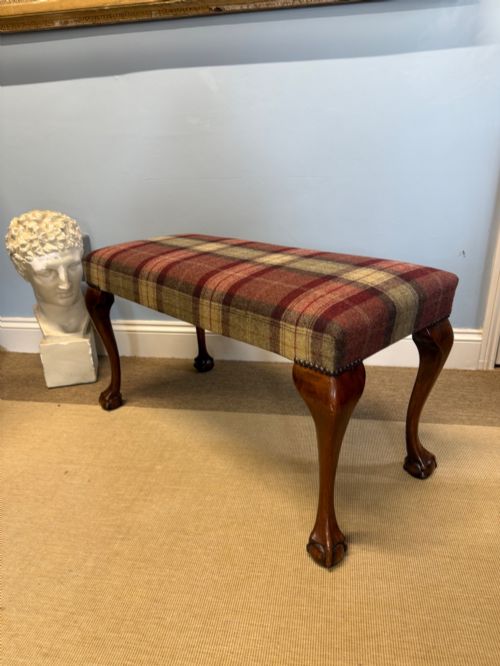


Vintage Upholstered Long Stool
A vintage upholstered long stool provides generous seating or foot support, bringing traditional comfort and period character to a bedroom or living space.
Vintage Upholstered Long Stool
A vintage upholstered long stool offers an elongated surface designed for seating or resting feet, appearing across several distinct historical periods. Buyers seeking a vintage upholstered long stool encounter pieces ranging from nineteenth-century mahogany frames to early twentieth-century Edwardian examples.
The selections on this page include forms such as window seats, dressing stools, and multi-seater benches. These long stools serve practical functions at the foot of a bed or beside a window, combining utilitarian purpose with period style.
Makers and manufacturers adapted traditional designs like Queen Anne, Chippendale, and Louis XV styles across the nineteenth and twentieth centuries. This means buyers find both restrained mahogany frames and more ornate carved or painted French designs.
Materials and construction methods
Frames are constructed from solid hardwoods including mahogany and walnut, alongside painted and gilded wood surfaces. Cabinetmakers shaped these supports using traditional joinery methods before applying decorative elements such as ball and claw details or hand carving.
Upholstery techniques involve securing textiles like wool, linen, and patterned fabrics over padded seat foundations. Many pieces incorporate decorative metalwork, including brass components, to accent the wooden frames.
Listings feature mahogany, walnut, and painted wood frames paired with wool, linen, and kilim textiles across multiple periods.
Distinctions in quality and finish
Quality rests upon the execution of the timber frame and the sophistication of any carved details. Finer examples display crisp hand-carved ornamentation and solid hardwood construction rather than simpler turned elements.
The integrity of the frame construction and the quality of the textile coverings dictate the durability and aesthetic weight of each piece. Superior items maintain robust joinery alongside well-executed period upholstery fabrics like kilim or patterned linen.
Morris & Co.
The Vintage Upholstered Long Stool Glossary
- Cabriole leg
- A furniture leg that curves outward and then tapers inward, mimicking an animal's curving leg. This form appears frequently on eighteenth-century revival pieces from the Victorian era.
- Kilim
- A flatwoven textile originating from the Middle East and parts of southeastern Europe. These durable fabrics often feature geometric patterns and appear on nineteenth-century footstools.
- Window seat
- A long, narrow bench specifically designed to fit into a bay or recess beneath a window. These forms often feature upholstered tops suited for extended sitting.
- Aesthetic Movement
- A late nineteenth-century design current that prioritized visual beauty over narrative or moral function. Furniture from this movement emphasises simplified lines and refined craftsmanship.
- Gilded
- Coated with a thin layer of gold leaf or gold-colored paint to give a metallic sheen. This decorative finish appears on French and Italian carved wood stools from the nineteenth century.
Vintage Upholstered Long Stool: Frequently Asked Questions
Where do you place a long stool?
A long stool functions effectively at the foot of a bed, beneath a window as a window seat, or alongside a dressing table. Its elongated proportions accommodate multiple sitters or provide a substantial surface for resting feet.
Positioning the piece against a wall or beneath a window utilises its length without obstructing room traffic, blending seating utility with decorative presence.
How do I identify Edwardian stools?
Edwardian pieces generally date from the early twentieth century and often exhibit lighter proportions than their Victorian predecessors. They incorporate various revival styles alongside simpler, refined woodwork.
Examining the wood species, such as walnut or mahogany, alongside the upholstery style helps distinguish these early twentieth-century examples from nineteenth-century iterations.
What fabrics cover these stools?
Upholstery materials on these stools include wool, linen, general textiles, and flatwoven kilim coverings. These fabrics reflect both the original period of manufacture and subsequent reupholstery.
Examining the textile helps determine the decorative character of the piece, ranging from patterned wools to gilded or painted wooden frames paired with neutral linens.
Are French style stools different?
French style stools often feature painted wood, hand carving, and gilded surfaces associated with Louis XV aesthetics. These pieces emphasise decorative woodwork and ornate sculptural details.
In contrast, British revival styles like Chippendale or Queen Anne focus on mahogany frames, cabriole legs, and ball and claw foot details.